

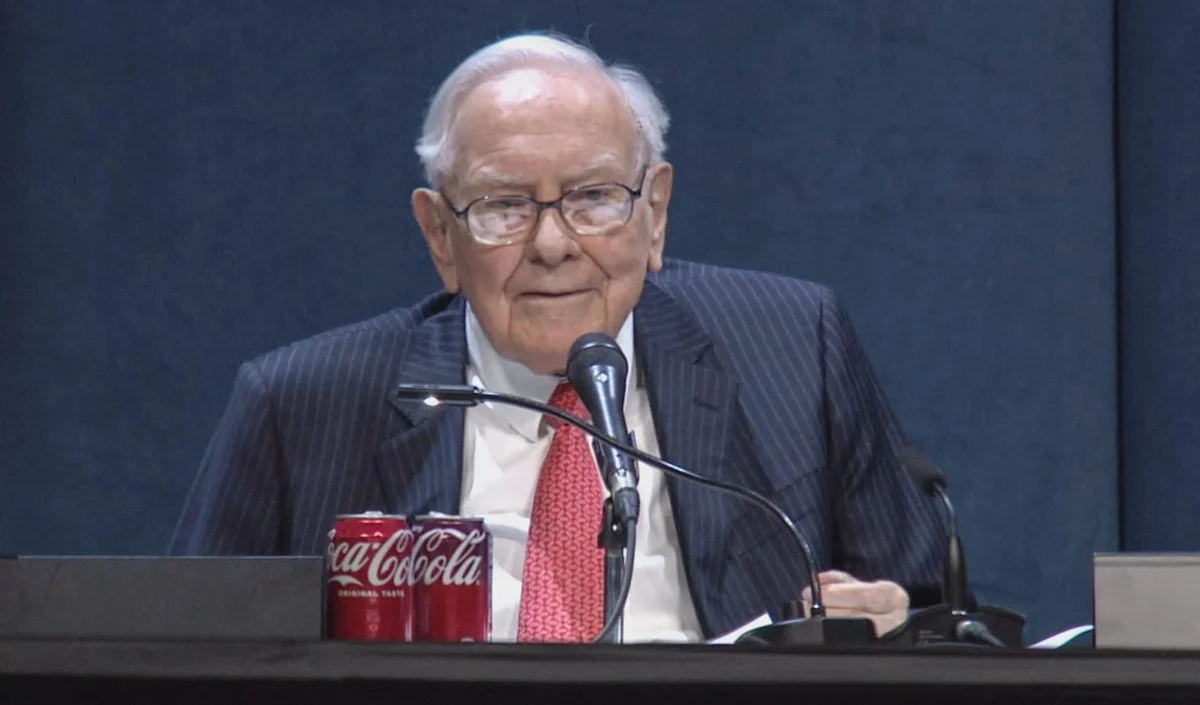
As the year 2026 progresses past its midpoint, Berkshire Hathaway finds itself in a challenging market environment, with its Class B shares recording a 1.8% year-to-date decline. This performance places the conglomerate a significant 12.4 percentage points behind the S&P 500, which has surged by 10.7% over the same period. When factoring in dividends, the S&P 500’s lead extends further to 13.1 percentage points, demonstrating a pronounced divergence in returns between the broader market and Warren Buffett’s Omaha-based investment vehicle. This underperformance marks a continuation of a trend observed in the previous year, where Berkshire trailed the S&P by 5.5 percentage points before dividends, escalating to 7.0 percentage points with dividend inclusions.
Despite a robust June, which saw Berkshire Hathaway erase nearly a third of its 17.5 percentage point deficit from June 1—its largest losing margin of the year so far—the second quarter proved particularly arduous. The conglomerate achieved a modest gain of just over 3% during the quarter (including the first ten days of July), starkly contrasted by the benchmark S&P 500’s impressive 16% advance. This significant gap effectively nullified Berkshire’s slim 1.8 percentage point lead held at the end of March, highlighting the potent influence of a tech-driven market rally that has largely bypassed the value-oriented holdings characteristic of Berkshire Hathaway’s portfolio. The current market climate, heavily influenced by advancements in artificial intelligence and robust performance from a concentrated group of technology giants, presents a unique challenge for Berkshire’s traditionally conservative investment philosophy.
Berkshire’s Market Performance: A Mid-Year Assessment
Berkshire Hathaway’s recent market trajectory reflects a broader narrative playing out between "value" and "growth" investing strategies. For decades, Berkshire, under the stewardship of Warren Buffett and Charlie Munger, championed a philosophy centered on acquiring well-understood businesses with durable competitive advantages at reasonable prices. This approach often led to investments in established, financially sound companies across diverse sectors like insurance, utilities, manufacturing, and consumer goods. While this strategy has historically delivered exceptional returns over the long term, outperforming the S&P 500 for extended periods, the current market cycle has seen a dramatic shift in investor preference.
The S&P 500’s 2026 ascent has been predominantly fueled by a handful of mega-cap technology companies, particularly those at the forefront of the artificial intelligence revolution. Companies like NVIDIA, Microsoft, Apple, and Amazon have seen their valuations soar, driven by expectations of future earnings growth tied to AI innovation and strong consumer demand for digital services. These companies often command high price-to-earnings ratios, reflecting their growth potential rather than their immediate intrinsic value, a stark contrast to the metrics Berkshire typically favors.
Market analysts suggest that Berkshire’s underperformance is multi-faceted. Firstly, its portfolio composition, while diversified, lacks the concentrated exposure to the high-flying tech stocks that have propelled the S&P 500. While Apple remains a significant holding, Berkshire’s other major investments are in sectors that have not experienced the same explosive growth. Secondly, Berkshire’s enormous cash pile, which stood at an astounding $397.4 billion as of March 31, 2026, while offering a substantial safety net and optionality for future acquisitions, acts as a drag on overall returns in a bull market. This cash, largely invested in short-term U.S. Treasury bills, yields modest returns compared to the equity market’s gains.
Historically, Berkshire has experienced periods of underperformance, particularly during tech booms such as the dot-com bubble of the late 1990s. In those instances, Buffett’s steadfast adherence to value investing eventually proved vindicated when speculative bubbles burst. However, the current environment is different, with tangible technological advancements underpinning the growth narrative. Investors are left to ponder whether Berkshire’s current strategy is merely undergoing a cyclical lull or if the market dynamics have fundamentally shifted in a way that challenges the traditional value investment paradigm. For long-term Berkshire shareholders, patience is often paramount, but the widening gap prompts ongoing scrutiny.
The Oracle’s Successors at Sun Valley: Continuity and Strategy
In a notable demonstration of leadership transition and strategic continuity, Berkshire Hathaway CEO Greg Abel and portfolio manager Ted Weschler were observed attending the exclusive Allen & Co. Media and Technology Conference in Sun Valley, Idaho. While they may not have graced the front pages of Forbes’ "Billionaire Summer Camp" coverage, their confirmed presence, captured by CNBC’s David Grogan and Reuters’ Brendan McDermid, signifies Berkshire’s enduring relevance within the global elite of finance, technology, and media. They mingled among titans such as Jeff Bezos, Mark Zuckerberg, and Sam Altman, underscoring the conglomerate’s continued engagement with the evolving landscape of business and innovation.
The Allen & Co. conference, often dubbed "billionaire summer camp," is an invitation-only annual gathering renowned for its discretion and the unparalleled caliber of its attendees. Since its inception in 1983, it has served as a crucible for deal-making, strategic partnerships, and candid discussions among the most influential figures shaping the global economy. For decades, Warren Buffett himself was a regular fixture at Sun Valley, his presence eagerly anticipated for his insights and pronouncements. His absence in recent years, a subtle yet profound shift, reflects the ongoing leadership transition at Berkshire Hathaway. Greg Abel, designated as Buffett’s successor for the CEO role, now carries the torch, signaling his increasing visibility and influence on the global stage. Ted Weschler’s attendance further emphasizes the depth of talent within Berkshire’s investment arm, indicating that the firm’s portfolio management continues to seek out opportunities and engage with industry leaders.
Buffett’s past appearances at Sun Valley are legendary, none more so than his prescient speech in 1999. At the peak of the dot-com frenzy, when exuberance for internet stocks seemed boundless, Buffett delivered a sobering warning. He acknowledged the transformative potential of the internet but cautioned investors against unrealistic expectations and speculative bubbles. He famously used the analogy of a gold rush, noting that while many would rush to pan for gold, the real money was often made by those selling the shovels and picks. His words proved remarkably prophetic, as the dot-com bubble burst shortly thereafter, leading to significant losses for many who had disregarded his conservative counsel.
Abel and Weschler’s attendance in 2026, against the backdrop of an AI-driven market boom, carries echoes of Buffett’s earlier sagacity. While the specifics of their discussions remain private, their presence suggests Berkshire’s leadership is actively monitoring technological shifts, potential disruptive forces, and emerging investment opportunities. It also allows them to network with leaders who may become future partners or acquisition targets. Their participation underscores a commitment to staying informed and engaged with the cutting edge, even as Berkshire maintains its core investment principles. It’s a testament to the idea that while the leadership may transition, Berkshire’s strategic imperative to understand and adapt to the world’s most significant trends remains unwavering.

Warren Buffett’s Prescient AI Warning: The ‘Growth Industry’ of Scams
The discourse surrounding artificial intelligence has been dominated by its transformative potential, but Warren Buffett has consistently drawn attention to its darker side, particularly its capacity to fuel financial scams. His concerns, articulated vividly in a 2024 discussion, stemmed from a personal and unsettling experience: witnessing an incredibly convincing AI-generated video of himself. "It was me, and it was my voice and wearing the kind of clothes I wear. And my wife or my daughter wouldn’t have been able to detect any difference. And it was delivering a message that no way came from me," Buffett recounted. This profound encounter led him to conclude that if he were "interested in investing in scamming, it’s going to be the growth industry of all time."
Buffett’s apprehension about AI is not merely anecdotal; it’s rooted in a deeper philosophical concern he first articulated in 2023, comparing AI to the "nuclear genie." He noted, "we let the genie out of the bottle when we developed nuclear weapons, and that genie has been doing some terrible things lately." This powerful analogy highlights the irreversible nature of technological breakthroughs and the inherent difficulty in controlling their negative ramifications once unleashed. Like nuclear weapons, AI possesses immense power for both good and harm, and Buffett, despite admitting his limited technical understanding of AI, keenly perceives the profound ethical and societal challenges it presents.
The rise of generative AI has indeed amplified the threat of sophisticated digital fraud. Deepfake technology, capable of creating hyper-realistic synthetic media, has moved beyond mere entertainment to become a potent tool for criminals. Voice cloning, where AI can mimic an individual’s voice from a short audio sample, is increasingly used in "grandparent scams" or corporate phishing attempts, tricking victims into believing they are speaking to a loved one or a senior executive in distress. Video deepfakes, as Buffett experienced, can create entirely fabricated scenarios, eroding trust and making it incredibly difficult for individuals to discern reality from deception. Cybersecurity firms and law enforcement agencies have reported a dramatic increase in AI-enabled scams, with estimated global losses running into billions of dollars annually.
The implications of AI’s potential for harm are far-reaching. Beyond financial losses, it poses a threat to information integrity, democratic processes, and personal security. Buffett’s warning underscores the urgent need for a multi-pronged approach to mitigate these risks. This includes the development of advanced AI detection technologies, enhanced digital literacy campaigns to educate the public about deepfake threats, robust regulatory frameworks to govern AI development and usage, and international cooperation to combat cybercrime. For Berkshire Hathaway, a company built on trust and integrity, Buffett’s concerns about AI-enabled scams resonate deeply with its conservative ethos and its emphasis on safeguarding its reputation and its investors’ interests. His public statements serve as a crucial reminder for individuals and institutions alike to exercise extreme vigilance in an increasingly digitally deceptive world.
Berkshire Hathaway’s Financial Landscape: Cash, Holdings, and Buybacks
A closer look at Berkshire Hathaway’s financial metrics reveals a picture of immense financial strength coupled with a cautious investment posture. As of March 31, 2026, the company boasted a staggering cash position of $397.4 billion, a 6.5% increase from December 31. Excluding rail cash and subtracting T-Bills payable, the figure stood at $380.2 billion, up 3.0% over the same period. This colossal cash reserve, often referred to as Buffett’s "elephant gun," provides Berkshire with unparalleled flexibility to seize large-scale acquisition opportunities when they arise, acting as both a defensive buffer against economic downturns and a strategic asset for future growth. However, in a booming stock market, this cash can also be seen as a drag on overall portfolio returns, as it generates far less than the equity market’s average gains.
Berkshire’s market capitalization, a testament to its scale and success, stood at $1,064,452,706,579. The company’s Class A shares traded at $739,750.00, while Class B shares were at $493.71, with a trailing twelve-month (TTM) Price/Earnings ratio of 14.70. This P/E ratio is generally considered reasonable for a company of Berkshire’s size and stability, reflecting its diverse revenue streams and consistent profitability.
The company’s approach to capital allocation is further demonstrated by its share repurchase program. In the first quarter of 2026, Berkshire repurchased $234 million of its own shares. Share buybacks are a common strategy employed by companies when management believes its stock is undervalued, signaling confidence in the company’s long-term prospects and returning capital to shareholders. While this amount is relatively modest compared to Berkshire’s overall cash position, it indicates a continued commitment to enhancing shareholder value when internal investment opportunities or external acquisitions do not meet its stringent criteria.
Berkshire’s top equity holdings, as disclosed in its 13F filing on May 15, 2026, for positions as of March 31, 2026, reflect its core investment tenets. While specific details of the full list are available via CNBC.com’s Berkshire Hathaway Portfolio Tracker, these holdings typically include large, well-established companies with strong brand recognition and robust cash flows. Examples often include significant stakes in companies like Apple, Coca-Cola, American Express, and various financial institutions and energy companies. These investments align with Buffett’s preference for businesses that are understandable, possess durable competitive advantages, and can generate consistent returns over the long haul. The stability of these holdings, combined with the strategic flexibility offered by its vast cash reserves, positions Berkshire Hathaway uniquely in the global financial landscape.
As 2026 continues, Berkshire Hathaway navigates a complex financial environment. Its underperformance relative to the S&P 500 underscores the ongoing debate between growth and value investing, while the presence of its top executives at Sun Valley highlights its strategic engagement with future trends. Warren Buffett’s enduring warnings about AI’s potential for harm serve as a critical reminder of the broader societal responsibilities that accompany technological progress. For investors and observers, the conglomerate’s trajectory through the remainder of the year will offer further insights into the adaptability of its enduring investment philosophy in an ever-evolving market.
Please send any questions or comments about the newsletter to me at [email protected]. (Sorry, but we don’t forward questions or comments to Buffett himself.) If you aren’t already subscribed to this newsletter, you can sign up here. Also, Buffett’s annual letters to shareholders are highly recommended reading. They are collected here on Berkshire’s website.
— Alex Crippen, Editor, Warren Buffett Watch
