

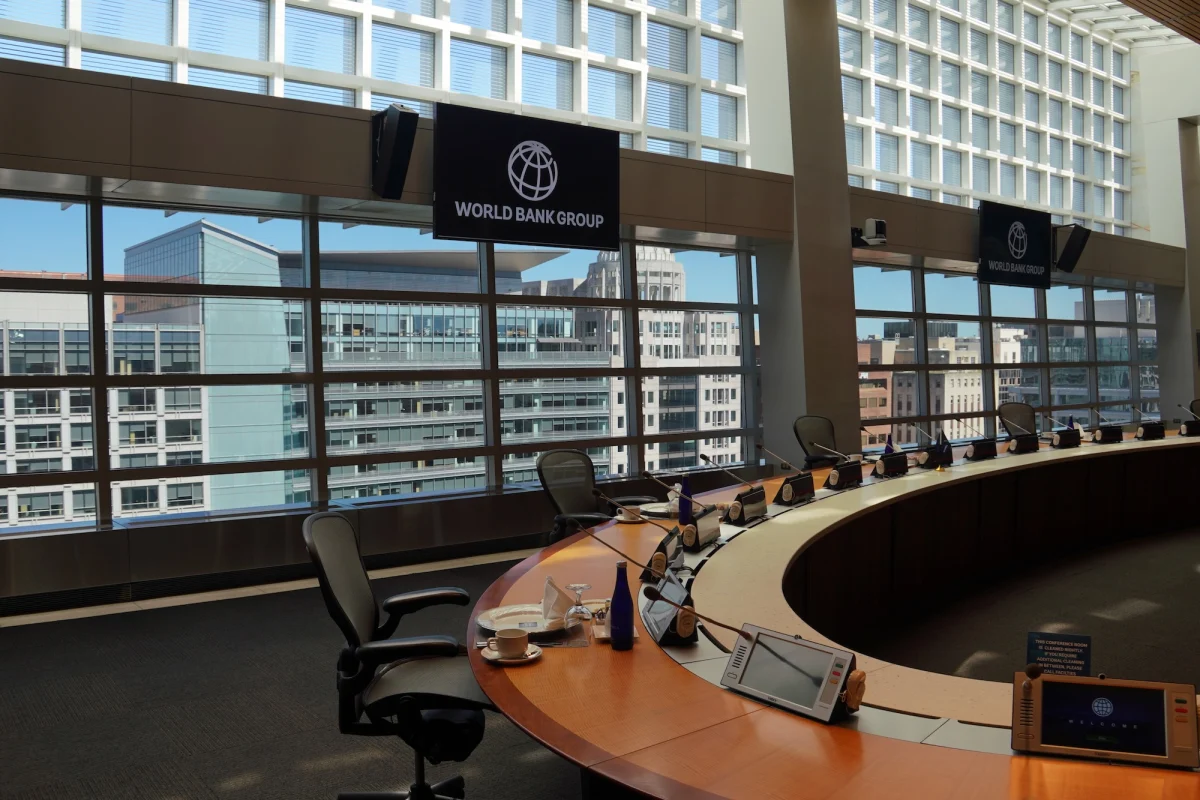
In an unprecedented move that has sent shockwaves through the global development community, the World Bank Group’s Board of Executive Directors has officially overruled its own independent accountability mechanism, the Office of the Compliance Advisor Ombudsman (CAO). This decision marks a significant departure from established protocols regarding institutional transparency and the redress of grievances for communities harmed by development projects. The CAO, which serves as the independent watchdog for the International Finance Corporation (IFC) and the Multilateral Investment Guarantee Agency (MIGA), recently concluded an exhaustive investigation into the IFC’s investments in Cambodia’s microfinance sector. The investigation corroborated long-standing allegations of predatory lending, land loss, and severe human rights abuses. However, the Board’s subsequent invalidation of these findings has triggered the resignation of CAO Director General Janine Ferretti and prompted more than 100 civil society organizations to issue a formal demand for the bank to reverse its course.
The Cambodia Investigation and the Breakdown of Redress
The controversy centers on a 2022 complaint filed by Cambodian community members who alleged that the IFC’s investments in six major microfinance institutions (MFIs) led to a systemic debt crisis. Following a multi-year investigation, the CAO released a report in late 2024 (formally finalized in early 2025) which found that the IFC had violated its own Environmental and Social Sustainability Framework. Specifically, the watchdog concluded that the IFC failed to conduct adequate due diligence and monitoring of the MFIs, which utilized aggressive debt collection tactics and required land titles as collateral for small loans—a practice that often led to forced land sales, food insecurity, and a spike in suicide risks among rural borrowers.
Instead of adopting the CAO’s recommendations to provide direct remedy to the affected families, the World Bank Board took the rare step of invalidating the watchdog’s findings. In its official statement, the Board argued that the IFC’s sustainability framework was not intended to govern the specific nuances of microfinance in the manner suggested by the CAO. In its place, the Board allowed the IFC to implement a "special" action plan. Critics and affected communities argue this plan is a watered-down version of the CAO’s recommendations, lacking the teeth necessary to compensate those who lost their livelihoods. Furthermore, the Board has moved to prevent the CAO from accepting any further complaints related to the microfinance sector, effectively creating an "accountability carve-out" for one of the bank’s largest portfolios.
Chronology of the Microfinance Accountability Crisis
The current crisis is the culmination of years of escalating tension between the World Bank’s operational goals and its internal oversight bodies. To understand the gravity of the Board’s recent overstep, a review of the timeline is essential:
- 2019–2021: Civil society groups, including LICADHO and Sahmakum Teang Tnaut (STT), publish reports detailing "predatory" lending in Cambodia, where MFI debt per capita is among the highest in the world.
- May 2022: Affected Cambodian borrowers file a formal complaint with the CAO, alleging that IFC-funded institutions caused land loss and psychological distress.
- October 2024: The CAO completes its investigation, finding the IFC in non-compliance with institutional policies regarding risk assessment and community protection.
- June 2025: The World Bank Board of Directors issues a statement rejecting the CAO’s findings, claiming the watchdog exceeded its mandate.
- August 2025: Janine Ferretti, Director General of the CAO, resigns in protest, citing the erosion of the mechanism’s independence.
- Early 2026: The World Bank begins the "integration" of its various accountability mechanisms while simultaneously approving new projects, such as the Bhutan hydroelectric plant, that explicitly waive certain community access rights to the CAO.
Supporting Data: The Scale of the Cambodian Debt Crisis
The IFC is one of the largest international financiers of microfinance, viewing it as a primary tool for financial inclusion. However, data from the Cambodia case suggests that without rigorous oversight, these investments can become counterproductive. At the time of the CAO investigation, Cambodia’s microfinance sector held approximately $16 billion in outstanding loans, shared among nearly 3 million borrowers in a country of 17 million people.
The average loan size in Cambodia had ballooned to nearly $5,000, which is more than double the country’s GDP per capita. Because nearly 90% of these loans were secured by land titles, the "efficiency" of the sector often relied on the threat of land foreclosure. Human rights monitors documented thousands of instances where families were forced to skip meals or pull children out of school to service debt interest rates that frequently hovered around 18% per annum. The CAO investigation found that the IFC was aware of these systemic risks as early as 2017 but continued to increase its exposure to the Cambodian market, prioritizing portfolio growth over social safeguards.
Official Responses and the "Evolution Roadmap"
The World Bank’s leadership, under the "Evolution Roadmap" initiated in late 2023, has emphasized a "bigger and better" bank focused on speed and impact. In response to the backlash, World Bank officials have stated that the institution must streamline its processes to meet the urgent demands of climate change and global poverty. The Board’s rejection of the CAO findings was framed as a necessary step to prevent "regulatory overreach" by the watchdog, which the Board claims could stifle private sector investment in emerging markets.

However, the resignation of Janine Ferretti has triggered a wave of internal and external concern. In her departing statements and subsequent reports from civil society, the narrative emerges of a Board that views accountability not as a pillar of development, but as an administrative hurdle. Over 100 organizations, including Human Rights Watch and Accountability Counsel, signed a joint statement asserting that "the Board’s decision sets a dangerous precedent that the bank can simply ignore its own rules whenever the findings are inconvenient or carry a high price tag for remedy."
Broader Impact: The Shift Toward Mutual Reliance and Carve-outs
The implications of the Cambodia case extend far beyond the borders of Southeast Asia. The World Bank is currently moving toward a "Full Mutual Reliance Framework" with other multilateral development banks (MDBs). Under this framework, when multiple institutions co-finance a project, they may agree to use only one institution’s environmental and social standards. While intended to reduce bureaucratic redundancy, this often results in communities being limited to a single accountability mechanism—usually the one with the weakest protections or the most restrictive access.
A recent example of this trend is the hydroelectric power project in Bhutan. Approved in early 2026, this project was celebrated as a milestone for the "One World Bank" approach, which seeks to harmonize the bank’s public and private sector arms. However, the project documents included waivers that stripped affected local communities of their right to bring complaints to the CAO. This "accountability-free" model of development is becoming increasingly common as the bank seeks to compete with other global lenders who may not have comparable safeguard requirements.
Analysis of Implications for Legal Immunity and Institutional Legitimacy
The World Bank, like most international financial institutions, enjoys a high degree of legal immunity in the countries where it operates. This immunity is predicated on the existence of internal, independent grievance mechanisms like the CAO. By overruling the CAO and limiting its jurisdiction, the World Bank risks undermining the legal basis for its own immunity. If local courts perceive that the bank’s internal "justice" system is no longer independent or functional, there may be increased pressure to bring the institution under the jurisdiction of national or international courts.
Furthermore, the "too big to fail" argument—the idea that the IFC’s microfinance portfolio is too large to be subject to standard accountability—threatens the moral authority of the institution. If sectors can be "excised" from oversight because they generate too many complaints, the bank effectively signals that its commitment to "do no harm" is conditional.
The Road to Restoring Trust
To mitigate the damage to its reputation and fulfill its mandate of sustainable development, experts suggest the World Bank must take immediate corrective actions. First, the new integrated accountability mechanism currently being designed must include a clear "non-regression" clause, ensuring that no existing community protections are weakened. Second, the selection process for the new head of this mechanism must be transparent and include civil society stakeholders to ensure the appointee is truly independent of management.
Most importantly, the bank must address the "remedy gap." An accountability mechanism that identifies harm but offers no path to compensation or restoration is essentially a hollow exercise. As the World Bank continues its "evolution," the Cambodia microfinance case stands as a stark reminder that speed and efficiency cannot come at the expense of the very people the bank is tasked with lifting out of poverty. Without a course correction, the institution risks transforming from a partner in development into a source of systemic risk for the world’s most vulnerable populations.
