

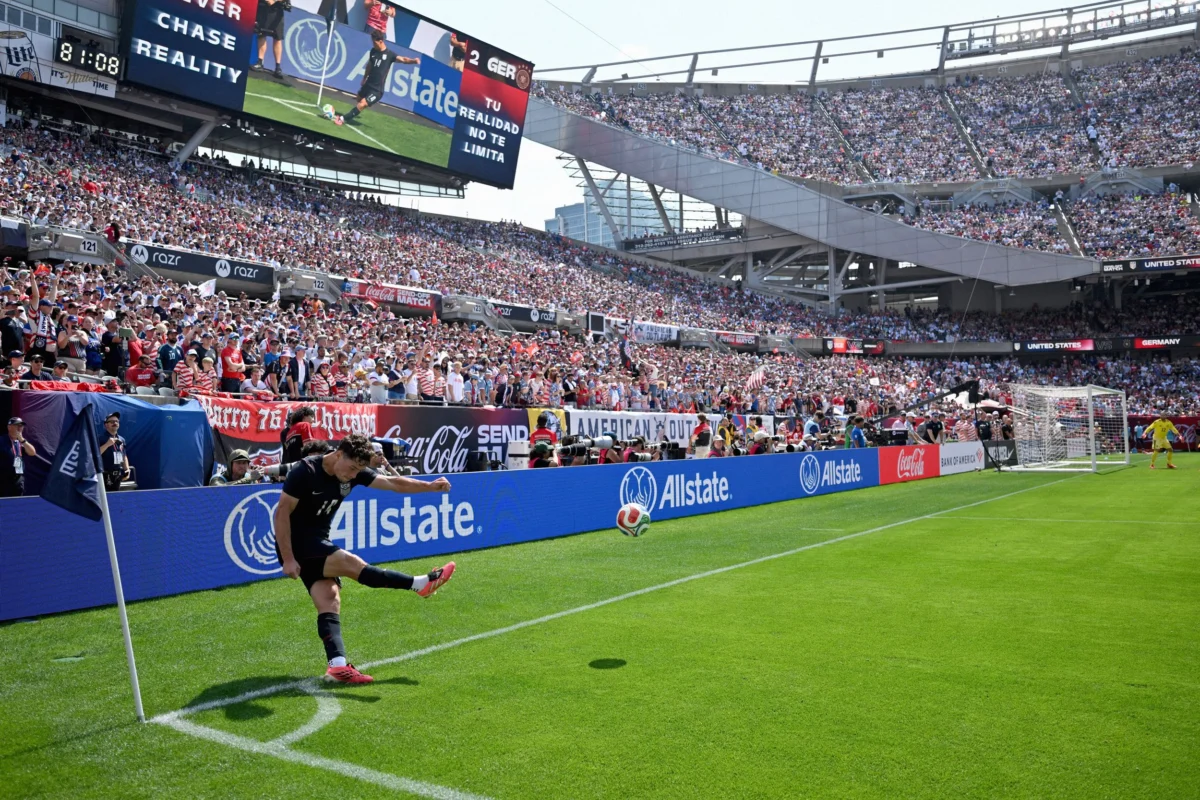
As the global sporting community prepares for the 2026 FIFA World Cup, which will be hosted across 16 cities in the United States, Mexico, and Canada, the technical prowess of the world’s elite strikers remains a focal point of anticipation. Beyond the athleticism and tactical formations, the tournament will serve as a high-stakes laboratory for fluid dynamics and classical mechanics. When a player like Lionel Messi or a rising star of the next generation executes a "banana kick" that swerves mid-flight, they are not defying the laws of nature; rather, they are expertly manipulating them. The ability to bend a soccer ball’s trajectory after it has left the foot is a masterclass in physics, specifically involving the interaction between a solid projectile and the fluid medium of air.
To understand the complexity of a modern soccer match, one must dissect the physical forces at play from the moment of impact to the point where the ball crosses the goal line. While spectators see magic, engineers and physicists see a sequence of predictable interactions governed by Newton’s laws of motion and the principles of aerodynamics.
The Chronology of a Strike: From Potential to Kinetic Energy
The lifecycle of a world-class shot on goal begins with a fraction of a second of intense physical contact. When a professional soccer player strikes the ball, the foot remains in contact with the synthetic surface for approximately 0.01 seconds. During this brief interval, the player exerts a massive impulse force. A standard FIFA-regulated ball, which must have a circumference of 68 to 70 centimeters and a mass between 410 and 450 grams, undergoes significant deformation. It compresses under the force of the strike before rebounding, a process that converts the elastic potential energy of the compressed air and casing into kinetic energy.

Top-tier professionals can launch a ball at speeds exceeding 80 miles per hour (approx. 128 kilometers per hour). According to Newton’s Second Law of Motion, the acceleration of the ball is directly proportional to the net force applied and inversely proportional to its mass ($F=ma$). Once the ball loses contact with the boot, no further accelerating force is applied by the player. In a vacuum, such as the void of deep space, the ball would obey Newton’s First Law, continuing in a straight line at a constant velocity indefinitely. However, on a terrestrial pitch, two primary forces immediately begin to alter this path: gravity and air resistance.
The Vertical Component: Gravity and Ballistic Trajectories
On Earth, every object is subject to a constant gravitational pull, regardless of its horizontal velocity. This force is calculated as the product of the ball’s mass and the gravitational field constant (approximately 9.8 Newtons per kilogram). A common misconception in sports is that a ball "falls" because it loses forward momentum. In reality, gravity acts on the ball from the microsecond it leaves the ground.
In an environment without atmosphere, a kicked ball follows a perfect parabola, known as a ballistic trajectory. The horizontal velocity remains constant because there is no air to slow it down, while the vertical velocity changes at a constant rate of 9.8 meters per second squared. This means that if a goalkeeper were to launch a ball in an airless environment, the distance covered would be significantly greater than on a standard pitch. The ball only stops its forward progress when it intercepts the ground or the netting of the goal. However, the presence of Earth’s atmosphere introduces the complex variables of drag and lift, which are the true architects of the "curving" shots seen in professional play.
Atmospheric Resistance and the Impact of Drag
Air is not empty space; it is a fluid comprised of gas molecules that exert resistance on any object moving through it. This force, known as aerodynamic drag, acts in direct opposition to the ball’s motion. The magnitude of drag is not constant; it increases with the square of the velocity. This means that doubling the speed of a kick results in a fourfold increase in air resistance.

For a ball traveling at 80 mph, the drag force is substantial enough to noticeably shorten the distance of the flight compared to a slower toss. This is why a long-range "goalie kick" often appears to "hang" in the air and drop more steeply than a simple parabolic arc would suggest. The air molecules act like billions of microscopic collisions, gradually stripping the ball of its kinetic energy. Without this resistance, the tactical nature of the game would be unrecognizable, as long-range passes would be nearly impossible to control, and shots from the midline would frequently sail out of the stadium.
The Magnus Effect: Engineering the Curve
The most celebrated aspect of soccer physics is the Magnus effect, named after the German physicist Heinrich Gustav Magnus, who investigated the phenomenon in the mid-19th century. This effect explains why a spinning ball curves away from a straight-line path. When a player strikes the ball off-center, they impart torque, causing the ball to rotate around an axis.
As the ball spins, it drags a thin layer of air around its surface, known as the boundary layer. On one side of the ball, the spin is moving in the same direction as the oncoming air stream, which accelerates the air flow. On the opposite side, the spin moves against the air stream, slowing it down. According to Bernoulli’s Principle, faster-moving fluid exerts less pressure than slower-moving fluid. This creates a pressure differential: high pressure on one side and low pressure on the other.
The resulting net force, the Magnus force, pushes the ball toward the low-pressure side. If a player imparts backspin, the Magnus force acts upward, opposing gravity and allowing the ball to stay aloft longer—a technique often used in long-range passing. Conversely, "topspin" causes the ball to dip prematurely, often deceiving goalkeepers who expect a higher trajectory. To "bend" the ball sideways around a defensive wall, the player imparts side-spin (rotation around a vertical axis), forcing the ball to hook or slice through the air.

Environmental Variables and the 2026 World Cup Context
The 2026 World Cup will present unique challenges for players due to the diverse altitudes of the host venues. Altitude significantly affects air density, which in turn alters both drag and the Magnus effect.
In high-altitude cities like Mexico City (7,350 feet above sea level) or Guadalajara, the air is thinner. Lower air density means there are fewer molecules to collide with the ball, resulting in less drag and a weaker Magnus force. Consequently, the ball will travel faster and farther, but it will be much harder for players to "bend" their shots. In contrast, matches played at sea-level venues, such as Miami or Vancouver, will see the ball move slower through the air but respond more dramatically to spin.
Sports scientists anticipate that teams will need to adjust their striking techniques based on the local atmospheric conditions. A free-kick specialist who is used to the thick air of London or Paris may find their shots sailing over the crossbar in the thin air of the Estadio Azteca unless they adjust the power and angle of their strike.
The Evolution of Ball Technology
The physical behavior of the ball is also influenced by its construction. FIFA’s "Quality Pro" standards ensure consistency, but the evolution from stitched leather to thermally bonded synthetic panels has changed the game’s aerodynamics. Modern balls are designed with specific surface textures—often referred to as "macrotextures" or "microtextures"—that influence the transition from laminar (smooth) to turbulent air flow.

Rougher surfaces can actually reduce drag at high speeds by creating a thin turbulent boundary layer that allows the air to follow the contour of the ball more closely, reducing the size of the low-pressure wake behind it. This is the same principle that allows dimpled golf balls to fly farther. For the 2026 tournament, ball manufacturers are expected to utilize advanced polymers that maintain their shape and flight characteristics across the varied temperature and humidity ranges of North America.
Tactical Implications and Goalkeeping Challenges
The science of fluid dynamics creates a significant disadvantage for goalkeepers. Because the Magnus force is dependent on velocity and spin rate, a ball’s trajectory can change most dramatically toward the end of its flight as it slows down. This is the "swerve" that often leaves keepers rooted to the spot; the ball appears to be heading toward one corner of the goal, only to veer sharply into another at the last second.
Advanced data analytics now allow teams to study the "expected goals" (xG) of certain types of strikes based on the physics of the player’s typical shot profile. Goalkeepers are increasingly trained using ball-launching machines that can replicate specific spin rates and velocities, helping them develop the intuition necessary to predict a ball’s path in real-time.
Conclusion: The Intersection of Art and Science
As the 2026 World Cup approaches, the focus will remain on the drama of the matches and the skill of the athletes. However, the underlying reality of the tournament is one of constant physical calculation. Every goal scored is a successful negotiation with gravity, air resistance, and the Magnus effect. By understanding these principles, fans can appreciate the "wizardry" of a curving shot not as a lucky break, but as a perfect execution of fluid dynamics. The pitch is more than a field of play; it is a space where human intent meets the rigid, beautiful laws of physics.
