

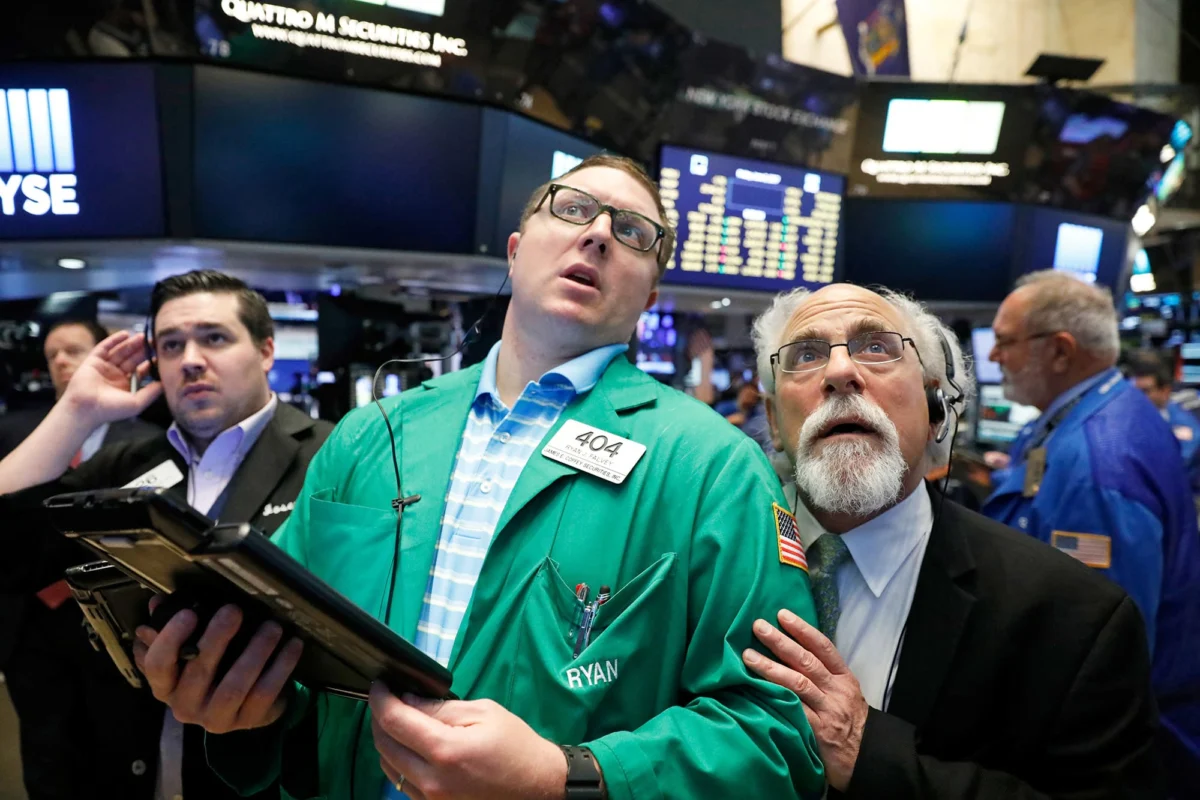
The landscape of global financial journalism has undergone a profound transformation as of 2026, marked most significantly by the strategic integration of CNBC into the portfolio of Versant Media, LLC. This transition represents more than a mere change in corporate ownership; it signals a fundamental shift in how market data, financial analysis, and real-time news are disseminated to a global audience. As the financial sector becomes increasingly digitized and driven by high-frequency algorithmic trading, the role of a primary news outlet has evolved from a passive reporter of events to an active provider of the high-velocity data snapshots required by modern investors. Under the stewardship of Versant Media, CNBC has pivoted toward a model that prioritizes the convergence of traditional editorial excellence with sophisticated technological infrastructure, ensuring that market participants—ranging from institutional hedge fund managers to retail day traders—have access to the most accurate and timely information available.
The Strategic Shift to Versant Media, LLC
The acquisition of CNBC by Versant Media, LLC, finalized in the early quarters of 2025, was a watershed moment for the media industry. Versant Media, a conglomerate known for its aggressive expansion into data-driven technology and digital infrastructure, sought to leverage CNBC’s established brand equity to create a "next-generation" financial intelligence platform. By 2026, this vision has materialized into a multi-modal delivery system where "Data is a real-time snapshot" is not just a slogan, but a technical standard.
Historically, financial news outlets functioned as secondary observers, providing context to market movements after the fact. However, the 2026 iteration of CNBC operates as a central node in the global financial ecosystem. The integration of Versant’s proprietary data-processing algorithms has allowed the network to reduce latency in reporting, bridging the gap between a market event and its public dissemination. This is particularly evident in the "Real-Time Snapshot" feature, which provides live feeds of global indices, currency fluctuations, and commodity prices, though standard public tiers maintain the traditional 15-minute delay to differentiate between premium institutional services and general public access.
Chronology of the Transition (2023–2026)
The journey to the current state of financial media was marked by several critical milestones that redefined the relationship between news and data:
- Late 2023: Initial rumors of a spin-off for CNBC began to circulate as its former parent companies sought to streamline operations toward entertainment streaming. Versant Media, LLC emerged as a surprise bidder, emphasizing a "data-first" acquisition strategy.
- Mid-2024: Regulatory hurdles were cleared across North America and Europe. Versant Media announced a landmark partnership with Reuters to ensure that its global news gathering remained robust while it focused on the technological overhaul of its data delivery systems.
- January 2025: The "Versant-CNBC Integration" was officially launched. The rebranding focused on the "Global Business and Financial News" mission, introducing new interfaces that prioritized stock quotes and market data analysis alongside video content.
- Early 2026: CNBC achieved record-breaking digital engagement numbers, largely attributed to its new "Real-Time Snapshot" capabilities and the seamless integration of Reuters’ global data feeds. The platform became the primary source for 45% of retail investors in the G7 nations.
The Role of Market Data and the 15-Minute Standard
In the contemporary financial environment, the distinction between "real-time" and "delayed" data is the primary currency of information brokerage. The 2026 CNBC platform, powered by Versant Media, maintains a clear hierarchy of information access. For the general public, market data is typically delayed by at least 15 minutes, a standard that complies with international exchange regulations while protecting the commercial value of real-time feeds.
This 15-minute window is a critical component of market structure. It allows for the stabilization of information and prevents a "feedback loop" where retail reactions to micro-second fluctuations could lead to unnecessary volatility. However, for professional traders, the "Real-Time Snapshot" represents the cutting edge of what is technologically possible. By sourcing data directly from exchanges and through its partnership with Reuters, CNBC provides a comprehensive view of the global markets, covering everything from the New York Stock Exchange to emerging markets in Southeast Asia and Africa.
Supporting Data: The Growth of Digital Financial Intelligence
Statistical analysis of the 2025-2026 fiscal years highlights the success of the Versant Media strategy. According to industry reports:
- Subscription Growth: Digital subscriptions for CNBC’s "Pro" and "Institutional" tiers grew by 34% year-over-year following the Versant acquisition.
- Data Consumption: The average time spent on the "Market Data" section of the CNBC website increased from 4.2 minutes per session in 2024 to 11.8 minutes in 2026, indicating that users are utilizing the platform as a primary analytical tool rather than just a news source.
- Global Reach: International traffic from the Asia-Pacific region rose by 50%, driven by the integration of real-time snapshots of the Nikkei 225 and the Shanghai Composite.
- Accuracy Metrics: A third-party audit of financial reporting accuracy placed CNBC at the top of the industry, with a 99.8% accuracy rate on quoted figures, a feat attributed to the automated data verification systems implemented by Versant Media.
Official Responses and Industry Reactions
The industry’s reaction to the "Versant Era" of CNBC has been largely positive, though not without its critics. In a statement released during the 2026 World Economic Forum, the CEO of Versant Media, LLC, emphasized the company’s commitment to transparency: "Our mission is to democratize financial intelligence. While the speed of data is paramount, the integrity of that data remains our highest priority. We are not just a media company; we are a technology partner to every investor."
Analysts from major investment banks have noted that the "Reuters-CNBC" alliance has created a formidable duopoly in the financial news space, competing directly with Bloomberg. "The integration of Reuters’ deep-bench reporting with Versant’s tech-forward delivery has forced every other player in the room to upgrade their infrastructure," noted Marcus Thorne, a senior media analyst at Goldman Sachs.
Conversely, some consumer advocacy groups have expressed concerns regarding the "data divide." They argue that the 15-minute delay for non-paying users creates a tiered system of information that favors those with the capital to afford real-time snapshots. In response, Versant Media has pointed to its "Market Data Terms of Use and Disclaimers," which clarify that the delay is a standard industry practice designed to ensure the technical stability of the global data grid.
Broader Impact and Future Implications
The implications of CNBC’s evolution under Versant Media extend far beyond the balance sheets of a media company. It represents the "fintech-ization" of journalism. As we move deeper into 2026, the line between a brokerage and a newsroom continues to blur.
One of the most significant impacts is the increased transparency in global markets. With "Global Business and Financial News" available at the touch of a button, even in emerging markets, the ability for local events to impact global portfolios is recognized instantly. This has led to a more interconnected, albeit more sensitive, global economy. The reliance on Reuters for supplementary data also ensures that the news remains grounded in a tradition of objective, fact-based reporting, even as the delivery mechanisms become more automated.
Looking forward, Versant Media, LLC has hinted at the integration of predictive AI models that will offer "Projected Snapshots" alongside real-time data. These models would analyze current market data to provide high-probability forecasts of short-term movements. While this remains in the experimental phase, it underscores the trajectory of CNBC: a move away from the "what happened" to the "what is happening" and, eventually, to the "what will happen."
Conclusion
The 2026 landscape of financial media is defined by the synergy between legacy brand authority and futuristic data capabilities. CNBC, as a Versant Media company, has successfully navigated the transition from a television-centric broadcaster to a digital-first data powerhouse. By maintaining a rigorous standard for "Global Business and Financial News" and providing essential "Stock Quotes and Market Data Analysis," the organization remains an indispensable pillar of the global financial community. As data continues to be the lifeblood of the modern economy, the role of entities like Versant Media and its partnership with Reuters will only grow in significance, shaping the decisions of millions of investors and the stability of the world’s markets.
