

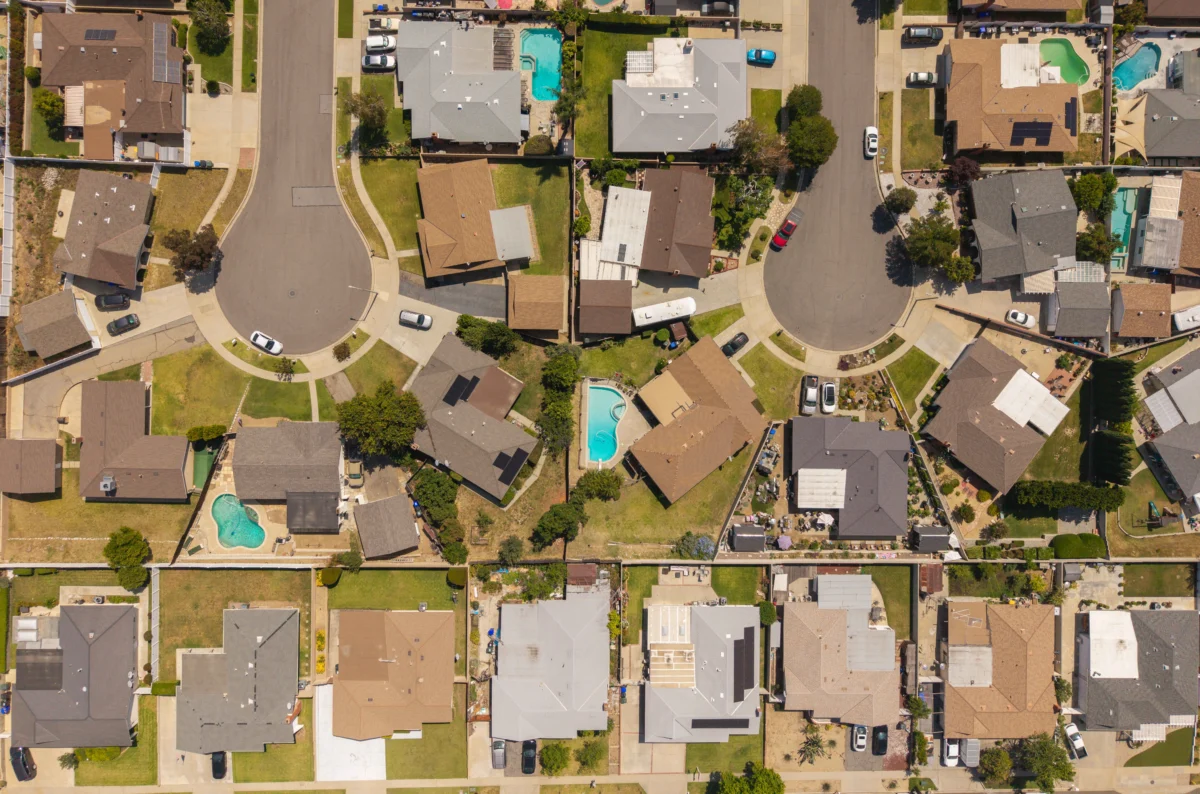
A notable shift in the dynamics of the American housing market became increasingly evident in April, as a significant number of frustrated home sellers opted to withdraw their properties from the market, even amidst the traditionally robust spring selling season. This trend, signaling a potential recalibration of market expectations, underscores the growing challenges faced by sellers in an environment increasingly influenced by shifting economic headwinds.
The Retreat of Sellers: A New Market Reality
According to comprehensive new data released by Redfin, a prominent real estate brokerage, a substantial 5.8% of all home listings nationwide were pulled off the market in April. This figure represents a critical juncture, tying with December for the highest share of delisted homes observed since March 2020, a period marked by the initial onset of the global pandemic and a subsequent freeze in housing market activity. The increase in delistings in April alone was significant, showing a 3.8% rise compared to March, indicating an accelerated pace of seller withdrawal as the spring market progressed.
This rising tide of delisted properties is not an isolated phenomenon but rather a multifaceted response to a confluence of economic pressures. Higher mortgage rates, which have steadily climbed for much of the past year, coupled with persistently elevated gas prices and a broader weakening of consumer confidence, are collectively taking a discernible toll on housing demand. The prevailing narrative of a fervent seller’s market, characterized by bidding wars and rapidly appreciating prices, has begun to dissipate, forcing sellers to confront a new reality where their pricing power is diminished, and buyer expectations are more assertive.
Regional Disparities: Hotspots of Withdrawal
While the trend of delisting is national, certain metropolitan areas experienced a more pronounced exodus of sellers. Atlanta, Georgia, recorded the highest share of homes pulled from the market in April, with a striking one in ten listings being delisted. This suggests a particularly acute sensitivity to market conditions in the Southern hub. Following Atlanta, the affluent Silicon Valley city of San Jose, California, saw approximately 9% of its listings withdrawn. Other major urban centers also registered significant delisting activity, including Los Angeles (7.8%), Dallas (7.8%), and Seattle (7.7%). These regions, known for their competitive and often high-priced housing markets, appear to be experiencing a notable correction in seller expectations as affordability challenges intensify for potential buyers.
Mortgage Rates: A Volatile Landscape
The trajectory of mortgage rates has been a primary determinant of housing market health over the past year. At the start of the year, there was a glimmer of hope for prospective buyers as the benchmark 30-year fixed mortgage rate experienced a brief decline, momentarily touching the 5% range by the end of February, according to data from Mortgage News Daily. This temporary dip provided a fleeting window of improved affordability. However, this downward trend proved short-lived. Rates subsequently jumped sharply, influenced by a combination of persistent inflationary pressures, the Federal Reserve’s aggressive monetary tightening policies aimed at curbing inflation, and broader geopolitical instability. While the original text mentioned a "war with Iran," it is highly probable this was a misstatement, and the more accurate drivers for rate increases in the early months of the year would have been the ongoing war in Ukraine, its impact on global energy and commodity prices, and the Fed’s stance. Since then, mortgage rates have largely remained elevated, hovering significantly higher than the ultra-low rates seen during the pandemic-induced housing boom.
For instance, after hitting record lows below 3% in late 2020 and early 2021, the 30-year fixed-rate mortgage began its ascent in 2022, breaching 7% by late 2022. While there have been minor fluctuations, the sustained period of higher rates has fundamentally reshaped buyer affordability and enthusiasm. Each percentage point increase in mortgage rates can add hundreds of dollars to a monthly mortgage payment, effectively pricing out a segment of potential buyers and diminishing the purchasing power of others.
The Evolving Negotiation Dynamic
The shift in market power from sellers to buyers is palpable. Patricia Ammann, a Redfin agent, articulated this new dynamic, stating in a recent release, "Buyers know they have negotiating power, often offering under the asking price and completing inspections, but some sellers just won’t budge." This observation highlights a growing chasm between seller expectations, often anchored to the peak market conditions of 2021 and early 2022, and the current reality of buyer caution and increased leverage. Buyers, emboldened by less competition and more inventory, are increasingly willing to submit offers below asking price, request concessions, and conduct thorough inspections, a stark contrast to the waive-all-contingencies environment that dominated the market just a year prior. Sellers who are unwilling to adapt to these new negotiating terms find their properties languishing on the market, eventually leading to the decision to delist.
Home Prices: Resilience Amidst Headwinds

Despite the challenges posed by higher interest rates and waning demand, home prices have shown a surprising degree of resilience. While the pace of appreciation has certainly eased from the dizzying double-digit gains of the pandemic era, prices generally remain higher than they were a year ago. In fact, some markets have even begun to show signs of strengthening more recently, defying earlier predictions of a widespread price collapse.
Selma Hepp, chief economist at Cotality, offered insights into this phenomenon: "Markets that depend more heavily on traditional mortgage financing and rate-sensitive buyers are seeing prices stay relatively flat." This suggests that cash buyers or those with substantial equity are still active, providing a floor for prices in some areas. She further noted, "Overall, fewer markets posted year-over-year price declines in April than in prior months, pointing to continued stabilization across the housing market." This indicates that while the market is undeniably cooling from its frenetic peak, it is not in freefall, but rather undergoing a process of rebalancing and stabilization. The national median existing-home price, for instance, while seeing its annual growth rate slow dramatically, has not experienced the widespread year-over-year declines many had anticipated, particularly in more resilient or supply-constrained regions.
Inventory and Pending Sales: Mixed Signals
Further complicating the market picture are the mixed signals emanating from inventory levels and pending sales data. The National Association of Realtors (NAR) reported a slight increase in signed contracts on existing homes, known as pending sales, which rose by 1.4% from March to April. While a modest gain, this uptick is likely attributable to a corresponding increase in housing inventory, which was up nearly 6% from March.
The gradual accumulation of listings in some parts of the country is a critical development. New properties are coming onto the market, and existing ones are sitting for longer periods, leading to an expansion of available homes. This increase in supply, while potentially offering more choices for buyers, also contributes to the longer market times, which in turn can frustrate sellers and prompt delistings. As the crucial spring selling season draws to a close, the phenomenon of homes sitting longer on the market means some buyers, too, are growing weary, either pulling back their search or waiting for more favorable conditions. This dynamic creates a challenging environment where both buyers and sellers are exercising caution.
The Phenomenon of Relistings: A Glimmer of Hope for Some
Interestingly, the market churn is not solely characterized by withdrawals. Some homeowners who had previously pulled their homes off the market over the past year chose to relist them in April. This behavior suggests a strategic attempt to capitalize on the perceived — or hoped for — vibrancy of the spring market, even in the face of elevated mortgage rates. Redfin’s report found that 2.5% of the homes on the market in April were relistings, a figure that ties with the preceding two months for the highest share since mid-2020. This earlier period also saw a sudden surge in housing demand as the initial pandemic shock subsided.
The decision to relist often comes after a seller has had time to reassess their pricing strategy, make necessary home improvements, or simply wait for market sentiment to improve. It also reflects the ongoing tension between a seller’s desire to achieve a specific price point and the market’s willingness to bear that price. For some, the renewed activity of the spring market, even if tempered, presented a window of opportunity they felt compelled to seize.
Broader Economic Context and Future Outlook
The current state of the housing market is inextricably linked to the broader macroeconomic environment. The Federal Reserve’s ongoing battle against inflation, characterized by a series of interest rate hikes, has directly impacted mortgage rates. While the Fed does not directly control mortgage rates, its actions on the federal funds rate influence the broader credit markets, including those for long-term loans like mortgages. Furthermore, consumer confidence, which has been volatile, plays a significant role in major purchasing decisions, including home buying. When consumers feel uncertain about their economic future, job security, or the trajectory of inflation, they are less likely to commit to large investments.
The trajectory for the remainder of the year remains subject to several key variables: the Federal Reserve’s future monetary policy decisions, the persistence of inflation, the evolution of the job market, and the stability of global geopolitical conditions. Should inflation continue to moderate, the Fed might ease its tightening stance, potentially leading to some relief in mortgage rates. Conversely, a resurgence of inflationary pressures could see rates climb further, intensifying the challenges for both buyers and sellers.
For the housing market, the current phase appears to be one of cautious rebalancing. The era of unchecked price growth and frenzied bidding wars has largely subsided, replaced by a more nuanced market where affordability, inventory levels, and seller flexibility are becoming paramount. While the pace of sales may slow, and price appreciation may normalize or even see modest declines in some overvalued areas, a widespread collapse is not universally anticipated. Instead, the market is adjusting to a new normal, where strategic pricing, effective marketing, and a willingness to negotiate are crucial for successful transactions. The trend of delistings in April serves as a powerful indicator of this ongoing adjustment, reflecting the deep impact of economic shifts on the aspirations and decisions of homeowners across the nation.
