

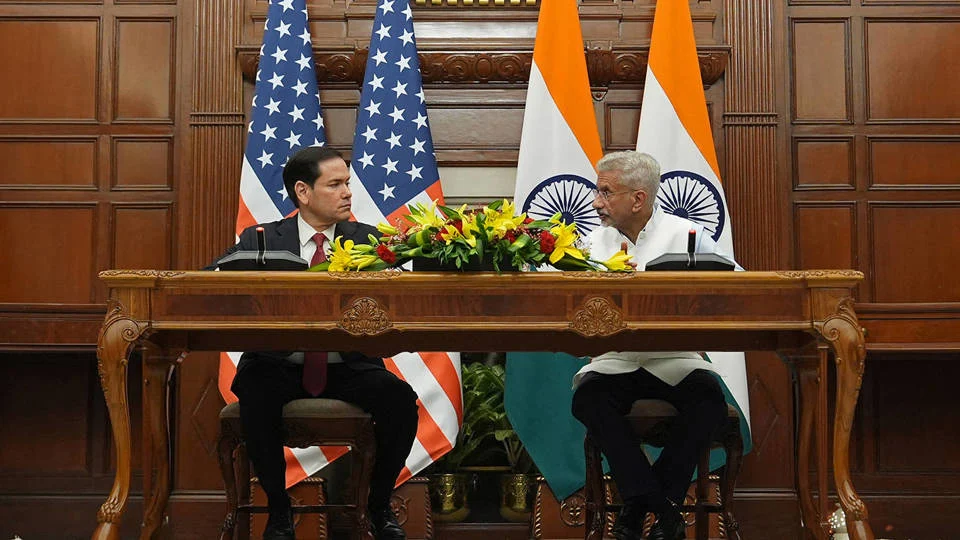
On his recent visit to India, US Secretary of State Marco Rubio predictably touted India as one of America’s “most important strategic partners,” citing the two countries’ shared values, “people-to-people ties,” and strategic alignment on “all of the key issues that will define the new century.” However, this familiar language of partnership, often echoed by previous administrations and articulated in joint statements emphasizing a “Comprehensive Global Strategic Partnership,” is increasingly being tested by underlying geopolitical realities and divergent strategic objectives. While the United States increasingly views India as a crucial counterweight to China’s growing influence in Asia, it simultaneously balks at the notion of Indian regional dominance, favoring instead a pluralistic, rules-based international order. The current Trump administration has further complicated this dynamic by pursuing closer ties with Pakistan, an action that appears to stem from a hope that the US and India can maintain their global partnership despite such regional entanglements.
Evolving Dynamics of the US-India Relationship
The strategic courtship between the United States and India has intensified over the past two decades, driven by a shared concern over China’s assertive foreign policy and economic expansion. India, with its rapidly growing economy and significant military capabilities, is seen by Washington as an indispensable partner in maintaining a stable and secure Indo-Pacific region. This convergence of interests has led to increased defense cooperation, joint military exercises, and enhanced intelligence sharing. The US has consistently supported India’s role in regional security architectures, including the Quadrilateral Security Dialogue (QUAD), which also includes Japan and Australia, ostensibly to promote a free and open Indo-Pacific.
However, beneath the surface of this burgeoning strategic alliance lies a fundamental tension: the US desire for a multipolar Asia versus India’s own regional aspirations. While the US policy articulates support for India as a significant power, it has historically shied away from endorsing any form of Indian hegemony within South Asia. This cautious approach is rooted in a desire to maintain its own influence in the region and to foster a balance of power that prevents any single nation from becoming overly dominant. This preference for a pluralistic order, where multiple powers coexist and contribute to regional stability, contrasts with India’s own ambitions to assert its primacy in its immediate neighborhood.
The Trump Administration’s Pakistan Pivot
The Trump administration’s overtures towards Pakistan have introduced a particularly sensitive element into the US-India strategic calculus. For decades, Pakistan has been a complex, often contentious, partner for the US, primarily due to its role in counter-terrorism efforts and its historical relationship with China. However, the Trump administration, seemingly departing from the established US policy of prioritizing its relationship with India, has actively sought to mend ties with Islamabad. This has included significant military aid packages and a renewed focus on Pakistan’s contributions to regional security.
The rationale behind this policy shift, as inferred from administration statements and actions, appears to be a strategic gamble. The US may be hoping to leverage Pakistan’s influence in Afghanistan and its historical role in regional security dialogues to its advantage, while simultaneously seeking to preserve its global partnership with India. This approach, however, risks alienating India and undermining the very foundation of the US-India strategic partnership. India views Pakistan as a primary source of regional instability, citing its alleged support for cross-border terrorism. Therefore, any perceived strengthening of US-Pakistan ties is often interpreted in New Delhi as a direct challenge to India’s security interests and its regional standing.
Historical Context and Shifting Alliances
The current dynamics are a product of evolving geopolitical landscapes. For much of the Cold War, India pursued a non-aligned policy, maintaining equidistant relations with both the US and the Soviet Union. The post-Cold War era, however, saw a significant recalibration of India’s foreign policy, driven by economic liberalization and a growing realization of China’s burgeoning power. This paved the way for a more robust engagement with the United States.
Timeline of Key Developments:
- 1990s: Post-Cold War era sees a gradual thawing of US-India relations, with increased economic engagement.
- 2000s: The US designates India a "major non-NATO ally," signaling a deepening strategic partnership. Joint military exercises and defense sales become more prominent.
- 2005: The Next Steps in Strategic Partnership (NSSP) initiative is launched, focusing on civilian nuclear cooperation, high-technology trade, and defense relations.
- 2008: The US-India Civil Nuclear Agreement is finalized, allowing India access to civilian nuclear technology and fuel, a significant step in normalizing bilateral ties.
- 2010s: The "Strategic Partnership" evolves into a "Comprehensive Global Strategic Partnership," with increased focus on maritime security, counter-terrorism, and climate change. The QUAD gains traction as a forum for strategic coordination.
- 2017-2020 (Trump Administration): While maintaining overall partnership rhetoric, the administration pursues closer ties with Pakistan, leading to concerns in India. Defense sales and strategic dialogues with India continue, but the Pakistan pivot introduces a new complexity.
- 2026 (Current Period): Secretary of State Marco Rubio’s visit reiterates US commitment to India as a key partner, yet the underlying strategic tensions and the Pakistan factor remain salient issues.
Supporting Data and Analysis
The strategic importance of India to the US is underscored by several factors:
- Demographics and Economy: India is the world’s most populous democracy and boasts the fastest-growing major economy. Its large, educated workforce and expanding middle class represent significant economic opportunities for the US.
- Military Capabilities: India possesses one of the largest and most capable militaries in the world, with a significant naval presence in the Indian Ocean. This makes it a crucial partner in maintaining maritime security and projecting power in the Indo-Pacific.
- Geopolitical Positioning: India’s location straddling the Indian Ocean and bordering China, Pakistan, and several Southeast Asian nations, positions it as a critical player in regional security dynamics.
However, the US approach to regional order is also informed by data and historical precedent. The US has historically sought to prevent the emergence of any single hegemonic power in Asia, a strategy that has guided its engagement with East Asia and Southeast Asia for decades. The fear is that an unchecked Indian regional dominance could lead to instability, as neighboring countries might feel threatened and seek external alliances, potentially drawing in other major powers.
Furthermore, the US has a long-standing, albeit complicated, relationship with Pakistan, which has been crucial for counter-terrorism operations and intelligence gathering. While the US-India relationship has grown substantially, Pakistan’s strategic location and its historical ties with China mean that Washington is reluctant to completely alienate Islamabad. This creates a delicate balancing act for US foreign policy in South Asia.
Official Responses and Implications
Secretary Rubio’s statements, while reiterating the strong partnership, are part of a broader diplomatic effort to manage these complex dynamics. The Indian Ministry of External Affairs, in its responses to such pronouncements, typically emphasizes India’s own strategic autonomy and its commitment to multipolarity. While acknowledging the importance of the US partnership, India consistently maintains that its foreign policy is driven by its own national interests and that it will not be drawn into any alliance that compromises its strategic independence.
The US-Pakistan engagement, particularly under the Trump administration, has often been met with cautious concern in New Delhi. Indian officials have publicly stated their expectations that the US will not compromise India’s security interests. The implications of this US policy are multifaceted:
- Potential for Strain on US-India Ties: A perception of US favoritism towards Pakistan could erode trust and lead to India seeking greater strategic autonomy, potentially diversifying its partnerships with other global powers, including Russia and European nations.
- Regional Instability: If India feels its regional ambitions are being curtailed or its security concerns are not adequately addressed, it could lead to increased assertiveness in its neighborhood, potentially exacerbating existing tensions with Pakistan and other smaller South Asian nations.
- Impact on China’s Influence: Conversely, a strained US-India relationship might inadvertently create more space for China to expand its influence in South Asia, a scenario that the US seeks to avoid.
Broader Impact and Future Outlook
The evolving US-India relationship, marked by both convergence and divergence, is a significant factor in the broader geopolitical landscape of the 21st century. The US desire for India as a strategic partner to counterbalance China is clear, but its reluctance to endorse Indian regional primacy and its continued engagement with Pakistan create a complex web of interests and potential conflicts.
The future of this partnership will likely depend on the ability of both nations to navigate these inherent tensions. For the US, it will require a nuanced approach that balances its strategic goals in Asia with its historical relationships and its commitment to a rules-based international order. For India, it will involve a continued assertion of its strategic autonomy while strategically leveraging its partnership with the US to advance its own national interests and regional ambitions.
The rhetoric of a “most important strategic partner” is likely to persist, but the substance of the relationship will be defined by how effectively both nations can bridge the gap between shared aspirations and divergent regional visions. The coming years will be crucial in determining whether the US-India partnership can evolve into a truly enduring alliance capable of shaping the future of the Indo-Pacific or whether it will remain a strategic convenience, subject to the shifting winds of regional power dynamics and geopolitical calculations. The delicate dance between US global strategy and Indian regional aspirations, complicated by the enduring role of Pakistan, will continue to be a defining feature of Asian geopolitics for the foreseeable future.
