

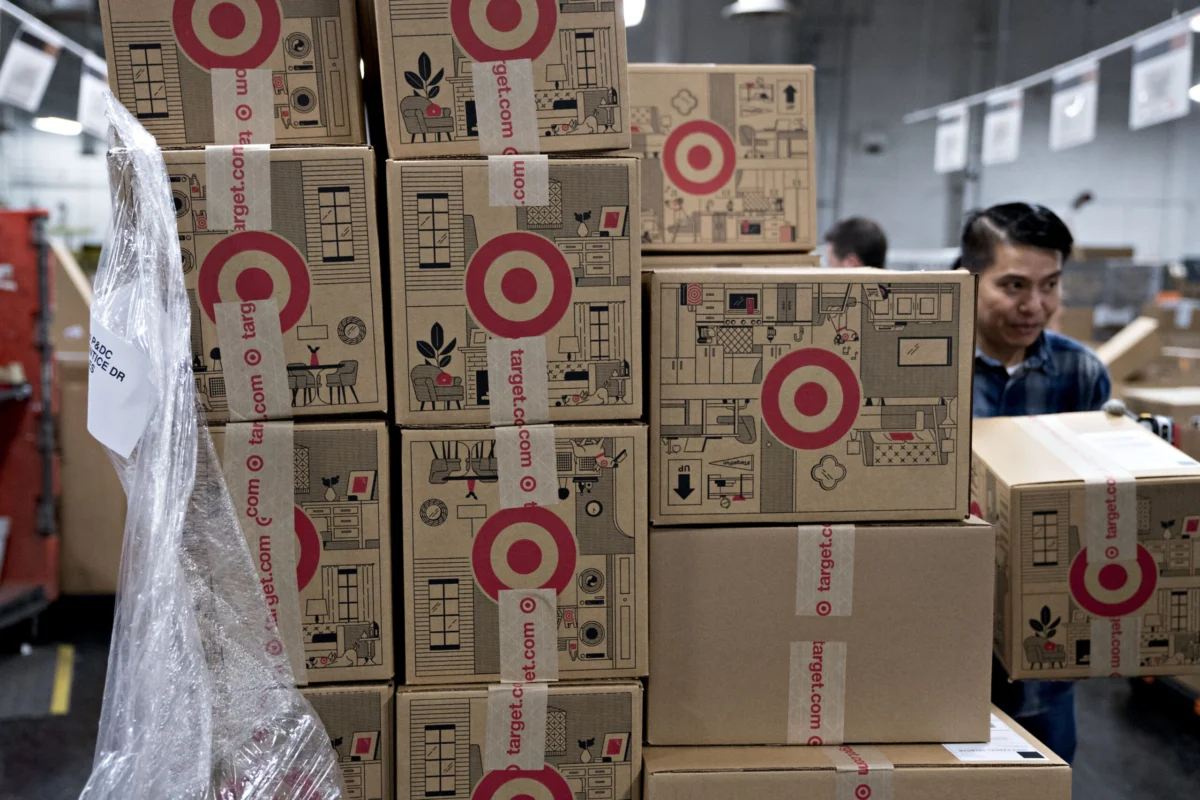
The proliferation of online shopping has fundamentally reshaped consumer habits and, consequently, the logistics of product delivery. The tangible evidence of this shift is visible in neighborhoods worldwide, where recycling bins overflow with cardboard. In many communities, the allocation of space for paper and cardboard recycling is perpetually insufficient, a direct consequence of nearly every online order arriving meticulously packaged in a box. This daily ritual underscores the indispensable nature of companies like PKG, which translate digital clicks into physical deliveries.
The Unseen Engine of E-commerce: Packaging’s Pivotal Role
The digital commerce revolution, far from diminishing the importance of physical goods, has amplified the demand for their secure and efficient transport. Every transaction executed through a mobile application, every expansive online shopping spree, and every intricate supply chain shipment culminates in a tangible product enclosed within a protective container. While technology platforms facilitate the order placement and processing, the actual fulfillment and delivery are inextricably linked to the ‘old economy’ industrials responsible for packaging. This symbiotic relationship highlights how foundational industries continue to underpin the most advanced digital ecosystems.
Global e-commerce sales have witnessed exponential growth over the past decade, a trend accelerated by recent global events. According to projections, worldwide e-commerce sales are expected to exceed $7 trillion by 2026, representing a significant portion of total retail sales. This sustained growth directly translates into a surging demand for packaging materials, particularly corrugated cardboard, which is favored for its strength, versatility, and recyclability. The shift from traditional brick-and-mortar retail to direct-to-consumer (DTC) models has further intensified this demand, as individual packages replace bulk shipments to retail stores. Packaging companies, therefore, are not merely suppliers but critical enablers of the vast e-commerce infrastructure, serving as the connective tissue between online storefronts and consumers’ doorsteps.
Packaging Corp of America: A Century of Industrial Strength Meets Digital Demand
Packaging Corp of America’s journey began over a century ago, establishing itself as a stalwart in the industrial sector. Headquartered in Lake Forest, Illinois, PKG has evolved into one of the largest producers of containerboard and corrugated packaging products in North America. Its primary products, corrugated boxes and containerboard, form the backbone of countless supply chains. Containerboard is the raw material from which corrugated packaging is made, encompassing linerboard (the flat outer layers) and corrugating medium (the fluted inner layer). The manufacturing process involves sourcing wood fiber, converting it into pulp, then into large rolls of paperboard, which are subsequently corrugated and converted into boxes.
PKG’s operational footprint spans numerous mills and corrugated products plants across the United States. This extensive network enables it to serve a diverse customer base across various industries, including food and beverages, industrial goods, chemicals, and consumer products. The company’s strategic adaptation to the modern retail environment has been pivotal. Rather than being a relic, PKG has become an indispensable cog in the digital economy’s machinery, constantly optimizing its production processes, logistics, and product offerings to meet the dynamic demands of e-commerce. This includes designing custom packaging solutions that balance protection, cost-efficiency, and increasingly, sustainability considerations.
The company distinguishes itself through its integrated business model, which encompasses timberland management, pulp and paper manufacturing, and converting operations. This vertical integration allows for greater control over the supply chain, enhancing efficiency and cost management. While facing competition from industry giants like International Paper, WestRock, and Smurfit Kappa, PKG has maintained a strong market position through operational excellence, strategic capital investments, and a focus on customer service.
Robust Financials Underpinning Growth and Shareholder Returns
Packaging Corp of America’s recent financial performance underscores its resilience and strategic positioning. For the year 2026, the company’s stock has seen a relatively modest, yet stable, increase of 9% year-to-date. This performance, while not explosive, reflects a steady appreciation in value, particularly notable in what has been described as a "choppy, sideways macro environment." In comparison to broader market indices, which have experienced significant volatility, PKG’s consistent upward trajectory signals underlying strength and investor confidence.
A significant indicator of management’s optimism and the company’s robust financial health is the recent announcement of a 20% boost to its annual dividend, raising it to $6.00 per share. This translates to a quarterly payout of $1.50 per share. For investors, a dividend increase of this magnitude is a strong signal of sustainable earnings and a commitment to returning capital to shareholders. Based on the stock trading around $225, this increased dividend translates into an annual yield of approximately 2.67% ($6.00 / $225), which is considered a solid yield in the current market landscape, especially for an industrial company. This yield provides a tangible income stream, making PKG attractive to income-focused investors.
Furthermore, the consensus among financial analysts projects Packaging Corp of America to achieve adjusted earnings per share (EPS) of $12.30 in the upcoming year, representing an impressive year-over-year growth of approximately 18%. This growth is anticipated to be driven by several factors, including sustained demand from the e-commerce sector, strategic pricing adjustments, and ongoing operational efficiencies across its manufacturing facilities. Analysts from firms such as Jefferies, RBC Capital Markets, and BMO Capital Markets have generally maintained ‘Outperform’ or ‘Hold’ ratings, often citing the company’s stable cash flows, disciplined capital allocation, and strong market position as key strengths. Their price targets typically range from $240 to $270, indicating potential upside from the current trading levels.
In terms of valuation, at a stock price of $225 and projected EPS of $12.30, PKG trades at a forward P/E ratio of approximately 18.3. This valuation is generally in line with or slightly below the industry average for packaging and paper companies, suggesting that the stock is not excessively priced, especially considering its growth prospects and dividend payout. The company’s consistent free cash flow generation also supports its ability to fund dividends, share buybacks, and strategic investments, further bolstering its appeal to long-term investors.
Enhancing Returns with a Strategic Buy-Write Options Strategy
In a market characterized by uncertainty and sideways movements, simply holding a stock and collecting its dividend, however attractive, may not fully capitalize on its potential. This is where a strategic options overlay, specifically a buy-write strategy (also known as a covered call), can significantly enhance returns and provide an immediate income boost. The buy-write strategy involves purchasing shares of a stock and simultaneously selling (writing) call options against those shares. The shares "cover" the potential obligation of the call option, hence the term "covered call."
For PKG, a company characterized by its stability, consistent performance, and robust dividend, a buy-write strategy presents a compelling opportunity to "supercharge this old-economy horse." The strategy aims to generate additional income from the options premium, effectively creating a "double distribution" or "double dividend" scenario – income from the stock’s quarterly dividend and income from the options premium.

Consider the proposed play:
- Buy 100 shares of Packaging Corp of America (PKG) at the current market price of approximately $225 per share. This represents a total equity investment of $22,500.
- Sell 1 contract of the July 2026 $250 Call option for $2.25 per share. Since one options contract typically controls 100 shares, this means collecting an immediate premium of $225 ($2.25 x 100 shares).
By executing this trade, an investor immediately pockets $2.25 per share in cash premium. This premium, received upfront, represents an immediate cash yield equal to roughly 1% of the stock price ($2.25 / $225) over a period of approximately six weeks (assuming the trade is initiated in late May/early June for a July expiration). This immediate cash injection is a key benefit, providing a buffer against minor price declines or simply augmenting overall portfolio income.
Let’s dissect the potential outcomes:
-
Scenario 1: PKG trades flat or moderately higher (below $250) by July expiration.
- In this most favorable scenario for the covered call writer, the call option expires worthless because the stock price does not reach the strike price of $250.
- The investor keeps the entire $2.25 per share premium.
- Crucially, the investor also receives the newly increased quarterly dividend of $1.50 per share, assuming the ex-dividend date falls within the holding period.
- Total income generated over this short period would be $3.75 per share ($1.50 dividend + $2.25 premium). This represents a substantial return on capital for a short-duration trade, significantly outperforming the dividend yield alone. The investor retains ownership of the 100 shares, allowing for the possibility of executing another covered call strategy for the next expiration cycle.
-
Scenario 2: PKG "blasts past" $250 by July expiration.
- If the market catches fire and PKG’s stock price rises significantly above the $250 strike price, the call option will be "in-the-money."
- The investor’s shares will likely be "called away," meaning they will be sold at the strike price of $250.
- Despite selling the shares, the investor still realizes a substantial profit:
- Capital gain from equity appreciation: $250 (strike price) – $225 (purchase price) = $25 per share.
- Options premium collected: $2.25 per share.
- Quarterly dividend received: $1.50 per share.
- Total gain per share: $25 (capital gain) + $2.25 (premium) + $1.50 (dividend) = $28.75.
- This translates to an impressive total return of approximately 12.78% ($28.75 / $225) in just a few weeks. While the investor’s upside participation is capped at the strike price, this strategy generates an excellent return in a short timeframe. As the original article suggests, if called away, the investor can then "recycle another options strategy" to potentially re-enter the name, perhaps by selling cash-secured put options to acquire shares at a lower price, or waiting for a dip and initiating another buy-write.
-
Scenario 3: PKG’s stock price declines.
- If the stock price falls, the call option will likely expire worthless, and the investor keeps the $2.25 premium.
- The premium acts as a small buffer, reducing the effective cost basis of the shares. For example, if the stock falls to $220, the net cost basis would be $225 – $2.25 = $222.75, resulting in a smaller loss than if no option had been sold.
- However, the primary risk of a covered call strategy is that it does not protect against significant downward movements in the stock price. If PKG were to experience a steep decline, the investor would incur losses on the underlying shares, partially offset by the premium.
For those new to options trading, the buy-write strategy is often recommended as an excellent introductory strategy due to its relatively straightforward mechanics and defined risk profile (the risk on the stock is the same as owning the stock outright, while the option portion caps upside but provides income). It allows investors to generate consistent income from stable stocks, especially during periods of moderate market growth or consolidation.
Broader Industry Trends and Future Outlook for Packaging
The packaging industry, far from being static, is continuously evolving, driven by powerful secular trends that directly impact companies like PKG.
Sustainability and Environmental Initiatives: One of the most significant trends is the escalating demand for sustainable packaging solutions. Consumers and regulators are increasingly pushing for materials that are recyclable, compostable, or made from recycled content. Corrugated cardboard, being highly recyclable and derived from renewable resources (trees), is well-positioned in this regard. PKG, like its peers, is investing in sustainable forestry practices, optimizing its manufacturing processes to reduce water and energy consumption, and increasing the use of recycled fiber in its products. The challenge lies in balancing environmental goals with performance and cost-effectiveness.
Technological Integration and Supply Chain Digitalization: The digital transformation of supply chains, hinted at in the original content’s image caption, is profoundly affecting packaging. This includes the adoption of IoT (Internet of Things) for real-time tracking of shipments, AI and machine learning for optimizing logistics and inventory management, and advanced analytics for demand forecasting. For packaging companies, this translates into designing "smarter" boxes that might incorporate RFID tags or sensors, and streamlining their own production and delivery schedules to align with increasingly agile supply chains. Automation in packaging lines is also becoming critical to improve efficiency and reduce labor costs.
Economic Resilience and the Essential Nature of Packaging: Packaging materials are essential for almost every industry, making the sector relatively resilient to economic downturns compared to more discretionary sectors. Even during recessions, essential goods like food, beverages, and pharmaceuticals still require packaging. Furthermore, the "Amazon effect" has cemented e-commerce as a fundamental part of consumer life, ensuring a baseline demand for packaging regardless of broader economic fluctuations. This essential nature provides a degree of defensive characteristic to companies like PKG.
Competitive Dynamics and Innovation: The competitive landscape is dynamic, with continuous innovation in materials and design. This includes lightweighting efforts to reduce material usage and shipping costs, advancements in moisture and temperature-resistant coatings, and the exploration of new bio-based materials. PKG must constantly innovate to maintain its competitive edge, offering tailored solutions that meet specific customer needs while keeping an eye on emerging threats and opportunities from alternative packaging formats.
Expert Commentary and Market Sentiment
Inferred statements from company leadership often reflect confidence in their strategic direction. A CEO or CFO of Packaging Corp of America might articulate, "The recent dividend increase is a testament to our robust operational performance, disciplined capital management, and our unwavering confidence in the long-term demand for our products, particularly given the secular tailwinds from e-commerce growth. We are committed to creating shareholder value through both consistent earnings growth and attractive capital returns."
Analyst perspectives consistently highlight PKG’s stability. An analyst might comment, "Packaging Corp of America represents a compelling blend of industrial stability and modern relevance. Its consistent cash flow generation, coupled with a proactive approach to shareholder returns via dividends, positions it as an attractive core holding. For investors seeking enhanced income and moderate capital appreciation in a volatile market, especially those willing to employ strategic options like covered calls, PKG offers a unique opportunity to generate alpha."
Overall market sentiment towards "old economy" industrials with a strong link to contemporary trends is generally positive, especially among value and income investors. In an environment where technology stocks often dominate headlines, the foundational sectors that quietly power the economy are increasingly recognized for their dependable performance and income-generating potential, making them appealing components of diversified portfolios. The ability to leverage these stocks with options strategies only amplifies their attractiveness.
