

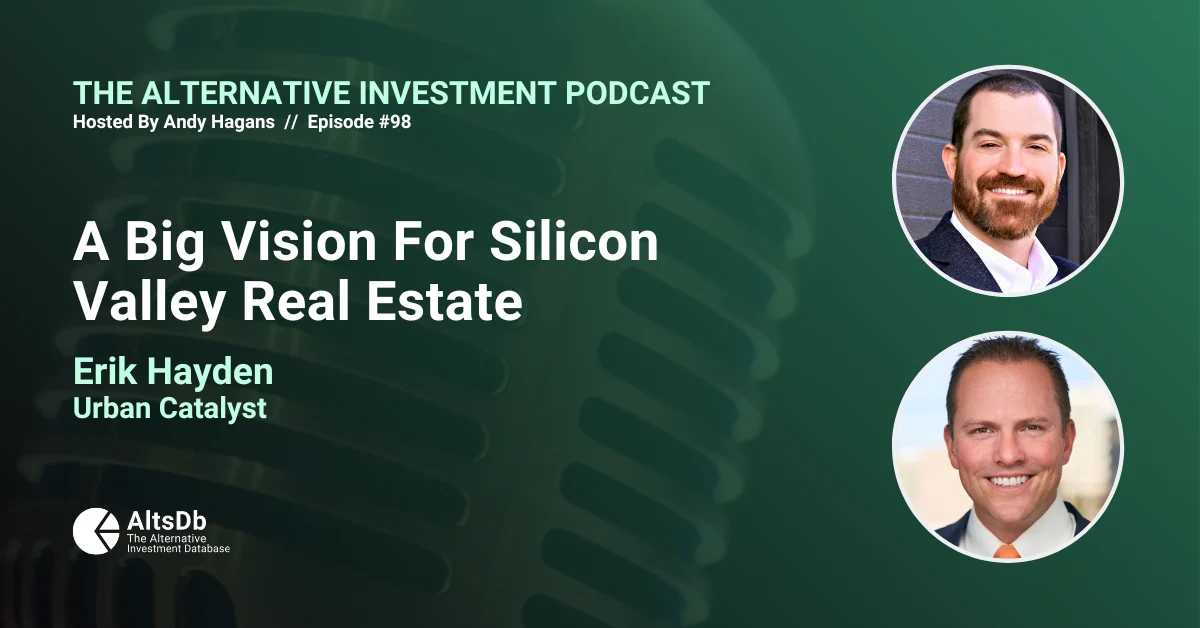
The narrative surrounding California real estate often leans towards "doom and gloom," but for those looking beyond the headlines, Silicon Valley presents a compelling landscape poised for sustained growth. Erik Hayden, founder of Urban Catalyst and recognized as one of Silicon Valley’s 100 most powerful individuals, recently shared his insights on how this dynamic region can foster generational wealth for long-term real estate investors. In a discussion on The Alternative Investment Podcast with host Andy Hagans, Hayden detailed the strategic vision and execution behind Urban Catalyst’s approach to development and investment in the heart of the tech world.
Urban Catalyst’s Foundation and Vision
Urban Catalyst operates as a real estate equity fund with a deep expertise in both acquiring existing assets and undertaking ground-up development and rehabilitation projects. Hayden, who founded the company in 2018, brought extensive experience in ground-up development, particularly within Silicon Valley and the broader San Francisco Bay Area. His decision to establish Urban Catalyst was driven by a keen observation of the burgeoning development potential in downtown San Jose.
"When I started Urban Catalyst, I was the president of a development company doing a big project up in Oakland," Hayden explained. "I also, on the side, had my own business doing some consulting work with other development companies, and decided that I wanted to do more. Ground-up development, you know, with the type of returns that are associated with it, and really the real estate market in Silicon Valley, has always made a lot of sense to me."
The catalyst for Urban Catalyst’s focus on San Jose was the observable migration of tech companies southward from established hubs like Palo Alto, Menlo Park, and Mountain View. As these smaller cities reached build-out capacity, San Jose emerged as the next logical expansion point. Hayden noted that companies like Google, Apple, and Meta have since made significant land acquisitions and office developments in the city, validating this foresight.
"If Palo Alto, Menlo Park, and Mountain View are kind of the center of the tech universe, they’re not really very big cities," Hayden elaborated. "So we’ve seen a lot of expansion. … In between the city of Sunnyvale, development went gangbusters, for years, in Sunnyvale. Now the city’s almost completely built out. And when we saw that happen, it was, well, where’s the next logical place that these companies will continue to expand? And obviously, it’s downtown San Jose."
Leveraging Opportunity Zones and Strategic Marketing
A significant aspect of Urban Catalyst’s strategy involves the utilization of Opportunity Zones. While many perceive Opportunity Zones as the primary driver for investment decisions, Hayden emphasized that for Urban Catalyst, the focus was on identifying prime development locations, which coincidentally fell within these designated zones.
"We wanted to be in San Jose, and San Jose was also an Opportunity Zone, and we became an Opportunity Zone fund, and it’s been working out pretty great for us," Hayden stated. "We wanted to be in San Jose, and San Jose was also an Opportunity Zone, and we became an Opportunity Zone fund, and it’s been working out pretty great for us." This approach allowed investors to benefit from both the inherent growth potential of Silicon Valley real estate and the tax advantages offered by the Opportunity Zone program.
The company’s fundraising strategy also set it apart. Unlike traditional methods relying heavily on broker-dealers and registered investment advisors, Urban Catalyst pioneered the use of digital marketing channels, including Google, LinkedIn, and Facebook, to directly engage individual investors. This innovative approach, leveraging the 506(c) exemption under SEC regulations, proved highly effective.
"In our first year, we raised $50 million, and we did it through a way that a lot of folks had never tried, which of course is digital marketing," Hayden recalled. "Using Google, LinkedIn, Facebook, all that stuff, to drive investors to our website, investors form fill, and then our investor relations team will call them and talk to them about their situations." This digital-first strategy not only generated significant capital but also built a robust brand presence, a critical component in the competitive alternative investment landscape.
Addressing Misconceptions About California Real Estate
Hayden directly challenged the prevalent "doom and gloom" narrative surrounding California’s economy and real estate market. He highlighted the state’s economic might, noting that in 2021, California’s economy, if it were a country, would rank as the fourth largest globally, surpassing Germany. Silicon Valley, in particular, experienced a banner year in 2021, with more companies going public than at any point since the dot-com bubble and record levels of venture capital funding.
"The city of Menlo Park, which has 45,000 people, had more venture capital funding than the entire state of Texas," Hayden illustrated, underscoring the region’s economic dominance.
Regarding the perception of widespread population exodus from California, Hayden presented a nuanced view. While acknowledging that some residents have relocated, he pointed out that the state’s population has historically grown, with a slight dip in 2020-2021 being a minor anomaly. He emphasized the continuous influx of international immigrants drawn to California’s climate, economy, and quality of life.
"Our population has gone up for over 100 years straight," Hayden asserted. "We had, like, a little blip in 2020 and 2021, where we lost, like, less than half a percent of our population. And so far this year, we’re already back on track."
The Ground-Up Development Advantage
Urban Catalyst’s core competency lies in ground-up development, a process fraught with regulatory hurdles and construction complexities, particularly in California. Hayden stressed the importance of a holistic approach to design and construction, integrating architects and general contractors from the initial stages of a project.
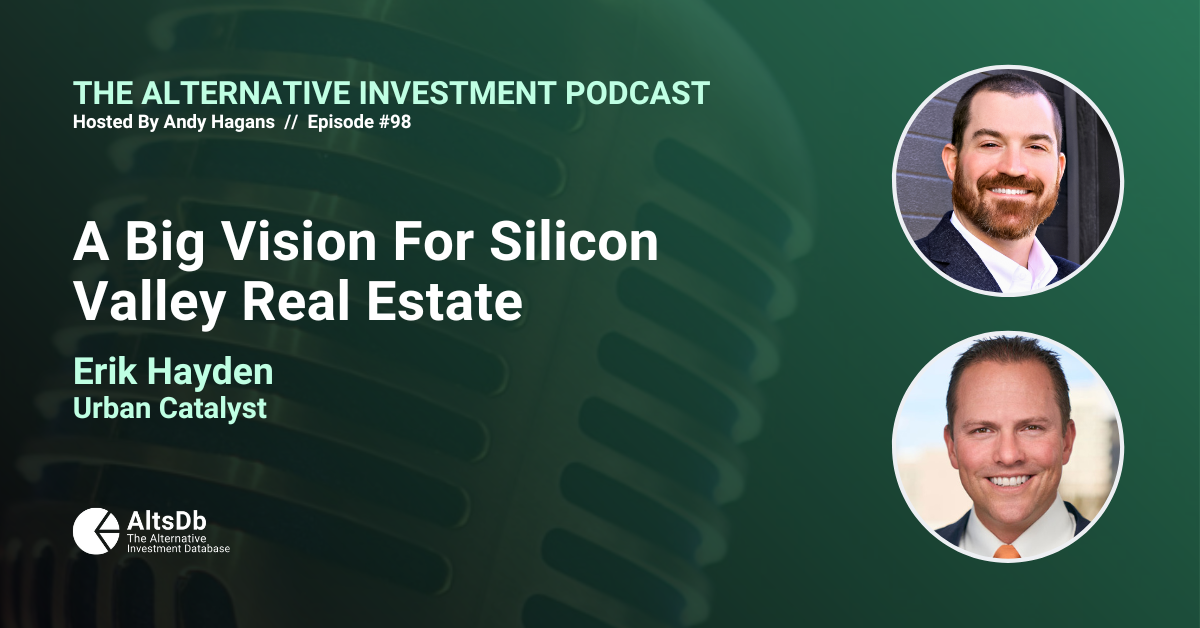
"My philosophy has always been, and is still to this day, when you start your project, you start that first design, you have your kickoff meeting, you have to grab your architect, and you gotta get your general contractor," Hayden explained. "They need to fight each other in that meeting. And what you end up with is a beautiful building, absolutely functional, but at the same time is cost-effective to build. And that’s our true value-add when it comes to development."
This meticulous planning is crucial in addressing the severe housing shortage in California. The state has created six jobs for every housing unit built over the past three decades, leading to a critical imbalance. Hayden highlighted San Jose’s status as the most expensive big city to live in the U.S., with median home prices reaching $1.6 to $1.7 million. This scarcity drives up construction costs, as a lack of affordable housing for construction workers limits the available labor pool.
Urban Catalyst’s Diversified Portfolio and Future Outlook
Urban Catalyst’s current offering, Opportunity Zone Fund II, encompasses four diverse projects in downtown San Jose: Echo (400 multi-family units), Icon (500,000 square feet of office space), Keystone Hotel (172 keys), and Gifford Place (senior living facility). The diversification across asset classes is a strategic move to mitigate market risks, particularly in the evolving office sector.
"When we started the fund, office was the hottest thing in the world. Now office has become, especially in the newspaper, not quite as popular," Hayden noted. "It’s nice to have a diversification of product types, just for this exact reason, right?"
The office project, Icon, is strategically located near Google’s massive "Downtown West" campus, a $19 billion, 10-year development project that will become Google’s largest campus globally. This proximity to a major tech employer is expected to generate significant synergy and demand for prime office space.
"It’s right next to the future BART station, just making it the epitome of transit-oriented development," Hayden said of the Icon project. "It’s on Santa Clara Street, which is kind of the main drag of the central business district here in downtown San Jose. And it’s about six [inaudible] blocks from Google’s future, we call it their mega campus."
Expanding Horizons with Delaware Statutory Trusts (DSTs)
Beyond its Opportunity Zone focus, Urban Catalyst is expanding its platform with Delaware Statutory Trusts (DSTs). The company recently launched its first DST, an industrial property in Dallas, Texas. This move represents a strategic diversification into a different asset class and geographic market, while maintaining the core strategy of tax-advantaged real estate investments.
"Delaware Statutory Trust, I mean, it fits right in our wheelhouse. Tax-advantaged real estate. That is what we do here at Urban Catalyst," Hayden explained. "We raise funds for tax-advantaged real estate. We raise funds for properties that we can control."
The chosen DST property in Dallas is a net-lease industrial asset with a 10-year lease and built-in 3% annual rent increases. This structure provides a stable income stream and a clear exit strategy for investors, aligning with Urban Catalyst’s emphasis on business plans rather than speculation.
"We wanted to go into a net lease environment, where we could have built-in rent increases into our leases," Hayden elaborated. "And so that’s what we found here with this property. We have a 10-year lease, 3% built-in rent increases, so that we can show, in a contract with a quality tenant, that 10 years from now, we will have a value that is similar to the value that we’re selling the DST for now."
The industrial sector in the Dallas-Fort Worth metroplex is experiencing robust growth, driven by population increases and its status as a major logistics hub. The specific property’s location between Dallas and Fort Worth, proximity to a major freight cargo airport, and historically strong rent growth in the submarket further solidify its investment appeal.
"It is. And, you know, it’s very interesting to us too, that we’re one of the only active Opportunity Zone funds here in Silicon Valley," Hayden concluded. "We have almost 800 investors between our two funds now, our two Opportunity Zone funds, and that’s kind of a testament to what we do here."
For advisors and high-net-worth investors seeking opportunities in dynamic markets, Urban Catalyst’s strategic approach to real estate development and investment, grounded in a vision for long-term growth, continues to present compelling prospects.
For more information about Urban Catalyst, visit urbancatalyst.com.
