

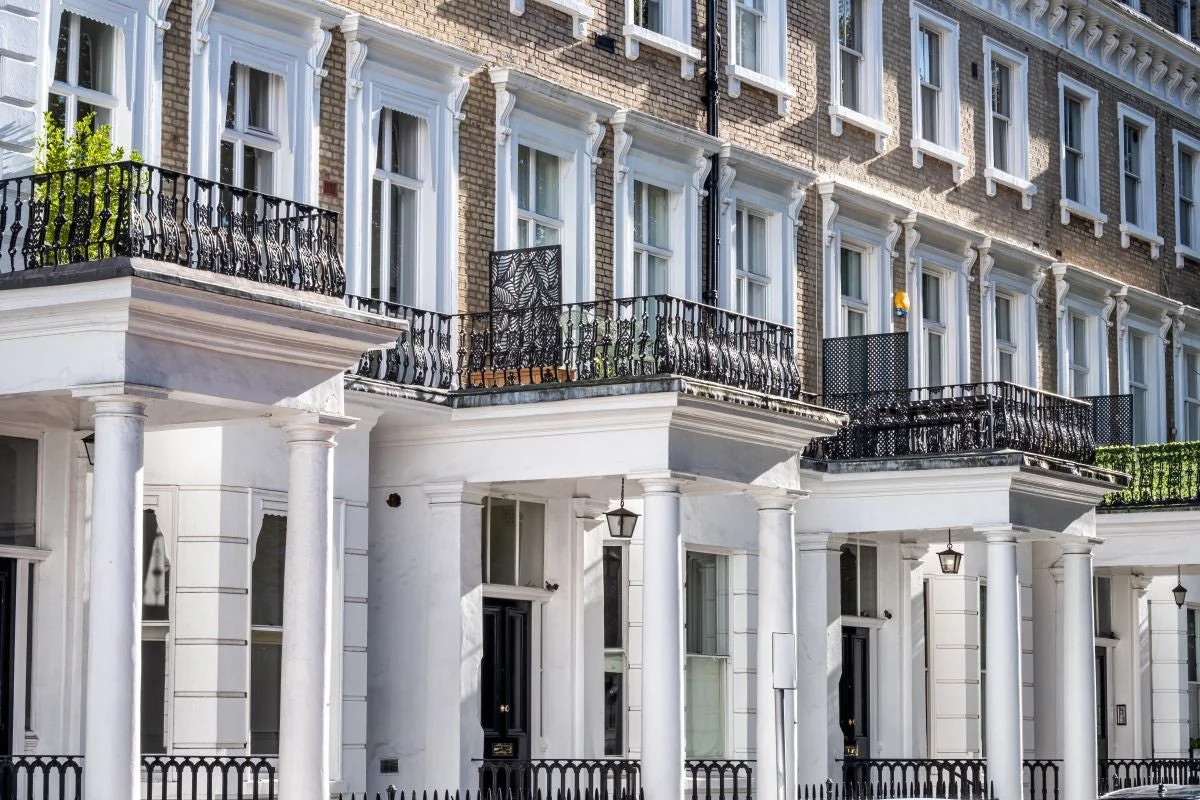
London’s coveted super-prime property market, typically a bastion of stability and wealth, has experienced a dramatic downturn, with sales figures in the first quarter of 2026 plummeting to their lowest point since before the COVID-19 pandemic. Data released by leading real estate consultancy Savills reveals a stark 54% decrease in transactions valued at £10 million and above when compared to the same period in the previous year. This sharp decline has been attributed by Savills to a palpable sense of caution among wealthy prospective buyers, largely influenced by escalating geopolitical tensions in the Middle East.
The report highlights that the super-prime segment of the London property market is particularly susceptible to shifts in the global economic and political landscape. The conflict in the Middle East, specifically the increased tensions stemming from Iran, appears to have acted as a significant catalyst, prompting a more reserved approach from international investors and high-net-worth individuals (HNWIs). This newfound hesitancy has translated directly into a sharp contraction in transactional activity, with the number of super-prime sales falling to levels not seen since the third quarter of 2019.
A Steep Decline in Transactional Volume
In the first quarter of 2026, only 16 properties in London sold for £10 million or more. This figure stands in stark contrast to the 35 such sales recorded in the first quarter of 2025, representing a significant contraction in market activity. To provide further historical context, the number of super-prime transactions in Q1 2026 is even lower than the 19 sales recorded in the second quarter of 2020, a period that was entirely encompassed by the initial COVID-19 lockdown, a time of unprecedented disruption.
The total value of super-prime properties transacted also reflects this downturn. In Q1 2025, the market saw £650 million worth of properties valued at £10 million and above change hands. By Q1 2026, this figure had fallen dramatically to £290 million, indicating a substantial decrease in both the volume of sales and the overall financial investment flowing into this elite sector of the London property market.
Geopolitical Tensions as a Primary Driver
Frances McDonald, Director of Residential Research at Savills, elaborated on the findings, stating, "Renewed caution has swept back into the super-prime London market following the start of the conflict in Iran. This segment of the market is most sensitive to periods of economic and geopolitical uncertainty, and, as a result, transactional activity fell more steeply across the remainder of the quarter." Her statement underscores the direct correlation between global instability and the behaviour of ultra-wealthy property investors, who often prioritize capital preservation and security in volatile times.
The implications of this caution extend beyond the immediate sales figures. For sellers, this represents a challenging market, potentially forcing them to adjust their pricing expectations. For buyers, however, it presents an opportune moment, with indications that prime properties are being sold at a discount compared to previous valuations.
The Broader Prime Market Also Affected
The impact of this cautious sentiment is not confined solely to the super-prime segment. Savills’ report also indicates a softening in the broader prime property market, defined by transactions between £5 million and £10 million. In the first quarter of 2026, there were 52 sales in this bracket, a notable decrease from the 69 transactions recorded in the corresponding period of 2025. Financially, this translates to £350 million worth of prime property sold in London in Q1 2026, a shortfall of £120 million compared to Q1 2025.
This ripple effect suggests that the broader concerns about global instability are influencing a wider spectrum of the high-end property market, not just the very top tier.
Underlying Factors: Tax Environment and Shifting Investor Priorities
While geopolitical events are cited as the immediate trigger for the current caution, the underlying tax environment in the UK is also playing a significant role in deterring some wealthy individuals from acquiring property in London. Lawyers have previously warned that UK property assets held offshore are increasingly at risk, a sentiment that may be contributing to investor reticence. This, coupled with global uncertainties, is leading some HNWIs to reassess their investment strategies.
Paradoxically, the reluctance of some to buy has inadvertently boosted the super-prime lettings market. For those relocating to the UK for shorter periods, or those adopting a more fluid investment approach due to the current climate, the availability of high-end rental properties has become more attractive.
Olivia McSweeney, a super-prime London letting specialist at Sotheby’s International Realty, confirmed this trend. "The demand is definitely there, but the supply is the challenge for us this year for super-prime lettings," she stated. This highlights a potential imbalance in the market, with strong demand for rentals but a constrained supply, possibly due to owners holding off on selling or converting properties for sale into long-term rentals.

A Buyer’s Market Emerges
Charlie Gibson, a property broker at OB Private, offered a perspective that acknowledges the challenges for sellers but highlights the advantages for buyers. "Prime property has been selling for discount on previous prices," Gibson observed. "Properties are still trading, albeit it is taking a longer time for sales to take place." This sentiment suggests that while the market is slower, those with the means and willingness to invest are finding opportunities to acquire prime London real estate at more favourable terms than in recent years.
The current market conditions represent a significant shift from the buoyant post-pandemic recovery that characterized London’s prime property sector in the preceding years. The combination of global geopolitical instability and domestic tax considerations has created a more complex and cautious environment for both buyers and sellers in the super-prime and prime segments of the market.
Historical Context and Future Outlook
The figures released by Savills paint a clear picture of a market recalibrating. The benchmark of Q3 2019, a period preceding the global pandemic and a time of different geopolitical considerations, now serves as a point of reference for the current low in super-prime sales. The brief surge in Q2 2020, despite the lockdown, may have been influenced by a unique confluence of factors, including a flight to perceived safe havens and a temporary lull in geopolitical anxieties as the world grappled with a new crisis.
Looking ahead, the trajectory of London’s super-prime property market will likely remain closely tied to the evolution of geopolitical events and the UK’s fiscal policies. Any significant de-escalation of tensions in the Middle East, or a shift in the UK’s tax landscape concerning property ownership, could potentially reignite buyer confidence. Conversely, a prolonged period of global instability or unfavorable tax reforms could see this cautious trend persist.

The data also suggests a potential divergence between the sales and lettings markets within the prime property sector. While sales volumes have contracted significantly, the demand for luxury rentals indicates a continued appetite for London as a global city, albeit expressed through different investment vehicles. This could lead to a more dynamic rental market, with potential opportunities for investors focused on generating income rather than capital appreciation in the short to medium term.
The analysis provided by Savills and industry professionals points to a market undergoing a period of adjustment. The resilience of London’s super-prime property market has been tested by external forces, leading to a significant slowdown in sales. However, the underlying desirability of London as a global hub for wealth and investment remains, suggesting that the current downturn may be a temporary recalibration rather than a fundamental shift in its long-term appeal, contingent on the resolution of external pressures and domestic policy considerations. The coming quarters will be crucial in determining whether this period of caution marks a brief pause or the beginning of a more sustained market adjustment.
