

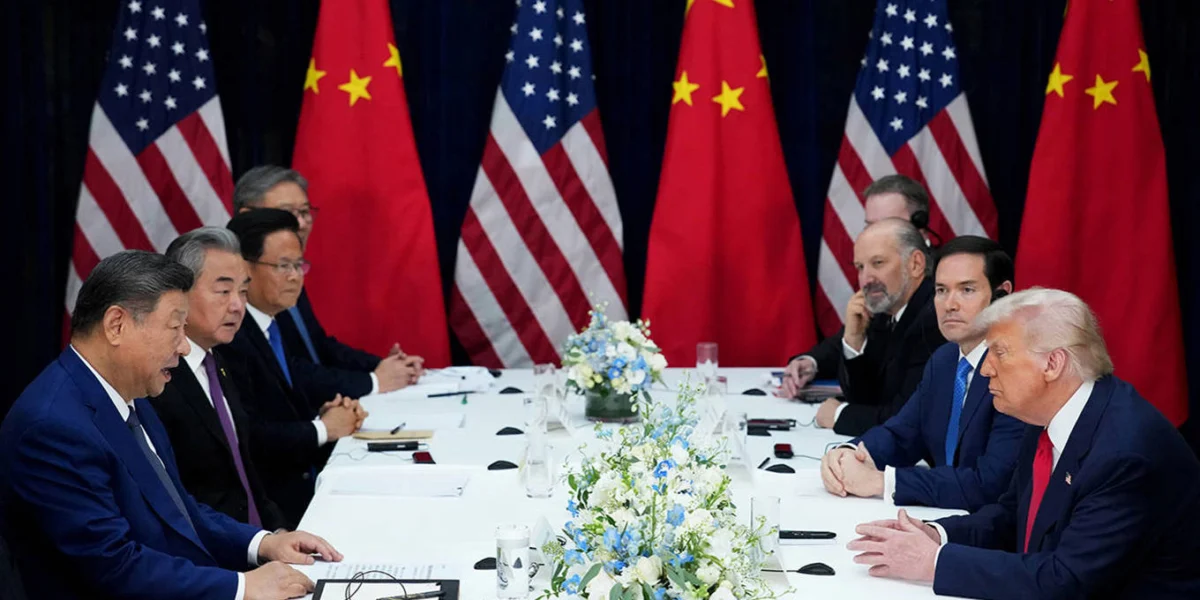
Chinese President Xi Jinping’s recent blunt warning to US President Donald Trump regarding Taiwan was a calculated move, designed to underscore the gravity of Beijing’s position on the self-governing island. However, by expanding the number of non-negotiable issues, Beijing risks constricting the already narrow channels for effective diplomacy and escalating the potential for accidental conflict between two global superpowers. The stark message, delivered during Trump’s summit in Beijing, highlights the enduring sensitivity of the Taiwan issue and its centrality to the complex and often fraught Sino-American relationship.
The Beijing Summit: A Direct Confrontation on Taiwan
During a high-stakes summit in Beijing on May 28, 2026, Chinese President Xi Jinping issued a direct and forceful warning to visiting US President Donald Trump concerning Taiwan. Sources close to the discussions report that Xi articulated a grim outlook, stating that mishandling the Taiwan issue could lead to China and the United States "colliding or even clashing," creating an "extremely dangerous situation." This statement, described as "tough" and "unmistakably clear," underscored Xi’s assertion that Taiwan remains the linchpin of Sino-American relations. The President emphasized that any perceived infringement on China’s sovereignty regarding Taiwan would not be tolerated and would carry severe consequences.
This direct engagement between the leaders of the world’s two largest economies was seen as a critical juncture. While previous administrations have navigated the delicate Taiwan Strait issue through carefully calibrated diplomatic language and strategic ambiguity, Xi’s direct ultimatum to Trump signaled a departure from such nuanced approaches. The warning was not presented as a negotiation point but as a definitive red line, a non-negotiable position that China would defend with all necessary means.
Background: The Enduring Taiwan Question
The issue of Taiwan’s political status has been a persistent source of tension in Sino-American relations since the end of the Chinese Civil War in 1949. The Republic of China (ROC), now governing Taiwan, retreated to the island after losing the mainland to the Communist Party of China (CPC). Beijing views Taiwan as a renegade province that must be reunified with the mainland, by force if necessary. The United States, while acknowledging Beijing’s "one China" principle, maintains unofficial relations with Taiwan and is committed to its self-defense under the Taiwan Relations Act.
This delicate balance has been maintained through decades of careful diplomacy, with both sides understanding the catastrophic potential of a direct military confrontation. The US, for instance, has historically maintained a policy of "strategic ambiguity" regarding its response to a Chinese invasion, neither confirming nor denying whether it would intervene militarily. This ambiguity was intended to deter both a Chinese invasion and a Taiwanese declaration of independence.
However, in recent years, there have been increasing signals from Beijing of impatience and a growing willingness to assert its claims more forcefully. This has been accompanied by a significant military buildup and more assertive rhetoric from Chinese officials. Conversely, under the Trump administration, there have been instances of increased US support for Taiwan, including arms sales and high-profile visits, which Beijing has viewed as provocations.
Chronology of Escalating Tensions
The exchange between Xi and Trump is not an isolated incident but rather a culmination of evolving dynamics.
- 1979: The United States officially recognized the People’s Republic of China (PRC) and severed diplomatic ties with the ROC, shifting its policy towards a "one China" policy.
- 1979: The US Congress passed the Taiwan Relations Act, committing the US to providing Taiwan with the means to defend itself.
- Late 2010s – Early 2020s: Increasing military exercises by the People’s Liberation Army (PLA) in the vicinity of Taiwan, including incursions into Taiwan’s Air Defense Identification Zone (ADIZ).
- 2022-2023: Heightened rhetoric from Beijing regarding reunification, coupled with increased international scrutiny of China’s intentions towards Taiwan.
- 2024: Escalating trade tensions and geopolitical competition between the US and China, creating a broader backdrop of mistrust and rivalry.
- May 2026: The summit in Beijing where President Xi Jinping delivers his direct warning to President Donald Trump on Taiwan.
Data Points: The Military and Economic Stakes
The implications of a potential conflict over Taiwan are immense, encompassing military, economic, and geopolitical dimensions.
Military Considerations:
- PLA Modernization: China has undertaken a massive military modernization program, significantly enhancing its naval, air, and missile capabilities. This includes the development of advanced aircraft carriers, stealth fighters, and hypersonic missiles, all of which are seen as crucial for projecting power into the Indo-Pacific and potentially challenging US dominance.
- Taiwan’s Defense: Taiwan, while significantly outmatched militarily by the mainland, has invested heavily in asymmetric warfare capabilities, aiming to make an invasion prohibitively costly for Beijing. This includes anti-ship missiles, mines, and advanced anti-air systems.
- US Military Presence: The US maintains a significant military presence in the Indo-Pacific, with a network of bases and alliances designed to deter aggression and respond to crises. However, the sheer proximity of Taiwan to the Chinese mainland presents a significant logistical challenge for any US intervention.
Economic Ramifications:
- Global Supply Chains: Taiwan is a critical hub for the global semiconductor industry, with companies like Taiwan Semiconductor Manufacturing Company (TSMC) producing the vast majority of the world’s most advanced chips. A conflict would cripple global supply chains, leading to widespread shortages and economic devastation.
- Global Trade: The Taiwan Strait is one of the world’s busiest shipping lanes, carrying trillions of dollars in goods annually. Disruption of this trade route would have cascading effects on the global economy.
- Economic Interdependence: Despite political tensions, the US and China remain deeply intertwined economically. A conflict would sever these ties, leading to profound economic consequences for both nations and the world.
Broader Implications: The Shifting Global Order
Xi Jinping’s direct warning to Trump signifies a potential inflection point in international relations. By framing Taiwan as a non-negotiable issue, China is signaling a willingness to escalate its assertive stance, potentially pushing the boundaries of what has been considered acceptable diplomatic practice.
Reduced Diplomatic Space:
The expansion of non-negotiable positions on key geopolitical issues inherently limits the room for maneuver in diplomatic negotiations. When core issues are declared off-limits, the primary tools for de-escalation—dialogue, compromise, and negotiation—become less effective. This can lead to a hardening of positions and an increased likelihood of miscalculation.
Increased Risk of Accidental Conflict:
In an environment where communication channels are strained and the stakes are perceived as existential, the risk of accidental conflict rises. Misunderstandings, unforeseen incidents, or a deliberate escalation by either side could rapidly spiral out of control, especially in the absence of robust crisis communication mechanisms.
The Future of US-China Relations:
Xi’s approach suggests a strategic shift towards a more confrontational posture, where China is less inclined to accommodate US interests or perceptions on issues it deems vital. This could lead to a more sustained period of tension and rivalry, impacting global security, economic stability, and international cooperation on issues like climate change and pandemics.
Regional Reactions:
Xi’s warning is also keenly observed by regional powers, including Japan, South Korea, and Australia, all of whom have significant stakes in maintaining peace and stability in the Indo-Pacific. The clear articulation of China’s red lines on Taiwan will likely prompt these nations to re-evaluate their own defense postures and diplomatic strategies in response to the evolving regional security landscape. Their reactions will be crucial in shaping the broader geopolitical response to China’s assertive foreign policy.
In conclusion, President Xi Jinping’s forceful declaration to President Trump regarding Taiwan represents a significant escalation in the rhetoric surrounding this contentious issue. While intended to convey Beijing’s unwavering resolve, it also underscores the precarious balance between asserting national interests and preserving the fragile peace. The coming months and years will be critical in determining whether this direct confrontation can be navigated through careful diplomacy, or if it pushes the world closer to a dangerous and destabilizing conflict. The global community watches with bated breath as the tightrope walk between diplomacy and danger continues.
