

Russia and China Deepen Energy Ties Amidst Global Instability with Power of Siberia 2 Pipeline on Agenda
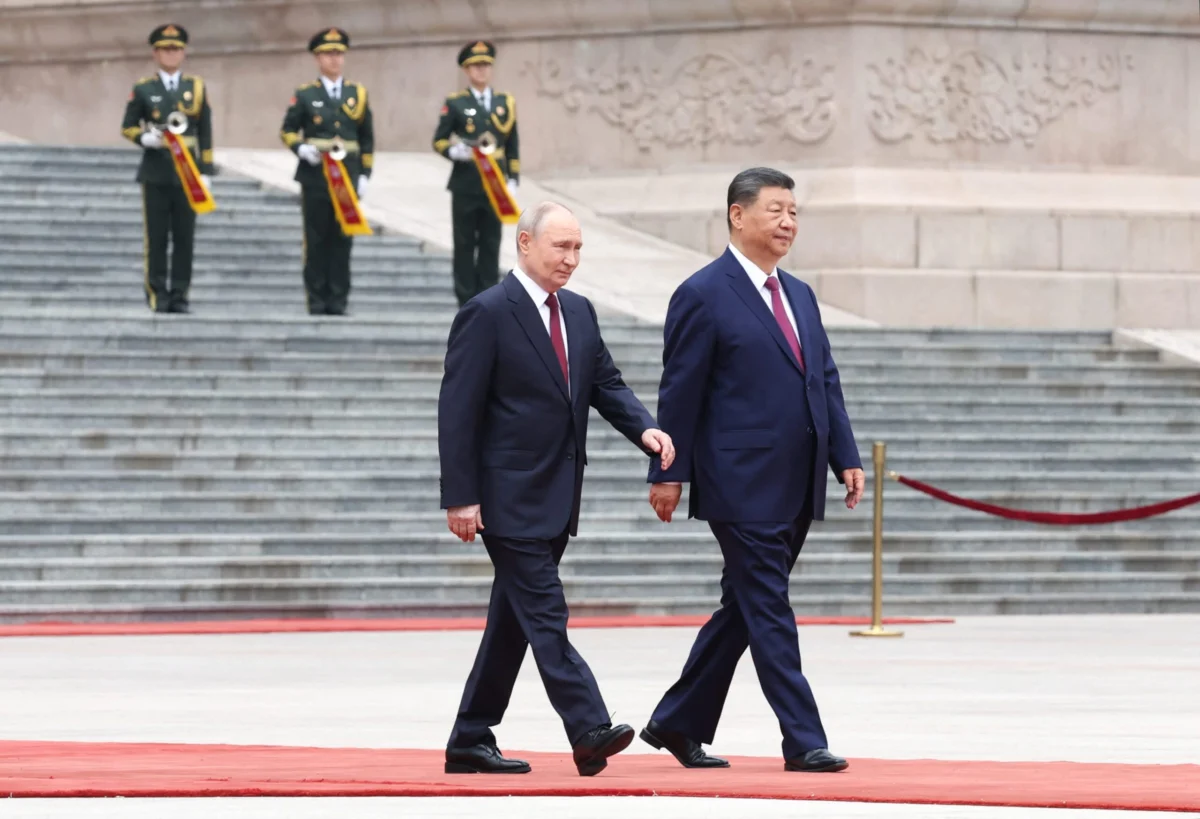
Russian President Vladimir Putin met with Chinese leader Xi Jinping in Beijing on Wednesday, with the long-stalled Power of Siberia 2 natural gas pipeline prominently on the agenda. The discussions, occurring amidst escalating global energy supply disruptions exacerbated by the ongoing U.S.-Iran war, underscore the deepening strategic energy partnership between the two nations. Kremlin foreign policy aide Yuri Ushakov confirmed that the project "will be discussed in great detail between the leaders," signaling its critical importance to both Moscow and Beijing.
The proposed Power of Siberia 2 pipeline, a monumental infrastructure project, is envisioned to span approximately 2,600 kilometers, traversing Russia, Mongolia, and terminating in China. Its ambitious capacity aims to deliver 50 billion cubic meters of natural gas annually from Russia’s vast Yamal fields directly to the burgeoning Chinese market. While a legally binding memorandum to advance construction was signed in September 2025, key commercial and logistical hurdles remain unresolved. Foremost among these are the pricing mechanisms, financing terms, and a definitive delivery timeline, which have proven to be significant sticking points in negotiations.
China has reportedly sought pricing terms for the new pipeline that align with Russia’s domestic rates, estimated to be around $120-130 per 1,000 cubic meters. This contrasts with Moscow’s aspiration for terms closer to those of the existing Power of Siberia 1 pipeline, a figure analysts suggest could more than double the per-unit cost for China. This divergence in pricing expectations highlights the delicate balance of power in the negotiations, with China leveraging its significant market size and Russia seeking to maximize revenue from its energy exports, particularly as its traditional European markets have contracted sharply.
China has solidified its position as a crucial buyer of Russian energy resources. Official customs data reveals a substantial 35% year-over-year increase in China’s imports of Russian oil during the first quarter of 2026. This trend underscores China’s growing reliance on Russian energy to fuel its economic engine and diversify its supply portfolio.
The Power of Siberia 2 project is designed to complement the existing Power of Siberia 1 system, which currently delivers approximately 38 billion cubic meters of natural gas to China annually. Both nations have previously agreed to further expand the capacity of this established pipeline, indicating a broader commitment to enhancing their bilateral energy trade infrastructure. The development of Power of Siberia 2 would represent a significant escalation of this commitment, creating a more robust and diversified energy corridor.
Joint Energy Projects and Strategic Alignment
During a joint press conference held on Wednesday, Russian President Vladimir Putin reiterated Russia’s readiness to sustain and expand its energy supplies to China. He emphasized the "big potential in joint renewable energy projects," signaling a forward-looking approach to bilateral cooperation that extends beyond fossil fuels. Putin stated, "Russia and China are actively cooperating in the energy sector. Our country is one of the largest exporters of oil, natural gas, including liquefied gas, and coal to China. We are, of course, ready to continue to reliably ensure uninterrupted supplies of all these fuels to the rapidly growing Chinese market," as reported by the Russian state news agency TASS.
The leaders also signed a joint statement solidifying their "comprehensive partnership" and advocating for a "multipolar world and a new type of international relations," according to Xinhua news agency. Putin characterized his discussions with Xi as "friendly, warm, and constructive," asserting that relations between the two states have reached an "unprecedented level."
While President Putin did not explicitly mention the Power of Siberia 2 pipeline during the press conference, Kremlin Press Secretary Dmitry Peskov later indicated that Russia and China had "reached an understanding on the project’s main parameters." However, Peskov cautioned that "some nuances remain to be ironed out," and there is no clear timeframe for the project’s commencement, as reported by RIA Novosti. This suggests that while a foundational agreement may have been reached, the intricate details that have previously stalled progress still require meticulous attention.
Key Considerations and Geopolitical Implications

The ongoing U.S.-Iran war, which intensified in late February 2026, has had a profound impact on global energy markets. The conflict has effectively led to the closure of the Strait of Hormuz, a critical maritime chokepoint that handles a substantial portion of global oil and gas transit. This disruption has significantly impacted China’s energy security, affecting approximately half of its oil imports and nearly a third of its liquefied natural gas (LNG) supply. This vulnerability underscores the strategic imperative for China to secure alternative and more resilient energy import routes, making overland pipelines like Power of Siberia 2 increasingly attractive.
Despite the heightened urgency stemming from maritime supply chain disruptions, analysts remain cautious about whether this will unilaterally shift Beijing’s negotiating position. China currently holds significant strategic reserves of crude oil, with approximately 1.23 billion barrels in onshore inventory, sufficient to sustain roughly 92 days of refining needs, according to Kpler senior oil analyst Muyu Xu. Furthermore, China’s domestic gas output has shown resilience, rising by 2.7% in the first four months of the year. Additionally, pipelines from Central Asian nations, independent of the Russian system, provide a supplementary source of gas supply. These factors suggest that while the U.S.-Iran conflict creates a compelling case for diversification, China retains considerable leverage in its negotiations with Russia.
The broader context of Russia’s energy exports reveals a significant pivot away from European markets. Following its 2022 invasion of Ukraine, Russia’s gas exports to Europe have collapsed. State-owned energy giant Gazprom reportedly saw its shipments to Europe plunge by 44% in 2025, reaching their lowest level in decades. This contraction in its traditional export markets has amplified Russia’s reliance on Asian markets, particularly China, to absorb its energy surplus.
The Power of Siberia 2 pipeline, by virtue of its immense scale, presents a potential strategic dilemma for both nations. For Russia, it risks creating an overdependence on a single major customer, potentially leaving Moscow economically vulnerable should geopolitical circumstances change. Conversely, for China, while bypassing maritime chokepoints offers enhanced security, it entails a growing reliance on energy supplies controlled by Russia, a nation increasingly isolated from Western markets.
Michael Feller, chief strategist at Geopolitical Strategy, articulated this complex interdependence: "A deal would signal not just trust, but a decision that co-dependency is safer than the alternative." He further noted that for the international community, such a deepened energy alliance would make "the Sino-Russian relationship harder to unpick." This suggests that a successful Power of Siberia 2 deal would not only solidify bilateral energy ties but also have broader implications for the global geopolitical landscape, potentially reshaping alliances and trade dynamics.
The existing Power of Siberia 1 system, operational since 2019, has served as a foundational element of the Russia-China energy partnership. This pipeline, originating from the Chayandinskoye field in Yakutia and connecting to the Kovyktinskoye field, delivers gas to northeastern China. In 2025, it transported approximately 38 billion cubic meters of gas, a figure that both countries have committed to increasing through capacity expansion efforts. The success and reliability of Power of Siberia 1 have paved the way for discussions about the larger, more ambitious Power of Siberia 2 project.
The economic rationale for Power of Siberia 2 is compelling for both parties. For Russia, it represents a vital avenue to monetize its vast Siberian gas reserves, particularly as it seeks to offset the loss of European markets. For China, it offers a stable, long-term supply of natural gas, crucial for meeting its growing energy demands, supporting its economic development, and facilitating its transition towards cleaner energy sources, thereby reducing reliance on more volatile seaborne imports.
However, the negotiations are intricate, involving not just price but also volume commitments, transit fees through Mongolia, and the specific financial instruments to fund such a colossal undertaking. Mongolia’s role as a transit country also adds another layer of complexity, requiring agreements on transit rights and revenue sharing.
The discussions between Putin and Xi are taking place against a backdrop of significant global energy market volatility. Beyond the U.S.-Iran conflict, the global transition towards renewable energy sources and the ongoing geopolitical realignments are creating a dynamic and often unpredictable energy landscape. In this environment, the strategic significance of the Power of Siberia 2 pipeline extends beyond mere commercial transaction; it represents a critical component of both nations’ long-term energy security strategies and their broader geopolitical positioning. The outcome of these negotiations will likely have far-reaching implications for energy markets, international relations, and the global pursuit of energy security.
