

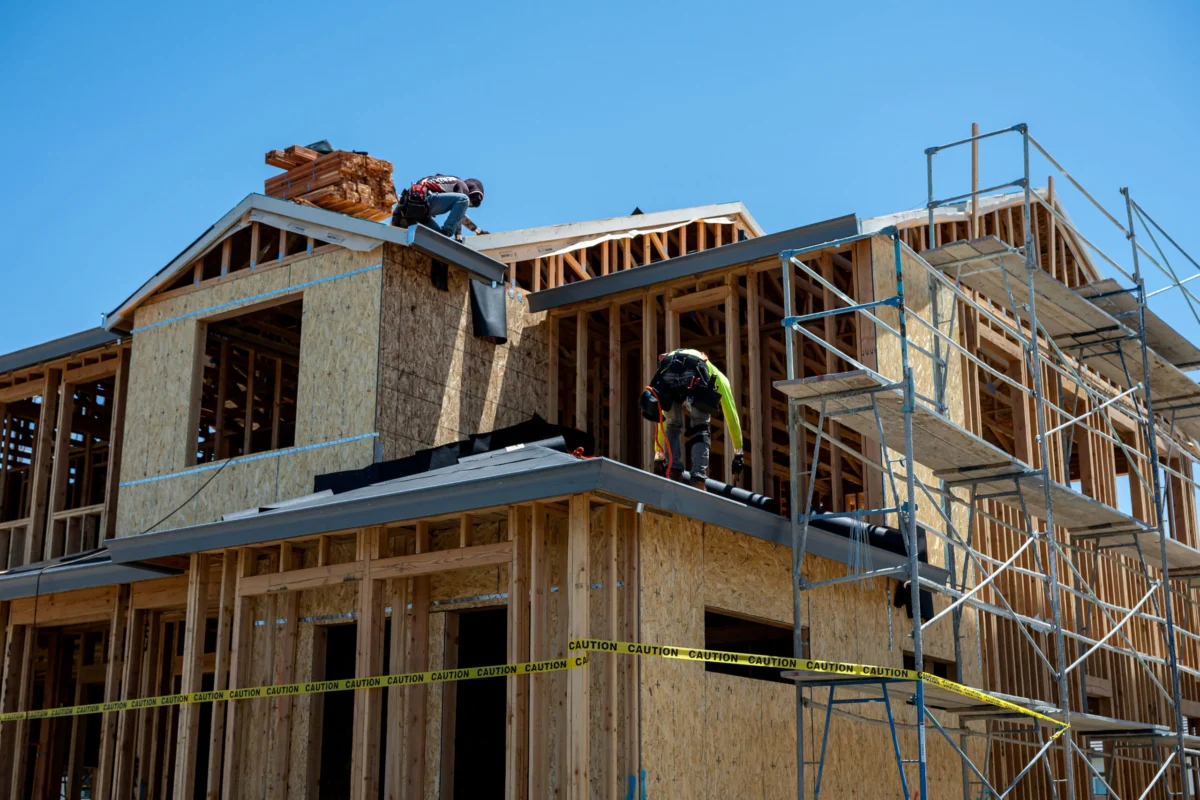
Despite a landscape still heavily influenced by elevated mortgage rates, persistent inflationary pressures, and broader economic uncertainties stemming from global geopolitical tensions, homebuilders in the United States are registering a slight uptick in their business outlook. This measured improvement, noted as a potential late spring surge in buyer interest, offers a glimmer of cautious optimism within a housing market that continues to grapple with significant headwinds for prospective homeowners.
Following a noticeable decline in April, the National Association of Home Builders (NAHB)/Wells Fargo Housing Market Index (HMI) for single-family homes recorded a three-point increase in May, reaching a readout of 37. This rise defied the expectations of many housing economists who had largely anticipated the index to hold steady month-over-month. However, it is crucial to contextualize this figure: any reading below 50 on the HMI indicates a prevailing negative sentiment among builders. The current level, while improved, still underscores that the majority of builders perceive market conditions as unfavorable. For comparison, the index stood at 34 in May of the previous year (2023), a period when average mortgage rates were hovering closer to 7%. While rates have seen fluctuations, they have been on an upward trajectory again in recent weeks, with the average rate on a 30-year fixed mortgage now reported at 6.65%, according to data from Mortgage News Daily.
Understanding the NAHB/Wells Fargo Housing Market Index
The NAHB/Wells Fargo Housing Market Index is a crucial barometer for the health of the U.S. residential construction sector. Compiled monthly from a survey of NAHB members, it gauges builder perceptions of current single-family home sales, prospective buyer traffic, and sales expectations for the next six months. The index is a composite of these three components, each of which is assigned a score. A reading above 50 signifies that more builders view conditions as good than poor, while a reading below 50 suggests the opposite. As a leading indicator, the HMI offers valuable insights into future housing starts and overall economic activity, given the significant role the housing sector plays in the broader economy. Its movements are closely watched by investors, policymakers, and industry analysts alike for clues about the direction of the housing market.
May’s Detailed HMI Components and Builder Actions
The May 2024 report revealed improvements across all three primary components of the HMI, each rising by three points from April. Current sales conditions climbed to 40, indicating a slightly better assessment of immediate purchasing activity. The measure for prospective buyer traffic, often seen as a bellwether for future sales, increased to 25, suggesting more potential buyers are visiting new home sites, even if conversions remain challenging. Future sales expectations, reflecting builders’ outlook for the next six months, saw the most significant optimism, rising to 45.
Further reinforcing this cautious optimism, the survey data also indicated a slight reduction in the proportion of builders resorting to price cuts to stimulate sales. In May, 32% of builders reported cutting prices, a decrease from 36% in April. This suggests that some builders might be experiencing stronger demand or feel less pressure to offer discounts, potentially due to reduced inventory in certain submarkets or a slight firming of buyer interest. However, the use of sales incentives, such as mortgage rate buydowns or free upgrades, remained prevalent, with 61% of builders offering them in May, a marginal increase from 60% in April. This sustained high level of incentives underscores that while demand may be showing signs of life, builders are still actively working to overcome affordability hurdles for buyers.
Persistent Headwinds: The Buyer’s Perspective

Despite the builders’ improved sentiment, the challenges facing potential homebuyers remain formidable. The primary deterrent continues to be elevated mortgage rates. After peaking near 8% in late 2023, rates saw a brief retreat but have since begun to climb again, pushing monthly housing costs beyond the reach of many households. For a median-priced home, a half-percentage point increase in mortgage rates can translate to hundreds of dollars added to a monthly payment, significantly impacting affordability, especially for first-time buyers.
Beyond interest rates, the broader economic environment contributes to buyer hesitation. Persistent inflation, although moderating from its peak, continues to erode purchasing power. Rising gas prices, mentioned explicitly in the initial analysis, directly impact household budgets, leaving less disposable income for large investments like a home down payment. Furthermore, geopolitical instability, particularly the generalized concerns about conflicts in key global regions, contributes to overall economic uncertainty, making consumers more conservative with major financial decisions. This confluence of factors creates a significant affordability crisis, where rising home prices (driven by limited inventory and construction costs) meet high borrowing costs and constrained household budgets.
Chronology of Sentiment: A Rollercoaster Ride
The housing market has experienced a dynamic trajectory over the past few years, directly impacting builder sentiment. During the pandemic-induced housing boom of 2020-2021, the HMI soared to unprecedented highs, often exceeding 80, as ultra-low interest rates and a sudden surge in remote work fueled demand for larger homes. This period saw rapid price appreciation and intense competition among buyers.
However, as the Federal Reserve began aggressively raising interest rates in early 2022 to combat surging inflation, the housing market quickly cooled. Builder sentiment plummeted throughout 2022, reaching a low of 31 in December of that year, marking one of the steepest and longest declines in the index’s history outside of major economic crises. This period was characterized by rapidly escalating mortgage rates, falling buyer traffic, and an increase in contract cancellations.
The early months of 2023 saw a modest recovery in sentiment as mortgage rates stabilized somewhat, and some pent-up demand began to emerge. Builders cautiously adapted to the new normal of higher rates, focusing on smaller, more affordable homes and offering incentives. Sentiment hovered in the low to mid-30s for much of the year. The slight dip in April 2024 before the May rebound can be attributed to renewed fears of higher-for-longer interest rates following stronger-than-expected inflation data early in the second quarter, which suggested the Federal Reserve might delay rate cuts or even consider further hikes. The May rebound indicates a potential recalibration of these expectations or a realization of underlying demand strength in specific market segments.
Supply-Side Challenges and Regional Nuances
While demand-side factors like interest rates and affordability dominate headlines, homebuilders continue to grapple with a host of supply-side challenges. Labor shortages remain a persistent issue, impacting construction timelines and increasing wage costs. Although the prices of some building materials have moderated from their pandemic peaks, others, like concrete and specialized components, continue to see upward pressure. Regulatory burdens, including zoning restrictions and permitting delays, also add to the cost and time required to bring new homes to market. Furthermore, the availability of developed lots, particularly in desirable locations, is increasingly scarce and expensive, limiting builders’ ability to expand supply and address the long-standing housing deficit.
NAHB Chief Economist Robert Dietz highlighted that "Although some regional markets, including parts of the Midwest, are showing relative strength, the housing market continues to face significant affordability challenges." This statement underscores the heterogeneous nature of the U.S. housing market. Regions with stronger job growth, more affordable land, or less restrictive zoning, such as certain areas in the Midwest or Southeast, may experience better buyer traffic and sales compared to historically expensive coastal markets. These regional variations mean that a national HMI average, while informative, can mask diverse local conditions. Areas experiencing net migration inflows or a robust manufacturing sector, for example, might see sustained demand for new housing despite national economic headwinds.

Expert Commentary and Broader Implications
Beyond the immediate statistics, industry leaders and economists offer a nuanced perspective on the HMI’s implications. "The modest improvement in May’s sentiment is a testament to builders’ resilience and their ability to adapt to a volatile market," stated an NAHB spokesperson, reflecting on the findings. "However, we cannot overlook the fundamental affordability crisis. Until interest rates stabilize at more favorable levels and construction costs are better managed, the path to homeownership will remain steep for many."
An independent housing market analyst, commenting on the report, might add, "This uptick in builder sentiment, while positive, is more indicative of a market searching for equilibrium rather than a full-blown recovery. Builders are becoming more adept at navigating higher rates through incentives, but the ultimate constraint remains the purchasing power of the average American family. The decrease in price cuts, coupled with an increase in incentives, suggests a delicate balancing act where builders are trying to protect margins while still attracting rate-sensitive buyers."
The implications of this cautious optimism are multifaceted. For housing starts, a sustained improvement in sentiment could translate into more groundbreaking activities in the coming months, albeit likely at a moderate pace. This would be a welcome development for addressing the chronic undersupply of housing inventory that has plagued the market for years. For home prices, if builders are indeed cutting prices less frequently, it could signal a stabilization, or even modest appreciation, in new home values in certain markets, contrasting with the earlier trend of price adjustments. This would impact existing homeowners’ equity and the overall wealth effect.
Furthermore, the housing sector’s health has broader economic ramifications. Residential investment is a significant component of the Gross Domestic Product (GDP). A robust or even stable housing market can support economic growth, employment in construction and related industries, and consumer spending on home-related goods and services. Conversely, a struggling housing sector can act as a drag on the economy. The current environment, where builders are cautiously optimistic but buyers face significant hurdles, suggests a continued period of adjustment rather than explosive growth.
Outlook and Key Factors to Watch
Looking ahead, the trajectory of homebuilder sentiment and the broader housing market will largely depend on several critical factors. The most prominent is the future path of interest rates. Any sustained decline in the Federal Reserve’s benchmark rate, or a moderation in inflation that allows long-term bond yields (which influence mortgage rates) to fall, would significantly ease affordability pressures and likely boost buyer demand. Conversely, continued inflation or an unexpected hawkish shift by the Fed could quickly reverse any positive sentiment.
The job market also remains a crucial determinant. A strong and stable job market, with consistent wage growth, provides the financial bedrock for potential homebuyers. Any significant weakening in employment could further dampen demand. Finally, the ability of builders to manage construction costs and bring more affordable housing options to market will be vital in bridging the affordability gap and unlocking a broader segment of buyer demand.
As the housing market continues to navigate these complex dynamics, staying informed is key. For those tracking new and evolving opportunities in real estate, CNBC’s Property Play with Diana Olick offers weekly insights directly to your inbox. You can subscribe here to get access today. The current environment calls for vigilance and adaptability from both builders and prospective homebuyers as they seek to navigate an evolving landscape marked by both persistent challenges and nascent signs of recovery.
