

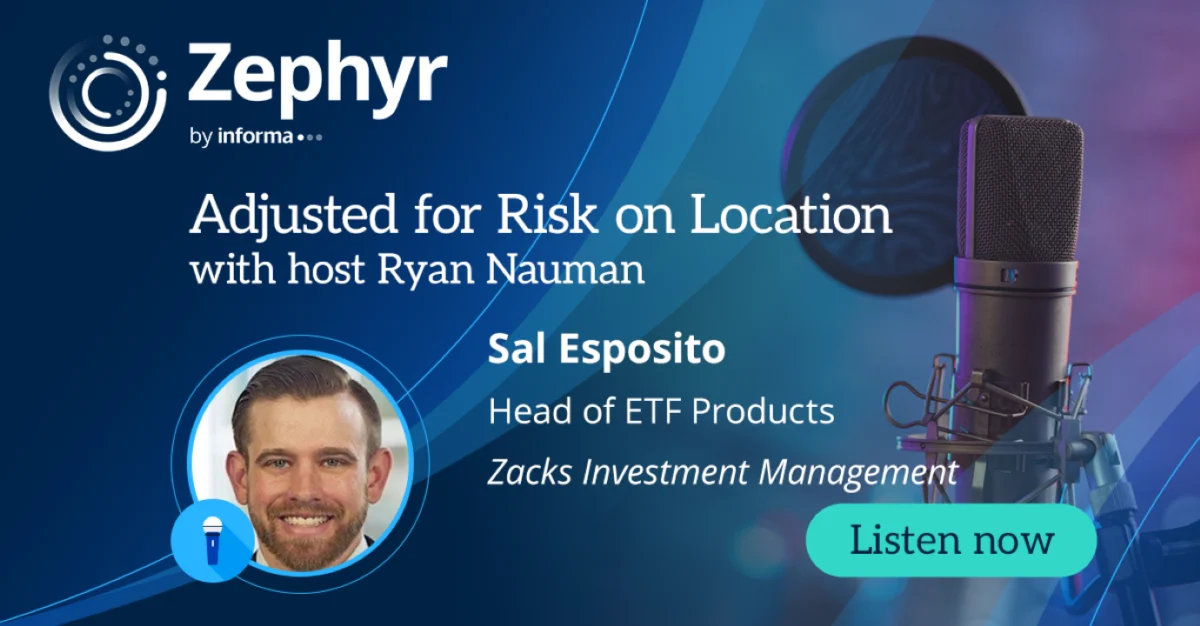
Las Vegas, NV – The bustling halls of the Exchange ETF Conference in Las Vegas, a pivotal gathering for financial professionals and ETF innovators, played host to a significant discussion on the evolving landscape of investment leadership. Ryan Nauman, host of the conference proceedings and a keen observer of market dynamics, welcomed Sal Esposito, Head of ETFs at Zacks Investment Management, to dissect a notable shift in investor sentiment. Esposito articulated a compelling argument for the return of fundamental analysis as the primary driver of market leadership, suggesting a recalibration away from the pervasive dominance of mega-cap technology and artificial intelligence (AI) driven narratives.
The conversation, recorded amidst the energetic backdrop of the conference, delved into Zacks Investment Management’s core investment philosophy. Esposito underscored the firm’s disciplined approach, which meticulously centers on three pillars: earnings performance, the trajectory of analyst estimate revisions, and the robustness of corporate balance sheets. This emphasis signals a strategic pivot, acknowledging that while the allure of groundbreaking technology like AI is undeniable, its long-term value proposition will ultimately be measured by tangible financial results.
Esposito pointed to 2026 as a critical juncture, a "prove it" year for the AI sector. This designation implies that investors, having initially embraced the transformative potential of AI, will increasingly scrutinize companies for demonstrable earnings growth and sustainable business models. The era of speculative investment based solely on future promises is expected to give way to a demand for concrete evidence of profitability and operational success. This sentiment resonates across the broader financial ecosystem, where the rapid ascent of tech giants, fueled in part by AI advancements, has previously overshadowed traditional valuation metrics.
The Exchange ETF Conference, held annually, serves as a crucial platform for industry leaders to share insights, announce new products, and debate prevailing market trends. This year’s event, held at a time of heightened economic uncertainty and evolving monetary policy, provided a fertile ground for discussions on strategic investment approaches. The conference typically draws thousands of asset managers, financial advisors, and industry analysts, making it a barometer for sentiment and innovation within the exchange-traded fund industry.
Zacks’ Fundamental Framework: A Disciplined Approach to ETF Investing
Sal Esposito elaborated on how Zacks Investment Management integrates its proprietary Zacks Indicator model into its diverse range of ETF products. This model, a sophisticated tool designed to identify companies with strong earnings potential and positive earnings momentum, acts as a compass for the firm’s investment decisions. By focusing on earnings growth, upward revisions in analyst estimates, and healthy balance sheets, Zacks aims to navigate market volatility and identify companies poised for sustained value creation.
"We believe that at the core of any successful investment strategy, especially in periods of market recalibration, is a deep understanding of a company’s financial health and its ability to generate consistent earnings," Esposito stated during the discussion. "The AI narrative has been incredibly powerful, and rightfully so, given its potential. However, as we move forward, the market will demand proof. It will demand to see how these technological advancements translate into bottom-line results."
The "prove it" year concept for AI is not an indictment of the technology’s potential but rather a reflection of market maturity. Investors, having witnessed significant price appreciation in AI-related stocks, are now seeking confirmation of these valuations through financial performance. This often involves analyzing key metrics such as revenue growth from AI-powered products and services, improvements in operating margins, and the development of recurring revenue streams directly attributable to AI investments.
The Value Proposition of Active Management in Niche Markets
Beyond the mega-cap tech space, Esposito also addressed the enduring relevance of active management, particularly within smaller and mid-capitalization companies, as well as in international equity markets. He argued that in these less efficiently priced segments, skilled active managers can indeed add significant alpha by identifying mispriced securities and capitalizing on market inefficiencies that passive strategies might overlook.
"In the small and mid-cap space, information asymmetry can be more pronounced," Esposito explained. "There’s often less analyst coverage, and companies are at different stages of their growth cycle. This presents opportunities for active managers who can conduct deep fundamental research, engage with company management, and identify undervalued gems before the broader market catches on."
Similarly, for international equities, Esposito highlighted the complexities introduced by diverse economic conditions, varying regulatory environments, and distinct geopolitical landscapes. These factors can create pockets of opportunity and risk that require nuanced understanding and active selection. The ability to navigate currency fluctuations, understand local market dynamics, and identify companies with global competitive advantages is where active management can shine.
Geopolitical Uncertainty and Interest Rates: Shaping Market Breadth and International Performance
The conversation also touched upon the significant influence of macroeconomic factors on market behavior. Esposito noted that geopolitical uncertainty and evolving expectations surrounding interest rates are critical determinants of market breadth – the extent to which a broad range of stocks participate in market rallies. Periods of high uncertainty often lead to market concentration, where a few dominant sectors or companies carry the market, while broader participation wanes.
"When geopolitical risks escalate, investors tend to seek perceived safe havens, often leading to a flight to quality and a narrowing of market leadership," Esposito observed. "Similarly, interest rate expectations play a crucial role. Higher rates can impact the cost of capital for companies, influence consumer spending, and affect the attractiveness of different asset classes. These macro forces can significantly impact how broadly market gains are distributed and can particularly influence the performance of international markets, which often have unique sensitivities to global economic shifts."
The outlook for international equities, particularly in the context of 2026, was also discussed. Esposito suggested that while challenges persist, there are emerging opportunities. Factors such as demographic trends in certain regions, technological adoption, and evolving trade relationships could present compelling investment cases. However, the ability to capitalize on these opportunities will likely depend on a discerning approach that accounts for both the potential rewards and the inherent risks.
Zacks’ Expanding ETF Lineup: Addressing Investor Needs
Esposito provided an update on Zacks Investment Management’s growing ETF offerings, emphasizing their commitment to expanding access to diverse asset classes and strategic exposures. The firm’s focus on developing ETFs that align with its fundamental investment principles aims to provide investors with tools to implement sophisticated strategies. The mention of international exposure within their growing lineup suggests a strategic effort to address the global investment needs of their clients, particularly in light of the discussion on international market dynamics.
This expansion reflects a broader trend in the ETF industry, where providers are continuously innovating to meet the evolving demands of financial advisors and their clients. The increasing sophistication of ETF products, from thematic ETFs to actively managed ETFs, offers a wider array of choices for portfolio construction.
The Role of Zephyr in Advisor Decision-Making
The article also highlighted Zephyr, a platform designed to assist financial advisors in identifying optimal ETF strategies for their clients. By providing tools for manager screening and performance analysis, Zephyr aims to empower advisors with the information necessary to make informed decisions in an increasingly complex investment environment. This underscores the importance of robust analytical tools in navigating the vast ETF landscape and aligning investment choices with individual client objectives and risk profiles.
Understanding the Market’s Undercurrents: A Chronological Perspective
The discussion provided a chronological framework for understanding the shift in market leadership. The initial phase was characterized by the broad enthusiasm for technological innovation, particularly in AI, leading to significant outperformance by mega-cap tech stocks. This period, roughly from the late 2010s through the early 2020s, saw a "growth at all costs" mentality take hold.
As macroeconomic conditions began to shift, marked by rising inflation and subsequent interest rate hikes, the market began to recalibrate. This led to a period of increased scrutiny of valuations and a greater emphasis on profitability. The current phase, as described by Esposito, is one where investors are actively seeking evidence of fundamental strength, making 2026 a critical year for companies to demonstrate their ability to translate innovative technologies into sustainable earnings.
The implications of this shift are significant. For investors, it signals a potential move away from broad market indices heavily weighted towards a few mega-cap tech names. Instead, it suggests a greater opportunity for diversified portfolios that incorporate value-oriented strategies, small and mid-cap equities, and international markets where fundamental analysis can uncover hidden value.
Broader Market Impact and Implications
The reinforcement of fundamental investing principles has far-reaching implications for the financial markets. It suggests a potential for increased volatility in sectors that have previously relied heavily on narrative rather than demonstrable financial results. Conversely, companies with strong earnings, healthy balance sheets, and consistent dividend growth may see renewed investor interest.
For financial advisors, this shift necessitates a deeper dive into the fundamentals of the companies and ETFs they recommend. It emphasizes the need for due diligence beyond simple performance metrics and requires an understanding of the underlying drivers of earnings and cash flow.
The ongoing evolution of the ETF market, with a growing emphasis on active management and niche exposures, further supports this trend. As investors seek more tailored solutions, the demand for ETFs that employ sophisticated fundamental analysis will likely increase. The Exchange ETF Conference, by hosting such discussions, plays a vital role in shaping these evolving investment strategies and providing a platform for thought leadership.
The insights shared by Sal Esposito at the Exchange ETF Conference offer a valuable roadmap for navigating the current investment climate. By emphasizing a return to fundamental analysis, acknowledging the maturation of the AI narrative, and highlighting the enduring value of active management in specific market segments, Zacks Investment Management is positioning itself to guide investors through a period of significant market recalibration. The focus on earnings, analyst estimates, and balance sheets, coupled with a strategic approach to international and small/mid-cap equities, suggests a forward-looking strategy designed to achieve sustainable long-term growth for clients.
Connect with Ryan Nauman:
LinkedIn: https://www.linkedin.com/in/ryannauman1/
X: https://twitter.com/LkTahoeBadger
