

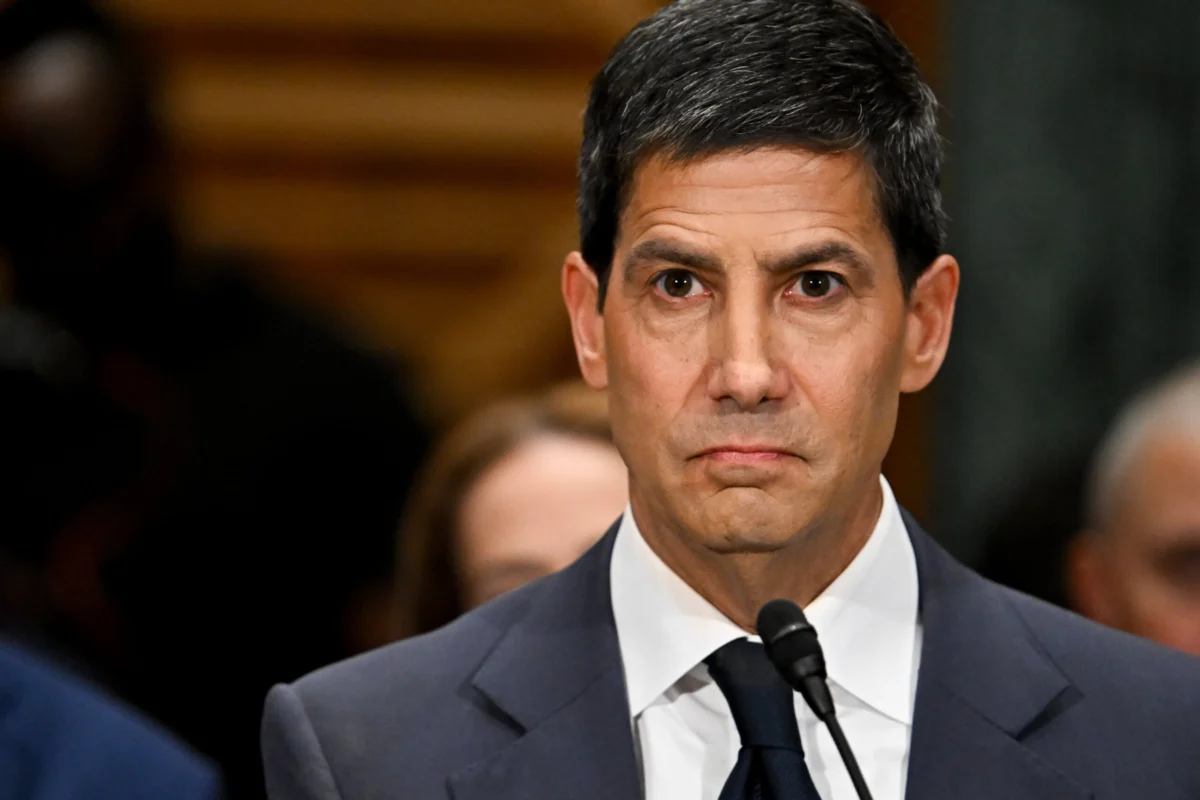
The nomination of Kevin Warsh to chair the Federal Reserve has triggered a profound debate within financial and political circles, centering on his unique and potentially radical reinterpretation of the central bank’s independence and its operational scope. Warsh, a former Fed governor and a nominee put forth by the Trump administration, has articulated a vision that seeks to strictly delineate the Fed’s monetary policy functions from what he terms "non-monetary matters," suggesting a new "Fed/Treasury accord" to govern the central bank’s expansive balance sheet. This perspective has raised concerns among former Fed officials, economists, and legal experts who fear it could fundamentally alter the institution’s autonomy and its ability to respond effectively to future financial crises.
Understanding the Pillars of Federal Reserve Independence
At its core, the Federal Reserve System, established in 1913, was designed to be independent of direct political influence, allowing it to make monetary policy decisions based on economic data rather than short-term political expediency. This independence is generally understood as crucial for maintaining price stability and maximum employment, the Fed’s dual mandate. The Fed achieves its objectives primarily through adjusting interest rates and managing its balance sheet, which expanded dramatically in response to the 2008 Great Financial Crisis (GFC) and the 2020 COVID-19 pandemic.
The Fed’s balance sheet consists primarily of assets like U.S. Treasury securities and agency mortgage-backed securities (MBS). Its expansion, known as Quantitative Easing (QE), involves buying these assets to inject liquidity into the financial system, lowering long-term interest rates and stimulating economic activity when the federal funds rate is near zero. Conversely, Quantitative Tightening (QT) involves reducing the balance sheet to withdraw liquidity. These actions are widely considered integral tools of modern monetary policy.
Currency swap lines, a specific financial instrument now at the center of this debate, represent another critical tool, particularly during times of global financial stress. These arrangements allow the Fed to exchange dollars with foreign central banks for an equivalent amount of their domestic currency. The primary purpose is to provide dollar liquidity to foreign financial systems, preventing or mitigating a scramble for dollars abroad that could destabilize global markets and, by extension, impact U.S. financial stability. Historically, these lines have been reserved for major, systemically important economies, such as those within the G-7, and have proven vital during periods like the GFC and the COVID-19 pandemic, when global dollar funding markets seized up. During the GFC, swap lines briefly added nearly $600 billion to the Fed’s balance sheet, representing about 25% of its total assets at the time. During the initial phase of the COVID-19 crisis, they peaked at approximately $450 billion, underscoring their scale and significance.
Kevin Warsh’s Vision for a Constrained Central Bank
Kevin Warsh’s philosophy, articulated during his April 21 confirmation hearing and in subsequent answers to senators’ questions, posits that while the Fed should remain "strictly independent" in setting monetary policy, it should be willing to collaborate with Congress and the executive branch on "non-monetary matters." He elaborated by stating that "Fed officials are not entitled to the same special deference in areas affecting international finance, among other matters." Furthermore, Warsh has frequently alluded to a new "Fed/Treasury accord" that he believes should govern the size and composition of the Fed’s balance sheet, though the specifics of this accord remain largely undefined.
This stance is not entirely new for Warsh. His skepticism about the Fed’s expanded role post-GFC is well-documented. He notably resigned from his position as a Fed governor in 2011, reportedly due to his objections to the central bank’s decision to maintain, and potentially expand, its balance sheet rather than initiate a reduction in the wake of the Great Recession. His past criticisms align with a broader sentiment among some conservatives who believe the Fed overstepped its traditional boundaries during periods of crisis, venturing into areas more appropriately handled by fiscal policy or other government agencies.
The Contested Terrain: Monetary Policy, International Finance, and the Balance Sheet
The ambiguity in Warsh’s distinction between monetary and non-monetary functions forms the crux of the controversy. Many former Fed officials interviewed for this article found his analysis "unclear or confusing at best" and "worrisome at worst." The critical question is where the line is drawn, and who draws it.
Currency swap lines serve as a prime example of this gray area. While Treasury Secretary Scott Bessent recently indicated that several countries in the Persian Gulf, including the United Arab Emirates, have requested swap lines, he did not clarify whether he expects the Fed to provide them or if Treasury would do so using its own funds, as it recently did for Argentina. The context of the UAE’s request is crucial: it comes amidst an ongoing "Iran war," a geopolitical situation that undoubtedly lends a political and strategic dimension to any financial support.
To former Fed officials, the notion that swap lines fall outside the purview of monetary policy is highly contentious. The Federal Open Market Committee (FOMC), the Fed’s principal monetary policy-making body, must approve these arrangements. Moreover, when drawn upon, swap lines directly expand the Fed’s balance sheet, increasing the supply of dollars in the global financial system – an undeniable monetary operation. The provision of dollars to foreign central banks is fundamentally about managing global dollar liquidity, which has direct implications for U.S. financial markets and the stability of the international monetary system. To suggest that such decisions are not within the Fed’s independent monetary policy domain challenges long-held conventions.

Voices of Concern: Erosion of Autonomy and Crisis Response
The potential implications of Warsh’s proposed changes have sparked significant concern among those with intimate knowledge of the Fed’s operations. Jeffrey Lacker, former Richmond Fed President, a long-time hawk on balance sheet policy, expressed a nuanced view. While he could welcome an accord that limits the Fed to buying only Treasuries, thus leaving "credit policy" (buying mortgages or corporate bonds) to the Treasury, he also cautioned against a "less constructive agreement that lets the Treasury use the Fed’s balance sheet to bypass Congress, perpetuating bad practices and compromising the Fed’s independence."
One former high-level Fed official, speaking anonymously, bluntly stated: "If followed to its logical conclusion, the Fed could lose control of its balance sheet." Another expressed a more pointed fear: "In the worst outcome, the Fed’s balance sheet becomes an arm of foreign aid." This concern is particularly salient regarding the UAE’s request. Unlike previous recipients of swap lines during crises, the UAE is a wealthy nation with substantial reserves and sovereign wealth funds, and there is currently no indication of a systemic dollar liquidity problem in the U.S. or global markets that would necessitate such a move on purely monetary grounds. Providing a swap line in this context could be perceived as a political gesture, granting the UAE an international financial cachet usually reserved for major developed economies, rather than a necessary financial stability measure. This raises questions about the political neutrality of such an action and whether it would effectively convert a monetary tool into a foreign policy instrument.
Furthermore, critics argue that limiting the Fed’s balance sheet tools could severely hamper its ability to respond to future crises. Former Boston Fed President Eric Rosengren highlighted this danger, noting that "the flexibility that monetary policy provides is hamstrung" if the Fed requires Treasury permission for asset purchases or faces restrictions on the types of assets it can acquire. Rosengren recalled that the Fed began purchasing mortgages during the GFC partly to avoid becoming an overly dominant player in certain segments of the Treasury market, illustrating the operational complexities involved in balance sheet management.
Former St. Louis Fed President Jim Bullard acknowledged the long-standing debate about the Fed’s asset purchases during crises, agreeing with critics that the Fed often loads up on assets but struggles to wind them down. However, he warned that some of Treasury Secretary Bessent’s comments about "intimate cooperation" between the Fed and Treasury "is usually associated with bad outcomes," alluding to historical instances where central bank subservience to fiscal authorities led to inflationary spirals or financial instability.
Treasury Secretary Bessent’s Alignment and Ambiguity
Treasury Secretary Scott Bessent has echoed some of Warsh’s criticisms of the Fed’s expanded balance sheet. He has famously likened the Fed’s growing balance sheet to a "dangerous lab experiment," calling it "gain of function" monetary policy. Bessent argues that this expansion increases the Fed’s footprint in the economy and grants it powers that should rightfully reside with the Treasury and the administration. "I think that, especially during the GFC, a lot of things moved from Treasury to the Fed that are political decisions that should be at Treasury," Bessent told CNBC. "So we’re in agreement on that."
However, even Bessent admitted to some uncertainty regarding the specifics of Warsh’s proposal, stating, "I’m not sure exactly what he means about the Treasury-Fed accord." This highlights the broader lack of clarity surrounding Warsh’s vision, leaving lawyers, economists, and Fed observers to parse his "cryptic comments." While Bessent and Warsh seem to share a philosophical alignment on reining in the Fed’s balance sheet and shifting certain functions to the Treasury, the practical implications and the precise mechanism of their proposed accord remain elusive.
Broader Implications for Markets and Governance
The prospect of a reconfigured Fed-Treasury relationship carries significant implications for financial markets and the broader governance framework. A perceived loss of central bank independence could spook bond markets, which rely on the Fed’s non-political decision-making to maintain confidence in the stability of government debt. If markets believe the Fed could be compelled to finance the deficit or allocate credit based on political preferences—actions it has already been accused of during its asset purchase programs—it could lead to higher borrowing costs and inflation expectations. JPMorgan’s chief U.S. economist Michael Feroli noted that "most Fed officials see balance sheet policy as just interest rate policy by other means when the short rate is constrained by being close to zero," underscoring the fundamental monetary nature of these operations.
It is important to note that the relationship between the Fed and Treasury is not entirely without points of collaboration. The Fed has long conceded that dollar policy, for instance, is primarily the purview of the Treasury. Moreover, in areas like bank supervision, the Fed often works in conjunction with other agencies headed by political appointees, leading to policy swings that align with the prevailing administration’s priorities. For example, under President Joe Biden, the Fed began to consider climate risk in its bank regulations, a focus that was subsequently de-emphasized when President Donald Trump won reelection, who instead pursued a path of reducing regulatory burdens on banks.
However, these areas of cooperation are distinct from direct political interference in monetary policy decisions, such as asset purchases or the deployment of liquidity tools like swap lines. While Warsh’s supporters might argue that shedding these "non-monetary" responsibilities would strengthen the Fed’s core independence in setting interest rates, critics contend that the interconnectedness of modern finance makes such clear-cut distinctions impractical and potentially dangerous. The other eleven members of the FOMC would also act as a crucial check on any rapid shifts in monetary policy or operational scope under a Warsh chairmanship, ensuring that significant changes would require broad consensus.
Ultimately, Kevin Warsh’s nomination and his articulated vision represent a potential inflection point for the Federal Reserve. His proposals challenge the conventional understanding of central bank independence, particularly concerning the expansive role the Fed has assumed since the GFC. While his intentions may be to safeguard the Fed’s core monetary policy function, the lack of clarity surrounding his proposed "Fed/Treasury accord" and the potentially far-reaching consequences for the Fed’s balance sheet and crisis response capabilities have ignited a critical debate about the future architecture of U.S. financial governance and the delicate balance between central bank autonomy and accountability. The outcome of this debate will profoundly shape the Fed’s operational capabilities, its standing in the global financial system, and its capacity to navigate the economic challenges of the coming decades.
