

May 22, 2026
By Eleni Yitbarek, Nicky Nicholls, and Michelle Pleace
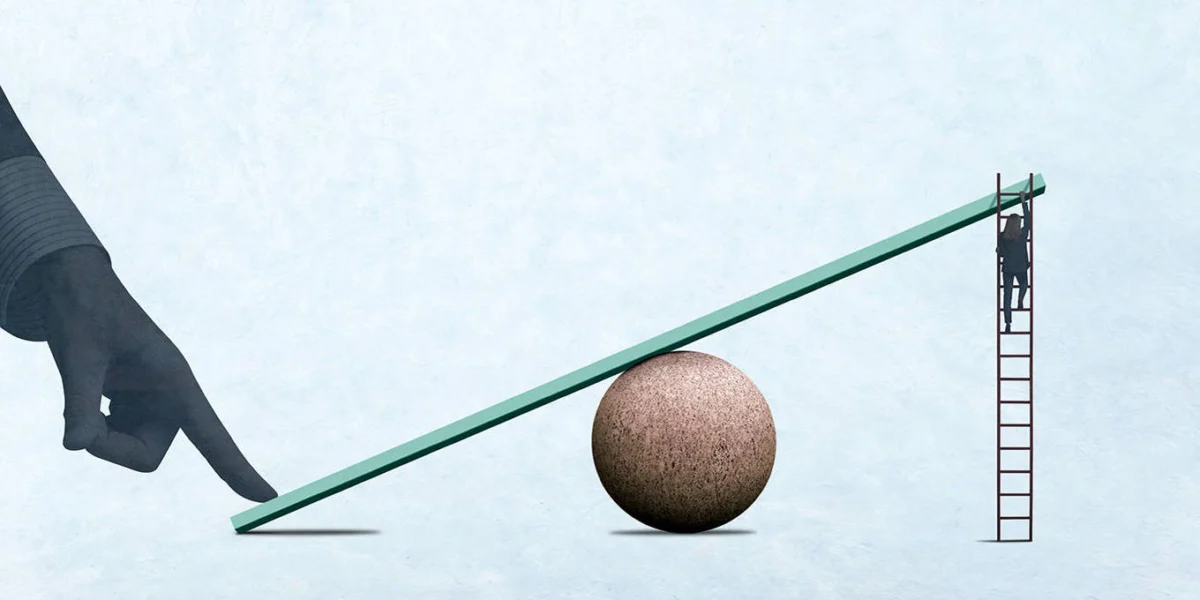
Gender inequality in the labor market remains a pervasive and paradoxical phenomenon, stubbornly resisting efforts to achieve true economic parity. Despite widespread public opposition to gender disparities and converging educational attainment levels between men and women, significant gaps in wages, leadership positions, and overall labor force participation persist. The crux of the issue, experts suggest, lies not merely in outdated beliefs or overt biases, but in deeply entrenched structural constraints that impede women’s economic advancement.
Globally, women’s labor-force participation rate lags approximately 24 percentage points behind that of men. Compounding this, a mere fraction, less than 5%, of women globally reside in economies that guarantee near-full legal equality in the workplace. While women’s engagement in the workforce has increased over time, they continue to earn less than men and are significantly underrepresented in senior roles, perpetuating a structural wage gap that education alone has failed to close. This enduring disparity underscores a critical challenge for policymakers, businesses, and societies striving for equitable economic outcomes.
The Scale of the Disparity: Data and Evidence
The statistics paint a stark picture of the entrenched nature of gender inequality in the labor market. According to the International Labour Organization (ILO), the global female labor force participation rate stood at approximately 47.4% in 2023, compared to 71.4% for men. This substantial gap translates into millions of women being excluded from paid employment or underemployed.
Furthermore, the World Bank’s Women, Business and the Law 2024 report highlights that only a handful of economies worldwide have achieved near-complete legal equality for women in the workforce. This means that in most countries, legal frameworks still contain provisions that disadvantage women in areas such as hiring, pay, and career progression. Even in nations with progressive legal frameworks, the practical implementation and enforcement often fall short, allowing existing inequalities to persist.
The gender wage gap is another critical indicator. Globally, women still earn, on average, significantly less than men for comparable work. While the exact figures vary by region and industry, studies consistently show that women are paid less across most sectors. For instance, data from the European Institute for Gender Equality (EIGE) indicates that in 2023, women in the European Union earned, on average, 12.7% less per hour than men. This gap widens considerably when considering lifetime earnings, due to factors such as career interruptions for childcare and the concentration of women in lower-paying sectors.
Educational Convergence: A Promising Trend Undermined by Structure
Historically, disparities in educational attainment were often cited as a primary driver of gender-based economic inequality. However, in recent decades, this narrative has shifted dramatically. In many parts of the world, women now not only match but often surpass men in educational attainment, particularly at the tertiary level. Countries like the United States, Canada, and many in Europe and Latin America have seen women graduate from universities at higher rates than men for years.
This educational convergence, however, has not translated into proportional economic equality. The persistence of the gender wage gap and the underrepresentation of women in leadership positions suggest that systemic issues are at play. These include:
- The "Motherhood Penalty": Women often face career setbacks after having children, including reduced hours, career breaks, and slower progression, leading to lower lifetime earnings. This is often exacerbated by insufficient parental leave policies and a lack of affordable childcare.
- Occupational Segregation: Women remain concentrated in certain sectors and occupations that are often lower-paying and less prestigious, such as care work, education, and administrative support. This segregation is driven by a complex interplay of societal expectations, educational tracking, and historical biases.
- The "Glass Ceiling" and "Sticky Floor": While women may enter the workforce in equal numbers to men, they encounter barriers that prevent them from ascending to senior leadership positions (the glass ceiling). Simultaneously, many women are "stuck" in low-wage, precarious jobs (the sticky floor) with limited opportunities for advancement.
- Unpaid Care Work Burden: Women disproportionately shoulder the responsibility for unpaid care work, including childcare, eldercare, and household chores. This burden limits their time and energy for paid employment and career development.
- Discrimination and Bias: Despite increased awareness, unconscious bias and overt discrimination continue to affect hiring, promotion, and pay decisions in many workplaces.
A Timeline of Progress and Persistent Gaps
The struggle for gender equality in the workplace is a long-standing one, with key milestones and ongoing challenges:
- Late 19th and Early 20th Centuries: Early feminist movements begin advocating for women’s suffrage and access to education and employment. Some professions begin to open up to women, though often with significant pay disparities.
- Mid-20th Century: Post-World War II, women entered the workforce in greater numbers, but often in supportive roles and with lower pay. Legislation like the Equal Pay Act of 1963 in the US aimed to address wage discrimination.
- Late 20th Century: Increased female educational attainment becomes a notable trend. Women begin entering traditionally male-dominated fields, but the gender wage gap and "glass ceiling" remain significant issues. International conventions like the Convention on the Elimination of All Forms of Discrimination against Women (CEDAW) are adopted by the UN.
- Early 21st Century: Awareness of gender inequality intensifies. The focus shifts from overt discrimination to systemic and structural barriers. The concept of "unconscious bias" gains prominence. The COVID-19 pandemic disproportionately impacted women’s employment and care responsibilities, highlighting existing vulnerabilities.
- 2020s: While educational parity is largely achieved in many developed nations, the gender wage gap and leadership gap persist. Debates intensify around the role of parental leave, affordable childcare, and flexible work arrangements in enabling women’s full economic participation. The call for systemic reform becomes more urgent.
Voices from the Field: Expert and Advocacy Perspectives
"The data is unequivocal," stated Dr. Anya Sharma, a labor economist specializing in gender studies at the University of Cape Town. "We are seeing a disconnect between educational achievements and economic outcomes. This isn’t a matter of women lacking ambition or capability; it’s a reflection of systems that haven’t adapted to ensure fair opportunity. The continued prevalence of unpaid care responsibilities, coupled with the scarcity of affordable childcare, places an insurmountable burden on many women, forcing them to make difficult choices between career and family."
Advocacy groups are also vocal about the need for systemic change. "For too long, the narrative has focused on individual women needing to ‘lean in’ or negotiate harder," commented Maria Rodriguez, spokesperson for Global Women’s Economic Justice. "While individual agency is important, we must recognize that the playing field is not level. Governments and corporations have a responsibility to implement policies that dismantle structural barriers – policies like robust paid parental leave for all genders, mandated pay transparency, and significant investments in accessible, high-quality childcare. Without these fundamental shifts, we will continue to see these persistent, unacceptable disparities."
Analyzing the Implications: A Societal and Economic Imperative
The enduring gender wage gap and underrepresentation of women in leadership positions have far-reaching implications for individuals, businesses, and the global economy.
For individuals, these disparities can lead to lower lifetime earnings, reduced financial security, and limited opportunities for personal and professional growth. This can perpetuate cycles of poverty and disadvantage, particularly for women from marginalized backgrounds.
For businesses, failing to leverage the full talent pool can stifle innovation, reduce productivity, and negatively impact employee morale. Companies with diverse leadership and equitable pay practices have been shown to perform better financially. Moreover, an inability to attract and retain female talent can lead to significant recruitment and training costs.
On a broader economic level, gender inequality represents a significant loss of potential. When women are not fully participating in the workforce or are underpaid, economies are missing out on their contributions to productivity, consumption, and tax revenues. The United Nations Development Programme (UNDP) has estimated that gender inequality costs the global economy trillions of dollars annually in lost human capital. Addressing these structural constraints is not just a matter of social justice; it is an economic imperative for sustainable and inclusive growth.
The Path Forward: Structural Reforms and Policy Interventions
Addressing the persistent gender wage gap and other economic disparities requires a multi-pronged approach that moves beyond individual-level interventions to tackle systemic issues. Key policy areas that demand urgent attention include:
- Enhanced Paid Parental Leave: Implementing comprehensive and gender-neutral paid parental leave policies can help to redistribute caregiving responsibilities more equitably between men and women, reducing the "motherhood penalty."
- Affordable and Accessible Childcare: Investing in universal, high-quality childcare services is crucial to enable parents, particularly mothers, to participate fully in the labor force.
- Pay Transparency and Audits: Mandating pay transparency and conducting regular pay equity audits within organizations can help identify and rectify unjustified wage gaps.
- Promoting Women in Leadership: Implementing targets for women’s representation in leadership positions, coupled with mentorship and sponsorship programs, can help break down the "glass ceiling."
- Combating Occupational Segregation: Encouraging women to enter traditionally male-dominated fields through targeted education and training initiatives, and conversely, elevating the status and pay of female-dominated professions, is vital.
- Flexible Work Arrangements: Promoting flexible work options, such as remote work and compressed workweeks, can help both men and women better balance work and family responsibilities.
- Challenging Unconscious Bias: Implementing unconscious bias training for hiring managers and employees, and ensuring diverse hiring panels, can help mitigate discriminatory practices.
The convergence of educational levels has laid a foundation for greater gender equality. However, without robust structural reforms and a sustained commitment to dismantling the barriers that impede women’s economic advancement, the paradox of persistent inequality will continue to undermine the potential of individuals and economies worldwide. The time for incremental change is past; a paradigm shift towards systemic solutions is urgently needed.
