

On May 5, the U.S. Securities and Exchange Commission (SEC) unveiled a significant proposal that could fundamentally alter the financial reporting cadence for public companies. The proposed rule would introduce an optional semiannual reporting framework as an alternative to the existing quarterly reporting system, a move that could streamline disclosures for many registrants while prompting careful consideration by audit committees. The proposal, stemming from a memorandum by Ray Garcia, Partner, Paul DeNicola, Principal, and Matt DiGuiseppe, Managing Director at PricewaterhouseCoopers LLP, offers companies the choice to file one comprehensive interim report covering the first half of their fiscal year, rather than the current practice of filing quarterly reports on Form 10-Q.
Shifting Gears: Form 10-S and the New Reporting Landscape
Under the proposed framework, companies electing the semiannual reporting option, termed "semiannual filers," would forgo the requirement to file quarterly reports for the first, second, and third quarters of their fiscal year. Instead, they would submit a new filing, tentatively named Form 10-S, to encompass the first six months of their financial operations. This new form would mirror the informational requirements of the current Form 10-Q, with a key distinction: the financial data and accompanying disclosures would cover a six-month period rather than a three-month quarter.
A notable change in the proposed Form 10-S is the reporting of financial periods. While Form 10-Q currently mandates the presentation of both quarter-to-date and year-to-date figures, Form 10-S would primarily require the presentation of year-to-date (semiannual) information. However, companies would retain the option to voluntarily include quarterly data. The financial statements within Form 10-S would need to adhere to U.S. Generally Accepted Accounting Principles (GAAP), undergo a review by independent auditors, and be tagged using Inline XBRL, a standard for interactive data reporting.
The proposed deadlines for filing Form 10-S would align with existing timelines for Form 10-Q. Accelerated and large accelerated filers would have 40 days after the end of the fiscal year’s first semiannual period to file, while non-accelerated filers would have 45 days. This synchronization aims to maintain consistency in reporting timeliness for different categories of companies.
An Annual Decision: Electing the Reporting Cadence
The SEC’s proposal introduces an annual election mechanism for public companies to choose between quarterly and semiannual reporting. Quarterly reporting would remain the default setting. However, companies could opt for semiannual reporting by selecting a new checkbox on the cover page of their annual report on Form 10-K. This election would also be available to companies pursuing an initial public offering (IPO) or other initial registrations, indicated by a checkbox on the registration statement cover page.
Once made, the chosen reporting frequency would remain in effect for the entirety of that fiscal year. For example, a calendar-year-end company that makes its election on the Form 10-K for the fiscal year ending December 31, 2026, would apply that semiannual reporting framework to its interim disclosures for 2027. Companies would have the flexibility to change their filing election annually, requiring them to re-select the semiannual option via the checkbox on each subsequent Form 10-K filing if they wish to continue with that cadence.
The proposal acknowledges the potential for administrative errors. A mistake in the reporting election check box could be rectified by filing an amended Form 10-K/A on or before the due date of the company’s first quarterly Form 10-Q for that fiscal year. This provision offers a grace period for corrections, mitigating the impact of inadvertent errors.
Continuity in Earnings Releases and Form 8-K Filings
A crucial aspect of the proposal is that it would not alter the existing requirements for Form 8-K filings, which are used for current reports of significant events. This includes the continued furnishing of earnings releases. Companies opting for the semiannual reporting framework would be permitted to continue issuing quarterly earnings releases, aligning with their established investor relations practices. These releases, if issued, would still need to be furnished to the SEC on Form 8-K. This ensures that material financial information continues to be disseminated to the market in a timely manner, even with a reduced frequency of formal periodic filings.

Revisiting Financial Statement Age Requirements for Registration and Proxy Statements
The proposed rule also addresses the "staleness" of financial statements included in registration statements and other filings under Regulation S-X. Currently, registrants must assess the currency of their financial statements based on a fixed number of days, typically 129 or 134 days depending on filer status. The SEC’s proposal aims to simplify these rules by aligning the staleness framework more closely with the reporting deadlines of existing Exchange Act reports, such as Forms 10-K and 10-Q.
Furthermore, the changes are designed to adapt the staleness framework to accommodate the proposed semiannual reporting model. Under the revised approach, the age of financial statements required in a registration statement would be tied to the information that would be filed in periodic reports. Specifically, as of the filing date of a registration statement, a registrant would be obligated to include interim financial statements that are as current as the most recently filed or required-to-be-filed Form 10-Q (for quarterly filers) or Form 10-S (for semiannual filers). Importantly, these proposed changes would not impact the requirements for updating financial statements after the conclusion of a fiscal year. This adjustment seeks to reduce the administrative burden associated with preparing and filing registration statements, ensuring that the financial information presented is consistently up-to-date with the company’s most recent public disclosures.
A Call for Input: The Public Comment Process
The SEC’s proposal is now open for a public comment period, which concludes on July 6. The Commission has explicitly invited stakeholders to provide their feedback and insights on the proposed changes. The request for comments includes specific areas of inquiry related to accounting, financial reporting, and auditing matters. The SEC is also seeking input on the potential cost savings for companies that might adopt semiannual reporting, as well as any perceived impacts that less frequent financial reporting could have on a company’s access to capital markets. The proposal does not currently outline specific effective dates or transition considerations, leaving these aspects open for discussion and potential adjustment based on public feedback. Following the comment period, the SEC will thoroughly review all submissions and decide whether to proceed with final rulemaking, which may include modifications to the initial proposal.
Implications for Audit Committees: Navigating the New Cadence
The proposed shift to an optional semiannual reporting framework carries significant implications for audit committees, a critical oversight body within public companies. A core responsibility of the audit committee is to oversee the integrity of the company’s financial statements, financial reporting processes, internal controls, and disclosure practices. A change in the frequency of financial reporting directly impacts how audit committees fulfill these essential duties. Consequently, audit committees will need to proactively evaluate management’s consideration of this potential transition.
Initial Considerations for Audit Committees
Audit committees should begin by understanding and meticulously evaluating management’s assessment of whether transitioning to semiannual reporting is appropriate for their specific company. Key questions that audit committees might pose to management include:
- Strategic Alignment: Does the company’s business model, industry dynamics, and investor expectations align with a semiannual reporting cadence? Are there specific risks or opportunities associated with this change?
- Resource Allocation: Does the company possess the necessary internal resources and expertise to maintain robust financial reporting and internal controls under a semiannual framework, particularly in the interim periods?
- Investor Relations and Market Perception: How might investors and other capital market participants perceive a move to semiannual reporting? Are there concerns about reduced transparency or timeliness of information?
- Internal Control Effectiveness: How will the change in reporting frequency impact the design, implementation, and testing of internal controls over financial reporting (ICFR)? Are there potential gaps or weaknesses that need to be addressed?
- Audit Committee Capacity: Will the audit committee have sufficient time and information to effectively oversee financial reporting and audits with a reduced number of formal reporting periods?
Additional Considerations for Deeper Evaluation
If, after addressing these initial factors, management indicates a serious exploration of transitioning to semiannual reporting, audit committees should delve deeper into the assessment, keeping their oversight responsibilities firmly in mind.
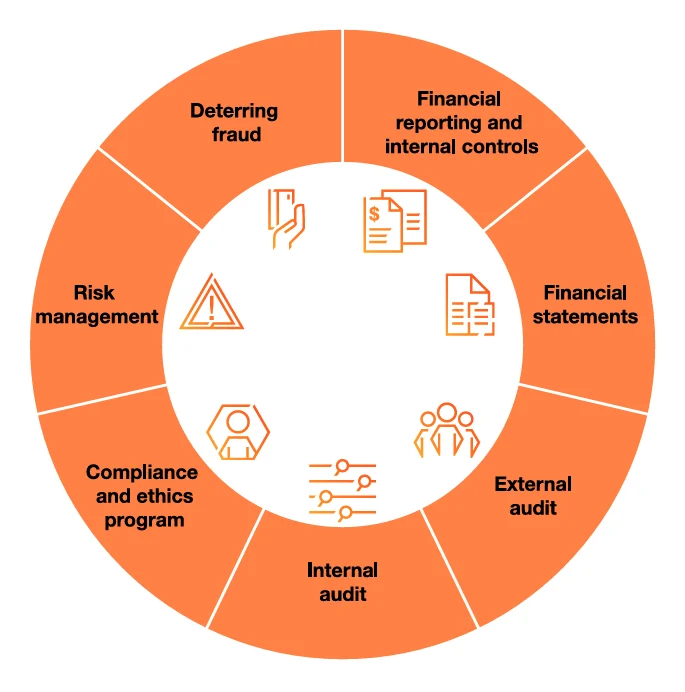
Financial Statements, Financial Reporting, and Internal Controls
- Data Integrity and Accuracy: How will the company ensure the accuracy and reliability of financial data in the interim six-month period, given the absence of quarterly reviews by management and auditors?
- Internal Control Monitoring: What enhanced monitoring procedures will be implemented to ensure the continued effectiveness of internal controls throughout the year, particularly in the periods not subject to formal quarterly reviews?
- Timeliness of Issue Identification: How will the company ensure that financial reporting issues or control deficiencies are identified and addressed promptly, without the quarterly cadence serving as a natural check?
- Disclosure Quality: Will the transition impact the depth and quality of interim disclosures? How will the company ensure that all material information is adequately communicated?
External Audit
- Audit Plan Adjustments: How will the external auditor’s plan be adjusted to accommodate semiannual reporting? Will the scope and nature of interim reviews change?
- Auditor Independence and Effectiveness: Will the proposed changes impact the auditor’s ability to maintain independence and provide effective oversight?
- Communication Channels: How will communication between the audit committee and the external auditor be maintained to ensure timely discussions of financial reporting matters and audit findings?
Internal Audit
- Internal Audit’s Role: How will the internal audit function adapt its work plan and testing procedures to provide assurance on financial reporting and internal controls under the semiannual framework?
- Resource Implications: Will the internal audit department have the necessary resources and expertise to execute its enhanced monitoring responsibilities?
- Risk Assessment: How will the internal audit department’s risk assessment process be updated to reflect the new reporting cadence and potential emerging risks?
Compliance and Deterring Fraud
- Fraud Risk Assessment: How will the company’s fraud risk assessment be updated to consider any potential increase in fraud risk associated with less frequent formal reporting and review?
- Whistleblower Mechanisms: Are existing whistleblower mechanisms robust enough to capture and address potential issues that might arise between semiannual reporting periods?
- Compliance Monitoring: What enhanced compliance monitoring procedures will be put in place to ensure adherence to all applicable regulations and internal policies?
Risk Management
- Enterprise Risk Management (ERM): How will the company’s ERM framework be integrated with the semiannual reporting process to ensure that emerging risks are identified and addressed in a timely manner?
- Disclosure of Risks: Will the change in reporting frequency impact the company’s ability to adequately disclose evolving risks and uncertainties?
Committee Operations
- Meeting Frequency and Agendas: Will the audit committee need to adjust its meeting frequency or the structure of its agendas to effectively oversee semiannual reporting?
- Information Flow: How will the audit committee ensure it receives timely and relevant information from management and the external auditor to support its oversight responsibilities?
- Expertise and Training: Will the audit committee members require additional training or expertise to effectively navigate the implications of semiannual reporting?
Background and Broader Context
The SEC’s proposal for optional semiannual reporting comes at a time when regulators and the business community are continually exploring ways to enhance the efficiency and effectiveness of financial reporting. For decades, quarterly reporting has been the norm for U.S. public companies, providing investors with frequent updates on financial performance and position. However, concerns have been raised about the potential burden of quarterly reporting on smaller companies and the resources required to maintain this cadence.
The idea of semiannual reporting is not entirely new. Some international jurisdictions have reporting requirements that differ from the U.S. model. For instance, many European countries operate under a system that mandates semi-annual or even annual financial reporting, with interim updates often being less detailed than U.S. quarterly reports. The SEC’s proposal could be seen as an effort to provide U.S. companies with greater flexibility and potentially reduce compliance costs, while still maintaining a robust level of transparency for investors.
The timing of this proposal also warrants attention. In recent years, the SEC has been engaged in various initiatives aimed at modernizing disclosure requirements and streamlining reporting processes. This proposal aligns with that broader objective, seeking to balance the need for timely investor information with the operational realities and costs faced by public companies. The public comment period is crucial for the SEC to gauge the sentiment of the market, understand the practical implications of such a shift, and make informed decisions about the future of financial reporting in the United States. The outcome of this proposal could set a new precedent for how public companies communicate their financial performance to the investing public.
