

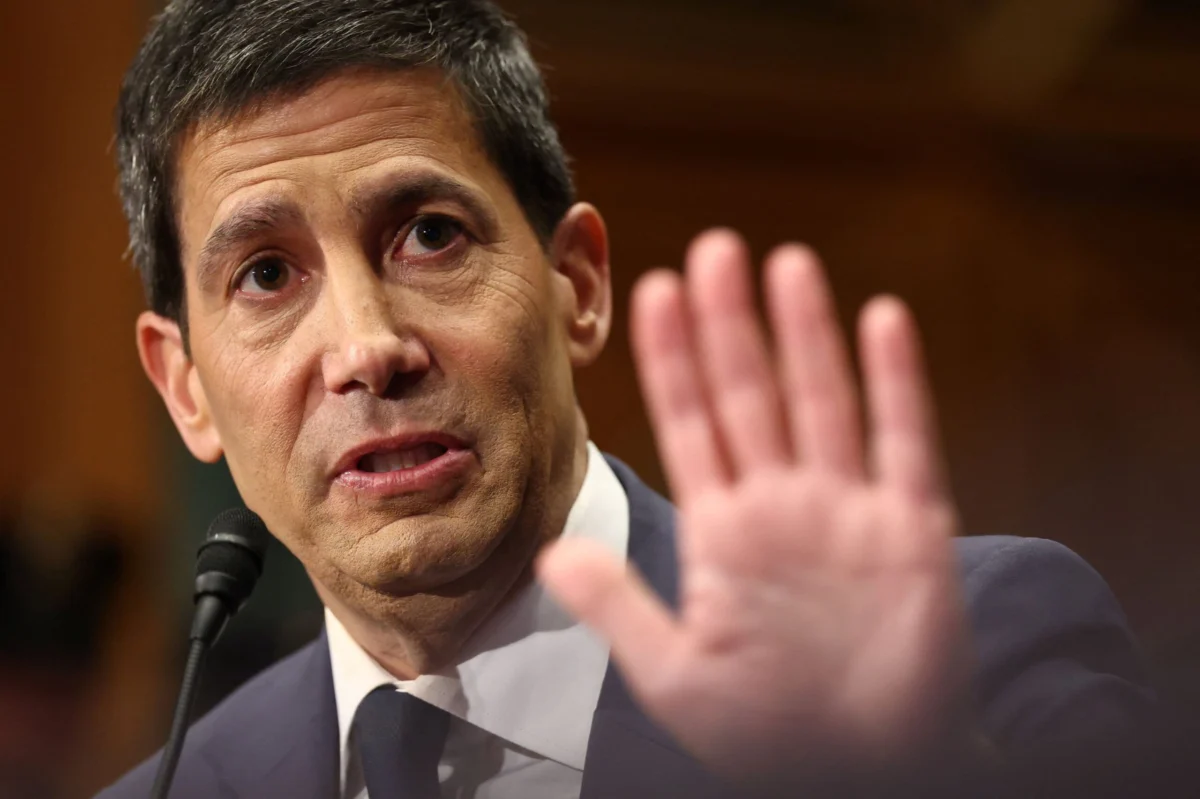
Washington D.C. – Incoming Federal Reserve Chair Kevin Warsh, nominated by President Donald Trump with an expectation of lower interest rates, may find himself in a position where he needs to champion rate increases to bolster the central bank’s credibility, according to veteran market strategist Ed Yardeni. This potential pivot comes as escalating inflation pressures, exacerbated by geopolitical events and underlying economic factors, are compelling market participants to reassess the Federal Reserve’s monetary policy trajectory.
Yardeni, credited with coining the term "bond vigilantes" to describe investor sentiment that can drive up borrowing costs, has articulated a view that the bond market, rather than Fed policymakers, may be dictating the immediate path of monetary policy. "If the new central bank leader fails to signal that policymakers are attuned to inflation pressures, it could risk further market wrath in the form of escalating Treasury yields," Yardeni stated in a recent analysis.
The incoming Chair is slated to preside over the June Federal Open Market Committee (FOMC) meeting, a crucial juncture where policy decisions are made. However, Yardeni’s commentary suggests a divergence between Warsh’s publicly stated dovish leanings and the market’s increasingly hawkish expectations. "Warsh is going to be the odd man out," Yardeni wrote. "But he is the new Fed chair, and the bond market is reacting badly to his dovish stance."
Treasury Yields Surge Amid Inflationary Concerns
The market’s apprehension was palpable last week, with Treasury yields experiencing a significant surge. The benchmark 30-year Treasury bond, a key indicator of long-term inflation expectations and borrowing costs, climbed past the 5% threshold, reaching its highest point in nearly a year. As of Monday morning, the 30-year yield remained elevated at 5.138%. In contrast, the 2-year Treasury yield, which is more sensitive to anticipated Federal Reserve policy actions, saw a modest decline to 4.07%, reflecting a complex pricing of future rate movements.
This uptick in yields underscores a growing concern among investors that the Federal Reserve might be falling behind the curve in its fight against inflation. The recent economic data has painted a picture of an economy grappling with price pressures that may be more persistent than initially anticipated.
Warsh’s Dovish Stance Meets Hawkish Market Reality
Prior to his nomination, Kevin Warsh expressed a belief that the Federal Reserve possessed the flexibility to lower its benchmark interest rate from its current targeted range of 3.5% to 3.75%. This stance was aligned with the prevailing economic conditions and the administration’s stated desire for accommodative monetary policy to stimulate growth.
However, a significant shift in the inflationary landscape has dramatically altered market expectations. A recent surge in inflation, significantly influenced by the ongoing conflict in Iran and compounded by other underlying economic factors, has prompted a widespread repricing of interest rate expectations. The geopolitical instability in the Middle East has disrupted global supply chains and led to spikes in energy prices, directly contributing to broader inflationary pressures.
The situation has become more complex with Warsh’s imminent leadership. Not only has the market begun to doubt the likelihood of interest rate cuts, but the probability of an actual rate hike by the end of the year has also increased. According to CME Group’s FedWatch tool, which tracks market-based probabilities of Federal Reserve policy actions, there is now a 42% chance of an increase in the federal funds rate by year-end. This represents a substantial departure from earlier expectations of monetary easing.
Yardeni’s Call for Early Tightening
Ed Yardeni’s analysis suggests that the Federal Reserve might need to act more decisively than market consensus anticipates. While he believes the Fed will likely hold interest rates steady at its June meeting, he projects a quarter-percentage-point rate hike to be "likely" in July. However, he proposes a more immediate, albeit less conventional, tightening step for the June meeting: the removal of "forward guidance" language from the post-meeting statement. This guidance has been interpreted by the market as signaling the central bank’s intention to move towards rate cuts.
"The Fed must catch up to the bond market to avoid losing control of borrowing costs and to appease the Bond Vigilantes," Yardeni asserted. He further elaborated, "By now, they might need to see a tightening stance rather than a neutral stance. A surprise FFR rate hike might actually please them!"
Yardeni’s argument centers on the idea that an early demonstration of a hawkish bias by the Warsh-led Fed could effectively allay bond market concerns, thereby helping to cap rising yields and providing the central bank with greater flexibility in its future policy decisions.
Broader Economic Implications and White House Aspirations
The implications of the Federal Reserve’s monetary policy extend far beyond the financial markets, impacting the broader economy and the administration’s economic agenda. Yardeni posits that a proactive, hawkish stance from the Federal Reserve under Warsh’s leadership could paradoxically serve the White House’s objective of lower real-world borrowing costs.
"So by acting hawkishly, Warsh might have a chance of delivering what the White House wants: lower real-world borrowing costs," he explained. "Mortgage rates could fall, corporate financing would ease, and Trump can point to declining long-term yields as the economic win." The logic here suggests that by proactively addressing inflation concerns and demonstrating resolve, the Fed could restore confidence in its ability to manage the economy, which in turn could lead to a stabilization and eventual decline in long-term interest rates, benefiting consumers and businesses alike.
However, Yardeni’s specific call for a July rate hike stands in stark contrast to the prevailing market sentiment. The current implied probability for a July increase, as indicated by FedWatch, is a mere 4.2%, highlighting the divergence between his forecast and the broader consensus.
Historical Context and the Evolution of "Bond Vigilantes"
The concept of "bond vigilantes" emerged in the 1980s, a period characterized by high inflation and substantial government deficits. At that time, investors, concerned about the erosion of their returns due to inflation, began demanding higher yields on government debt. When policymakers appeared unwilling or unable to control inflation, these investors would sell bonds, driving up yields and effectively punishing the government through higher borrowing costs. This phenomenon demonstrated the significant power of market sentiment in influencing fiscal and monetary policy.
The current inflationary environment, while sharing some similarities with the 1980s, also possesses unique characteristics. The global nature of supply chain disruptions, the impact of geopolitical conflicts, and the lingering effects of the COVID-19 pandemic have created a complex web of inflationary pressures that differ from the demand-driven inflation of previous decades.
The Federal Reserve’s Mandate and Warsh’s Challenge
The Federal Reserve operates under a dual mandate from Congress: to promote maximum employment and stable prices. In recent years, the focus on employment has often taken precedence, particularly in the aftermath of economic crises. However, as inflation re-emerges as a significant concern, the balance of this mandate is being tested.
Kevin Warsh faces the daunting task of navigating this complex landscape. He must contend with a market that is increasingly skeptical of the Fed’s inflation-fighting capabilities, a White House that desires lower borrowing costs, and an economy grappling with persistent price pressures. His ability to communicate effectively and demonstrate a clear commitment to price stability will be paramount to his success.
Supporting Data and Economic Indicators
Recent economic data has provided further evidence of the inflationary pressures. The Consumer Price Index (CPI) for April 2026, released on May 12, 2026, indicated a significant acceleration in price levels, driven by a confluence of factors including rising energy costs, supply chain bottlenecks, and robust consumer demand. For instance, energy prices, heavily influenced by the Iran conflict, saw a notable increase, impacting transportation and household utility costs. Food prices also exhibited upward trends, reflecting broader agricultural supply challenges and increased input costs for producers.
Core inflation, which excludes volatile food and energy components, also showed an upward trend, suggesting that inflationary pressures are becoming more entrenched in the broader economy. This is a key concern for central bankers, as it indicates that inflation is not solely a temporary phenomenon but may require sustained policy action to bring under control.
Market Reactions and Analyst Commentary
The reaction from various market participants and analysts underscores the significance of the current juncture. Many investment banks and research firms have revised their forecasts for interest rate hikes, with an increasing number now anticipating a move sooner rather than later. The discrepancy between Warsh’s prior statements and the market’s current pricing highlights the challenge of managing expectations in a volatile economic environment.
Some analysts have expressed concern that a delay in decisive action by the Federal Reserve could lead to a more aggressive tightening cycle later, potentially triggering a recession. Others believe that the current inflationary pressures are partly structural and that monetary policy alone may not be sufficient to fully address them, necessitating a coordinated approach with fiscal policy and supply-side reforms.
The Road Ahead: Policy Choices and Credibility
As Kevin Warsh prepares to assume the chairmanship of the Federal Reserve, the decisions made in the coming months will be critical in shaping the economic outlook and the Fed’s credibility. The market will be closely watching for any signals that indicate a shift towards a more hawkish stance, particularly at the upcoming FOMC meetings.
The Federal Reserve’s ability to effectively manage inflation without derailing economic growth will be a defining challenge of this era. Warsh’s tenure will be closely scrutinized for his approach to this delicate balancing act, and his success in appeasing the "bond vigilantes" while fulfilling the Fed’s dual mandate will have far-reaching consequences for the U.S. economy and global financial markets. The path forward is fraught with uncertainty, and the Federal Reserve’s policy choices will undoubtedly be a central theme in economic discussions for the foreseeable future.
