

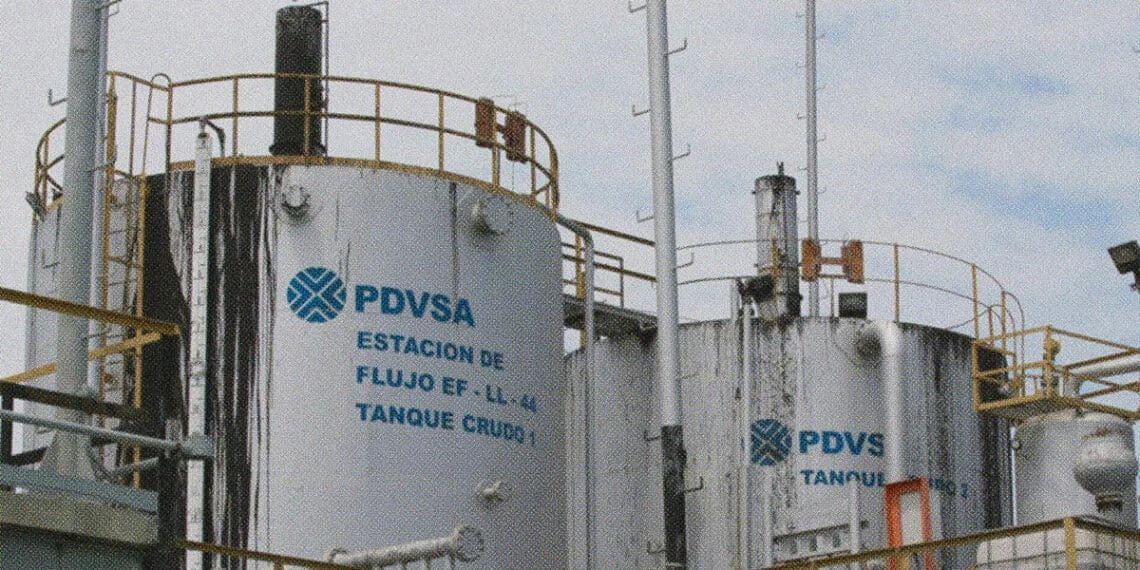
The recent partial reform of Venezuela’s organic hydrocarbons law, coupled with seven new U.S. Office of Foreign Assets Control (OFAC) general licenses, is charting a course for renewed opportunities within the nation’s energy sector. However, compliance officers and international investors must navigate a landscape where each license carries distinct conditions, and the implications of secondary sanctions for non-U.S. companies are more intricate than the general relief might initially suggest. Baker McKenzie attorneys Terry Gilroy and Eugenio Hernández-Bretón offer critical insights into what businesses need to understand to operate within this evolving framework.
The combined impact of Venezuela’s legislative adjustments and the U.S. government’s calibrated easing of sanctions is fostering a more conducive environment for foreign investment aimed at bolstering production in the nation’s vital oil and associated gas industry. These legislative and regulatory shifts, primarily announced in January 2026, are poised to attract capital by offering greater security for long-term investments.
Key Amendments to Venezuela’s Hydrocarbons Law
The partial reform of Venezuela’s organic hydrocarbons law introduces several significant changes designed to modernize and incentivize the energy sector. While specific details of the reform were not fully elaborated in the initial announcement, the overarching goal is to create a more attractive framework for international participation. Historically, Venezuela’s oil sector has been dominated by state-owned entities, often leading to operational challenges and underinvestment. This reform signals a potential shift towards greater private sector involvement and a more competitive operational environment.
Crucially, existing mixed companies and production sharing agreements (locally referred to as CPPs) are slated for a comprehensive review. Within 180 days of the reform’s effective date, January 29, 2026, these agreements must be adjusted to align with the new legal parameters. During this transitional period, the pre-reform tax system will remain in effect, providing a degree of stability for ongoing operations. It is important to note that, as of the current reporting, no equivalent changes or announcements have been made concerning legislation governing non-associated gas reserves, indicating a continued focus on the more established oil and associated gas sectors.
The U.S. Sanctions Perspective: Navigating OFAC’s General Licenses
Beyond Venezuela’s borders, U.S. sanctions continue to be a defining factor in investment considerations for companies operating both within and outside the United States. Since January 2026, OFAC has strategically issued a series of general licenses and accompanying guidance, offering targeted sanction relief, particularly for Venezuela’s oil and gas sector. Despite these accommodations, it is essential to recognize that the government of Venezuela and its relevant state-owned entities remain subject to U.S. blocking sanctions.
These general licenses are designed to create specific pathways for U.S. persons to engage in various aspects of the Venezuelan energy market. This includes facilitating oil trading, providing upstream energy services, supporting investment planning, and, more recently, enabling broader transactions involving Petróleos de Venezuela, S.A. (PdVSA), even extending to Venezuelan-origin gold.
Detailed Breakdown of OFAC General Licenses
The seven new general licenses issued by OFAC provide a nuanced approach to sanction relief, each with its own scope and set of conditions:
-
General License 46 (GL 46): Downstream Oil Operations
This license primarily targets downstream activities, authorizing established U.S. entities to engage in transactions that are ordinarily incidental and necessary for the lifting, exportation, sale, transportation, storage, and refining of Venezuelan-origin oil. This authorization extends even to transactions involving the government of Venezuela or PdVSA. However, GL 46 explicitly does not authorize upstream investment or new production initiatives. Furthermore, it imposes stringent conditions: contracts with the Venezuelan government or PdVSA must be governed by U.S. law and stipulate dispute resolution within the United States. Payments are generally required to be deposited into foreign government deposit funds controlled by the U.S. Treasury, with limited exceptions. -
General License 47 (GL 47): Export of U.S.-Origin Diluents
Complementing GL 46, this license authorizes the export, sale, and transport of U.S.-origin diluents to Venezuela. Diluents are critical for the efficient movement and processing of Venezuela’s heavy crude oil. Unlike GL 46, GL 47 does not mandate that the activity be conducted by an established U.S. entity. However, it retains similar contractual and payment stipulations concerning governing law, dispute resolution, and payments to PdVSA as those found in GL 46. -
General License 48 (GL 48): Upstream Support Services
Focused squarely on upstream activities, GL 48 permits U.S. persons to provide essential goods, technology, software, and services necessary for the exploration, development, production, and maintenance of oil and gas operations in Venezuela. This includes crucial repair and refurbishment of existing infrastructure. A key prohibition within this license is the formation of new joint ventures (JVs) or other entities in Venezuela specifically for exploration and development purposes. Effectively, GL 48 is designed to support operational continuity and maintenance rather than enabling new ownership structures or significant expansion of exploration efforts. -
General License 49 (GL 49): Future Investment Planning
GL 49 opens a pathway for future investment planning. It authorizes U.S. persons to negotiate and enter into contingent contracts for new oil and gas investments in Venezuela. The critical condition is that the performance of these agreements is explicitly conditional upon receiving future OFAC approval, indicating that these are preliminary arrangements rather than immediate commitments. -
General License 50 (GL 50): Company-Specific Authorizations
This license deviates from broader market authorizations by being company-specific. GL 50 permits transactions related to oil and gas sector operations in Venezuela for a list of specifically named companies within the general license. These designated companies can conduct activities ordinarily incident to their Venezuelan operations, subject to specific contractual conditions outlined within the license. -
General License 51 (GL 51) and its Amendment (GL 51A): Non-Energy Sector Expansion
Initially focused on Venezuelan-origin gold, GL 51 represented a significant step beyond the energy sector. It authorized established U.S. entities to import, refine, resell, and export Venezuelan-origin gold, including transactions involving Venezuela’s state mining company. This license was subsequently amended and replaced by General License 51A. The amended version significantly expands the original scope to encompass "Venezuelan-origin minerals" more broadly, signaling a potential for wider engagement with Venezuela’s extractive industries beyond just gold. -
General License 52 (GL 52): Broad PdVSA Transactions
GL 52 offers the most comprehensive authorization for transactions involving PdVSA or its entities and established U.S. entities. It incorporates the same governing law and payment requirements as earlier GLs. This license covers all transactions involving PdVSA that were not already authorized by the other new Venezuela GLs related to oil and gas, including petrochemicals. Notably, GL 52 explicitly authorizes the entry into new investment contracts for exploration, development, or production activities in Venezuela’s oil and gas sectors. This means U.S. persons no longer need to rely solely on GL 49 for entering into such contracts with PdVSA or related entities. However, the practical impact of GL 52 may be somewhat constrained as it does not authorize transactions involving the government of Venezuela beyond those directly necessary for the activities set forth in the license. Consequently, activities involving other Venezuelan government-owned industries, such as mining or electricity generation, remain unauthorized under GL 52.
Sanctions Implications for Non-U.S. Companies
For companies headquartered outside the United States, as well as foreign subsidiaries of U.S. corporations, understanding the dual nature of U.S. sanctions is paramount:
-
Primary Sanctions: These sanctions directly prohibit U.S. persons (individuals and entities) from engaging in specified transactions with sanctioned countries, entities, or individuals. Non-U.S. companies are generally not directly subject to U.S. primary sanctions unless they have a significant "U.S. nexus."
-
Secondary Sanctions: These are extraterritorial measures that allow the U.S. government to impose restrictions on non-U.S. persons who engage in certain transactions with sanctioned parties. These sanctions are designed to deter third-country entities from circumventing U.S. primary sanctions.
The presence of "U.S. touchpoints" can expose non-U.S. companies to primary sanctions risk. These touchpoints can include:
- Use of U.S. Dollars in Transactions: Even if a non-U.S. company is involved, if the transaction involves U.S. dollar clearing or settlement in the United States, it can trigger U.S. jurisdiction.
- Involvement of U.S. Financial Institutions: Any intermediary or correspondent bank that is a U.S. entity can bring a transaction under U.S. regulatory oversight.
- Incorporation or Registration in the U.S.: If a company, even a foreign subsidiary, is incorporated or registered in the U.S., it is considered a U.S. person.
- Presence of U.S. Citizens or Permanent Residents: The employment or involvement of U.S. citizens or permanent residents in a transaction can create a U.S. nexus.
- Use of U.S.-Origin Goods or Technology: The re-exportation or use of U.S.-origin goods or technology in a transaction can subject it to U.S. export control regulations and sanctions.
Historically, the U.S. government has penalized non-U.S. companies for violating U.S. primary sanctions. The likelihood of similar enforcement actions concerning Venezuela will likely depend on how specific activities align with the current U.S. administration’s broader foreign policy objectives and priorities.
Ultimately, non-U.S. companies must maintain a vigilant approach, consistently identifying potential U.S. touchpoints and evaluating their exposure to U.S. sanctions, particularly in scenarios where existing general licenses do not offer explicit coverage. For companies operating without any U.S. touchpoints and engaged solely in cross-border energy sector transactions in Venezuela, the risk of U.S. primary sanctions is minimal. However, the threat of secondary sanctions remains a pertinent concern.
Under longstanding OFAC guidance, non-U.S. companies engaged in activities covered by a general license that is exclusively applicable to U.S. persons would not typically face secondary sanctions for participating in the same activities. OFAC’s FAQ 1247, issued on March 31, 2026, provides specific commentary on the application of U.S. secondary sanctions. Significantly, this FAQ does not reference a requirement for non-U.S. companies to include U.S. governing law or U.S. dispute resolution provisions in their contracts to mitigate the risk of secondary sanctions.
Given that OFAC has thus far refrained from taking action against non-U.S. companies already engaged with PdVSA in the energy sector, businesses whose activities are directionally consistent with the spirit of the general licenses likely face a relatively low risk of secondary sanctions.
However, in situations where a relevant general license mandates that a contract be governed by U.S. law or include a U.S. dispute resolution mechanism, non-U.S. companies entering into such agreements with PdVSA might find it unlikely to meet these specific requirements. This scenario could potentially expose them to the risk of secondary sanctions.
Impact on Contracts for Crude Oil Refinement and Sale
Venezuela’s revised hydrocarbons law fundamentally alters the landscape of who can commercialize, refine, and market crude oil within the country, as well as the contractual structures governing these operations. Several types of agreements are particularly relevant:
Production Sharing Agreements (PSAs)
A PSA is a contractual framework between a foreign or independent oil company (IOC)—the investor—and the state-owned enterprise, in this case, PdVSA. These agreements are fundamental for exploration and production activities. Under a PSA, the ownership of hydrocarbon resources remains with the host state, Venezuela. While the IOC does not possess immediate property rights over production or mineral rights, it secures an economic entitlement to a share of the oil from a specific field.
The PSA typically outlines minimal capital commitments from the IOC, which is responsible for funding exploration and production activities and generally supports the national oil company (NOC) during the exploration phase. The NOC may have the option to contribute to development costs following a commercial discovery. The IOC recoups its investment once production commences; if no production occurs, all costs and investments represent a loss for the IOC. Compensation is calculated based on production and the profits generated, making these long-term contracts intrinsically linked to the lifespan of the oilfield. A thorough understanding of Venezuelan law is therefore essential.
Crude Oil Sale and Purchase Agreements (CSPAs)
Also known as crude offtake agreements, CSPAs govern the sale and purchase of crude oil, typically between an upstream producer (which could be an IOC, NOC, or a joint venture) and a trader or refinery. The buyer is often a commodity trader or a major IOC. These contracts detail the quantity and quality requirements of the crude oil, and include provisions such as take-or-pay obligations, supply commitments, delivery terms, pricing frameworks, title and risk transfer mechanisms, payment terms, termination clauses, and dispute resolution procedures.
CSPAs are generally shorter in duration than PSAs, often representing a single transaction or covering sales for six to twelve months, with the option for renewal for one to five years. These contracts are frequently financed by third-party financiers, banks, and lenders, with the financing tenor typically mirroring the duration of the offtake agreement. Longer-term CSPAs are more likely to incorporate a price review mechanism to account for potential fluctuations and volatility in crude oil prices.
Tolling or Processing Agreements (TPAs)
TPAs are crucial for companies lacking their own refining capacity. These agreements allow a crude owner to have its crude processed at a refinery for a fee, in exchange for receiving refined products such as jet fuel, diesel, or gasoline. The parties involved are the refinery owner or operator and the crude owner, producer, or trader. Key elements include a fixed or variable processing fee, dependent on the refinery’s complexity; a yield agreement specifying the product slate and expected yields; and provisions for quality and losses.
During the refining process, losses, contamination, or off-specification outputs can occur, and these contingencies should be clearly outlined in the contract. TPAs may also stipulate required refinery resources, including utilities and storage charges, steam, water, and tankage. The average term for a TPA is typically between one and three years, though shorter terms are common for merchant refinery operations.
Beyond these primary agreement types, the new hydrocarbons law will undoubtedly influence a range of other contracts, including those pertaining to crude oil disposal, crude swaps and exchanges, crude prepayment, pre-financing, storage, tank leases, commercial support, and transportation agreements.
What Lies Ahead?
The recent legislative overhaul of Venezuela’s organic hydrocarbons law presents international companies, including those based in the United States, with renewed opportunities to engage in primary activities such as the exploration, extraction, initial transportation, and storage of hydrocarbons. These revised legal frameworks may also empower private sector companies to commercialize hydrocarbons, either as minority shareholders managing mixed operating companies or as private entities operating under development contracts for primary activities.
Concurrently, a more permissive U.S. sanctions environment is enabling companies to explore these emerging opportunities. However, success on both fronts hinges on meticulous planning and a comprehensive understanding of the latest developments. Ensuring compliance with both U.S. sanctions requirements and Venezuelan law will be paramount for any entity seeking to navigate this complex and evolving landscape. The coming months will be critical in observing how these legislative and regulatory shifts translate into tangible investment and operational activities within Venezuela’s energy sector.
