

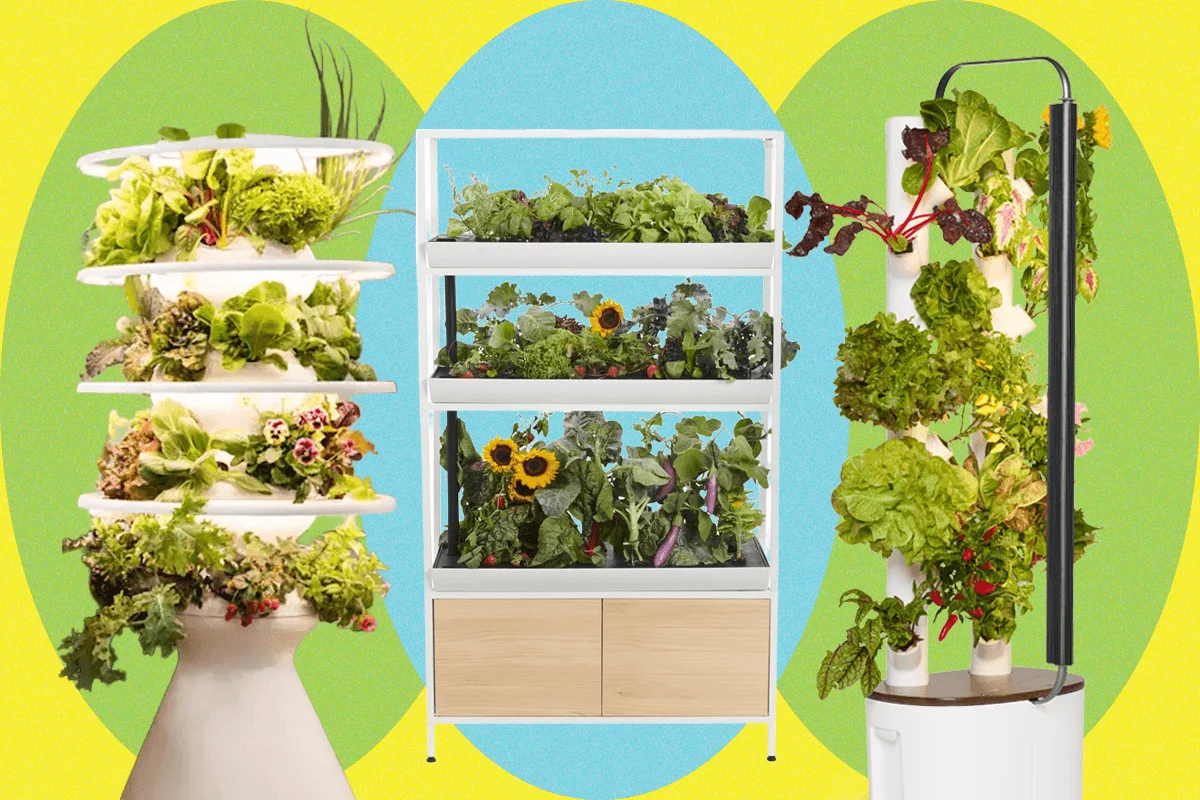
The landscape of domestic agriculture has undergone a significant transformation over the last decade, shifting from traditional backyard plots to high-tech, soil-free systems designed for urban environments. At the forefront of this movement is Gardyn, a company that has integrated advanced robotics and artificial intelligence into the home gardening experience. The release of the Gardyn Home 4.0 represents the latest iteration of this technology, promising a "plug-and-play" solution for consumers seeking to grow a diverse array of produce—ranging from leafy greens like Tokyo bekana to hearty vegetables like kohlrabi and cauliflower—within the confines of their living rooms.
The Evolution of Indoor Hydroponics: Context and Background
Hydroponics, the method of growing plants without soil by using mineral nutrient solutions in a water solvent, was once the domain of commercial greenhouses and research laboratories. However, as urbanization increases and concerns over food security and pesticide use grow, the demand for residential systems has surged. The global indoor farming market was valued at approximately $40 billion in 2022 and is projected to grow at a compound annual growth rate (CAGR) of over 10% through 2030.
Gardyn entered this market with a focus on verticality and aesthetics. Unlike many horizontal hydroponic trays that require significant floor space, Gardyn’s pipe-based tower system utilizes vertical space, making it suitable for apartments and small homes. The Home 4.0 model builds upon its predecessors by refining the assembly process and enhancing the integration of its proprietary AI assistant, Kelby.
Technical Specifications and System Architecture
The Gardyn Home 4.0 is engineered as a recirculating hydroponic system. The unit stands as a vertical tower with two light bars positioned in front of the growth columns. This specific configuration is a departure from many competitors that place lights within the columns; by placing them in front, Gardyn allows for "taller plant growth," as the foliage is not restricted by overhead light fixtures.
Key Hardware Components:
- Dimensions: The unit occupies a footprint of approximately 24 inches in height (for the Studio model) or larger for the Home model, with a depth of 7 inches and a width of 16 inches.
- Capacity: The Home model supports up to 30 plants simultaneously, while the more compact Studio model supports 16.
- Lighting: The system utilizes full-spectrum LED grow lights, consuming approximately 40 watts of power. These lights are programmed to run on a 14-to-16-hour cycle, mimicking natural sunlight.
- Nutrient Delivery: The system includes a 7-inch-tall bottle of 7-3-11 (Nitrogen-Phosphorus-Potassium) plant food. The water pump is programmed to run for five minutes, three times a day, though this frequency is dynamically adjusted by the system’s AI.
The plants themselves are housed in "yCubes"—proprietary pods containing seeds tucked into mineral wool. These cubes slot into "yPods," which are then inserted into the vertical pipes. This modular design allows for the easy rotation and replacement of crops.
The Role of Artificial Intelligence: The Kelby Assistant
The defining feature of the Gardyn ecosystem is "Kelby," an AI-driven horticultural assistant. Kelby utilizes a suite of sensors and cameras embedded in the hardware to monitor plant health in real-time. According to industry insiders, the underlying architecture of Kelby is based on OpenAI’s ChatGPT, which has been customized with a specific horticultural prompt layer to provide tailored advice.
Kelby automates the most complex aspects of hydroponics, including:
- Watering Schedules: Adjusting the pump frequency based on the growth stage of the plants and ambient humidity.
- Lighting Optimization: Modifying light intensity and duration to maximize photosynthesis while minimizing energy consumption.
- Maintenance Alerts: Notifying the user when the water tank requires a refill or when it is time to add nutrients.
Access to Kelby’s full suite of automated features requires a monthly subscription, which adds an estimated $259 per year to the base purchase price. This subscription model has become a point of contention among some consumers, though Gardyn offsets the cost by including monthly "credits" that can be used to purchase new yCubes. Users can opt-out of the subscription and use the device in manual mode, though this requires a significantly higher level of botanical knowledge and daily oversight.
Operational Chronology and Maintenance Requirements
Owning a Gardyn Home 4.0 is not a passive endeavor. While the AI manages the biological cycles, the physical maintenance remains the responsibility of the owner. A typical operational timeline includes:
- Initial Setup: Assembly is noted as one of the most streamlined in the industry, with most users able to go from box to planting in under an hour.
- Germination (Days 1-14): Seeds are started in the yCubes. While Gardyn sells an $80 "Nursery" for this purpose, seeds can also be germinated within the main system, provided nutrients are withheld until sprouts appear.
- Growth Phase (Weeks 3-8): Plants begin to mature. During this phase, users must check the roots every two to three weeks to prevent "root rot" and ensure that roots do not grow outside the yPods and clog the internal piping.
- System Reset (Monthly): Every four weeks, the base water tank must be emptied, scrubbed, and refilled with fresh water and nutrients to prevent the buildup of algae and mineral salts.
Failure to adhere to this maintenance schedule can lead to catastrophic system failure. On a scale of ease-of-resetting, the Gardyn Home 4.0 is rated at a 2/10 by long-term testers, indicating that the cleaning process is labor-intensive and requires thorough scrubbing of every column section and yPod.
Cybersecurity and Privacy Vulnerabilities
As with many Internet of Things (IoT) devices equipped with cameras and microphones, the Gardyn system has faced scrutiny regarding data security. In early 2026, the US Cybersecurity and Infrastructure Security Agency (CISA) issued two critical advisories (ICSA-26-055-03) regarding the Gardyn Home and Studio devices.
The advisories highlighted vulnerabilities that could potentially allow unauthorized actors to:
- Take remote control of the device’s hardware.
- Access photos of the plants (and the surrounding room) taken by the onboard cameras.
- Obtain sensitive personal information, including names, physical addresses, and contact details.
In response to these findings, Gardyn issued a statement claiming that these vulnerabilities were remediated through a mandatory firmware update. The company has advised all users to ensure their devices are running firmware version 619 or later and to maintain a constant internet connection to receive security patches. This incident underscores the broader risks associated with bringing "smart" cameras into private living spaces.
Market Comparison: Home 4.0 vs. Studio 2
Gardyn currently offers two primary models: the flagship Home 4.0 and the more compact Studio 2. While the Studio 2 features upgraded cameras and columns, it utilizes a single light bar rather than the double light bar found on the Home 4.0.
Data from long-term testing suggests that the Home 4.0 remains the superior choice for high-yield harvests. The dual-light configuration provides more uniform coverage, resulting in "plusher" and more robust plant growth. The Studio 2, while more space-efficient, may struggle with light-hungry crops like miniature sunflowers or large-leafed kohlrabi. Both models feature a "Vacation Mode," a software setting that slows plant metabolism by reducing light and water frequency, allowing the system to survive for up to two weeks without user intervention.
Implications for the Future of Domestic Food Production
The Gardyn Home 4.0 is more than a consumer appliance; it is a case study in the "service-ification" of hardware. By tethering the hardware to an AI subscription, Gardyn has created a recurring revenue model that ensures the company can continue to provide software updates and security patches. However, this also means that the device’s utility is partially dependent on the company’s long-term financial stability and server uptime.
From a sustainability perspective, the system offers significant advantages. It eliminates the carbon footprint associated with transporting produce from farm to grocery store and reduces water usage by up to 95% compared to traditional soil-based gardening. Furthermore, the ability to grow "Chef Faves" like Thai basil and breen greens at home provides a level of freshness that cannot be replicated by commercial supply chains.
In conclusion, the Gardyn Home 4.0 stands as a high-performance, aesthetically pleasing entry into the smart home market. While it requires a commitment to physical maintenance and a recurring financial investment in the Kelby AI, its ability to produce dramatic agricultural success in a small footprint is currently unmatched in the consumer hydroponic space. As urban living continues to become the global norm, systems like Gardyn may transition from luxury items to essential household utilities.
