

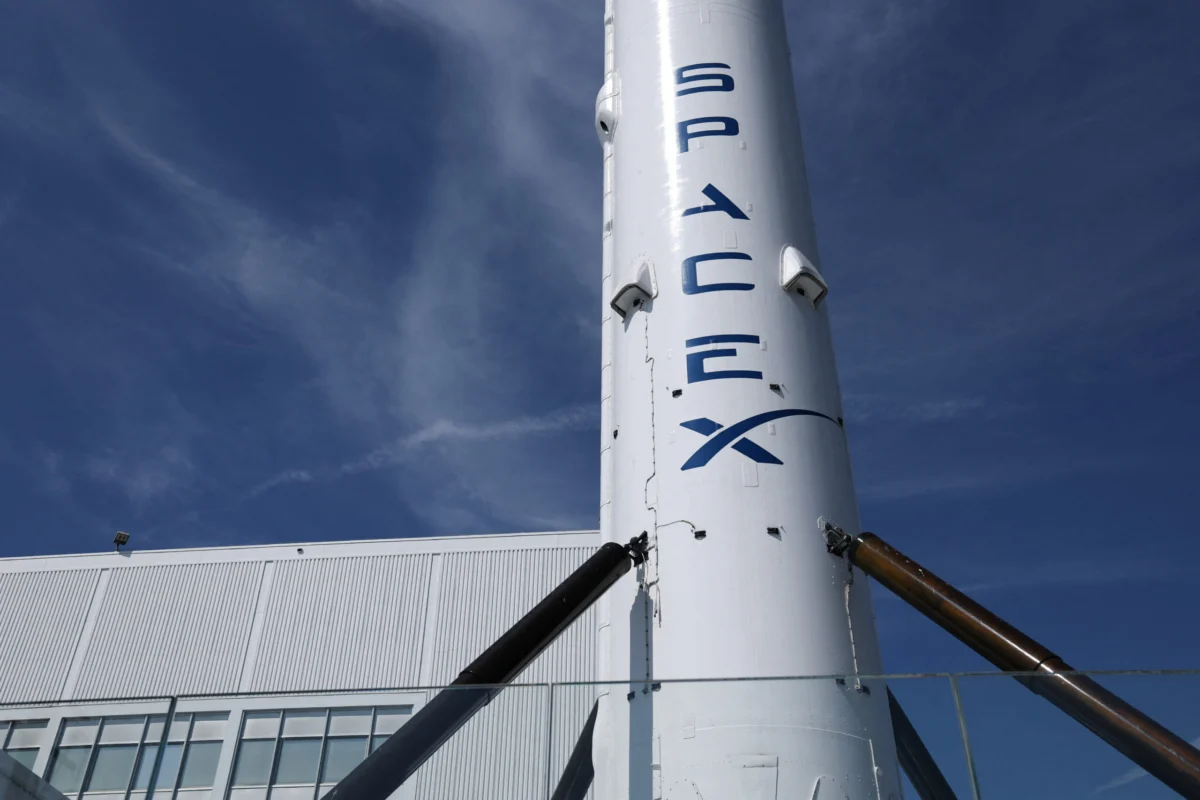
Jim Cramer, the veteran host of CNBC’s Mad Money, issued a stark warning to investors on Friday, expressing profound concern over what he describes as burgeoning speculative excess within the initial public offering (IPO) market. Highlighting the recent market debut of artificial intelligence chipmaker Cerebras Systems as a cautionary tale, Cramer cautioned that the highly anticipated public offering of Elon Musk’s SpaceX could trigger a wave of irrational exuberance, potentially destabilizing the broader financial landscape. The warning comes at a pivotal moment for the equity markets, as a series of high-valuation technology companies prepare to transition to the public sphere amidst an environment already heightened by intense interest in artificial intelligence and aerospace innovation.
The Cerebras Precedent and the Risk of "Low Float" Volatility
The catalyst for Cramer’s immediate concern was the performance of Cerebras Systems, an AI hardware firm that recently debuted on the public market. While the stock saw a significant first-day surge, Cramer characterized the price action as "wrong," suggesting that the spike was more a result of engineered scarcity than a measured reflection of corporate value. When a company goes public by offering only a "sliver" of its total shares—a practice often referred to as a low-float IPO—the limited supply can lead to extreme price volatility if demand is high.
Cramer’s critique of the Cerebras debut centers on the idea that such "pops" are often artificial. When underwriters limit the number of shares available to the public, they can effectively manufacture a surge in stock price, creating a narrative of success that may not be supported by the company’s long-term fundamentals. Cramer warned that this pattern is beginning to replicate the behavior seen during the late 1990s, where speculative fervor eventually led to a catastrophic market correction.
The SpaceX Factor: A Multi-Trillion Dollar Variable
The focal point of the current IPO discourse is SpaceX, Elon Musk’s aerospace and satellite communications giant. Reports indicate that the company could release its prospectus as early as next week, with a public debut tentatively scheduled for June. SpaceX is not merely a rocket company; it is a conglomerate that encompasses the Starlink satellite internet constellation, the social media platform X (formerly Twitter), and the Grok artificial intelligence chatbot.
Various media reports and financial analysts suggest that SpaceX could seek a valuation between $1.75 trillion and $2 trillion. To put this in perspective, such a valuation would immediately place SpaceX among the top five most valuable companies in the world, rivaling the market caps of tech titans like Alphabet (Google), Amazon, and Nvidia. Cramer noted that while the enthusiasm surrounding Musk’s ventures is understandable given his track record of disruption, the sheer scale of the offering poses a systemic risk.
"If SpaceX issues just a sliver of stock… this company could have a $5 trillion valuation," Cramer remarked, highlighting the danger of a runaway market cap driven by restricted supply. He argued that SpaceX has the potential to "create a bubble unto its own," where the gravity of its valuation pulls capital away from other sectors and creates a distorted perception of market health.

Chronology of the 2024 IPO Resurgence
The current concern over speculative excess follows a period of relative dormancy in the IPO market. After the record-breaking activity of 2021, the market for new issues cooled significantly in 2022 and 2023 due to rising interest rates and geopolitical uncertainty. However, 2024 has seen a marked shift in sentiment:
- January – March 2024: Market sentiment began to thaw as the Federal Reserve signaled a potential end to its rate-hiking cycle. Investors started looking for high-growth opportunities, particularly in the AI sector.
- April 2024: Rumors began to circulate regarding confidential IPO filings by several "decacorns"—startups valued at over $10 billion.
- May 14, 2024: Cerebras Systems went public, experiencing a "blockbuster" debut that saw its share price soar, sparking debates about whether the AI trade was becoming overcrowded.
- May 15, 2024: Reports emerged that SpaceX was preparing to release its prospectus, setting the stage for one of the largest financial events in history.
- June 2024 (Anticipated): The expected window for the SpaceX IPO, which many analysts believe will serve as a litmus test for the market’s appetite for high-valuation tech.
Supporting Data: The Magnitude of the SpaceX Ecosystem
To understand why Cramer is concerned about a $2 trillion to $5 trillion valuation, it is necessary to examine the components of the SpaceX business model. As of early 2024, Starlink has deployed over 5,000 satellites and boasts more than 2.6 million customers globally. Internal projections suggest Starlink could eventually generate $30 billion in annual revenue, providing the cash flow necessary to fund Musk’s ambitions for Mars colonization.
Furthermore, the integration of X and Grok into the SpaceX ecosystem adds a layer of complexity. X provides a massive data pipeline for training AI models, while Grok represents a direct competitor to OpenAI’s ChatGPT and Google’s Gemini. Analysts suggest that the "Musk Premium"—the added value investors place on companies led by Elon Musk—could drive the SpaceX valuation far beyond traditional discounted cash flow models. However, this premium is also what makes the stock susceptible to extreme volatility should Musk’s personal brand or his other ventures face setbacks.
The Looming Pipeline: OpenAI and Anthropic
SpaceX is not the only high-profile company on the horizon. Cramer pointed out that a successful, albeit speculative, SpaceX debut would likely clear the path for other artificial intelligence leaders like OpenAI and Anthropic. OpenAI, currently valued at over $80 billion in private markets, and Anthropic, which has received billions in investment from Amazon and Google, are both viewed as "must-own" stocks for institutional investors.
The concern is that a "wave of massive technology IPOs" could begin to weigh on the overall market. Cramer explained the mechanics of this threat through the lens of supply and demand. "The stock market, like any other market, is all about supply and demand," he stated. "Too much supply and the market breaks down."
When trillion-dollar companies go public, institutional investors often have to sell their existing holdings in established companies—such as Apple, Microsoft, or Berkshire Hathaway—to raise the necessary capital to participate in the new issues. If this happens on a large enough scale, it can lead to a broad-based market sell-off as liquidity is sucked out of the "old guard" of the S&P 500 to fund the "new guard" of AI and space exploration.
Historical Context: Lessons from the Dot-com Era
Cramer’s warnings are deeply rooted in the history of the 1999-2000 dot-com bubble. During that period, investment banks and underwriters frequently engineered massive first-day "pops" for internet startups with little to no revenue. These pops created a feedback loop of speculation, where retail investors felt compelled to buy into any new issue regardless of price, fearing they would miss out on the next big thing.

"Hope the underwriters act responsibly rather than engineering the pops of a lifetime," Cramer urged. "They did the latter during the dot-com era and that ended horribly." The "horrible" ending Cramer referred to was the Nasdaq crash of 2000, which saw the tech-heavy index lose nearly 76% of its value over two years, wiping out trillions of dollars in household wealth.
The current environment mirrors the late 90s in several ways: the emergence of a transformative technology (AI vs. the Internet), a period of high interest in retail trading, and a handful of charismatic leaders driving the narrative. Cramer’s plea to underwriters is a call for "price discovery"—the process of finding a stock’s true value based on supply and demand—rather than "price engineering."
Analysis of Broader Market Implications
The potential for a SpaceX IPO to reach a $5 trillion valuation carries significant implications for index funds and exchange-traded funds (ETFs). If SpaceX enters the public market at such a size, it would immediately become a dominant component of the S&P 500 and the Nasdaq-100. This would force passive index funds to buy massive amounts of the stock to maintain their tracking, further driving up the price in a self-fulfilling prophecy of valuation.
However, the risk remains that if the initial "sliver" of shares is followed by a massive secondary offering—where the company or early investors sell more shares—the sudden increase in supply could cause the price to crater. This "lock-up expiration" or secondary supply shock is a common feature of speculative IPOs and often leaves retail investors holding the bag.
Furthermore, the concentration of so much market value in a single individual’s ventures (Tesla, SpaceX, X) creates a unique form of "key man risk." Any event affecting Elon Musk’s ability to lead or his public standing could have a multi-trillion dollar impact on the global economy.
Conclusion: A Call for Caution
While Jim Cramer acknowledged the undeniable innovation and potential of SpaceX and the broader AI sector, his message remains one of caution. The intersection of low-float offerings, massive valuations, and a pipeline of high-profile IPOs creates a volatile cocktail that could threaten the stability of the current market rally.
As the financial world awaits the SpaceX prospectus, the focus will be not just on the company’s orbital achievements, but on the responsibility of the financial institutions bringing it to market. If underwriters prioritize long-term stability over short-term "pops," the market may be able to absorb these giants. If not, as Cramer warns, the market may find itself repeating the most painful lessons of its own history. For investors, the takeaway is clear: in a market driven by supply and demand, the most dangerous price is the one detached from reality.
