

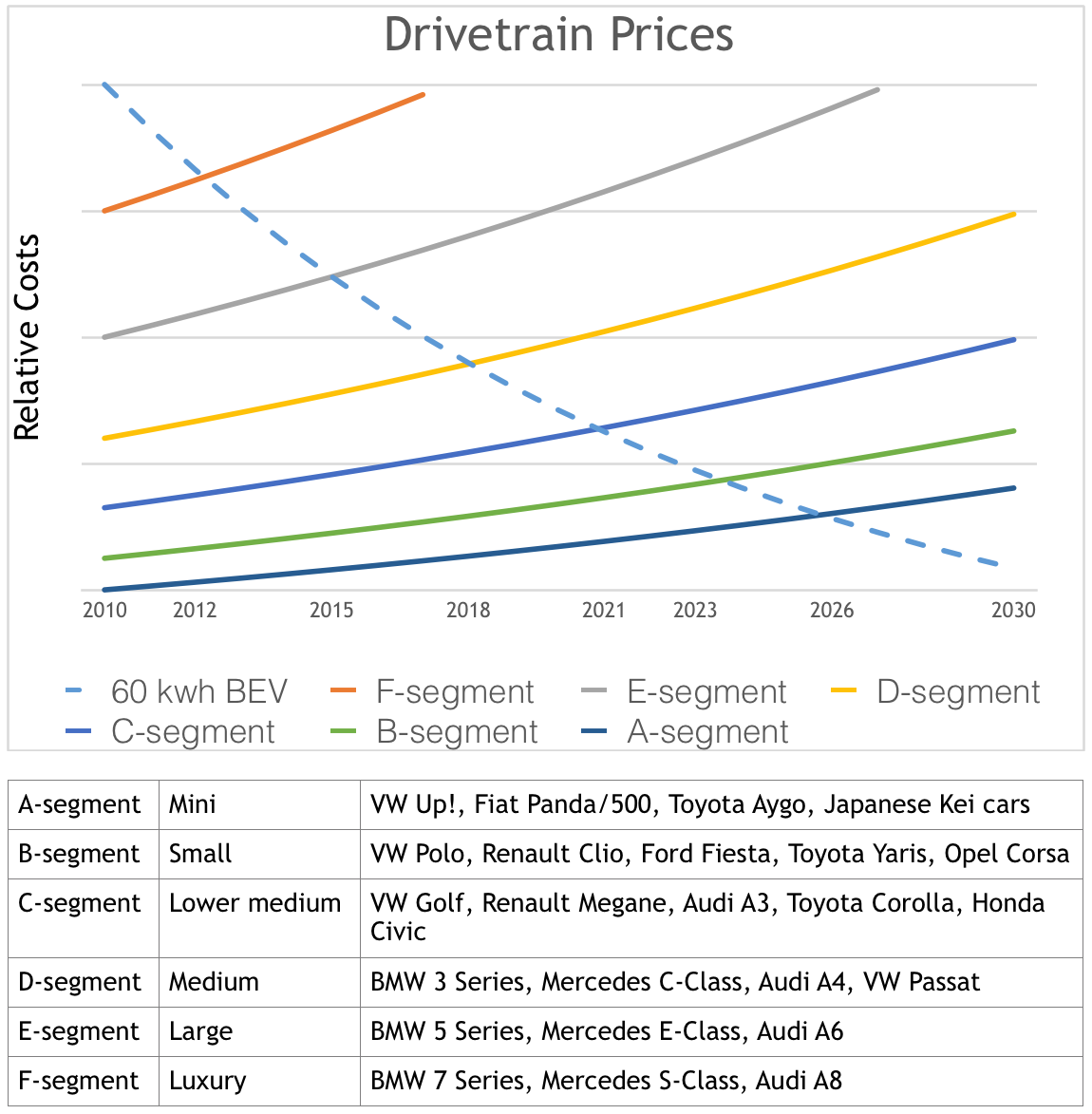
The Colombian automotive market is currently undergoing a structural transformation that mirrors the long-predicted "Osborne Effect," a phenomenon where consumers defer purchases of current technology in anticipation of a superior, more cost-effective successor. In the context of the global energy transition, this effect is manifesting as a rapid shift from internal combustion engine (ICE) vehicles to electric vehicles (EVs). While the concept of price parity—the point at which an EV costs the same as an equivalent gasoline or diesel vehicle—was once viewed as a distant milestone for the late 2020s, recent market data from Colombia suggests that this threshold has not only been reached but, in several key segments, surpassed. Driven by an influx of affordable Chinese manufacturing and the disruptive entry of Tesla into the Andean market, the transition is moving at a velocity that exceeds both historical projections and infrastructure development.
The Evolution of the Colombian EV Landscape
To understand the current state of the market, one must look back to the pre-pandemic era of 2019. At that time, the electric vehicle market in Colombia was characterized by high entry barriers and limited consumer choice. An EV, such as the Renault Zoe equipped with a 40 kWh battery, typically cost three times as much as a comparable internal combustion model like the Renault Sandero. During this period, EVs were viewed as luxury items or niche technological experiments rather than practical transportation solutions for the masses. Total annual sales for the entire country were frequently measured in the hundreds, representing a negligible fraction of total automotive volume.
By 2022, the price gap began to narrow as emerging Chinese brands entered the market, offering vehicles that were approximately twice the cost of their ICE counterparts. However, the true inflection point occurred between 2024 and 2026. This period saw the introduction of high-volume, hyper-affordable models that challenged the traditional pricing structures of established European, Japanese, and American manufacturers.
Chronology of Market Disruption: 2024–2026
The timeline of Colombia’s EV acceleration is marked by three distinct phases of competitive pressure:
- The Entry-Level Surge (Early 2024): The arrival of the BYD Seagull and the Yuan Up introduced a new floor for EV pricing. These models targeted the urban commuter segment, providing sufficient range and modern amenities at prices that began to pressure the low-end ICE market.
- The SUV and Off-Road Expansion (Mid-2025): The market diversified with the introduction of capable electric SUVs. The Chery ICar 03 emerged as a significant player, offering the country’s first affordable, off-road-capable EV. This addressed a major consumer hurdle: the perception that EVs were limited to paved city streets.
- The Tesla Catalyst (Late 2025 – 2026): Tesla’s formal entry into the Colombian market acted as a force multiplier. By offering the Model 3 and Model Y at prices that were among the most competitive globally, Tesla triggered a systemic "price war." This forced both EV competitors and traditional ICE manufacturers to recalibrate their pricing strategies to remain relevant.
Comparative Data: The Achievement of Price Parity
The most compelling evidence of the market shift lies in the direct price comparisons across various vehicle segments. In 2026, the cost of ownership and the initial purchase price of EVs have reached a level where they are often the more economical choice.
The SUV Segment
The SUV remains the most popular vehicle category in Colombia. In this segment, the price disparity has effectively vanished. The Chery E5, a 4.5-meter SUV, is currently priced at approximately $21,150. For comparison, the fossil-fuel-powered MG ZS is priced only slightly lower at $20,000. However, when compared to a mainstream premium ICE competitor like the Mazda CX30, which retails for $29,900, the EV alternative represents a significant upfront saving of nearly $9,000.
The Sedan and Hatchback Segments
In the sedan market, Tesla has disrupted the hierarchy. The Model 3 has become the top-selling sedan in the country, outselling significantly cheaper gasoline models like the Renault Logan and Mazda 2. This suggests that consumers are willing to pay a moderate premium for the perceived value, technology, and status of a Tesla, even when more "affordable" gasoline options exist.
In the hatchback segment, which is vital for Colombia’s middle-class urban population, the Geely EX2, Dongfeng Box, and MG4 have all stabilized at prices below $20,000. The GAC Aion UT, a larger and more feature-rich hatchback, is priced at $21,150. This places these vehicles in direct competition with the Suzuki Swift and Chevrolet Onix, which have long dominated the segment.

The Tesla Effect and Market Mainstreaming
The "Tesla Effect" in Colombia refers to more than just competitive pricing; it represents the psychological mainstreaming of electric mobility. As of April 2026, battery electric vehicles (BEVs) achieved a 20% market share, a figure that was unthinkable five years prior. The Model Y’s performance is particularly noteworthy, becoming the most-sold vehicle in the country for consecutive months in early 2026, nearly tripling the sales volume of the second-place Renault Duster, a perennial favorite in the Colombian market.
This surge in sales has shifted the public discourse. Automotive forums and social media groups, which were once skeptical of EV technology, now largely view electric propulsion as the inevitable future. The primary concern for consumers has shifted from "Will the technology work?" to "Is the infrastructure ready for my needs?" This transition indicates that the technological hurdle has been cleared, leaving only logistical challenges to be resolved.
Infrastructure Challenges and the Charging Bottleneck
Despite the rapid adoption of vehicles, the physical infrastructure in Colombia is struggling to keep pace. The growth in EV sales has outstripped the installation of fast-charging stations, leading to significant bottlenecks during peak travel seasons. Reports from late 2025 indicated wait times of up to 12 hours at popular 50 kW charging points along major transit corridors.
The private sector has responded with the launch of several new charging network apps and increased investment in station deployment. Furthermore, a grassroots movement among apartment owners is currently pressuring residential complexes to allow the installation of private charging ports in designated parking spots. Under Colombian law, parking spaces are often privately owned, yet homeowners’ associations (HOAs) frequently deny requests for electrical modifications. Legal and regulatory clarity on this issue is expected to be a major focus for the Ministry of Mines and Energy in the coming year.
Government Policy and Economic Incentives
A critical factor in Colombia’s status as an EV leader in the region is the proactive stance of the national government. To stimulate adoption, the government implemented several key fiscal measures:
- Tariff Exemptions: BEVs are currently exempt from the high import tariffs that typically apply to foreign-made vehicles.
- Preferential VAT: While the standard Value Added Tax (VAT) in Colombia is 19%, BEVs are subject to a reduced rate of only 5%. This 14-percentage-point difference is often the deciding factor in achieving price parity at the dealership.
- Traffic Exemptions: In major cities like Bogotá and Medellín, "Pico y Placa" (peak and plate) restrictions limit the days on which specific ICE vehicles can be driven to reduce congestion. EVs are generally exempt from these restrictions, providing a massive utility advantage for daily commuters.
Analysts suggest that these incentives may be phased out toward the end of the decade as the market matures. However, the hope is that by that time, global battery prices—particularly for Lithium Iron Phosphate (LFP) cells—will have dropped sufficiently to maintain price parity without government intervention.
Implications and Future Outlook
The Colombian experience serves as a blueprint for other developing nations. It demonstrates that when the barriers of cost are removed through a combination of aggressive competition and supportive policy, consumer demand for electric mobility is virtually limitless. The transition is no longer driven by environmental altruism but by cold economic logic: EVs are becoming better, faster, and cheaper than the cars they are replacing.
The "Osborne Effect" is now in full swing. As the used car market for ICE vehicles begins to see declining residual values due to the shift in consumer preference, the move toward electrification is expected to accelerate further. If current trends hold, industry experts project that electric vehicles could account for 50% of all new car sales in Colombia by 2028.
While the "charging bottleneck" remains a valid concern, the market has reached a point of no return. The influx of diverse models from brands like Deepal, GAC Aion, and Geely, combined with the market-defining presence of Tesla and BYD, has created a competitive ecosystem that benefits the consumer. The road ahead for Colombia is one where the internal combustion engine moves from a necessity to a legacy technology, as the country positions itself as a leader in the South American energy transition.
