

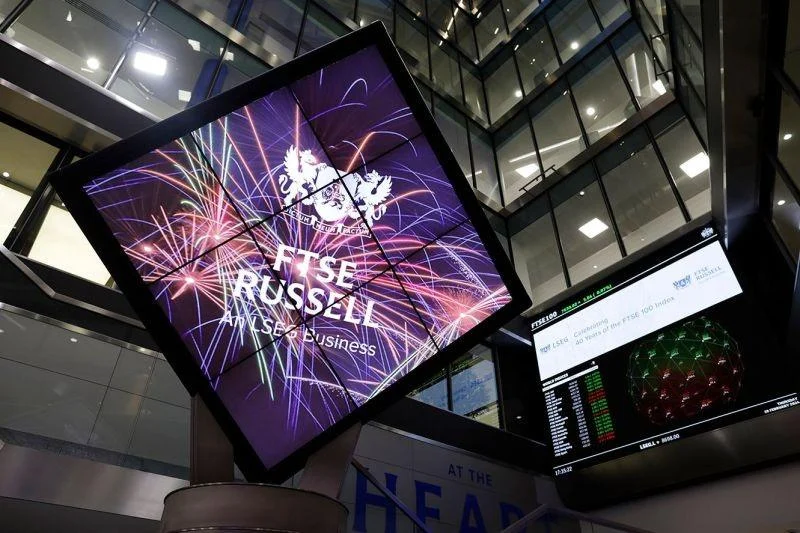
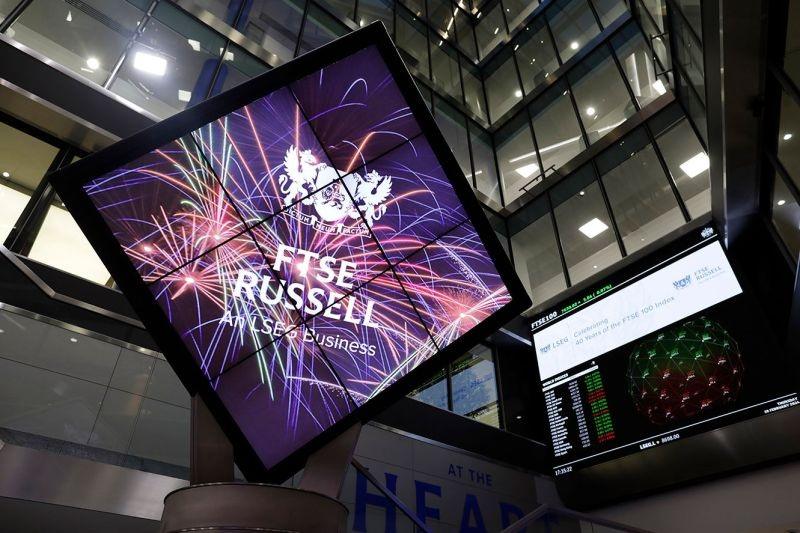
In a significant move to bridge the gap between climate science and financial markets, global index provider FTSE Russell and climate risk analytics firm Planetrics have announced a strategic Memorandum of Understanding (MoU) to develop a new suite of climate-scenario based indices and analytics. This collaboration aims to provide institutional investors, asset managers, and financial institutions with the sophisticated tools necessary to integrate forward-looking climate insights directly into their investment processes. The partnership represents a pivotal shift in the evolution of sustainable finance, moving beyond static Environmental, Social, and Governance (ESG) scores toward dynamic, scenario-based financial modeling that accounts for both the physical and transition risks of a warming planet.
The agreement comes at a time when the global financial community is under increasing pressure from regulators, shareholders, and the public to quantify the financial implications of climate change. By combining FTSE Russell’s extensive experience in benchmark construction and governance with Planetrics’ advanced analytical capabilities, the two organizations seek to create a new standard for climate-adjusted investment benchmarks. The companies have indicated that the first products resulting from this collaboration are expected to be brought to market in late 2026.
The Strategic Framework of the Partnership
Under the terms of the newly signed MoU, Planetrics will provide FTSE Russell with access to its proprietary climate risk analytics, high-resolution models, and suite of scenario tools. These tools are designed to model a variety of "plausible futures," ranging from orderly transitions to net-zero emissions to more chaotic, "disorderly" scenarios involving sudden policy shifts or severe physical climate shocks.
FTSE Russell will hold primary responsibility for the governance, calculation, and commercial distribution of the resulting indices. This ensures that the new climate benchmarks will benefit from the same rigorous oversight and transparency that define FTSE Russell’s existing suite of global indices, such as the FTSE 100 and the Russell 2000. Planetrics will support these efforts by providing ongoing research expertise, technical depth, and the underlying data inputs required to maintain the accuracy of the climate-scenario overlays.
The partnership is designed to address a critical "data gap" in the market. While many investors currently use carbon footprinting as a proxy for climate risk, carbon intensity is often a backward-looking metric that does not capture a company’s strategic resilience or its exposure to future regulatory changes. The new indices will instead focus on "Climate Value-at-Risk" (CVaR) and other forward-looking indicators that reflect how a company’s valuation might change under different temperature pathways.
Background and Evolution of Planetrics
Founded in 2014, Planetrics has established itself as a leader in the specialized field of climate-scenario modeling. Unlike traditional financial data providers that may rely on self-reported corporate data, Planetrics utilizes a "bottom-up" approach. This involves analyzing asset-level data—such as the specific geographic location of a company’s factories or the carbon intensity of its specific supply chains—and then overlaying these with macroeconomic models.
In early 2026, Planetrics was acquired by SLR, a global sustainability consultancy. This acquisition provided Planetrics with the capital and global reach needed to scale its technical solutions. The integration into SLR allowed Planetrics to leverage a broader pool of environmental scientists and engineers, further refining the accuracy of its physical risk models, which assess the potential impact of extreme weather events like floods, wildfires, and droughts on corporate assets.
Thomas Bremner Bligaard, Executive Director at Planetrics, emphasized that the collaboration with FTSE Russell is a response to a maturing market. According to Bligaard, the industry is moving from a phase of simply acknowledging that climate risk exists to a phase where that risk must be accurately priced into every asset class. He noted that the granularity of Planetrics’ modeling allows for portfolio signals that are precise enough to support active risk management and strategic capital allocation.
Understanding the Two Pillars of Climate Risk: Physical and Transition
The indices developed through this partnership will focus on two primary categories of climate risk, both of which have profound implications for long-term investment returns.
1. Transition Risk
Transition risks emerge from the global shift toward a low-carbon economy. This includes changes in government policy (such as carbon taxes or emissions limits), technological breakthroughs (such as the rapid decline in the cost of renewable energy), and shifts in market sentiment or consumer behavior. The FTSE Russell-Planetrics indices will model how these factors impact corporate supply chains, production costs, and competitive positioning. For example, a heavy industrial company might face significant transition risk from rising carbon prices, but it could also find opportunities if it possesses the technology to produce low-carbon steel or cement.
2. Physical Risk
Physical risks refer to the tangible damage caused by climate change. These are divided into "acute" risks, such as increased frequency of hurricanes or floods, and "chronic" risks, such as long-term sea-level rise or persistent heatwaves that reduce labor productivity and agricultural yields. The partnership’s analytics will help investors identify which companies have assets located in high-risk zones and how those risks might affect insurance costs, asset valuations, and operational continuity.
Chronology of Climate Index Innovation
The announcement of this partnership is the latest milestone in a decade-long effort to integrate environmental factors into financial benchmarks.
- 2014: Planetrics is founded, focusing on the intersection of climate science and macroeconomic modeling.
- 2015: The Paris Agreement is adopted, creating a global mandate to limit warming to well below 2 degrees Celsius. This sparks the first wave of "low-carbon" indices.
- 2017: The Task Force on Climate-related Financial Disclosures (TCFD) releases its recommendations, urging companies to disclose climate risks.
- 2021-2023: Major index providers, including FTSE Russell, launch "Paris-Aligned" and "Climate Transition" benchmarks to meet new EU regulatory standards.
- Early 2026: SLR acquires Planetrics, signaling a consolidation in the climate data and consulting space.
- May 2026: FTSE Russell and Planetrics announce their MoU to develop next-generation scenario-based indices.
This timeline illustrates a clear trajectory toward greater sophistication. Early climate indices often relied on simple exclusions (e.g., removing coal companies). The new generation of indices represented by the FTSE-Planetrics partnership will instead use complex simulations to determine which companies are "transition leaders" and which are "transition laggards" across all sectors, including those traditionally seen as hard to abate.
Regulatory and Market Drivers
The demand for these indices is driven by a tightening global regulatory environment. In Europe, the Corporate Sustainability Reporting Directive (CSRD) and the Sustainable Finance Disclosure Regulation (SFDR) have set high bars for transparency. In the United States, despite political debates, the Securities and Exchange Commission (SEC) and various state-level regulators have moved toward requiring more robust climate risk disclosures.
Furthermore, the International Sustainability Standards Board (ISSB) has unified global reporting frameworks, making it easier for data providers like Planetrics to access the high-quality corporate data needed for their models. For institutional investors, particularly pension funds with multi-decadal time horizons, the ability to stress-test a portfolio against a "3-degree world" versus a "1.5-degree world" is no longer a luxury but a fiduciary necessity.
Official Responses and Industry Outlook
Stephanie Maier, Global Head of Sustainable at FTSE Russell, highlighted the innovative nature of the partnership, stating that it reflects a commitment to developing transparent indices that help clients navigate the low-carbon transition. Maier noted that the investment landscape is increasingly defined by climate considerations, and the partnership with Planetrics allows FTSE Russell to meet the evolving needs of the market with robust, research-led frameworks.
Industry analysts suggest that the launch of these indices could influence billions of dollars in capital flows. As more assets are managed against climate-aware benchmarks, companies that demonstrate resilience to climate shocks and a clear path to decarbonization are likely to see a lower cost of capital. Conversely, those that fail to adapt may find themselves excluded from these prestigious indices, leading to potential divestment from passive and active funds alike.
Broader Implications for Financial Stability
Beyond individual portfolios, the development of climate-scenario indices has implications for global financial stability. Central banks, under the umbrella of the Network for Greening the Financial System (NGFS), have warned that a sudden "Minsky Moment"—a wholesale repricing of climate risk—could destabilize the financial system. By providing the market with more accurate, forward-looking tools to price these risks incrementally, the FTSE Russell and Planetrics partnership may contribute to a more orderly and predictable market transition.
As the financial world looks toward the end of 2026 for the official launch of these indices, the partnership stands as a testament to the increasing convergence of climate data and financial engineering. For investors, the message is clear: the future of indexing is not just about tracking the market as it is today, but about navigating the complexities of the world as it will be in a climate-constrained future.
