

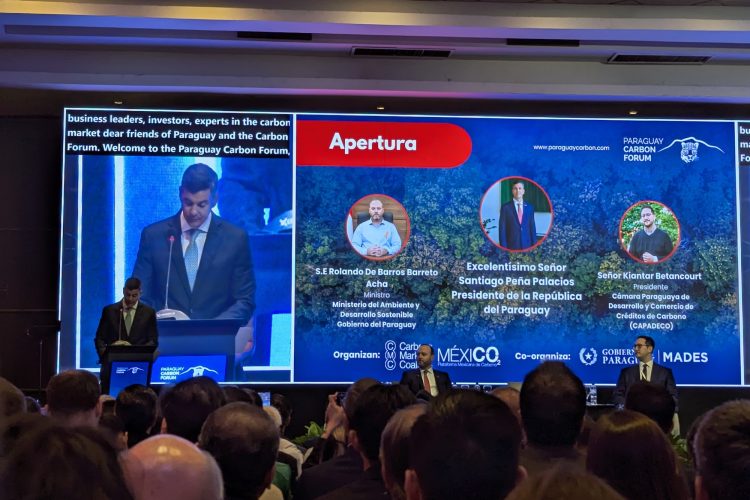
As the global community intensifies its efforts to mitigate the effects of climate change, Paraguay has positioned itself at the forefront of the emerging compliance carbon market. In a landmark two-day event held at the end of March 2026, the first-ever Paraguay Carbon Forum convened in Asunción, bringing together a high-level assembly of government officials, international financiers, project developers, and environmental experts. The forum served as a definitive declaration of the country’s intent to transform its vast natural capital into a sophisticated financial engine, leveraging the mechanisms of the Paris Agreement to drive national development.
President Santiago Peña, addressing the forum’s opening session at the Palacio de los López, emphasized that the transition to a carbon-focused economy is a pillar of his administration’s broader strategy. According to the President, the government is not merely seeking environmental preservation but is focused on mobilizing large-scale investment and strengthening Paraguay’s international competitiveness. By creating a robust legal and regulatory framework, Paraguay aims to provide "concrete development opportunities" for its entire population, moving beyond traditional agricultural exports to become a provider of high-integrity environmental services.
The Shift from Voluntary to Compliance Markets
To understand the magnitude of Paraguay’s ambition, it is essential to distinguish between the two primary types of carbon markets currently operating globally. For years, the voluntary carbon market (VCM) has allowed private companies to purchase credits to offset their emissions. However, the VCM has recently faced significant scrutiny regarding the integrity of its projects. Investigations into major carbon registries have raised concerns over "permanence"—the guarantee that sequestered carbon stays out of the atmosphere—and "additionality"—the proof that the carbon reduction would not have happened without the project’s funding.
In the voluntary market, credits typically trade at lower price points, often ranging between US$5 and US$10 per tonne of carbon dioxide equivalent. In contrast, compliance markets are regulated by national, regional, or international regimes, such as the European Union’s Emissions Trading System (ETS) or various "cap-and-invest" programs. Because these markets are legally mandated, the demand for high-quality, verified credits is significantly higher. In these regulated environments, carbon credits can fetch prices upwards of US$40 per tonne, offering a much more lucrative revenue stream for host countries like Paraguay.

Paraguay is specifically targeting the compliance market by aligning its national legislation with Article 6 of the Paris Agreement. Article 6 provides the framework for countries to cooperate in meeting their Nationally Determined Contributions (NDCs). Specifically, Article 6.2 allows for bilateral agreements where "Internationally Transferred Mitigation Outcomes" (ITMOs) can be traded between nations. By selling these ITMOs to countries that struggle to meet their own targets, Paraguay can secure premium pricing while ensuring that the credits meet the highest standards of international oversight.
A Strategic Timeline of Regulatory Development
Paraguay’s emergence as a carbon market leader is the result of a deliberate, multi-year legislative push. While neighboring giants like Brazil and Argentina have grappled with complex subnational regulations and political shifts, Paraguay has moved with uncharacteristic speed to establish a unified national framework.
The journey began in earnest following the COP26 summit in Glasgow, where the "rulebook" for Article 6 was largely finalized. Recognizing the opportunity, the Paraguayan Congress worked through 2023 and 2024 to draft the Carbon Credits Law. This legislation was designed to provide legal certainty to international investors, defining carbon credits as intangible assets and establishing a clear registry under the Ministry of the Environment and Sustainable Development (MADES).
In May 2025, Paraguay achieved a major diplomatic milestone by signing a comprehensive agreement with Singapore. This partnership was one of the first of its kind globally, establishing a pathway for Singaporean companies to purchase Paraguayan carbon credits to meet a portion of their domestic carbon tax obligations. This deal served as a proof-of-concept, signaling to the world that Paraguay’s regulatory environment was ready for high-stakes international commerce.
Following the Singapore deal, Paraguay secured Memorandums of Understanding (MOUs) with the United Arab Emirates and Taiwan. As of early 2026, nations including New Zealand, Norway, and Sweden have entered formal discussions to explore similar bilateral trades under Article 6.2.
The Renewable Energy Advantage: 100 Percent Green Power
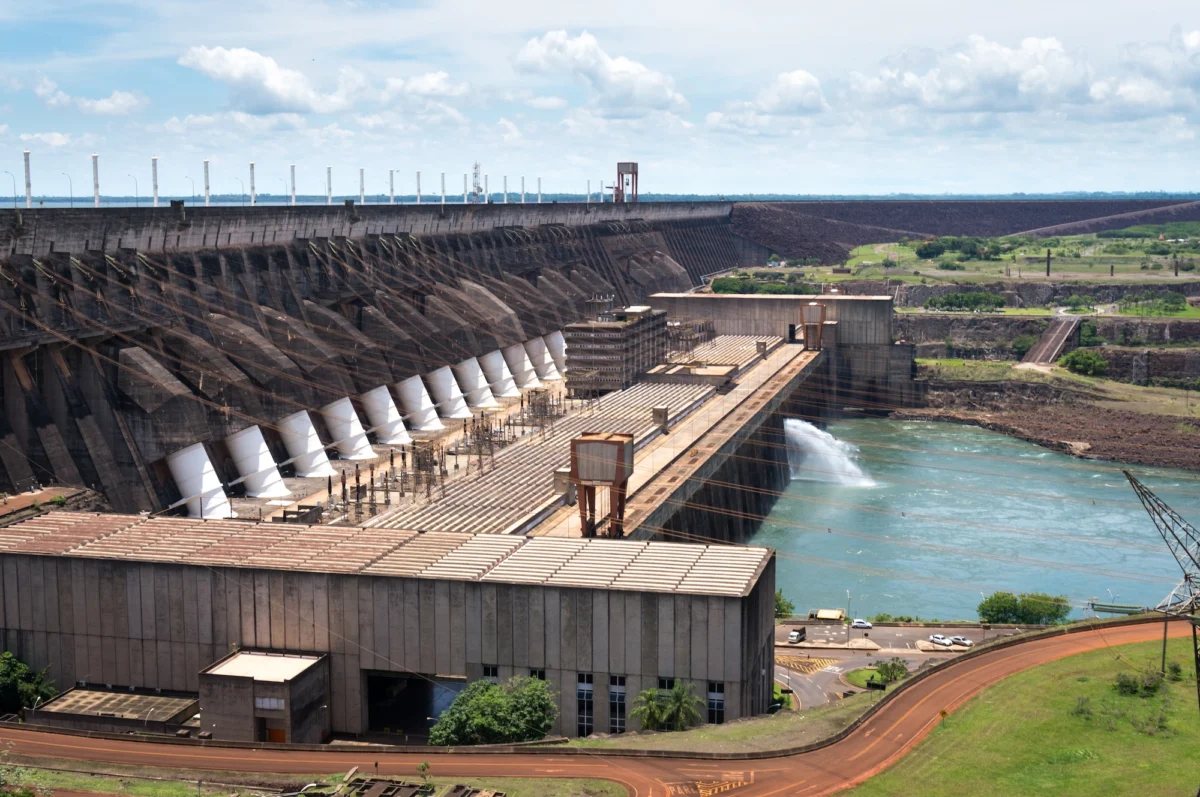
A core component of Paraguay’s value proposition is its unique energy profile. Unlike many of its peers, Paraguay boasts an electricity grid that is 100 percent renewable. This is primarily due to the massive hydroelectric output of the Itaipu Dam, a joint venture with Brazil, and the Yacyretá Dam, shared with Argentina.
This clean energy surplus provides Paraguay with a significant advantage in the carbon market. While many carbon projects in South America are focused on "REDD+" (Reducing Emissions from Deforestation and Forest Degradation), Paraguay can offer credits from a wider variety of sectors. The electrification of industrial processes and the expansion of electric public transport systems represent "low-hanging fruit" for carbon mitigation projects.
Furthermore, Paraguay is exploring the potential of green hydrogen production. By using its abundant hydroelectric power to split water molecules, the country can produce hydrogen for export or domestic use in the shipping and heavy industry sectors. Each of these initiatives generates high-value carbon credits because they represent a clear, verifiable displacement of fossil fuels—a metric that compliance markets value highly.
The "Clean Slate" Advantage in Governance
Victor Gonzalez, the Director of Carbon Markets at MADES, noted during the forum that Paraguay’s relatively late entry into the carbon space has actually functioned as a strategic advantage. "Having a clean slate allows us to avoid the bureaucratic tangles that have slowed down our neighbors," Gonzalez explained.
In countries like Brazil or Mexico, carbon projects often must navigate a patchwork of state and federal laws, which can lead to "double counting"—where both a local province and the national government try to claim the same emission reduction. Paraguay’s centralized system ensures that every credit registered is unique, traceable, and compliant with UN standards. This transparency is vital for maintaining the "reputational" value of the credits, a point Gonzalez emphasized as being more important than the sheer volume of sales.

Michael Berends, CEO of ClearBlue Markets, echoed this sentiment at the forum. He suggested that while Paraguay must move quickly to capture market share, its ability to offer "uncluttered" regulatory pathways makes it an attractive destination for the billions of dollars in climate finance currently looking for a home.
Social Equity and Land Rights Challenges
Despite the economic optimism, the expansion of the carbon market in Paraguay is not without its critics. One of the most contentious issues involves land ownership and the distribution of wealth generated by these projects. Paraguay has one of the highest levels of land concentration in the world, with a small percentage of the population owning the vast majority of arable land.
Victor Vera, a board member of the conservation organization OPADES, raised concerns during the forum regarding the inclusion of marginalized groups. "We are seeing that this framework heavily favors international investment and large-scale landowners," Vera stated. He argued that without specific public policies to protect Indigenous peoples and small-scale producers, the "carbon gold rush" could exacerbate existing social inequalities.
Indigenous communities, who often serve as the primary guardians of Paraguay’s remaining forests in the Chaco and Eastern regions, face the risk of being sidelined in negotiations. There are fears that "carbon land grabs" could occur, where developers lease land for decades at low rates, depriving local communities of their ancestral rights and a fair share of the carbon revenue.
In response to these concerns, government officials have pledged to integrate "social safeguards" into the carbon registry process. This includes requirements for Free, Prior, and Informed Consent (FPIC) for any projects located on or near Indigenous territories. The challenge for the Peña administration will be to ensure these safeguards are not merely box-ticking exercises but are rigorously enforced.

Broader Economic Impact and Regional Implications
The success of Paraguay’s carbon market strategy could have profound implications for the Southern Cone’s economy. If Paraguay successfully scales its Article 6 operations, it could transition from a landlocked nation dependent on commodity exports (soy and beef) to a regional hub for green technology and environmental finance.
The influx of capital from carbon credit sales is expected to be reinvested into climate adaptation infrastructure. Paraguay is highly vulnerable to extreme weather patterns, including prolonged droughts that affect both its agricultural output and its hydroelectric generation. Carbon revenue provides a dedicated funding stream for building resilience, such as improved irrigation systems and forest fire prevention networks.
Moreover, Paraguay’s move is putting pressure on other Latin American nations to modernize their own frameworks. As buyers from Singapore and Europe seek the highest-integrity credits, a "race to the top" may emerge, where countries compete not on price, but on the quality of their monitoring, reporting, and verification (MRV) systems.
Conclusion: A High-Stakes Reputation Game
The 2026 Paraguay Carbon Forum concluded with a sense of cautious urgency. The technical infrastructure is largely in place, the international MOUs are signed, and the political will appears steadfast. However, as Minister Rolando De Barros Barreto Acha noted, the market is "100 percent reputational."
Paraguay’s journey into the global compliance market is a high-stakes gamble on its ability to maintain transparency and equity. If the country can prove that its carbon credits are both environmentally sound and socially responsible, it stands to unlock a multi-billion dollar industry that could redefine its national development for the next century. As the world watches, Paraguay is no longer just a participant in the global climate conversation; it is attempting to write the manual on how a developing nation can turn the challenges of the Paris Agreement into a blueprint for economic sovereignty.
