

The landscape of American democracy underwent a seismic shift last week as the U.S. Supreme Court issued a landmark ruling in Louisiana v. Callais, a decision that legal experts and civil rights advocates warn could signal the end of the Voting Rights Act of 1965 as it was originally intended. By a 6-3 margin, the Court’s conservative majority restricted a pivotal provision of the Act, effectively granting states greater leeway to engage in mid-census redistricting and racial gerrymandering. The ruling has ignited a firestorm of political maneuvering, legal challenges, and grassroots protests as both major political parties scramble to redraw congressional maps ahead of the 2026 midterm elections.
Within hours of the decision, several Southern states moved to capitalize on the new legal framework. The ruling centers on Section 2 of the Voting Rights Act, which has historically been used to protect the voting power of minority communities by requiring the creation of "majority-minority" districts in areas with a history of discrimination. By weakening these protections, the Court has opened the door for state legislatures to "crack" and "pack" minority voting blocs, a practice that critics argue is designed to suppress Democratic-leaning voters and cement Republican control of the House of Representatives.

The Historical Context of the Redistricting Battle
Redistricting, the process of redrawing electoral district boundaries, is traditionally conducted once every ten years following the completion of the U.S. Census. The purpose is to ensure "one person, one vote" by adjusting for population shifts. However, the process has long been vulnerable to gerrymandering—the intentional manipulation of boundaries to favor one party over another. The term itself dates back to 1812, named after Massachusetts Governor Elbridge Gerry, who signed a bill creating a partisan district shaped like a salamander.
In the modern era, gerrymandering has become a high-tech endeavor. With sophisticated data analytics and GPS-level precision, political parties can now isolate specific neighborhoods to maximize their electoral advantage. While some states have moved toward non-partisan redistricting commissions to mitigate bias, many others leave the power in the hands of state legislators. This allows the dominant party to insulate itself from shifts in public opinion, effectively allowing politicians to choose their voters rather than voters choosing their politicians.
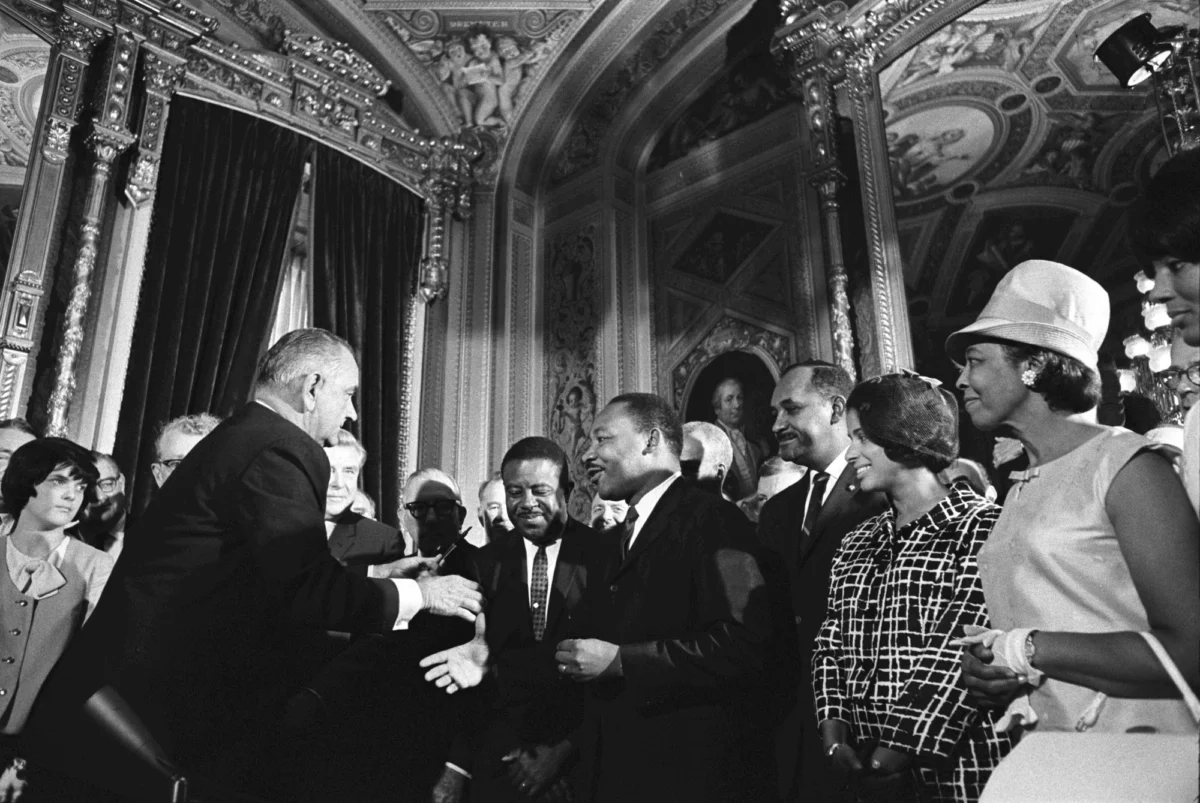
The Voting Rights Act (VRA) of 1965 was signed into law by President Lyndon B. Johnson during the height of the Civil Rights Movement, following the brutal "Bloody Sunday" march in Selma, Alabama. For decades, the VRA served as the primary bulwark against discriminatory voting practices in the South. However, the Act has been systematically weakened by the Supreme Court over the last decade, starting with the 2013 Shelby County v. Holder decision and continuing with more recent rulings that have limited federal court oversight of partisan maps.

A Chronology of the 2026 Redistricting Crisis
The current crisis began to take shape shortly after the 2024 general election. Despite reclaiming the White House, President Donald Trump and his allies expressed concern over the slim Republican majority in the House of Representatives. In late 2025, the President began publicly advocating for states to engage in mid-census redistricting—a practice that is historically rare and often viewed as a violation of established democratic norms.
In August 2025, the Texas state legislature became the first to act on this call, adopting a proactive new congressional map. The Texas GOP argued the change was necessary to reflect "shifting demographics," though analysts noted the map was engineered to secure up to five additional Republican seats. Florida, Missouri, North Carolina, Ohio, and Utah soon followed, initiating their own legislative sessions to revise maps that had only been in place for a few years.
The tension reached a breaking point on April 29, 2026, when the Supreme Court issued its ruling in Louisiana v. Callais. The decision invalidated a previous map in Louisiana that had included a second majority-Black district, ruling that the state was not obligated to maintain such districts if they were drawn primarily on the basis of race. This effectively gave a green light to other states to dismantle majority-minority districts under the guise of "race-neutral" redistricting.

State-by-State Responses and Legal Escalations
The fallout from the Supreme Court’s decision was instantaneous. Louisiana Governor Jeff Landry issued an emergency executive order to halt the state’s primary elections, directing the legislature to immediately produce a map more favorable to the Republican party. The move was met with an emergency lawsuit from the ACLU and other voting rights organizations, who argued that the Governor was overstepping his authority to subvert the will of the voters.
In Alabama, the situation reached a state of near-chaos. Governor Kay Ivey and the Republican-led legislature moved to eliminate one or both of the state’s majority-Black districts. This action was particularly controversial as it required the potential annulment of primary election results in districts where voting was already scheduled to begin on May 19. Civil rights advocates pointed out the irony of Alabama once again becoming the epicenter of a voting rights struggle, sixty years after the Selma marches.
Democratic-led states have not remained idle. In California, voters responded to the national trend by approving a redistricting measure designed to expand the Democratic majority by five seats. In Virginia, a new map was approved that could potentially eliminate three out of four Republican-leaning districts, creating a 10-1 advantage for Democrats. While these moves have been framed as a necessary "counterbalance" to Republican gerrymandering in the South, they have also faced legal challenges in federal courts.
Economic Pressures and the Politics of Panic
Political analysts suggest that the Republican push for redistricting is driven by a sense of electoral vulnerability. Despite the 2024 victory, the administration has been hit by a perfect storm of economic and geopolitical crises. In February 2026, the United States entered a military conflict with Iran, leading to a massive spike in global oil prices. Domestically, the price of gasoline has reached record highs, and food inflation—symbolized by the soaring cost of eggs—has continued to erode household budgets.
These factors have taken a toll on the administration’s popularity. A recent ABC News/Washington Post poll revealed a 62 percent disapproval rating for the executive branch, with a majority of Americans stating the country is headed in the wrong direction. National polling by NPR, PBS, and Marist indicates that if the midterm elections were held today, Democrats would hold a 10-point lead on the generic congressional ballot.
Furthermore, the Republican party’s traditional hold on the Latino vote appears to be slipping. A survey by UnidosUS found that 81 percent of Hispanic voters in Texas expressed concern that the executive branch is exercising too much authority. Similarly, a Florida International University poll suggests that 60 percent of Latino voters nationwide plan to support Democratic candidates in the midterms, citing economic stability and healthcare as their primary concerns.

Public Outcry and the Fight for Fair Maps
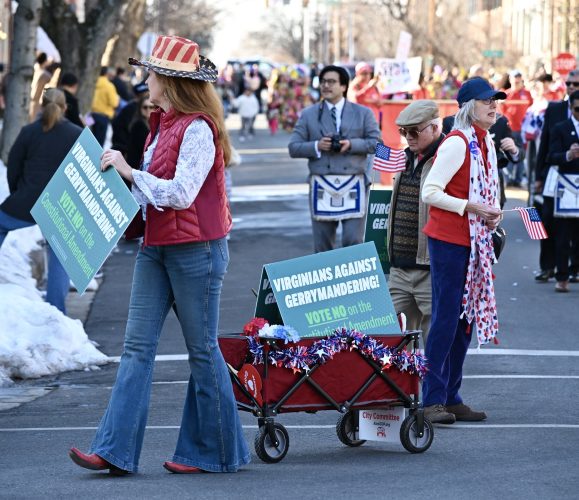
The legal and legislative battles have been accompanied by a surge in civic activism. In Nashville, Tennessee, hundreds of protesters marched on the state Capitol this week after the legislature convened a special session to eliminate the state’s only majority-Black district. Protesters carried signs reading "Fair Maps, Fair Future" and "Don’t Silence Our Voices," arguing that the redistricting efforts are a blatant attempt to disenfranchise urban and minority communities.
In Birmingham, Alabama, a similar scene unfolded as over 400 people gathered at the State House to protest the elimination of majority-Black districts. The demonstration featured prominent national figures, including New Jersey Senator Cory Booker and former Alabama Senator Doug Jones. Booker told the crowd, "What we are seeing today is a coordinated assault on the very foundation of our democracy. They are trying to win through map-making what they cannot win through the marketplace of ideas."
Voting rights organizations like the Brennan Center for Justice have warned that the current trajectory could lead to a permanent "unrepresentative" government. Michael Li, senior counsel for the Brennan Center, noted that the use of modern technology combined with the lack of judicial oversight has created a "perfect storm" for the erosion of democratic norms. "The worst-case scenario is that we are entering an era where the outcome of elections is decided in the statehouse and the courthouse long before a single ballot is cast," Li stated.

Broader Impact and the Road to November
The 2026 midterms are shaping up to be some of the most litigious and volatile in American history. The Supreme Court’s decision to allow Louisiana to proceed with its map without a customary rehearing period has set a precedent for "expedited judgment" that other states are likely to follow. This creates a high degree of uncertainty for candidates and voters alike, as district boundaries and polling locations remain in flux just months before the election.
The implications of this redistricting war extend beyond the 2026 cycle. By normalizing mid-census redistricting, the Supreme Court has effectively turned the drawing of maps into a permanent political weapon. If state legislatures can redraw districts whenever there is a shift in political power, the stability of the House of Representatives may be permanently compromised.
As the nation moves toward the November general election, the focus remains on whether the grassroots mobilization and legal challenges can successfully check the power of state legislatures. While the Supreme Court has opened the floodgates for gerrymandering, the final verdict will ultimately rest with the voters. Whether the public’s dissatisfaction with the current economic and political climate can overcome the structural advantages of gerrymandered maps remains the defining question of the 2026 election cycle. For now, the fight for the soul of the American electoral system continues in the streets, the statehouses, and the highest courts in the land.
