

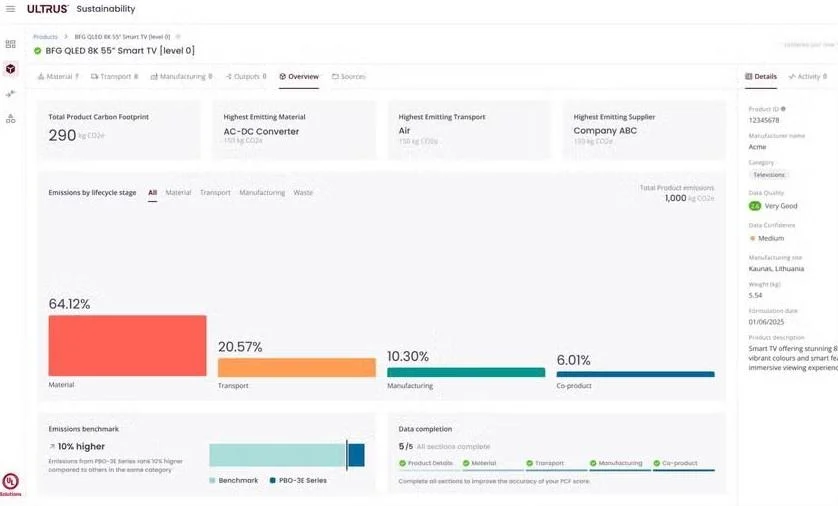
UL Solutions, a global leader in applied safety science, has officially introduced a sophisticated software tool designed to empower enterprises to calculate product carbon footprints (PCF) with greater precision while significantly improving the integrity of supplier data utilized in Scope 3 emissions reporting. This new solution is integrated into the ULTRUS UL 360 ESG and sustainability data management platform, marking a pivotal advancement in how corporations manage the environmental impact of their supply chains. The launch comes at a critical juncture as global regulatory bodies tighten requirements for environmental disclosure, forcing companies to move beyond high-level estimates toward granular, verifiable data.
The software is engineered to address one of the most persistent challenges in corporate sustainability: the accurate measurement of indirect emissions that occur in the value chain. By focusing on the product level, UL Solutions provides a pathway for procurement and sustainability departments to gain a comprehensive understanding of the carbon intensity of their offerings, from raw material extraction to the point where the product leaves the factory gate.
The Growing Imperative for Precise Scope 3 Reporting
The timing of this launch is inextricably linked to a shifting global regulatory landscape. Historically, many organizations focused their decarbonization efforts on Scope 1 (direct emissions from owned sources) and Scope 2 (indirect emissions from the generation of purchased energy). However, for the vast majority of manufacturing and retail sectors, Scope 3 emissions—which include everything from purchased goods and services to transportation and product end-of-life—account for more than 70% to 90% of a company’s total carbon footprint.
Regulatory frameworks such as the European Union’s Corporate Sustainability Reporting Directive (CSRD) and California’s Climate Corporate Data Accountability Act (SB 253) have fundamentally changed the reporting calculus. These mandates require large corporations to disclose their Scope 3 emissions with a level of rigor previously reserved for financial reporting. Failure to provide accurate, audit-ready data can result in significant legal and financial repercussions, as well as reputational damage in an increasingly eco-conscious marketplace.
By providing a specialized tool for PCF calculation, UL Solutions is positioning itself as a vital partner for companies that must now navigate these complex compliance requirements. The software facilitates the transition from "spend-based" emission factors—which estimate carbon based on the dollar amount spent with a supplier—to "activity-based" data, which uses actual quantities and specific carbon intensities to provide a far more accurate reflection of environmental impact.
Technical Capabilities and AI Integration
The new UL Solutions software offering is characterized by its use of advanced technology to streamline what has traditionally been a manual and error-prone process. A standout feature of the platform is its artificial intelligence (AI)-based interpretation of bills of materials (BOM), formulations, and process data. This AI capability allows the software to ingest complex technical documents and automatically categorize components and materials, mapping them to relevant carbon emission factors.
Key features of the new PCF solution include:
- Cradle-to-Gate Calculations: The software aligns with the Greenhouse Gas (GHG) Protocol Product Life Cycle Accounting and Reporting Standard. It focuses on "cradle-to-gate" footprints, encompassing all emissions from resource extraction through manufacturing up until the product is ready for shipment.
- Supplier Engagement and Data Acquisition: The platform simplifies the process for suppliers to share their own emissions data. It provides a streamlined interface for calculation and sharing, reducing the administrative burden on small and medium-sized enterprises within a larger company’s supply chain.
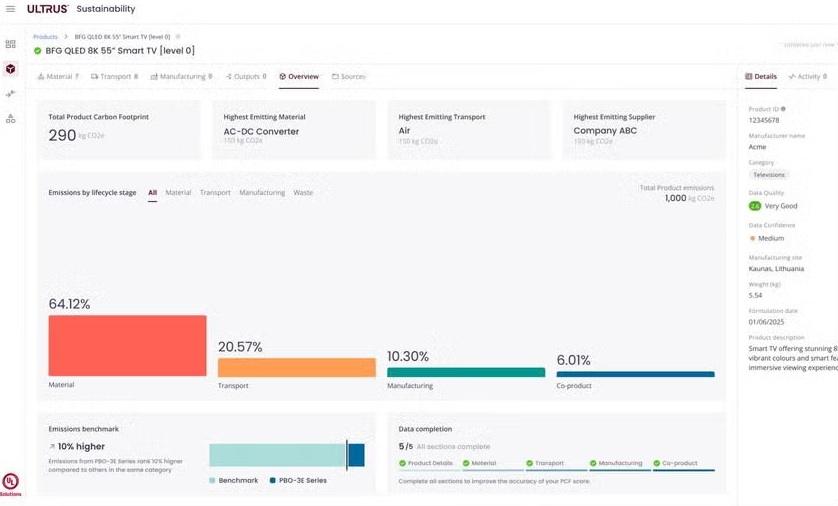
- Data Completeness and Gap Analysis: One of the most significant hurdles in PCF calculation is missing information. The software identifies data gaps and missing inputs, allowing sustainability teams to prioritize their data collection efforts and use statistically sound proxies where necessary.
- Integration with Reporting Workflows: Rather than operating as a standalone silo, the PCF data is integrated into the broader ULTRUS UL 360 ESG platform. This ensures that product-level insights feed directly into corporate-level sustainability reports, maintaining a "single version of the truth" for auditors and stakeholders.
- Actionable Insights: Beyond simple reporting, the tool provides analytics into the primary drivers of emissions within a product’s lifecycle. This enables engineers and procurement officers to identify "carbon hotspots" and explore alternative materials or more efficient manufacturing processes.
Strategic Role in the ULTRUS Platform
The integration of the PCF tool into the ULTRUS UL 360 ESG platform reflects a broader trend toward the "digitization of sustainability." As companies are asked to manage thousands of data points across global operations, spreadsheet-based management is no longer viable. UL Solutions has evolved its software suite to offer a centralized view of supplier responses, creating a transparent audit trail that is essential for third-party verification.
Simin Zhou, Vice President and General Manager of Software at UL Solutions, emphasized the transformative potential of the tool. According to Zhou, the software is designed to bring structure to the often chaotic influx of supplier inputs. By turning disparate data points into consistent, audit-ready footprints, the tool allows companies to move from passive reporting to active, data-driven decision-making.
Market Context and Competitive Pressure
The launch of this PCF solution occurs within a highly competitive market for ESG software. Industry analysts suggest that the market for sustainability management software is expected to grow at a double-digit compound annual growth rate (CAGR) through 2030. This growth is driven not only by regulation but also by institutional investors who are increasingly using carbon intensity as a metric for risk assessment.
In addition to regulatory compliance, there is a growing commercial demand for low-carbon products. "Green procurement" is becoming a standard practice in B2B transactions, where companies select suppliers based on their ability to provide low-carbon alternatives. By utilizing the UL Solutions tool, companies can provide verified PCF data to their own customers, thereby gaining a competitive advantage in tenders and contracts.
Chronology of UL Solutions’ Sustainability Evolution
The development of this software is part of a multi-year strategic pivot for UL Solutions. Originally founded in 1894 as the Underwriters Electrical Bureau, the organization spent over a century as a leader in physical product safety testing. However, the last decade has seen the company aggressively expand into digital solutions and environmental sustainability.
- Early 2010s: UL began acquiring sustainability software firms to build out its environmental data capabilities.
- 2020-2022: The company intensified its focus on ESG reporting tools as the GHG Protocol became the global standard for corporate carbon accounting.
- 2023-2024: Development of the ULTRUS platform began, aiming to unify safety, quality, and sustainability data into a single ecosystem.
- 2025-2026: The integration of AI and machine learning became a priority to handle the massive volume of Scope 3 data required by the EU’s CSRD and other global mandates.
The May 2026 launch of the PCF calculation tool represents the culmination of these efforts, bridging the gap between high-level corporate ESG metrics and the granular reality of product-level engineering.
Implications for Supply Chain Management
The introduction of this tool is expected to have a profound impact on procurement strategies. Historically, procurement teams were primarily measured on cost, quality, and delivery speed. With the advent of audit-ready PCF data, "carbon" is becoming the fourth pillar of procurement.
When companies can see the exact carbon footprint of a specific component, they can engage in more meaningful dialogues with suppliers. This data allows for "collaborative decarbonization," where buyers and suppliers work together to switch to renewable energy sources or optimize logistics. Furthermore, the tool’s ability to identify data completeness gaps means that companies can now hold suppliers accountable for their environmental transparency, potentially making data disclosure a prerequisite for doing business.
Analysis of Broader Industry Impact
The move by UL Solutions signals a broader shift in the "Safety Science" industry. Safety is no longer just about preventing fires or electrical shocks; it now encompasses the "safety" of the planet and the long-term viability of business models in a low-carbon economy. By providing the tools to measure and manage carbon at the product level, UL Solutions is helping to standardize the language of sustainability.
For the broader tech and software industry, this launch underscores the necessity of AI in solving environmental challenges. The complexity of a Bill of Materials for a modern electronic device or an industrial machine involves thousands of individual parts and materials. Manually calculating the carbon footprint of such items is an insurmountable task for most sustainability teams. AI-driven interpretation is the only scalable solution to this problem.
As more companies adopt these tools, the industry will likely see a "network effect." As more suppliers input data into standardized platforms like ULTRUS, the accuracy of the entire ecosystem improves. This reduces the reliance on industry averages and generic databases, leading to a more honest and transparent global marketplace.
In conclusion, the launch of the PCF calculation solution by UL Solutions is more than just a product update; it is a response to a fundamental change in how the world values products. In an era where carbon is increasingly priced and regulated, the ability to measure it with precision is becoming an essential capability for any global enterprise. Through this AI-powered tool, UL Solutions is providing the infrastructure necessary for companies to meet their climate commitments while navigating a complex and demanding regulatory environment.
