

In a significant legal rebuke to the executive branch’s immigration enforcement strategies, U.S. District Court Judge Brian Murphy of Massachusetts ruled on Wednesday that the Trump administration acted in direct violation of a standing federal injunction. The ruling followed the controversial deportation of eight migrants to South Sudan, a nation currently grappling with extreme internal instability and the threat of renewed civil war. Judge Murphy’s decision underscores a growing constitutional friction between the judiciary’s mandate to ensure due process and the administration’s expedited removal policies.
The ruling centered on an injunction issued in March 2025, which explicitly prohibited the Department of Homeland Security (DHS) and Immigration and Customs Enforcement (ICE) from removing individuals to "third countries"—nations other than their country of origin—without providing them a meaningful opportunity to contest the move. Under international and domestic law, such opportunities are essential for migrants to raise claims of potential persecution or torture, a principle known as non-refoulement. Judge Murphy characterized the administration’s recent actions as "unquestionably violative" of this judicial order, sparking a fresh debate over the limits of executive power in the realm of border security.
A Direct Violation of Judicial Authority
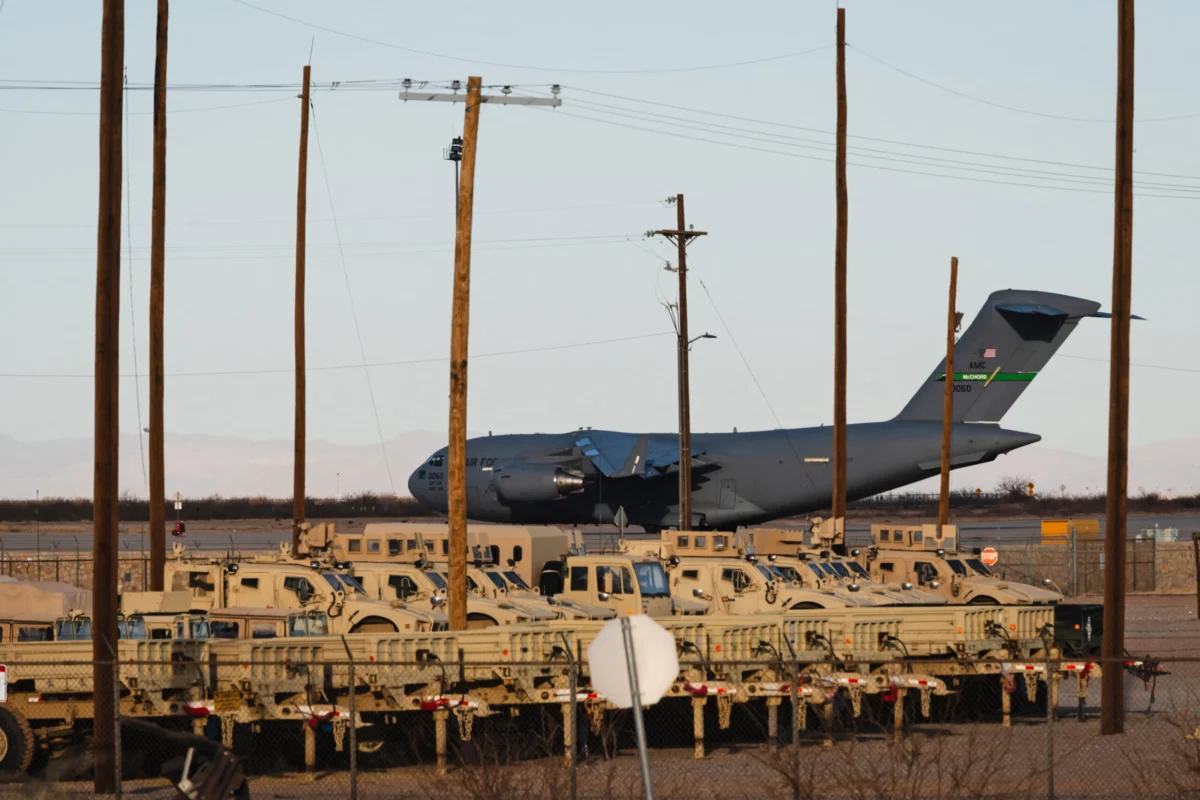
The legal conflict came to a head during a Wednesday hearing in Massachusetts, where Judge Murphy addressed the circumstances surrounding a deportation flight that departed from Biggs Army Airfield at Fort Bliss in El Paso, Texas. The flight, utilizing a United States Air Force Boeing C-17 Globemaster III, carried eight individuals whose origins spanned the globe, including Myanmar, Laos, Vietnam, Cuba, Mexico, and South Sudan.
According to court proceedings, the administration failed to provide the deportees with the necessary time or resources to consult with legal counsel or family members before being sent to a third-party destination. Judge Murphy noted that the individuals were only notified of their final destination late Monday evening, well outside of standard business hours. By the following morning, between 9:00 a.m. and 10:00 a.m., they had already been removed from the ICE facility and placed on the transport aircraft.
"The department’s actions are unquestionably violative of this court’s order," Judge Murphy stated, emphasizing that the narrow window between notification and departure made it "impossible" for the individuals to exercise their right to object. The judge spent over 30 minutes in a sealed proceeding before publicly relaying the sequence of events, highlighting the sensitive and potentially classified nature of the flight logistics.
Logistics and the Use of Military Assets
The use of a Boeing C-17 for deportation missions marks a significant escalation in the logistics of U.S. immigration enforcement. Typically used for transporting heavy cargo and troops into austere environments, the C-17 is a long-range, heavy-lift strategic transport aircraft. Its deployment at Biggs Army Airfield—a major military hub—indicates the administration’s reliance on Department of Defense resources to execute its mass deportation mandate.
Photographs from the airfield on February 13, 2025, and subsequent reports from late March, show the massive aircraft being used as a primary vehicle for these "high-stakes" removals. The choice of South Sudan as a destination has raised eyebrows among logistics experts and human rights advocates alike. South Sudan is one of the world’s most difficult environments for civil aviation and international logistics, further complicating the transparency of the deportation process.
While government attorneys confirmed that the plane has since landed and that the migrants remain in ICE custody (presumably at a transit point or a secured facility abroad), they have repeatedly declined to share the specific location of the plane’s final destination or the current status of the passengers. This lack of transparency has led to allegations from immigration attorneys that their clients have essentially been "disappeared" into a black site-style deportation pipeline.
Profiles of the Deportees and DHS Allegations
The Department of Homeland Security has defended its actions by focusing on the criminal backgrounds of the individuals involved. In a press briefing held Wednesday morning, DHS officials confirmed the deportation of the eight men: Enrique Arias-Hierro, Jose Manuel Rodriguez-Quinones, Thongxay Nilakout, Jesus Munoz-Gutierrez, Dian Peter Domach, Kyaw Mya, Tuan Thanh Phan, and Nyo Myint.
According to DHS, many of these individuals had "violent criminal convictions," including charges of murder and sexual assault. The administration has frequently used the presence of criminal records as a justification for bypassing standard procedural delays, arguing that the immediate removal of "dangerous non-citizens" is a matter of national security and public safety.
However, legal representatives for the migrants argue that criminal status does not negate constitutional protections. Jonathan Ryan, a San Antonio-based attorney representing Nyo Myint, a migrant from Myanmar, expressed outrage over the lack of communication. "I have not heard from my client," Ryan said. "How am I supposed to take their word that they sent him to Burma? The government is acting as if due process is a privilege. It’s a problem when we stop doing due process for unpopular people."
The Perils of South Sudan: Geopolitical Context
The decision to send migrants from Southeast Asia and the Caribbean to South Sudan is particularly contentious given the current state of the African nation. South Sudan, the world’s youngest country, has been plagued by instability since gaining independence in 2011. While a 2018 power-sharing agreement between President Salva Kiir and Vice President Riek Machar officially ended a five-year civil war, that peace is currently fracturing.
In early 2025, reports emerged of ramped-up violent clashes between various factions, leading many international observers to warn that the country is on the cusp of another full-scale civil conflict. The U.S. State Department currently maintains a "Level 4: Do Not Travel" advisory for South Sudan, citing pervasive crime, kidnapping, and armed conflict. Furthermore, in March 2025, the State Department ordered the departure of non-emergency U.S. government employees from the country due to the deteriorating security situation.
Sending migrants—some of whom have no linguistic, cultural, or familial ties to South Sudan—into such a volatile environment is what prompted Judge Murphy’s initial injunction. For a Vietnamese or Burmese national, being dropped into a conflict zone in East Africa could constitute a "death sentence," according to human rights advocates.
The "Third-Country" Strategy and Previous Legal Blocks
This is not the first time Judge Murphy has intervened to stop the administration’s third-country deportation strategy. Earlier this month, the judge blocked an attempt by the Trump administration to deport individuals from the Philippines, Vietnam, and Laos to Libya. Libya, much like South Sudan, is classified by the U.S. government as a high-risk zone with minimal central governance and significant human rights concerns.
The administration’s "third-country" strategy appears to be an attempt to circumvent the refusal of certain home countries to accept their own citizens back. Countries like Vietnam and Myanmar have historically had complex repatriation agreements with the U.S., often refusing to take back individuals with criminal records or those who left under certain political conditions. By sending these individuals to a third country—often one with which the U.S. has a specific, albeit undisclosed, agreement—the administration seeks to clear its backlog of deportable non-citizens.
Judge Murphy’s reaffirmation of his injunction was a direct response to an emergency motion filed by immigration lawyers who feared their clients were being secretly moved to these high-risk zones. The judge’s ruling on Wednesday confirms those fears were well-founded.
Due Process vs. Executive Authority: A Fact-Based Analysis
The conflict between Judge Murphy and the Trump administration represents a fundamental disagreement over the reach of the Fifth Amendment, which guarantees that no person shall be deprived of life, liberty, or property without due process of law. The Supreme Court has historically held that this protection applies to all "persons" within the United States, regardless of their citizenship status.
The administration’s argument rests on the executive’s broad authority over immigration and foreign policy. By labeling these individuals as "violent criminals," the administration seeks to frame the issue as one of public safety that supersedes procedural niceties. However, the judiciary maintains that the process of determining whether someone can be safely deported is what ensures the law is applied fairly.
The "meaningful opportunity to object" mentioned by Judge Murphy is a cornerstone of this process. Without it, the government could theoretically deport any individual to any location without oversight, a precedent that legal experts warn could lead to significant human rights abuses.
Timeline of Recent Events
- February 13, 2025: A Boeing C-17 is photographed at Biggs Army Airfield, El Paso, being prepared for deportation operations.
- March 2025: Judge Brian Murphy issues an injunction preventing third-country deportations without due process.
- Early March 2025: The State Department orders non-emergency personnel to evacuate South Sudan.
- Mid-March 2025: Judge Murphy blocks a deportation flight intended for Libya.
- Monday Evening (This Week): Eight migrants are notified after business hours that they are being deported to South Sudan.
- Tuesday Morning (9:00 AM – 10:00 AM): The migrants are moved from ICE custody and flown out of the United States.
- Wednesday Morning: DHS confirms the deportation of eight individuals during a press briefing.
- Wednesday Afternoon: Judge Murphy rules the administration in violation of his court order.
Broader Implications for U.S. Immigration Policy
The ruling by Judge Murphy is likely to lead to further litigation and potential sanctions against the Department of Homeland Security. If the administration continues to ignore judicial injunctions, it could face a constitutional crisis where the executive branch operates outside the bounds of court oversight.
Furthermore, the "disappearance" of individuals like Nyo Myint raises questions about the international legality of these operations. If a deportee is sent to a third country and their location is not disclosed to their legal counsel, it may violate international statutes regarding enforced disappearances.
As the Trump administration continues its push for mass deportations, the role of federal judges like Brian Murphy will be critical in determining the speed and legality of these operations. For now, the eight men sent to South Sudan remain at the center of a legal storm, their whereabouts uncertain and their safety unconfirmed, while the U.S. court system grapples with an administration determined to reshape the nation’s immigration landscape at any cost.
