

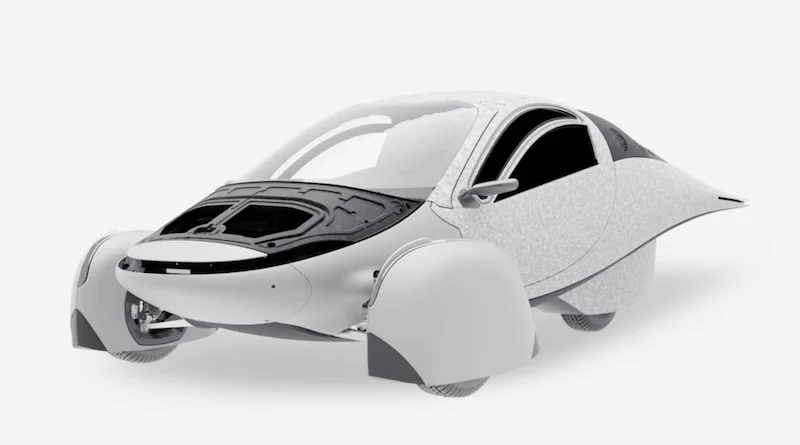
The journey toward a commercially viable solar-powered electric vehicle has reached a definitive turning point as Aptera Motors announced the successful assembly of its first five validation vehicles. These units, which recently rolled off the company’s low-volume production line in Carlsbad, California, represent the culmination of two decades of engineering challenges, financial restructuring, and a persistent vision to redefine personal transportation. While the startup faces a significant climb to reach the production scales of industry titans like Tesla, the completion of these validation builds signals that Aptera is moving beyond the realm of prototypes and into the rigorous phase of pre-production testing. With 50,000 reservations currently on the books, the company is under immense pressure to prove that its unconventional three-wheeled "autocycle" can meet the demands of the modern consumer.
A Legacy of Resilience: From Liquidation to Resurrection
To understand the significance of this milestone, one must look back at the turbulent history of the company. Aptera was originally founded in 2006, a period of nascent interest in electric mobility that also saw the early rise of Tesla. However, the two companies followed radically different trajectories. In 2009, the U.S. Department of Energy (DOE) awarded Tesla a $465 million loan guarantee through the Advanced Technology Vehicles Manufacturing (ATVM) program. This capital allowed Tesla to accelerate the development of the Model S and establish its manufacturing footprint in Fremont.
Aptera attempted to follow a similar path, entering negotiations for a $150 million DOE loan guarantee in 2011. Unfortunately, the company was unable to secure the required matching private investment to finalize the deal. At the time, the high cost of lithium-ion batteries and the relative inefficiency of solar photovoltaic technology made the prospect of a solar-integrated vehicle appear financially and technically precarious to many investors. Following the collapse of the loan negotiations, Aptera went into liquidation in late 2011.
The brand remained dormant for nearly a decade until 2020, when original founders Chris Anthony and Steve Fambro regained control of the intellectual property and reformed the company as Aptera Motors Corp. This "Aptera 2.0" benefited from a decade of advancements in composite materials, battery energy density, and solar cell efficiency. The revamped strategy focused on a "Public Benefit Corporation" (PBC) model, which legally mandates the company to balance shareholder returns with a commitment to social and environmental responsibility, specifically the advancement of solar mobility.
Defining the Autocycle: Engineering for Efficiency
One of the most distinctive aspects of the Aptera vehicle is its classification as an autocycle. Under United States federal and state regulations, an autocycle is defined as a three-wheeled vehicle that provides car-like controls and safety features. Unlike a motorcycle, an autocycle features a steering wheel, side-by-side bucket seats, and foot pedals. Drivers are typically not required to possess a motorcycle endorsement or wear a helmet, making it accessible to any licensed driver.
The decision to utilize a three-wheeled design is rooted in the laws of physics. By reducing the number of contact points with the road and adopting a teardrop-shaped aerodynamic profile, Aptera has achieved an exceptionally low coefficient of drag. This efficiency is critical for a vehicle intended to run primarily on solar power. In a traditional four-wheeled electric vehicle, a significant portion of the battery’s energy is spent overcoming wind resistance and rolling friction. The Aptera design minimizes these forces, allowing the onboard solar panels—integrated into the roof and hood—to provide a meaningful contribution to the vehicle’s daily range.
Technical Specifications and the Solar Advantage
The validation vehicles now undergoing testing are designed to meet specific performance benchmarks that differentiate Aptera from conventional EVs. The company’s "Never Charge" technology utilizes approximately 700 watts of integrated solar cells. According to company data, under ideal conditions, these panels can harvest enough energy to provide up to 40 miles of range per day. For the average American commuter, whose daily travel often falls under 30 miles, this creates the possibility of a vehicle that requires no external charging for routine use.
For longer journeys, the vehicle is equipped with a battery pack providing a total range of approximately 400 miles on a full charge. The target price for the base model is set at $40,000, positioning it as a premium yet attainable option within the specialized EV market. To ensure the vehicle can handle diverse climates and driving conditions, the current validation fleet is being subjected to a battery of tests, including:
- Thermal Validation: Testing the efficiency of the cooling systems and battery performance in extreme heat and cold.
- Braking and Dynamics: Ensuring the three-wheel configuration maintains stability during high-speed maneuvers and emergency stops.
- Destructive Testing: Validating the structural integrity of the composite body through crash simulations.
- Solar Collection Efficiency: Measuring real-world energy harvest across different latitudes and weather patterns.
The Low-Volume Validation Assembly Line
The five vehicles recently completed were built using a specialized 14-station assembly line in Carlsbad. This line serves a dual purpose: it produces the validation fleet and acts as a "beta test" for the manufacturing process itself. Steve Fambro, co-CEO of Aptera, emphasized that the goal is to refine the workflow, improve cycle times, and ensure repeatability before moving to high-volume production.
"What we are building here is not just vehicles, but the system to build them well," Fambro stated during the rollout ceremony. By identifying bottlenecks and assembly errors during this low-volume phase, Aptera hopes to avoid the "production hell" that has plagued other EV startups. The use of carbon-fiber-reinforced composites for the vehicle’s body allows for a lightweight structure that is incredibly strong, though it requires specialized manufacturing techniques compared to traditional steel or aluminum stamping.
Comparative Market Analysis: Lessons from the Industry
Aptera’s progress comes at a time when other solar EV ventures have struggled. Sono Motors, a German startup that aimed to produce the "Sion"—a solar-integrated hatchback—was forced to terminate its passenger car program in 2023 due to funding shortfalls and high manufacturing complexities. Similarly, Lightyear, a Dutch firm, faced bankruptcy proceedings before pivoting to a more limited, high-end solar technology strategy.
Aptera’s survival and current momentum are often attributed to its niche focus. Unlike Sono Motors, which attempted to build a mass-market five-passenger car, Aptera has embraced the "quirky" and ultra-efficient nature of the autocycle. This has allowed it to capture a dedicated enthusiast base. However, the company also faces competition from other non-traditional vehicle manufacturers. Companies like Polaris, with the Slingshot, and Vanderhall have popularized the three-wheeled format for recreation, though neither has successfully integrated solar-electric drivetrains on a mass scale.
Furthermore, the broader EV market has shown signs of volatility. While Tesla remains the dominant force, projects like the Cybertruck have faced criticism regarding production delays and niche appeal. Aptera’s leadership believes that as global fuel markets experience volatility due to geopolitical tensions—such as recent fluctuations in the Middle East—the appeal of a vehicle that provides "free" solar fuel will only increase.
Economic and Political Implications
The landscape for electric vehicles in the United States is heavily influenced by federal policy and economic shifts. The U.S. government has historically utilized tax credits and loan programs to incentivize domestic EV production. For Aptera, the transition to a Public Benefit Corporation is a strategic move to align with these federal goals of energy independence and carbon reduction.
Industry analysts suggest that the next 12 to 18 months will be the most critical in Aptera’s history. The company must successfully convert its 50,000 reservations into confirmed orders. At $100 per reservation, the company has generated significant interest, but the transition to a $40,000 purchase requires consumer confidence in the vehicle’s safety and long-term reliability. The successful deployment of the validation fleet is a necessary step in securing further private investment or potential government grants to fund the expansion of a full-scale production facility.
Looking Forward: The Path to 2026 and Beyond
As the five validation vehicles begin their rigorous testing programs, Aptera is already looking toward the next phase of its rollout. The company plans to gradually expand the validation fleet, integrating software and firmware updates based on real-world data. If the testing phase concludes successfully, the transition to customer deliveries will represent a historic moment—the first time a solar-powered electric vehicle has reached a meaningful level of consumer distribution in the United States.
The success of Aptera would signify more than just the survival of a startup; it would validate the concept of extreme efficiency in transportation. In an era where EVs are becoming larger and heavier to accommodate bigger batteries, Aptera’s "less is more" philosophy offers a counter-narrative. By focusing on aerodynamics, lightweight materials, and direct solar harvesting, the company aims to prove that the most sustainable way to move is to require as little energy as possible in the first place.
While the "trippy earthbound space ship" aesthetic may not appeal to every driver, the data from 50,000 reservation holders suggests there is a substantial market for innovation that prioritizes efficiency over convention. For now, the five vehicles in Carlsbad stand as proof that persistence in the face of liquidation and skepticism can eventually lead to the assembly line. The road ahead remains long, but for the first time in twenty years, Aptera is no longer just a vision on paper—it is a fleet on the move.
