

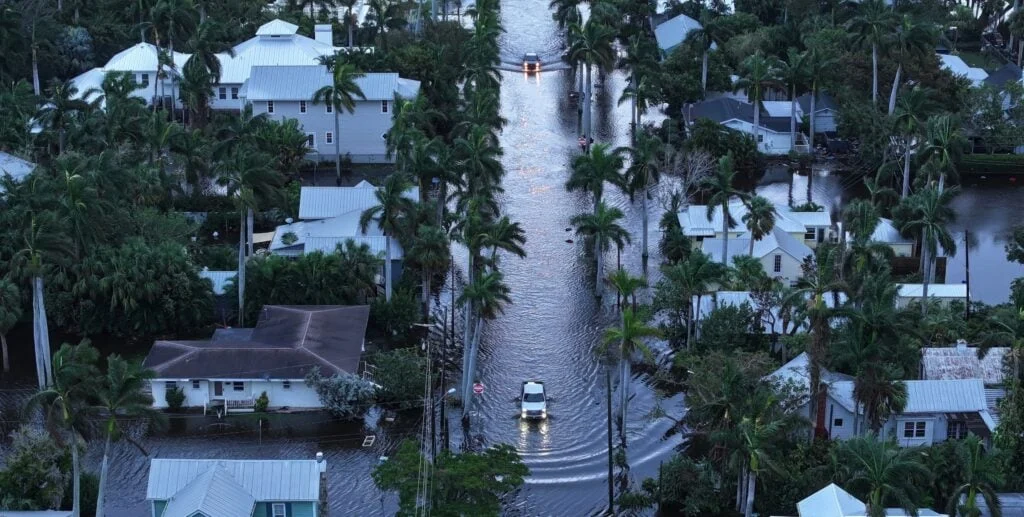
The emergence of a "Super El Niño" event, characterized by exceptionally warm sea surface temperatures in the central and eastern tropical Pacific Ocean, is fundamentally altering the risk profile of real estate investment across the United States. Meteorologists and climate scientists are warning that this intensified weather pattern is set to bring unprecedented volatility to the Sunbelt, a region that has served as the primary engine for American real estate growth over the last decade. As extreme weather events—including catastrophic flooding, high-velocity hurricanes, and prolonged heatwaves—become more frequent and severe, the underlying economics of property ownership are being recalibrated. For investors, the primary threat is no longer just the physical damage caused by storms, but the resulting surge in insurance premiums that threatens to render properties in eight specific states effectively "uninvestable" due to the total erosion of monthly cash flow.
The Mechanics of the Super El Niño Phenomenon
An El Niño event occurs when trade winds weaken, allowing warm water to push eastward toward the west coast of the Americas. A "Super El Niño" is defined by a temperature deviation of at least 2.0 degrees Celsius above the historical average. This shift disrupts the atmospheric jet stream, typically resulting in wetter, stormier conditions across the southern tier of the United States. According to data from the National Oceanic and Atmospheric Administration (NOAA), these cycles historically correlate with increased precipitation in the Southwest and Southeast, often leading to inland flooding that bypasses traditional flood zones.
For the real estate sector, the timing of this meteorological event is particularly precarious. It arrives as the private insurance market is already grappling with the highest payout totals in history. The convergence of climate volatility and economic inflation has created a "perfect storm" for property owners, where the cost of risk mitigation is outpacing the growth of rental income and property appreciation.
Identifying the Eight States in the Path of Volatility
The geographic focus of the current crisis centers on eight states where the intersection of climate risk and insurance market instability is most acute. These states—Arizona, California, Florida, Louisiana, Mississippi, Texas, Alabama, and South Carolina—represent a significant portion of the "Sunbelt" migration trend.
- Florida: Long considered the epicenter of the insurance crisis, Florida faces a dual threat from Atlantic hurricanes and rising sea levels. The state’s "last resort" insurer, Citizens Property Insurance Corp, has seen its policy count explode as private carriers flee the market.
- Texas: Beyond the coastal threat of hurricanes, Texas is increasingly vulnerable to "convective storms," which include hail and tornadoes, as well as extreme heat that strains the power grid and building infrastructure.
- Louisiana: With some of the highest insurance premiums in the nation, Louisiana’s coastal erosion and flood risk have made traditional underwriting nearly impossible in several parishes.
- Arizona: While not a coastal state, Arizona has seen the steepest percentage increase in insurance costs—rising 94% between 2021 and 2025—largely due to wildfire risk and the soaring cost of reconstruction.
- California: The state continues to face an exodus of major insurers like State Farm and Allstate, driven by the persistent threat of catastrophic wildfires and regulatory caps on premium increases.
- Mississippi: Similar to Louisiana, Mississippi faces significant flood and wind risks, coupled with a lower-income demographic that is particularly sensitive to rising housing costs.
- Alabama: Coastal exposure along the Gulf and a rising frequency of severe inland storms have pushed Alabama into the high-risk category for national underwriters.
- South Carolina: As development continues along the Atlantic coast, the state is increasingly exposed to storm surges and tidal flooding exacerbated by El Niño-driven weather patterns.
A Chronology of the Insurance Crisis (2021–2026)
The current instability is the result of a multi-year escalation in costs and risk. To understand the current "uninvestable" status of certain markets, one must look at the timeline of the industry’s shift:
- 2021-2022: Following a series of billion-dollar disasters, insurance carriers began implementing double-digit rate hikes across the Sunbelt. This period marked the beginning of a 46% cumulative increase in national average premiums over the next five years.
- 2023: Major national carriers announced they would cease writing new policies in California and Florida, citing the inability to accurately price risk in the face of climate change and rising reinsurance costs.
- 2024: The official declaration of a strong El Niño event accelerated the timeline for anticipated weather losses. The "affordability crisis" began to manifest as insurance costs started to outpace both inflation and wage growth.
- 2025 (Projected): Industry analysts project a further 12% increase in average premiums as the full impact of Super El Niño-related damages is tallied and passed on to policyholders.
- 2026 (Projected): Data from Insurify suggests average U.S. homeowner premiums will reach approximately $3,057, a 4% increase over 2025 levels, though high-risk states are expected to see much sharper spikes.
The Financial Impact on Real Estate Investment Metrics
The most immediate casualty of rising insurance costs is the "cap rate" or capitalization rate—the ratio of a property’s net operating income to its purchase price. For decades, real estate investors relied on predictable insurance expenses to calculate their returns. In the current environment, these calculations are being upended.
In Louisiana, for example, the average annual insurance premium has reached $6,274, or roughly $523 per month. For an investor owning a property valued at $300,000, the monthly financial breakdown reveals a slim margin for error. If the property generates $2,200 in monthly rent and carries a $1,000 mortgage (principal and interest), the remaining $1,200 is quickly consumed by taxes ($300), property management fees ($150), and the $523 insurance premium. This leaves less than $230 for maintenance, repairs, and vacancy reserves.
If a Super El Niño event triggers further rate hikes, pushing the monthly insurance cost above $600 or $700, the property effectively moves into negative cash flow territory. This "margin squeeze" is forcing many investors to reconsider the Sunbelt in favor of "Rust Belt" markets—such as those in Ohio, Pennsylvania, and Michigan—where insurance costs remain stable due to lower exposure to catastrophic weather events.
The Role of Flood Insurance and Federal Intervention
Standard homeowner insurance policies typically do not cover flood damage, requiring owners to purchase separate coverage through the National Flood Insurance Program (NFIP), administered by FEMA. Under the new "Risk Rating 2.0" methodology, the NFIP has moved toward actuarial pricing that reflects the true risk of a specific property rather than general flood zones.
Natalie Lord, a principal climate scientist for Fathom, notes that while insurance premiums are rising generally, the markets in El Niño-affected states are likely to see increases that far exceed the national average. "It’s hard to tell exactly where the highest risk is going to be until it actually happens," Lord stated. "The issue will be not all of those states are likely to see extreme losses, but the market will price in the risk across the board to counteract anticipated losses."
This broad-brush approach to risk pricing creates "insurance deserts," where even properties with no history of damage are hit with exorbitant premiums because of their proximity to high-risk areas. This trend is expected to contribute to a projected $1.47 trillion decline in total U.S. home values by 2055, according to research from First Street, as buyers and investors avoid high-risk zones.
Broader Economic and Social Implications
The shift in the real estate market is not merely a concern for wealthy investors; it has profound implications for the broader economy and housing affordability. As insurance costs rise, landlords are forced to pass these expenses on to tenants in the form of higher rent. However, in an "affordability economy" where tenant incomes are already stretched, there is a ceiling on how much rent can be increased.
When rent increases cannot cover rising insurance premiums, the value of the asset drops. This "reversion to the mean," as described by some economists, suggests that the "sizzling" metros of the South and West are cooling, while historically "unsexy" markets with lower risk profiles are coming back into vogue.
Furthermore, the financial stress on tenants increases the likelihood of missed payments. For an investor whose deal is already "hanging by a thread" due to insurance costs, a single month of vacancy or non-payment can be catastrophic. The strategy for modern investors is shifting from a focus on rapid appreciation and high leverage to a "safety-first" approach, prioritizing markets where the "cost of carry"—including insurance, taxes, and utilities—is a smaller percentage of the total revenue.
Conclusion and Future Outlook
The Super El Niño of the mid-2020s serves as a catalyst for a long-overdue reckoning in the American real estate market. The assumption that the Sunbelt would provide endless growth and low-cost living is being challenged by the physical and financial realities of a changing climate. As insurance premiums become a dominant factor in property valuation, the definition of a "good deal" is being rewritten.
For the eight states in the crosshairs, the path forward will require significant policy intervention, including potential reforms to state-backed insurers and increased investment in climate-resilient infrastructure. Until then, the real estate investment landscape will likely continue its migration toward stability, leaving the high-risk, high-reward markets of the Sunbelt to face an uncertain and increasingly expensive future.
