

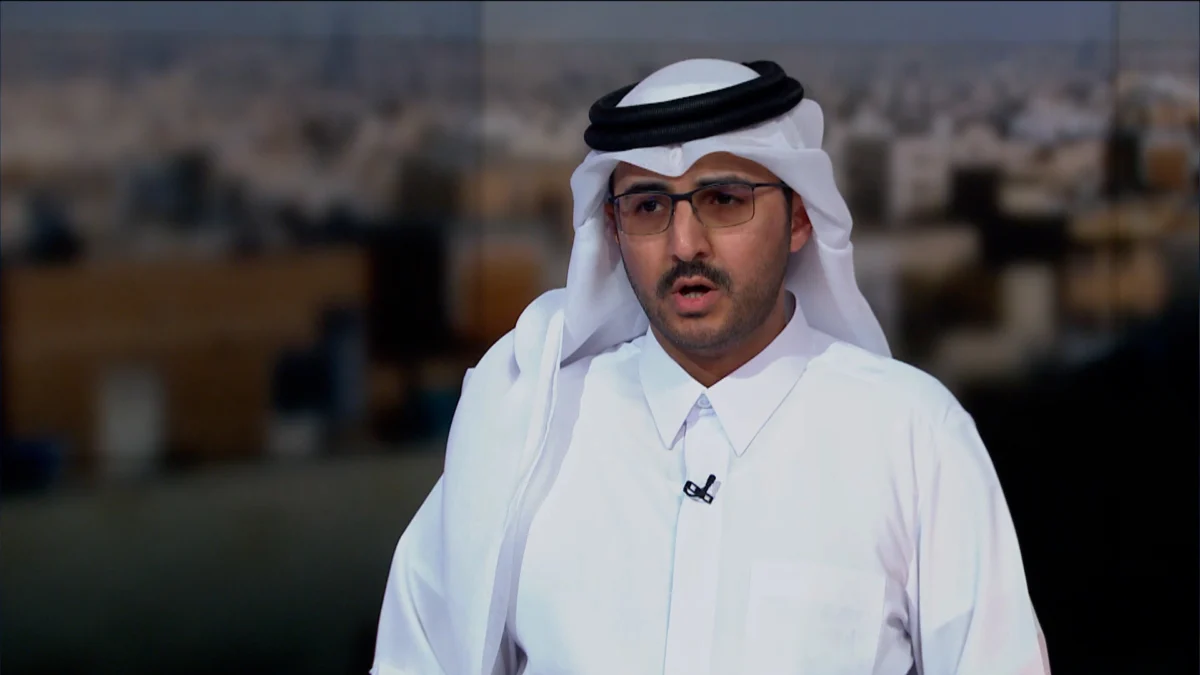
In a significant declaration dated May 10, 2026, senior researcher Sultan Al-Khulaifi articulated Iran’s unwavering position regarding its nuclear program, stating unequivocally that Tehran will neither destroy its enriched uranium stockpile nor permit its transfer overseas. However, Al-Khulaifi indicated a potential avenue for negotiation, suggesting that Iran "may give assurances on the use of nuclear facilities." This statement, reported from a critical juncture in international efforts to manage Iran’s nuclear ambitions, underscores the enduring complexities and deep-seated red lines that continue to define the protracted standoff between Iran and global powers. The carefully chosen words highlight Iran’s intent to maintain its nuclear infrastructure and materials within its sovereign borders, while simultaneously signaling a cautious openness to discuss operational transparency and verification mechanisms, rather than outright disarmament or a fundamental alteration of its enrichment capabilities.
A Deep-Rooted History of Nuclear Ambition and International Concern
Iran’s nuclear program has a long and intricate history, dating back to the 1950s when it initiated its nuclear endeavors with U.S. assistance under the "Atoms for Peace" program. Following the 1979 Islamic Revolution, the program was largely halted but was covertly revived in the late 1980s. International scrutiny intensified in 2002 when an Iranian opposition group revealed the existence of undeclared nuclear facilities at Natanz and Arak. These revelations sparked widespread alarm and led to a cascade of diplomatic efforts, sanctions, and inspections by the International Atomic Energy Agency (IAEA).
For decades, Iran has consistently maintained that its nuclear program is exclusively for peaceful purposes, primarily electricity generation and medical isotope production, a right it asserts under the Nuclear Non-Proliferation Treaty (NPT), to which it is a signatory. However, the international community, particularly the United States, Europe, and regional rivals like Israel, has long harbored suspicions that Iran might be pursuing nuclear weapons capability. This mistrust was fueled by Iran’s historical lack of transparency, its advanced centrifuge technology development, and the discovery of evidence suggesting past weaponization studies. These concerns culminated in numerous United Nations Security Council resolutions imposing sanctions on Iran, aimed at compelling it to halt its enrichment activities and cooperate fully with the IAEA.
The Joint Comprehensive Plan of Action: A Landmark Agreement and Its Unraveling
The most significant diplomatic breakthrough came in 2015 with the signing of the Joint Comprehensive Plan of Action (JCPOA), often referred to as the Iran nuclear deal. This landmark agreement was reached between Iran and the P5+1 group (China, France, Germany, Russia, the United Kingdom, and the United States), along with the European Union. Under the JCPOA, Iran agreed to stringent limitations on its nuclear program for a specified period, including caps on uranium enrichment levels (to 3.67%), reductions in its enriched uranium stockpile (to 300 kg of UF6), redesigning the Arak heavy water reactor to prevent plutonium production, and unprecedented access for IAEA inspectors. In return, Iran received significant relief from international economic sanctions.
The JCPOA was hailed as a triumph of diplomacy, effectively extending Iran’s "breakout time" (the theoretical period needed to produce enough fissile material for one nuclear weapon) from a few months to over a year. However, the agreement’s stability was severely undermined when the United States, under President Donald Trump, unilaterally withdrew from the deal in May 2018. Trump argued that the JCPOA was flawed, did not adequately address Iran’s ballistic missile program or its regional activities, and had sunset clauses that would allow Iran to resume its nuclear work after a certain period. Following the U.S. withdrawal, Washington reimposed and escalated sanctions on Iran, initiating a "maximum pressure" campaign.
In response to the U.S. sanctions and the perceived failure of European signatories to mitigate their economic impact, Iran began a phased reduction of its JCPOA commitments starting in 2019. This involved exceeding the 3.67% enrichment limit, increasing its enriched uranium stockpile beyond 300 kg, utilizing more advanced centrifuges, and reducing cooperation with certain IAEA inspection protocols. By early 2026, Iran’s nuclear advancements had significantly shortened its breakout time, raising renewed international alarms and intensifying calls for a diplomatic resolution.
Iran’s Conditional Overture: "Assurances" Versus "Destruction"
Sultan Al-Khulaifi’s statement on May 10, 2026, must be interpreted within this complex historical and political landscape. The categorical refusal to destroy uranium or move it overseas is not a new position for Iran. It aligns with Iran’s long-held assertion of its right to a complete nuclear fuel cycle for peaceful purposes and its rejection of any demands perceived as undermining its sovereignty or technological advancements. For Iran, possessing enriched uranium, even if capped at lower levels, is a symbol of scientific achievement and national resilience against external pressures. To destroy or export it would be seen internally as a capitulation and a betrayal of national interests.
The significant nuance in Al-Khulaifi’s remarks lies in the willingness to "give assurances on the use of nuclear facilities." This phrase, while open to interpretation, suggests a potential willingness to engage in discussions concerning enhanced transparency, monitoring, and verification measures. Such assurances could take several forms:
- Expanded IAEA Access: This might include allowing more frequent inspections, access to undeclared sites (if outstanding issues are resolved), or the reinstallation of monitoring equipment that Iran had previously removed.
- Limits on Production: While not destroying existing stockpiles, Iran might agree to limits on the rate of future enrichment or the number of operational advanced centrifuges, effectively capping the growth of its program without dismantling it.
- Real-time Monitoring: Implementing advanced surveillance technologies to provide the IAEA with real-time data on enrichment activities, material inventories, and centrifuge production.
- Codified Transparency Measures: Incorporating additional protocols beyond the NPT’s Additional Protocol, perhaps tailored to specific Iranian facilities, to provide further confidence regarding the peaceful nature of its activities.
However, it is crucial to note that "assurances on use" falls significantly short of demands from some international actors for a complete rollback of Iran’s enrichment capacity, a halt to advanced centrifuge research and development, or the complete dismantlement of facilities. It signals a willingness to manage the perception of risk, rather than eliminate the capability itself.
Technical Realities of Iran’s Nuclear Advancements
By 2026, Iran’s nuclear program had progressed considerably beyond the limitations set by the JCPOA. While the exact figures are often dynamic, reports from the IAEA and intelligence agencies indicated:
- Enrichment Levels: Iran was enriching uranium to levels significantly higher than the JCPOA’s 3.67% cap, reaching 20% purity (suitable for medical isotopes but a significant step towards weapons-grade 90%) and even 60% purity at facilities like Fordow and Natanz. Enriching to 60% is a mere technical step away from 90%, drastically reducing the time needed to produce weapons-grade material.
- Stockpile Size: Iran’s stockpile of enriched uranium, measured in kilograms of uranium hexafluoride (UF6), had grown substantially, far exceeding the 300 kg limit of the JCPOA. This increased quantity, combined with higher enrichment levels, significantly reduced its breakout time.
- Advanced Centrifuges: Iran had installed and was operating cascades of advanced centrifuges, such as the IR-2m, IR-4, and IR-6, at various facilities. These centrifuges are many times more efficient than the first-generation IR-1 machines allowed under the JCPOA, enabling faster and higher-volume enrichment. The deployment of these advanced machines demonstrated Iran’s irreversible technological progress in enrichment capabilities.
- Research and Development: Iran continued its research and development into even more sophisticated centrifuges, further enhancing its long-term enrichment capacity.
- Arak Reactor: While the core of the Arak heavy water reactor was modified under the JCPOA, ensuring it could not produce weapons-grade plutonium, the overall technical knowledge and infrastructure related to heavy water reactors remained.
These technical realities underpin the urgency of international diplomacy. Iran’s increased capacity means that any "assurances" would need to be exceptionally robust and verifiable to rebuild trust and prevent proliferation risks.
International Reactions and Diplomatic Hurdles
The statement from Sultan Al-Khulaifi, while attributed to a senior researcher, is widely seen as reflecting the official Iranian stance, especially given its consistent reiteration of these red lines.
- Iran’s Perspective: From Tehran’s viewpoint, the program is a matter of national pride, technological self-sufficiency, and a deterrent against external threats. They demand an end to sanctions, especially those imposed after the U.S. withdrawal from the JCPOA, and guarantees that any future agreement will not be unilaterally abandoned again.
- United States and E3 (UK, France, Germany): These nations would likely view "assurances on use" as a potential, albeit limited, opening for dialogue. However, they would simultaneously stress the need for a full return to JCPOA compliance, or ideally, a "longer and stronger" deal that addresses Iran’s ballistic missile program and regional destabilizing activities, which Iran consistently rejects as outside the scope of nuclear negotiations. The focus would be on concrete, verifiable measures that significantly reduce proliferation risks and extend breakout time.
- IAEA: The agency’s primary role is to verify compliance. It would push for full cooperation, resolution of outstanding safeguards issues (concerning undeclared nuclear material and activities at various sites), and unfettered access to all declared and undeclared facilities. "Assurances" would need to translate into legally binding and technically verifiable agreements for the IAEA to endorse them.
- Regional Actors (Israel, Saudi Arabia): These nations consistently express deep skepticism and alarm regarding Iran’s nuclear program. Israel, in particular, views a nuclear-armed Iran as an existential threat and has advocated for stronger international pressure, including military options, to prevent it. They would likely dismiss "assurances" as insufficient unless they involved a complete dismantlement of Iran’s enrichment capabilities and a verifiable cessation of any weaponization efforts.
Regional Security and Non-Proliferation Concerns
The implications of Iran’s nuclear trajectory extend far beyond its borders, impacting regional stability and the global non-proliferation regime. A highly advanced Iranian nuclear program, even if officially peaceful, could trigger a regional arms race, prompting other states in the Middle East to pursue their own nuclear programs for deterrent purposes. This prospect is a grave concern for international security, especially in an already volatile region.
The ongoing diplomatic impasse also erodes the credibility of international agreements and the NPT itself. If a signatory state can significantly advance its nuclear program while facing only partial consequences, it sets a dangerous precedent for other nations contemplating similar paths. The lack of a comprehensive, verifiable agreement with Iran by 2026 underscored the fragility of the non-proliferation framework in the face of geopolitical rivalries and national security aspirations.
The Path Forward: A Precarious Diplomatic Landscape
Sultan Al-Khulaifi’s statement on May 10, 2026, encapsulates the enduring dilemma in managing Iran’s nuclear program. While Iran’s refusal to destroy or export uranium highlights its firm commitment to maintaining its nuclear infrastructure, the willingness to discuss "assurances on the use of nuclear facilities" offers a faint glimmer of hope for future negotiations. The challenge for international diplomacy remains immense: how to reconcile Iran’s asserted right to peaceful nuclear technology with the international community’s imperative to prevent proliferation, especially given Iran’s past secrecy and current advanced capabilities.
Any future agreement would need to address the core concerns of all parties, providing substantial sanctions relief and security guarantees for Iran, while simultaneously imposing robust, verifiable, and long-lasting restrictions on its nuclear activities to reassure the international community. The path forward is fraught with obstacles, demanding sustained diplomatic engagement, mutual concessions, and a renewed commitment to finding a durable solution that safeguards both Iran’s sovereignty and global non-proliferation norms. The 2026 declaration serves as a stark reminder that despite years of negotiations, the fundamental tensions surrounding Iran’s nuclear ambitions remain unresolved, casting a long shadow over regional and international security.
