

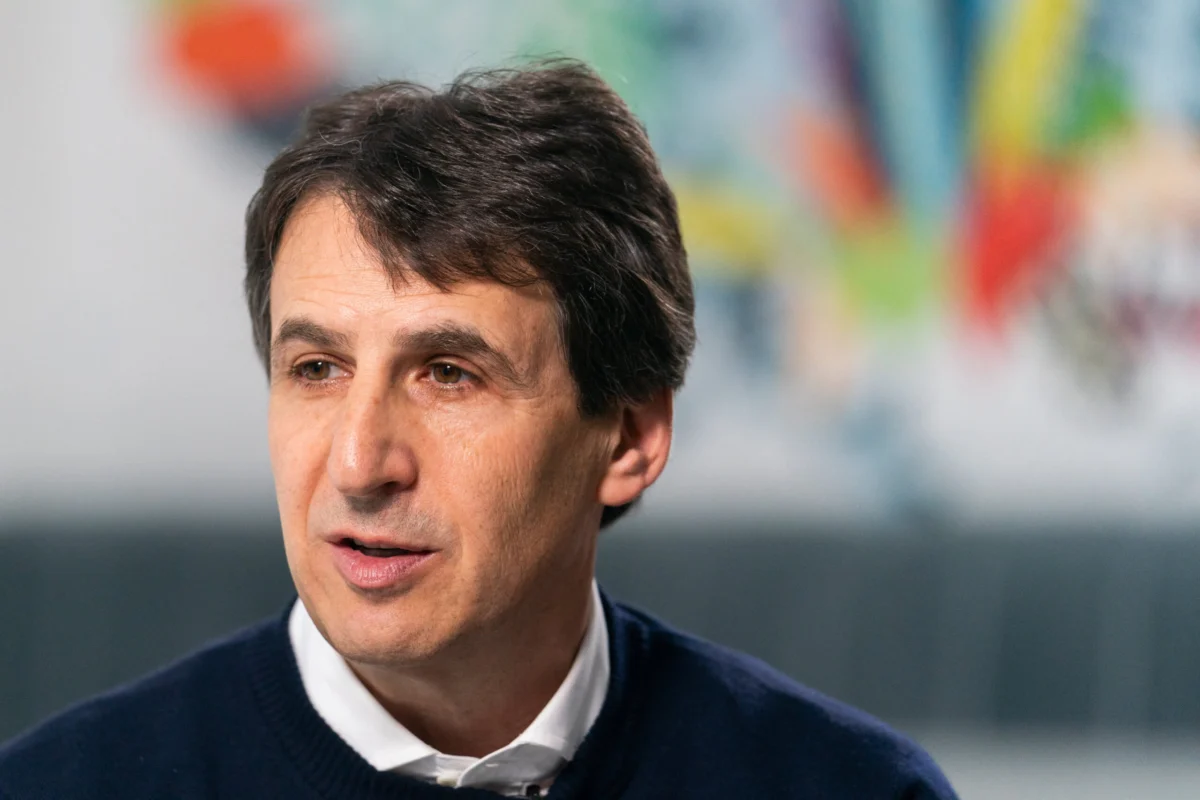
New York, NY – Marc Rowan, the chief executive officer of Apollo Global Management LLC, a global alternative asset manager overseeing over $1 trillion in assets, issued a stark warning to investors on Wednesday, indicating that he is actively preparing the firm for a potential market downturn. His cautionary remarks were coupled with sharp criticism directed at what he described as "egregious" practices employed by some rival insurers, raising concerns about potential contagion within the broader financial system.
Rowan’s statements arrive amidst a seemingly robust economic backdrop, a period in which Apollo itself reported a banner quarter, reaching the significant milestone of $1 trillion in assets under management and achieving record fee-related earnings. However, the veteran Wall Street executive cautioned that this apparent strength might be masking a rapidly escalating risk of what he termed "out of the box" or "out-of-sideline" shocks – unforeseen events with the potential to significantly destabilize markets.
"Everything we see in front of us is actually quite strong," Rowan acknowledged during his address, reflecting on the current economic indicators. Yet, he swiftly pivoted to the underlying anxieties: "But there is a much greater chance, in our opinion, of out-of-sideline results." This sentiment underscores a deeper unease beneath the surface of record-high equity markets and solid corporate performance.
Apollo’s Strategic Posture Amidst Market Optimism
Apollo Global Management, co-founded by Rowan in 1990 alongside Leon Black and Joshua Harris, has evolved from its origins as a distressed asset investor into a diversified alternative asset and insurance powerhouse. Its recent achievement of $1 trillion in assets under management highlights its growing influence in the global financial landscape, particularly in areas like private equity, credit, and real estate. The firm’s first-quarter 2026 earnings report showcased robust performance, driven by strong investment activity and expanding fee-generating revenue streams. This financial strength, however, is not fostering complacency within Apollo’s leadership.
Rowan, who has overseen Apollo’s strategic expansion, particularly its foray into the insurance sector through Athene, revealed that his current level of concern about external factors derailing the economy is higher than at any point in his four-decade career on Wall Street. This profound apprehension comes at a time when the U.S. stock market is trading near all-time highs, prompting a critical examination of underlying vulnerabilities.
His warnings echo similar sentiments voiced by other prominent financial executives, including JPMorgan Chase CEO Jamie Dimon, who has repeatedly cautioned about potential economic "hurricanes" or "storm clouds" on the horizon. Such pronouncements from leaders of major financial institutions often serve as bellwethers, signaling a need for increased vigilance among investors and policymakers alike. Rowan placed the odds of an exogenous shock occurring at between 30% and 35%, a figure he considers significantly higher than the usual background level of risk.
The Looming Specter of "Out-of-Sideline" Shocks
Rowan elaborated on a confluence of forces that, in his assessment, could collectively destabilize global markets and economies. These include a "total geopolitical reset," a reference to the escalating tensions and realignments occurring on the global stage, such as ongoing conflicts, shifts in trade alliances, and rising nationalism. Such geopolitical shifts can disrupt supply chains, alter commodity prices, and undermine investor confidence, creating widespread economic ripple effects.
Furthermore, Rowan pointed to policies that could inadvertently prove inflationary by restricting labor and trade. While not naming specific administrations, his comments seemed to allude to protectionist measures like tariffs and stricter immigration policies. "Almost everything we’re doing, whether intentional or not, has the potential to be inflationary," Rowan stated, emphasizing that "restricting the supply of goods, restricting the supply of labor and the free movement of goods and labor – maybe for good and valid reasons that need to be done – are all inflationary in the short term, even if we are not seeing signs of it." This perspective highlights the complex interplay between political decisions and economic outcomes, suggesting that policies aimed at national security or domestic job protection could have unintended inflationary consequences that ripple through the economy.
The third major disruptive force identified by Rowan is the sweeping artificial intelligence (AI) cycle, which he believes is poised to profoundly reshape jobs and economic growth. He predicted significant socioeconomic upheaval, stating: "Almost every job will be enhanced or replaced. We’re going to see a complete flip – blue-collar ascendancy and white-collar stress." This prognosis suggests a future where traditional white-collar roles face increasing automation and disruption, while skilled blue-collar professions, particularly those involving advanced technology or direct human interaction, may see renewed demand and value. The transition, however, is likely to be turbulent, creating widespread labor market adjustments and social challenges.
Despite these looming threats, Rowan acknowledged the current strength of corporate and consumer balance sheets. However, he contrasted this with the increasingly strained finances of governments globally, a trend that could limit their capacity to respond effectively to future economic crises.
Contagion Fears and the Scrutiny of Insurance Practices

While Apollo itself is experiencing robust financial results, Rowan stressed that the firm is actively preparing for more turbulent times ahead. This proactive stance includes several strategic adjustments designed to fortify its resilience. Apollo has systematically moved up the credit quality of its fixed-income investments, reducing exposure to riskier sectors such as software, which have seen significant valuations in recent years. Critically, the firm has also stockpiled approximately $40 billion of cash within its insurance business, Athene, providing a substantial liquidity buffer.
"It means we’re investing with an eye toward protecting our capital and making sure that we are here to ride through cycles if there are corrections, which we quite frankly expect," Rowan affirmed. This defensive posture reflects a deep-seated conviction that the current market equilibrium is fragile and that prudent risk management is paramount.
However, Rowan reserved his sharpest criticisms for other players within the insurance industry. Apollo’s strategic expansion into insurance through Athene, established in 2009, has been central to its transformation. Athene, a major seller of annuities and retirement products, provides Apollo with a large, stable pool of long-term capital to invest, akin to the highly successful "insurance float" model popularized by Berkshire Hathaway. This float, the premiums collected before claims are paid, can be invested for profit, providing a consistent source of capital that is less susceptible to market fluctuations than traditional fund management fees.
It is against this backdrop of strategic reliance on the insurance model that Rowan’s concerns become particularly salient. "Not everyone in our industry is doing what they should do. Not everyone runs their business the way we have run our business," Rowan stated unequivocally. His apprehension extends to the potential for "contagion," a term that in financial markets signifies the spread of stress or failure from one institution or sector to others, potentially leading to systemic risk.
Contagion in the insurance sector would imply that the distress of one or more firms could ripple through the industry, eroding public trust, triggering widespread redemptions, and potentially necessitating intervention from regulators or central banks to safeguard insurance and retirement customers. While Rowan refrained from naming specific firms, he strongly implied that some insurers are engaging in "egregious" practices that could obscure their true financial health.
These alleged practices include reliance on offshore Cayman structures, which can be used to hold assets or liabilities with less transparency and regulatory oversight; complex collateralized loans, which can be difficult to value and carry hidden risks; and aggressive credit assumptions, where firms might overstate the creditworthiness of their investments, thereby underestimating potential losses. Such tactics, Rowan suggested, could make some balance sheets appear stronger than they actually are, creating a false sense of security for investors and policyholders.
"What we can do is be transparent, be committed to higher ratings, build our capital and run the business for the long term," Rowan declared, outlining Apollo’s commitment to sound, conservative financial management in contrast to the practices he criticized.
Broader Implications and Regulatory Scrutiny
Rowan’s warnings carry significant weight given his extensive experience and Apollo’s position as a major player in the alternative asset and insurance sectors. The implications of his statements are multifaceted, extending beyond just the investment community to encompass regulatory bodies and the broader economy.
The National Association of Insurance Commissioners (NAIC) and various state insurance departments are responsible for regulating the U.S. insurance industry, ensuring solvency and protecting policyholders. Warnings from a prominent CEO about "egregious" practices and potential "contagion" are likely to prompt increased scrutiny from these regulatory bodies. Regulators may intensify their examinations of insurers’ balance sheets, investment strategies, and use of complex financial structures to assess underlying risks. The 2008 financial crisis highlighted how interconnected the financial system is, and how failures in one sector, like mortgage-backed securities, can rapidly cascade. While the insurance sector generally operates with different risk profiles, the potential for systemic risk, particularly from highly leveraged or opaque practices, remains a concern.
Moreover, the growth of the private credit market, where alternative asset managers like Apollo play a crucial role, has brought new dynamics to financial markets. As traditional banks face tighter regulations, a growing portion of corporate lending and financing has shifted to the private credit space. While this offers flexibility, it also means that a significant pool of capital operates with less public transparency than traditional banking. Rowan’s comments on complex collateralized loans underscore the need for vigilance in this evolving landscape.
The predicted socioeconomic upheaval from AI also presents a monumental challenge for policymakers and educators. Governments will need to consider investment in reskilling and upskilling programs to prepare the workforce for the jobs of the future, while also addressing potential social safety net needs for those displaced by automation. The "blue-collar ascendancy and white-collar stress" paradigm could reshape urban planning, educational priorities, and social welfare programs for decades.
In conclusion, Marc Rowan’s comprehensive warning serves as a powerful reminder that even in periods of apparent economic strength, underlying vulnerabilities and unforeseen shocks can rapidly alter the financial landscape. His dual message – a proactive de-risking strategy for Apollo and a sharp critique of risky practices within the insurance sector – underscores a deep concern for the stability of the broader financial system. As global markets navigate geopolitical uncertainties, inflationary pressures, and transformative technological shifts, the calls for transparency, prudent risk management, and regulatory vigilance from seasoned financial leaders like Rowan are likely to resonate widely across the industry.
