

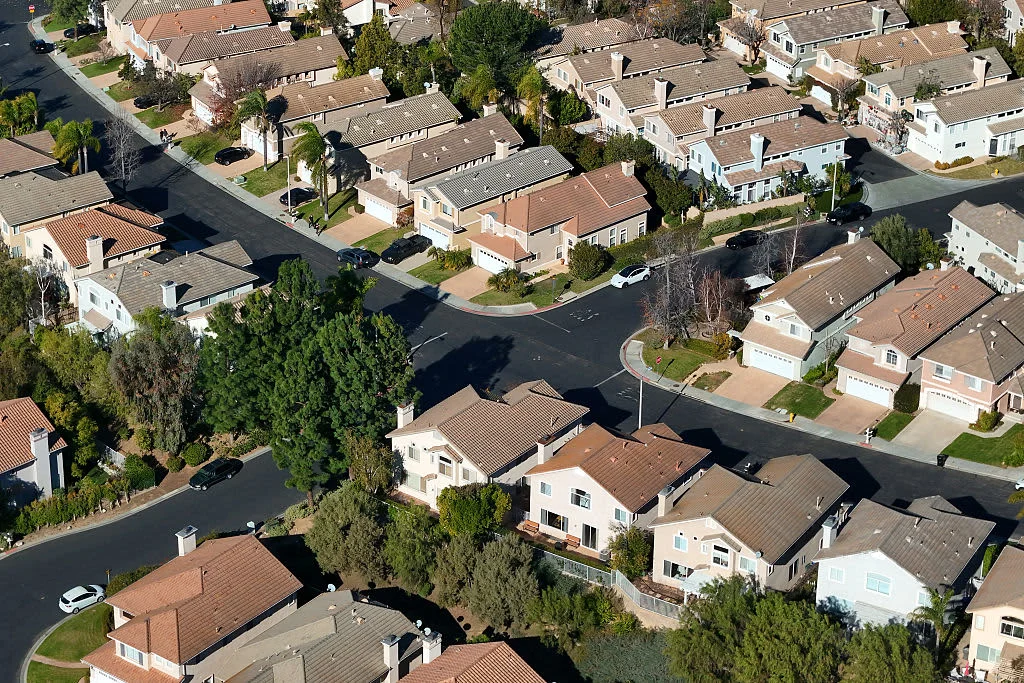
The United States housing market witnessed a nuanced shift last week, as a renewed uptick in mortgage rates dampened refinance demand but simultaneously saw a cautious resurgence in homebuyer activity, signaling an early commencement to the spring selling season. This evolving dynamic comes against a backdrop of persistent economic uncertainties, subtle shifts in housing inventory, and ongoing geopolitical considerations that continue to influence consumer confidence and market sentiment. An aerial perspective of two-story single-family homes lining the streets of Thousand Oaks, California, captured on January 14, 2026, visually encapsulates the suburban landscape central to these market movements.
Mortgage Application Volume Sees Modest Decline
Overall mortgage application volume experienced a slight contraction, falling 1.6% compared to the preceding week, according to the latest seasonally adjusted index released by the Mortgage Bankers Association (MBA). This marginal decline masked divergent trends within the market, as refinance applications, highly sensitive to daily interest rate fluctuations, retreated, while applications for home purchases demonstrated a surprising degree of resilience. The average contract interest rate for a 30-year fixed-rate mortgage with conforming loan balances, capped at $832,750, edged up to 6.37% from 6.35%. Points, including the origination fee, remained stable at 0.61 for loans with a 20% down payment, indicating that lenders maintained consistent fees despite the slight rate increase.
Refinance Demand Retreats as Rates Climb
The segment of the market most immediately impacted by the recent rate increase was refinance demand. Applications for refinancing fell by 4% for the week. This sensitivity underscores a common characteristic of the refinance market: even minor shifts in rates can prompt borrowers to delay or abandon plans to restructure their existing home loans. Despite the weekly dip, refinance activity remained significantly higher, up 51%, compared to the same week one year prior. This substantial year-over-year increase highlights the dramatic difference in interest rate environments; at this time last year, the 30-year fixed-rate mortgage was approximately half a percentage point higher, making current rates comparatively more attractive for many homeowners who secured mortgages during periods of even higher rates.
Homebuyers Display Renewed Vigor for Spring Market
In contrast to the cooling refinance segment, the purchase mortgage market showed signs of awakening. Applications for mortgages to purchase a home rose by 1% for the week, indicating a nascent but definite increase in buyer interest. More notably, this activity was 21% higher than the same week a year ago, underscoring a consistent upward trajectory in buyer confidence and market engagement. This renewed vigor in the purchase market can be attributed to a combination of factors, primarily the gradual increase in housing supply and a perceived normalization of external market influences. Consumers appear to be acclimating to the ongoing geopolitical tensions, specifically concerning the Middle East and reports related to Iran, which had previously introduced an element of elevated uncertainty into financial planning.
Mike Fratantoni, the MBA’s chief economist, commented on the emerging trend, stating, "After a brief pause, in part because of the elevated geopolitical uncertainties, potential homebuyers certainly appear to be moving forward this spring and taking advantage of the more favorable inventory conditions in most parts of the country." His analysis points to a market where buyers, having absorbed various shocks and adjustments, are now focusing on the tangible improvements in available housing stock.
Chronology of Rate Volatility and Market Adaptation
The current state of the mortgage market is a culmination of several years of unprecedented volatility, beginning with the ultra-low rates seen during the COVID-19 pandemic. In 2020 and 2021, the Federal Reserve maintained an accommodative monetary policy, driving mortgage rates to historic lows, often below 3%. This spurred a frenzied housing market characterized by intense competition, rapid price appreciation, and a surge in both purchase and refinance activity.
However, as inflation began to accelerate in late 2021 and throughout 2022, the Federal Reserve embarked on an aggressive campaign of interest rate hikes. The federal funds rate, which directly influences short-term interest rates and indirectly impacts long-term rates like mortgages, was raised eleven times between March 2022 and July 2023. This rapid tightening cycle pushed the average 30-year fixed-rate mortgage well above 7% by late 2023, reaching peaks not seen in over two decades. This period effectively froze a significant portion of the refinance market, as homeowners who had locked in rates below 4% or 5% found little incentive to trade up to higher rates. Purchase activity also slowed considerably as affordability challenges intensified, leading to a noticeable cooling in home sales volumes and, in some regions, modest price corrections.
As 2024 progressed into 2025, the market began to stabilize. While rates remained elevated compared to the pandemic era, they settled into a more predictable range, often fluctuating between 6% and 7%. This stabilization, coupled with a slight easing of inflation and expectations of potential future rate cuts by the Fed, started to lure some buyers back into the market. The current period, marked by the slight rate increase but simultaneous rise in purchase applications, suggests that buyers have largely adjusted their expectations to this "new normal" for interest rates, prioritizing factors like inventory and long-term housing needs.
Federal Reserve’s Pivotal Role and Future Outlook
The trajectory of mortgage rates remains intricately linked to the monetary policy decisions of the Federal Reserve. Markets are currently awaiting the latest report from Federal Reserve Chairman Jerome Powell, scheduled for Wednesday, at what some speculate could be his last meeting as chair. While a change in the federal funds rate is not widely anticipated at this particular meeting, the commentary provided during the news conference following the decision is always meticulously scrutinized by investors. Powell’s remarks on inflation, economic growth, and the future path of monetary policy could significantly influence bond yields, and consequently, mortgage rates, in either direction.
Should the Fed signal a more hawkish stance, indicating a longer period of higher rates or even the possibility of further hikes, mortgage rates could experience renewed upward pressure. Conversely, any dovish signals, such as strong indications of upcoming rate cuts due to cooling inflation or economic deceleration, could provide relief to borrowers by pushing rates lower. The potential for a leadership transition at the Fed, as implied by the speculation surrounding Powell’s tenure, adds another layer of uncertainty and anticipation, as markets would then begin to assess the policy leanings of a new chair.
Expanding Inventory and Easing Supply Constraints
A critical factor underpinning the recent uptick in purchase applications is the gradual improvement in housing inventory. For several years, the market has grappled with a severe shortage of homes for sale, a legacy of underbuilding following the 2008 financial crisis and exacerbated by the pandemic-induced demand surge. However, recent data suggests that more homes are slowly making their way onto the market.
This increased supply stems from several sources. New home construction, after facing significant challenges with labor shortages and supply chain disruptions, has been steadily ramping up in many regions, providing much-needed fresh inventory. Additionally, some existing homeowners who had been hesitant to sell due to the "rate lock" phenomenon (unwillingness to trade a low-interest mortgage for a higher one) are now beginning to re-evaluate their situations. Life events such as job relocations, growing families, or downsizing needs often outweigh the disincentive of a higher mortgage rate, particularly as current rates become more normalized. Furthermore, a segment of homeowners who purchased during the peak of the market and have accumulated significant equity may feel more comfortable selling, especially if their local market has maintained strong price appreciation.
This improvement in inventory is particularly crucial for the spring market, traditionally the busiest selling season. With more options available, prospective buyers face less intense competition and may find themselves with greater negotiating power, moving away from the frantic bidding wars that characterized earlier periods. This rebalancing of supply and demand is a healthier dynamic for the overall market and contributes to a more sustainable pace of sales.
Broader Economic Impact and Affordability Challenges
The housing sector is a significant pillar of the U.S. economy, and its performance has wide-ranging implications. A healthy housing market supports construction jobs, stimulates demand for related industries such as home furnishings, appliances, and landscaping, and contributes to overall consumer wealth through home equity. Conversely, a slowdown can ripple through these sectors, impacting employment and economic growth.
Despite the recent signs of resilience, affordability remains a persistent challenge for many prospective homebuyers, especially first-time buyers. Even with a slight increase in supply, home prices, particularly in high-demand areas like Thousand Oaks, California, remain elevated. When combined with mortgage rates hovering above 6%, the monthly cost of homeownership can be prohibitive for a substantial portion of the population. The median income required to afford a typical home has risen significantly, pushing homeownership further out of reach for many. This issue is compounded by wage growth that, while strong, has not always kept pace with the combined increases in home prices and interest rates.
Policymakers and industry stakeholders continue to explore solutions to address affordability, including increasing housing density, streamlining permitting processes for new construction, and expanding down payment assistance programs. The interplay between interest rates, housing supply, and income levels will remain a critical focus for the foreseeable future, shaping the landscape for both current homeowners and aspiring buyers.
Implications for Real Estate Investors
For real estate investors, the current market dynamics present a mixed bag of opportunities and challenges. Higher mortgage rates increase the cost of capital, potentially reducing returns on rental properties or development projects. However, the stabilization of rates and the increase in inventory could also create more opportunities for investors to acquire properties at more reasonable valuations, especially if the market continues to cool from its previous overheated state. Areas experiencing significant population growth or economic development may still offer strong rental demand and potential for appreciation, even in a higher-rate environment. Strategic investors will be closely monitoring local market conditions, rent growth trajectories, and the long-term outlook for interest rates to inform their decisions.
As the spring market unfolds, all eyes will remain on the Federal Reserve’s communications, evolving geopolitical events, and the continued delicate balance between housing supply and demand. The initial signs suggest a resilient, albeit cautious, cohort of homebuyers ready to navigate these complexities, marking a new phase in the ongoing evolution of the nation’s housing landscape.
