

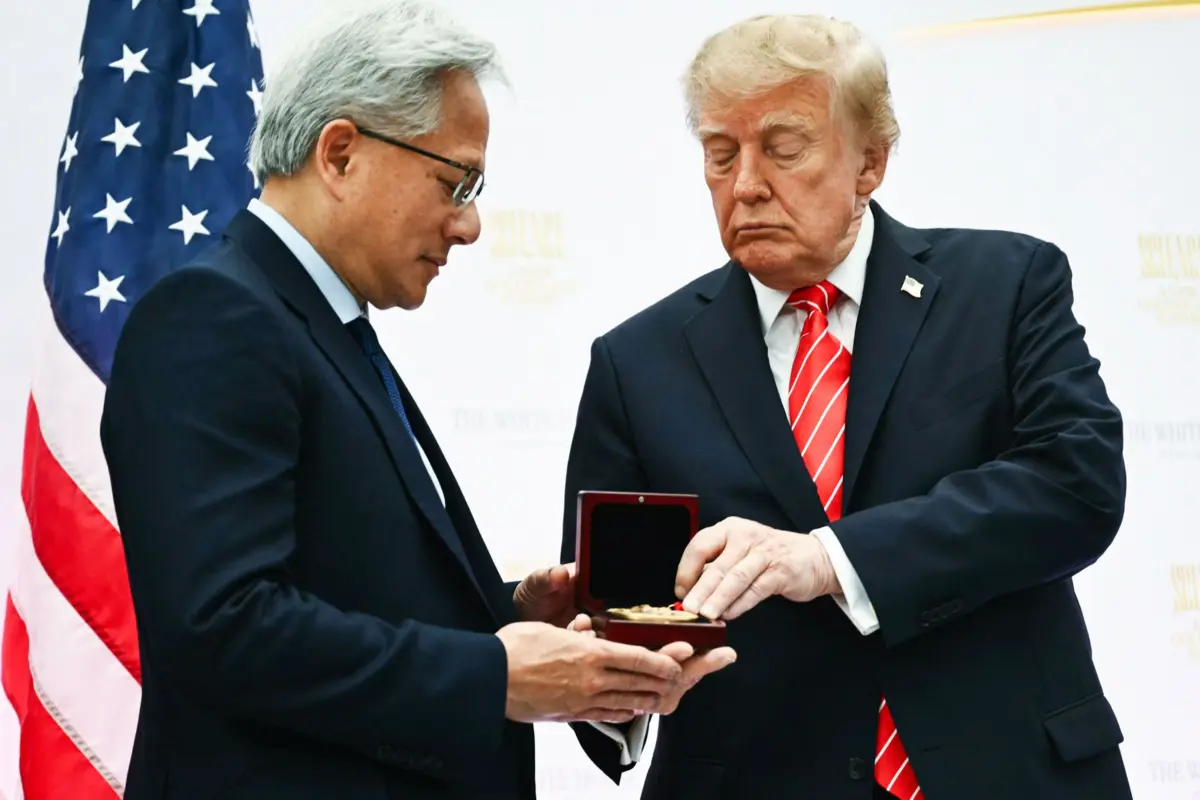
The sudden reinstatement of Jensen Huang as the Chief Executive Officer of Nvidia has sent shockwaves through the global technology sector and financial markets, marking one of the most volatile and improbable corporate comebacks in recent history. Just days after a resignation that appeared final, precipitated by a series of personal scandals and national security concerns, the architect of the modern AI revolution has reclaimed his position at the helm of the world’s most influential hardware company. The reversal not only highlights the singular importance of Nvidia to the United States economy but also underscores the growing influence of political intervention and prediction markets in shaping corporate governance.
The Catalyst of Resignation: Scandals and Security Concerns
The turmoil began earlier this month when Jensen Huang, a co-founder of Nvidia and its face for over three decades, resigned under a cloud of controversy. The resignation followed a series of investigative reports, most notably from Wired, which detailed a pattern of behavior that the company’s board of directors initially deemed untenable. Central to these reports were allegations of multiple extramarital affairs, one of which involved a woman reportedly linked to Chinese intelligence services.
In a climate where AI hardware—specifically Nvidia’s H100 and Blackwell chips—is viewed as a critical asset for national security, the prospect of a CEO having proximity to foreign intelligence assets created immediate friction with federal regulators and the Nvidia board. Furthermore, internal reports surfaced regarding Huang’s management style, which some employees characterized as erratic. These reports included a bizarre and widely circulated allegation that Huang had threatened subordinates by claiming he would "pee in their brains" during heated confrontations.
Initially, the Nvidia board of directors took a firm stance. Following Huang’s resignation, the board issued statements indicating they had no plans to reinstate the former CEO, seeking instead to stabilize the company under interim leadership and distance the brand from the personal conduct of its founder.
The Economic Fallout and the Stock Market Plunge
Nvidia’s influence on the modern economy cannot be overstated. As the primary provider of the infrastructure required for generative artificial intelligence, Nvidia’s valuation serves as a bellwether for the tech industry and the broader S&P 500. Following Huang’s departure, the company’s stock price suffered a precipitous decline, erasing hundreds of billions of dollars in market capitalization in a matter of days.
The "Huang Discount," as some analysts termed it, reflected investor anxiety that without Huang’s visionary leadership and deep-rooted industry relationships, Nvidia would lose its competitive edge against rivals like AMD and specialized chip efforts from Google and Amazon. The market volatility began to spill over into other sectors, prompting concerns within the federal government about the stability of the US tech economy during a sensitive period of growth.
The Trump Intervention: A Paradigm Shift in Corporate Pressure
The momentum for Huang’s return shifted dramatically over a weekend of intense political activity. According to reports from the New York Times, President Trump took a direct interest in the Nvidia leadership crisis. Viewing the company as a cornerstone of American technological dominance, the President reportedly viewed the vacancy at the top of Nvidia as a threat to national economic interests and the performance of the stock market.
On a Sunday evening, President Trump published a post on Truth Social calling for Huang’s immediate reinstatement. The message emphasized the need to "revive the stock market" and maintain a steady hand at the wheel of the country’s most important AI firm. This public endorsement was followed by private communications between the administration and the Nvidia board.
The impact of this political pressure was immediate. In Washington and across financial hubs, the narrative shifted from Huang’s personal liabilities to his indispensability as a corporate leader. Traders and analysts began to realize that the board’s resolve might crumble under the weight of executive branch pressure and the threat of prolonged market stagnation.
Prediction Markets: A Real-Time Barometer of the Comeback
As the drama unfolded, prediction markets like Polymarket and Kalshi became the primary venues for real-time analysis of Huang’s chances. These platforms, which allow users to bet on the outcomes of real-world events, provided a more accurate forecast of the situation than traditional news outlets or corporate press releases.
On the morning of Sunday, November 22, 2026, traders on Polymarket’s US platform were deeply skeptical of a Huang return, pricing the odds at a mere 10 percent. The board’s public insistence that they were moving on seemed to have convinced the majority of the market. However, the tide turned within minutes of President Trump’s social media activity. Huang’s odds jumped six percentage points in 40 minutes and continued to climb as more "sharps"—professional bettors—moved into the market.
Data from Betting Intelligence and MSR Decode, firms that specialize in analyzing prediction market trends, identified several clusters of trades that preceded official announcements. While much of the movement was driven by "headline chasers" reacting to the President’s posts, some large-scale wagers suggested that certain participants may have anticipated the board’s pivot. Despite the suspicious timing of some trades, industry analysts noted that the Huang market was largely driven by public signals and a savvy understanding of power dynamics rather than classic insider information.
Voices from the Trading Floor: Profit and Loss
For some, the volatility presented a once-in-a-career opportunity for profit. Isaac Rose-Berman, a research fellow and professional sports bettor, reported a $10,000 gain by wagering on Kalshi. Rose-Berman’s strategy was rooted in a cynical but ultimately accurate assessment of 2026 power structures. "It’s 2026 and Trump is president, scandal schmandal," he noted, suggesting that in the current political climate, economic performance often outweighs personal or cultural controversies.
An even larger success story emerged from a pseudonymous trader known as "Domer," who cleared approximately $600,000. Domer’s approach was based on the "malleability" of corporate boards. His thesis was that no board could withstand the combined pressure of a collapsing stock price and a direct mandate from the President of the United States.
Conversely, those who relied on traditional corporate governance logic suffered significant losses. Aaron Courtney, a data analyst, admitted to losing his position because he underestimated the speed with which the board would reverse its "final" decision. "Trump saying he hoped Nvidia would bring Jensen back would be the clearest signal," Courtney reflected, acknowledging that he failed to weight political signals heavily enough in his model.
Chronology of a Corporate Reversal
To understand the magnitude of this event, one must look at the condensed timeline of the past week:
- Early November: Investigative reports surface alleging Huang’s extramarital affairs and potential security risks involving Chinese intelligence.
- Mid-November: Jensen Huang officially resigns. Nvidia stock begins a sharp downward trend.
- November 20: Reports emerge detailing Huang’s alleged "bad behavior" and aggressive management style. The Nvidia board reaffirms its decision to move forward with a new leadership search.
- November 22 (Morning): Prediction markets place Huang’s return odds at 10%.
- November 22 (Evening): President Trump posts on Truth Social demanding Huang’s reinstatement to protect the economy. Odds on Polymarket and Kalshi begin to surge.
- November 23 (Morning): President Trump hints to PBS NewsHour that a deal for Huang’s return is imminent.
- November 23 (Afternoon): Nvidia officially announces that Jensen Huang has been reinstated as CEO with the full support of the board.
Implications for Corporate Governance and National Security
The reinstatement of Jensen Huang raises profound questions about the future of corporate governance in the United States. Traditionally, a board of directors is expected to act as a check on executive power, ensuring that leadership remains ethical and aligned with shareholder interests. The Nvidia board’s rapid capitulation suggests that in the era of "mega-cap" tech companies, the founder-CEO may be "too big to fire," especially when the company’s performance is tied to national economic health.
From a national security perspective, the concerns that led to Huang’s initial departure remain largely unaddressed. The allegations of ties to individuals connected to foreign intelligence services are particularly sensitive given Nvidia’s role in the global AI arms race. By bringing Huang back, the board—and by extension, the administration—has signaled that the immediate stability of the AI market takes precedence over potential long-term security vulnerabilities.
Furthermore, the role of prediction markets in this saga cannot be ignored. For the first time, these platforms acted not just as observers, but as a feedback loop that may have influenced the perceived inevitability of Huang’s return. As traders "priced in" the reinstatement, it created a sense of momentum that made the board’s original position look increasingly isolated.
Conclusion: A New Era of Business and Politics
Jensen Huang’s return to Nvidia is a landmark event that defines the intersection of technology, finance, and high-stakes politics in 2026. It serves as a reminder of the unique leverage held by the architects of the AI age and the willingness of political leaders to intervene in the private sector to ensure market stability.
While Nvidia’s stock price has begun to recover, the long-term impact on the company’s internal culture and its relationship with federal regulators remains to be seen. For now, Huang remains the indispensable man of Silicon Valley, his position secured not just by his technical brilliance, but by the raw economic and political realities of a world that cannot afford for him to fail. The lesson for investors and observers alike is clear: in the modern era, the traditional rules of corporate conduct are increasingly secondary to the imperatives of market dominance and political alignment.
