

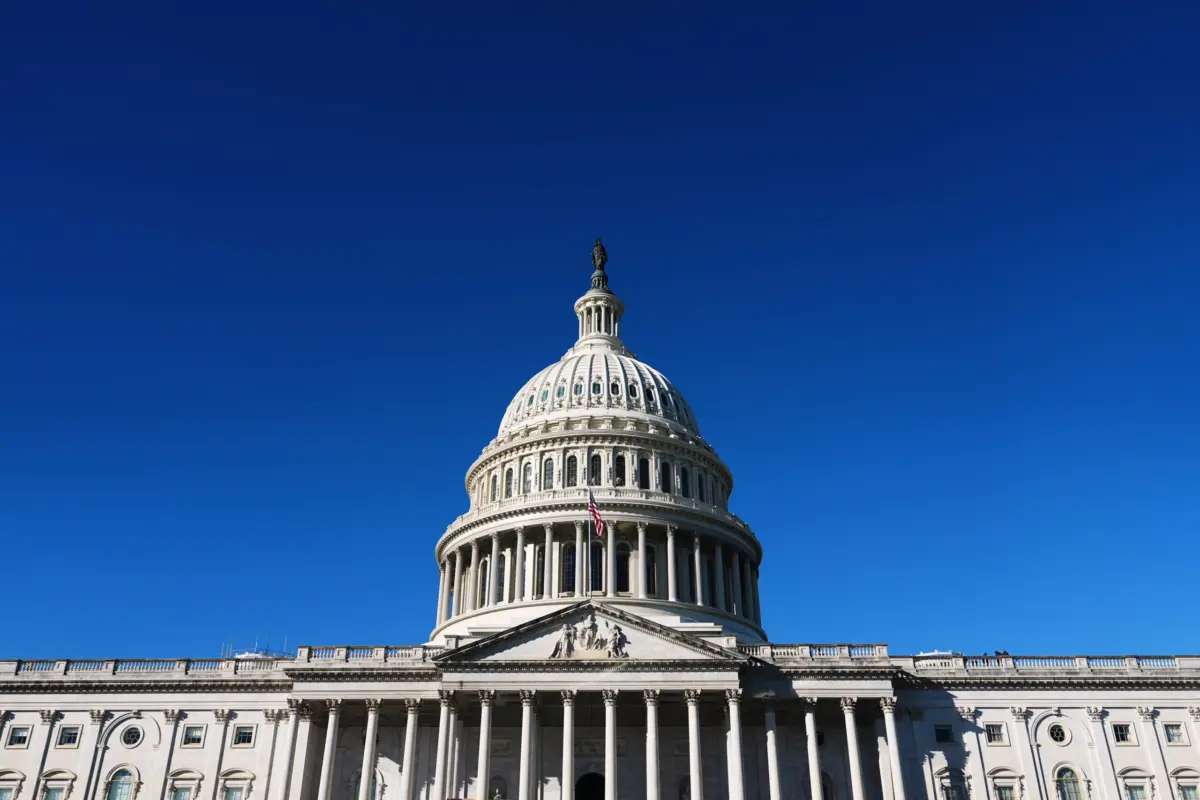
The Democratic Party has officially secured 258 seats in the United States House of Representatives following a pivotal recount in North Carolina, marking the party’s most significant legislative victory since the 1992 general elections. This definitive surge in the lower chamber, coupled with a strengthened majority in the Senate, signals a dramatic shift in the American political landscape as the nation moves into the final two years of President Donald Trump’s second term. With four races still categorized as too close to call, the Democratic majority could potentially expand further, solidifying a legislative wall against the current administration’s agenda.
The milestone 258th seat was confirmed late Sunday in North Carolina’s 5th congressional district. In a race that serves as a microcosm for the national trend, Democratic challenger Chuck Hubbard unseated the Republican incumbent Virginia Foxx. Foxx, a veteran legislator who has served 11 terms and most recently chaired the powerful House Rules Committee, lost by a razor-thin margin of just 330 votes. The defeat of such a high-ranking Republican in a district long considered a conservative stronghold underscores the volatility of the 2026 midterms and the shifting allegiances of suburban and rural voters alike.
A Historic Realignment: Comparing 1992, 2008, and 2026
The scale of the Democratic victory invites immediate historical comparison. The last time the party held a majority of this magnitude was in 1992, during the election of Bill Clinton, when Democrats also controlled 258 seats. It also surpasses the 257-seat majority achieved during the 2008 "blue wave" that accompanied Barack Obama’s first inauguration.
The 2026 midterms represent a gain of approximately 47 seats for the Democrats, who held 214 seats in the outgoing Congress. This massive swing is being characterized by political analysts as a "corrective realignment." While the 2024 elections saw a Republican consolidation of power, the subsequent two years of governance appear to have triggered a sharp counter-reaction from the electorate. The 120th Congress, scheduled to be sworn in on January 3, will feature one of the largest freshman Democratic classes in modern history, bringing a surge of progressive and centrist newcomers to Washington D.C.
The Senate and the Power of the 120th Congress
The Democratic triumph was not limited to the House of Representatives. In the upper chamber, the party has secured 56 seats, providing its largest Senate majority in over a decade. This dual-chamber control grants the Democratic Party immense leverage over the federal budget, the legislative calendar, and oversight functions.
With 56 seats in the Senate, Democrats will have a streamlined path to confirming judicial appointments and executive branch nominees, though they remain short of the 60-vote threshold required to overcome a filibuster on most major legislation. However, the House majority provides them with the "power of the purse," allowing the party to dictate funding levels for the administration’s flagship programs. This setup effectively brings President Trump’s legislative agenda to a standstill, shifting the focus from Republican policy expansion to a defensive posture defined by executive orders and the use of the presidential veto.
Catalysts of the Midterm Shift: War, Economy, and Civil Unrest
The Republican Party’s substantial losses are being attributed to a convergence of domestic and international crises that eroded public confidence in the administration. According to exit polls and recent data from Reuters and Ipsos, several key issues dominated the voter consciousness:
Geopolitical Instability and the War on Iran
The most prominent factor cited by political experts is the ongoing US-Israel conflict with Iran. The escalation of hostilities in the Middle East has led to significant concerns regarding American military involvement and the resulting regional instability. Voters expressed growing fatigue with foreign interventions, particularly as the conflict began to impact global energy markets and domestic security concerns. The Democratic platform leaned heavily into a message of de-escalation and diplomatic re-engagement, which resonated with a war-weary public.
The Cost of Living Crisis
Despite various economic interventions, the cost of living remained a primary grievance for the American electorate. Persistent inflation in housing, healthcare, and essential commodities created a sense of economic precariousness. While the administration pointed to low unemployment figures, Democratic candidates successfully argued that the "quality of life" index was declining for the middle and working classes. The narrative that the incumbent government was out of touch with the financial realities of average families proved devastating for Republican candidates in swing districts.
Immigration Enforcement and Civil Liberties
The second Trump administration’s aggressive approach to immigration, characterized by high-profile raids and expanded deportation efforts, served as a powerful mobilization tool for the Democratic base. While these policies were intended to appeal to the Republican core, they also galvanized significant opposition among civil rights advocates, urban voters, and immigrant communities. The perceived severity of these enforcement actions contributed to a surge in turnout among demographics that had been less active in the 2024 cycle.
Corruption Allegations and Approval Ratings
Public perception of government integrity also played a role. A series of ethics investigations and allegations of corruption within various federal agencies contributed to a general sense of "incumbent fatigue." By November 2026, President Trump’s job approval rating had plummeted to 32 percent, according to Reuters/Ipsos. Historically, when a president’s approval falls below the 40 percent mark, their party faces severe retribution in midterm cycles, a trend that held true with remarkable consistency this year.
Timeline of the 2026 Electoral Cycle
The path to the 258-seat majority was marked by several critical phases:
- January – May 2026: Democratic recruitment reached record levels, focusing on military veterans and healthcare professionals to challenge Republican incumbents in traditionally "red" districts.
- June – August 2026: Primary season saw a surge in progressive turnout, while the administration’s focus on the conflict in Iran began to dominate national headlines.
- September 2026: Economic data showed a sharper-than-expected rise in consumer prices, handing Democrats a potent campaign issue.
- November 3, 2026: Election Day saw historic midterm turnout. Initial returns showed significant Democratic gains in the Rust Belt and the Sun Belt.
- November 4 – November 21, 2026: Extended counting periods in states like California, Arizona, and New York saw the Democratic lead grow as mail-in and provisional ballots were tabulated.
- November 22, 2026: The North Carolina recount concluded, officially handing the 258th seat to Chuck Hubbard and confirming the historic nature of the majority.
Reactions from the Capitol
The reaction to the results has been polarized, reflecting the deep divisions within the country. Representative Alexandria Ocasio-Cortez, who easily won re-election in New York, framed the victory as a "mandate for change" and a rejection of the status quo. Speaking from the steps of the Capitol, she emphasized that the large freshman class represents a diverse array of American voices ready to challenge executive overreach.
"This is a historic moment for our country," Ocasio-Cortez stated. "This is one of the largest classes we have seen, and it represents a clear demand from the American people to take the country in a different direction. We have been given a mandate to protect our institutions and prioritize the needs of working people over the interests of the elite."
Conversely, the White House has signaled a confrontational approach to the new Congress. President Trump has already indicated that he is prepared to use his veto power to block Democratic-led initiatives. In a recent statement, the President suggested that the Democratic majority would lead to "legislative gridlock" and accused the opposition of planning "frivolous investigations" rather than focusing on governance.
Broader Implications and the Road to 2028
The implications of a 258-seat Democratic House and a 56-seat Senate are profound. In the immediate term, the 120th Congress is expected to launch a series of oversight inquiries into the administration’s handling of the Iran conflict and domestic immigration policies. Legislative priorities for the new majority are likely to include federal protections for reproductive rights, climate change mitigation, and a massive overhaul of the tax code to address income inequality.
However, the reality of a divided government means that major policy shifts will be difficult to achieve without bipartisan cooperation—an unlikely prospect in the current political climate. The next two years will likely be defined by a series of high-stakes standoffs over the debt ceiling and government funding bills.
Furthermore, the 2026 midterms serve as a significant bellwether for the 2028 presidential election. The Democratic Party’s ability to flip long-standing Republican districts in states like North Carolina suggests that the electoral map is expanding. For the Republican Party, the results necessitate a period of soul-searching and potential strategic recalibration as they look to reclaim the momentum lost during this cycle.
As the final four races are decided, the focus in Washington has already shifted to the internal leadership elections within the Democratic caucus. With such a large and ideologically diverse majority, the party leadership will face the challenge of maintaining unity while navigating the complex legislative battles that lie ahead. For now, the 258 seats stand as a testament to a restless electorate and a harbinger of a transformative period in American governance.
