

JOHANNESBURG – The global geopolitical landscape is undergoing a profound fragmentation, a process that coincides with widening fissures in the prevailing development models applied across African nations. Compounding these internal challenges are the escalating crises of climate change and unsustainable debt, which collectively constrict the fiscal and policy space available to governments. Despite this confluence of pressures, multilateral institutions continue to advocate for a singular, familiar trajectory for African countries: the pursuit of a formal economy centered on industrial employment, with Gross Domestic Product (GDP) growth bolstered by technology transfer from international partners. However, this prescribed path is increasingly viewed as neither neutral nor universally attainable, and crucially, it risks perpetuating historical patterns of economic exploitation.
The historical foundations of wealth accumulation in advanced economies are inextricably linked to exploitative practices such as slavery and colonial extraction, which involved the systematic appropriation of land, labor, and natural resources from colonized regions. Today, the burgeoning digital and green transitions, which are heavily reliant on African minerals, vast datasets, and a significant labor force, carry the potential to replicate these historical dynamics, thereby exacerbating existing inequalities. Recent global wealth distribution data underscores this concern. Between 2000 and 2024, the wealthiest 1% of the global population captured an astonishing 41% of all newly generated wealth, while the bottom half of humanity received a mere 1%. This stark disparity highlights a fundamental imbalance in the global economic system, one that African nations are uniquely positioned to challenge.
The core argument presented is that Africa cannot surmount its multifaceted development challenges by adhering to the same knowledge, economic, and innovation systems that were instrumental in creating these very problems. A continuation of current approaches risks reinforcing the very inequalities that development initiatives ostensibly aim to dismantle. Bridging the gap between the economic paradigms that international institutions were designed to manage and the complex realities on the ground necessitates a fundamental re-evaluation. This re-evaluation, the analysis posits, requires three critical intellectual ruptures, urging multilateral development banks, donor agencies, non-governmental organizations (NGOs), and African governments to shed outdated assumptions and instead empower societies to forge pathways that are authentically tailored to their specific and diverse needs.
Rethinking Value: Recognizing the Informal Economy’s Contribution
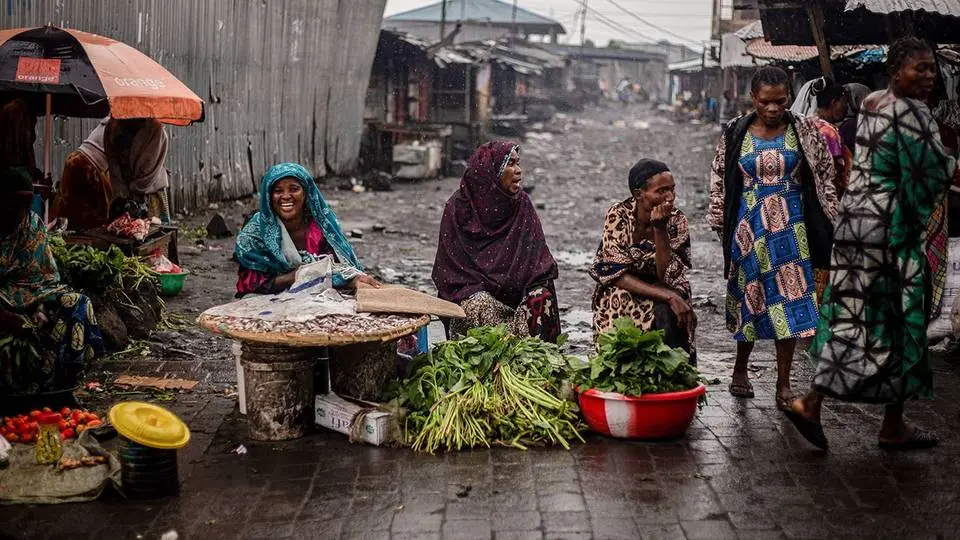
The first and perhaps most significant intellectual rupture lies in redefining what constitutes economic and innovative value. In Sub-Saharan Africa, an overwhelming 87.6% of the workforce is employed in the informal sector. These individuals often operate without the security, protection, or policy recognition afforded to their formal counterparts, typically engaging in a dynamic combination of wage labor with activities such as trading, farming, caregiving, platform-based gig work, remittance management, and community-based enterprises. These economic arrangements are not transient; they represent durable and sophisticated strategies for survival and value creation, rendering them inherently difficult to absorb into a conventional formal economy designed for a different era.
Development institutions have historically operated under the assumption that formal firms and salaried employees represent the norm. This bias is evident in the criteria often used to determine eligibility for public procurement, development finance, and business support, which frequently mandate formal registration, tax compliance, and conventional collateral. Instead of pursuing a simplistic and often disruptive "formalization" agenda that forces individuals into institutions ill-equipped to accommodate them, a more nuanced approach is advocated. Policymakers are urged to extend protection and recognition without demanding the eradication of hybrid economic models. This includes acknowledging and supporting cooperative, communal, and informal production systems. Furthermore, the assessment of innovation should extend beyond mere growth metrics to encompass crucial questions of ownership, benefit distribution, and risk allocation.
Supporting Data:
According to the International Labour Organization (ILO), informal employment in Africa constitutes a significant portion of the labor market. While specific figures vary by country, Sub-Saharan Africa’s reliance on the informal sector for livelihoods is a defining characteristic. This sector often provides essential services and goods, acting as a crucial buffer against destitution, particularly in periods of economic volatility. The World Bank has also highlighted that micro and small enterprises, many of which operate informally, are the backbone of job creation in many African economies, contributing significantly to local economies, even if their output is not always captured in official statistics.
Reclaiming Knowledge and Authority: Empowering Local Logics
The second crucial rupture concerns the fundamental understanding of knowledge and authority. Development institutions must actively recognize and integrate the existing organizing logics prevalent across the African continent – the relational, community-driven methods through which knowledge is produced, resources are coordinated, and authority is exercised. Innovation, it is argued, has never been solely the preserve of multinational corporations, research laboratories, universities, or government ministries. It flourishes organically through diverse channels, including apprenticeships, communal land stewardship, intricate repair cultures, grassroots civic technology initiatives, decentralized informal production networks, and adaptive governance systems that emerge in urban centers and through the confluence of indigenous and scientific knowledge. Yet, the concentration of financial resources and decision-making power remains firmly entrenched within central governments and elite institutions.
A paradigm shift is required, wherein development institutions acknowledge marginalized actors as legitimate knowledge producers. This necessitates a genuine redistribution of resources and authority, moving beyond tokenistic invitations to participate in pre-designed, externally imposed programs. Practical implementation would involve direct financing of community and informal innovators, robust support for intermediary organizations capable of bridging disparate knowledge systems, and a concerted effort to preserve and valorize locally generated knowledge.
Case Study: Sudan’s Emergency Response Rooms
The efficacy of localized, community-led initiatives is vividly illustrated by Sudan’s Emergency Response Rooms. These networks, often overlooked by state-centric frameworks as transient or unreliable, have demonstrated remarkable capacity in organizing critical functions such as food distribution, healthcare services, and local relief efforts, particularly within conflict zones. Their success underscores the potential of decentralized organizational structures to respond effectively to urgent needs.
Case Study: Community Philanthropy Networks in Kenya and South Africa
In Kenya and South Africa, community philanthropy networks offer compelling evidence of how external finance can serve to reinforce and empower local institutions, rather than imposing externally designed projects. These models demonstrate a capacity for sustained local development, driven by community priorities and expertise.
Analytical Insight:
These examples highlight that conventional institutional categories often fail to capture the complex interplay of trust, knowledge, and care that underpins these relational networks. By focusing solely on formal firms and industries, development frameworks risk overlooking potent sites of knowledge generation and value creation. The implication is that a more effective development strategy would involve recognizing and nurturing these relationships as fundamental economic and social assets.
Navigating Uncertainty: Moving Beyond Solutionism
The third essential rupture involves a fundamental reorientation of how development institutions operate under conditions of uncertainty. The prevailing tendency towards "solutionism" – the relentless search for simple, ready-made answers – must be abandoned. Instead, institutions need to cultivate a nuanced understanding of when to embrace experimentation and when to engage in what is termed "institutional hospicing," a process that involves pausing or shutting down ineffective or harmful systems. The profound disruptions caused by climate change, the rapid advancements in artificial intelligence (AI), shifting demographic trends, and persistent geopolitical tensions have irrevocably exposed the fiction of a predictable, linear economic path from "developing" to "developed" status, assuming such a path ever truly existed. Nevertheless, governments continue to be incentivized for adopting "best practices" and penalized when experimental approaches falter.
The Peril of AI Hyperscaler Data Centers:
A pertinent example of this flawed approach is the global push to construct AI hyperscaler data centers. The purported benefits of these facilities are often presented as self-evident, yet their primary advantages tend to accrue to external entities. Meanwhile, the potentially detrimental consequences – including escalating electricity bills for local populations, heightened water stress, and increased pollution – are borne by the very communities that host them. Responsible governance, in this context, mandates a critical evaluation, potential delays, or outright rejection of projects whose public value has not been unequivocally demonstrated.
Rethinking Experimentation and Governance:
Simultaneously, multilateral organizations must overcome their reluctance to finance experiments whose outcomes cannot be guaranteed in advance. Such endeavors, when undertaken responsibly, require the active participation of affected communities, the establishment of transparent safeguards, and the creation of multiple avenues for revision or termination. Crucially, the success of these experiments must be evaluated not solely on metrics like GDP growth or patent counts, but more importantly, on their capacity to enhance adaptive resilience and to distribute the benefits and risks associated with innovation more equitably.
Broader Impact and Implications
The imperative for these three intellectual ruptures is not an endorsement of romanticizing informality, abandoning industrial policy altogether, or assuming that all local practices are inherently equitable or beneficial. Rather, it is a call for the global institutions that shape and finance development, alongside African governments themselves, to render the economies that people actually inhabit – and the emergent alternatives within them – visible, contestable, and ultimately, governable.
The true measure of reform within global governance will not solely be determined by whether African countries gain a more significant voice within existing institutional structures. It will be measured by the capacity of these institutions to genuinely respond to Africa’s diverse realities and to actively create space for alternative developmental models to flourish. Such a transformed governance architecture, founded upon these three critical ruptures – the reconceptualization of value generation, the redistribution of authority, and a refined understanding of when to experiment and when to relinquish control – represents the most promising path toward a more equitable and sustainable future for the continent. The current global order, characterized by fragmentation and deep-seated inequalities, demands nothing less than a fundamental reimagining of how development is conceived, implemented, and governed.
