

The landscape of global football governance shifted significantly this week as the Confederation of African Football (CAF) and the South American Football Confederation (CONMEBOL) formally declared their total alignment behind the incumbent FIFA President, Gianni Infantino. During the CAF Ordinary General Assembly held in Abuja, Nigeria, CAF President Patrice Motsepe announced that all 54 member nations of the African continent have pledged their "unanimous" support for Infantino’s bid for a fourth term. This declaration follows a similar endorsement from CONMEBOL, effectively securing a massive voting bloc for the 56-year-old Swiss-Italian lawyer ahead of the elective congress scheduled for March 18, 2027, in Rabat, Morocco.
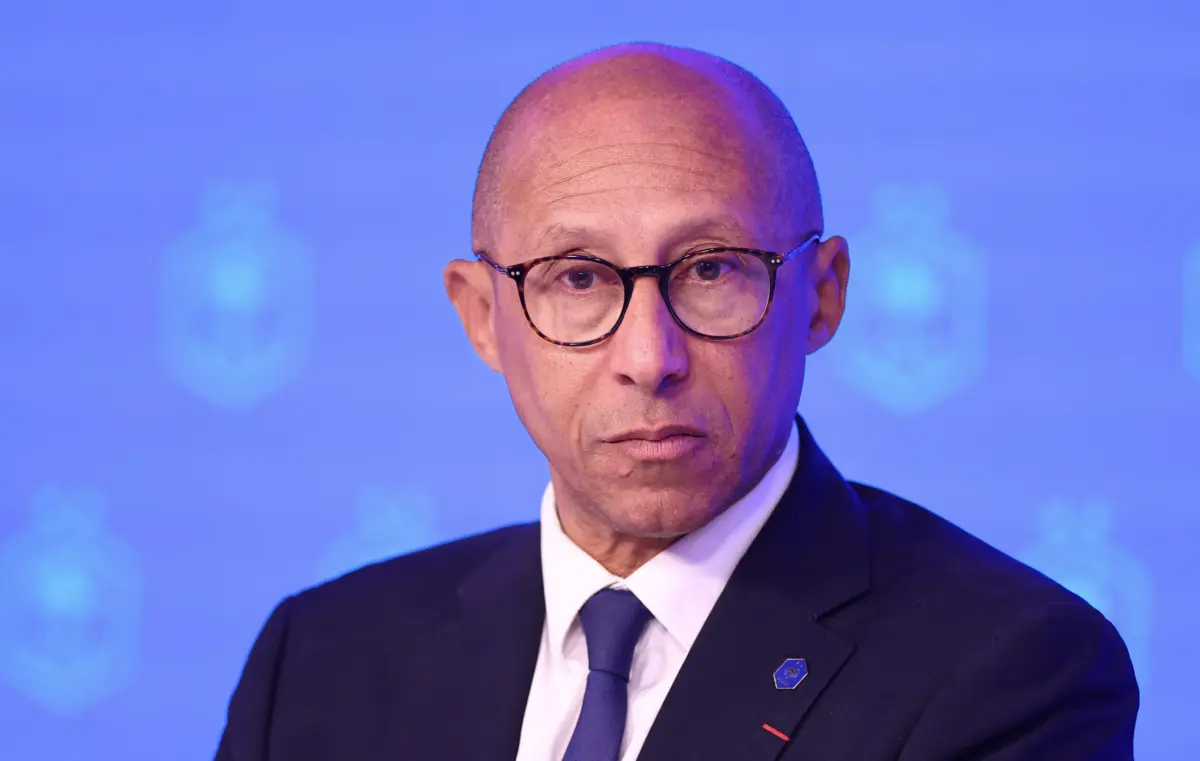
The endorsement in Abuja was a high-stakes diplomatic affair, attended by key figures in the international football community, including Infantino himself and one of his declared challengers, Philippe Diallo, the president of the French Football Federation (FFF). Despite the presence of opposition, the African continent’s message was singular and resolute. Motsepe, a South African billionaire who has maintained a close working relationship with FIFA since taking the helm of CAF in 2021, emphasized that the decision was not merely a top-down directive but a reflection of the collective will of the 54 national associations.
The Mathematical Path to Victory
To secure the FIFA presidency, a candidate must obtain a simple majority of the 211 member associations that comprise the global governing body. With Africa’s 54 votes and South America’s 10 votes already publicly pledged to Infantino, the incumbent has secured 64 votes—nearly 30% of the total required—before the campaign has entered its final year.
The African bloc is the largest single voting contingent within FIFA, making it the kingmaker of any presidential election. Historically, candidates who capture the unified support of Africa and Asia (AFC) are almost impossible to defeat. While the Asian Football Confederation has yet to issue a collective statement, former Japan Football Association president Kozo Tashima has entered the race, suggesting that the Asian vote may be split or contested. However, with the heavyweights of Africa and South America already in Infantino’s corner, the path for challengers like Diallo and Tashima appears increasingly narrow.
Financial Incentives and the FIFA Forward Program
A central pillar of Infantino’s enduring popularity in the Global South is the aggressive expansion of FIFA’s financial distribution models. During his address to the Abuja assembly, Infantino announced a significant increase in development funding. Starting in January 2027, each member of CAF is slated to receive $25 million for development projects. This influx of capital is part of the "FIFA Forward" initiative, which has seen FIFA’s investment in member associations quadruple since Infantino took office in 2016.
For many African nations, where local government funding for sports can be inconsistent, FIFA’s grants are the lifeblood of national football infrastructure, youth academies, and women’s leagues. Critics, primarily in Europe, have often characterized these financial promises as a method of "buying" votes. However, supporters argue that Infantino is simply fulfilling a mandate to redistribute the massive wealth generated by the FIFA World Cup—revenues of which reached a record $7.5 billion in the 2019–2022 cycle—to the regions that need it most.
"You will always find, in me and in FIFA, a trusted partner," Infantino told the delegates in Abuja. This sentiment of reciprocity was echoed by Motsepe, who noted that under Infantino’s leadership, Africa’s representation in the World Cup has increased significantly. The 2026 World Cup in North America will feature nine guaranteed slots for African teams, up from the previous five, a reform that has garnered immense goodwill across the continent.
The Challenge from UEFA and the Diallo Factor
While Africa and South America stand united behind the incumbent, the situation in Europe is markedly different. The Union of European Football Associations (UEFA) has become the primary site of opposition to Infantino’s leadership. Relations between Infantino and UEFA President Aleksander Čeferin have been strained for years, exacerbated by Infantino’s previous proposals for a biennial World Cup and his short-lived FIFA Forward Enterprise (FFE) plan. The FFE plan, which sought to sell stakes in future World Cup cycles to private equity investors, was met with fierce resistance from UEFA and the European Club Association, who viewed it as a threat to the traditional football calendar and European economic dominance.
Philippe Diallo, the 63-year-old French football chief and a lawyer by training, has emerged as the European-backed alternative. Diallo’s candidacy is strategic; as a Francophone with Senegalese heritage—his father was an Olympic boxer for France—he was expected to appeal to the many French-speaking nations within CAF.
UEFA Vice President Laura McAllister recently suggested that Diallo should not be pigeonholed as a "European candidate." She argued that there is a "soft space" within various confederations where federations are uncomfortable with the "concentration of power" in Infantino’s hands. McAllister noted that while confederation leaders might pledge unanimous support, the actual vote is conducted by secret ballot, allowing individual presidents to vote their conscience or their reformist agendas.
A Chronology of the Infantino Era
To understand the current consolidation of power, one must look at the timeline of Infantino’s rise and the evolution of his relationship with the global confederations:
- February 2016: Gianni Infantino is elected FIFA President, succeeding Sepp Blatter amid a massive corruption scandal that saw dozens of top officials indicted. He promises transparency and financial reform.
- January 2017: FIFA votes to expand the World Cup from 32 to 48 teams starting in 2026, a move that secures massive support from Africa and Asia.
- June 2019: Infantino is re-elected unopposed for a second term at the FIFA Congress in Paris.
- 2021–2022: FIFA pushes for a biennial World Cup. The plan is ultimately shelved after a rebellion from UEFA and CONMEBOL, though the two confederations later split on their support for Infantino himself.
- March 2023: Infantino is re-elected by acclamation for a third term in Kigali, Rwanda.
- July 2024: The controversial FIFA Forward Enterprise (FFE) plan is proposed and quickly retracted after UEFA threatens legal action.
- November 2024: CONMEBOL and CAF announce unanimous support for Infantino’s 2027 re-election bid.
The Geopolitical Significance of the 2030 World Cup
Another factor cementing the alliance between FIFA and CAF is the selection of Morocco as a co-host for the 2030 World Cup, alongside Spain and Portugal. By integrating an African nation into a joint bid with Europe, Infantino has effectively bridged two of the most powerful confederations. This "Centenary" World Cup will also feature matches in Uruguay, Argentina, and Paraguay to celebrate the tournament’s 100-year history, thereby satisfying South American interests as well.
The 2030 hosting arrangement is seen as a masterstroke of football diplomacy. It rewards Morocco for its heavy investment in infrastructure and its historic run to the semi-finals of the 2022 World Cup, while also ensuring that the tournament returns to Africa for the first time since 2010. For African football leaders, Infantino is the architect of this inclusive approach, further insulating him from the criticisms of European reformers.
Analysis of Implications: Stability vs. Reform
The unanimous backing from CAF and CONMEBOL suggests that Infantino is likely to enter the 2027 election with an insurmountable lead. However, this consolidation of power raises questions about the future of FIFA’s democratic processes.
From an administrative perspective, a fourth term for Infantino represents stability. Under his tenure, FIFA’s reserves have grown to unprecedented levels, and the "Forward" program has professionalized many smaller associations. For the Global South, Infantino is a president who has successfully challenged the Euro-centric status quo of world football.
Conversely, the "uncomfortable" concentration of power mentioned by Laura McAllister remains a concern for governance experts. The lack of a robust, contested election can lead to a lack of accountability. If the majority of the 211 associations feel their financial interests are best served by the incumbent, there is little incentive for them to entertain a reform agenda that might prioritize human rights, environmental standards, or more equitable distribution of power within the FIFA Council.
Furthermore, the tension between UEFA and the rest of the world could lead to a fragmented footballing landscape. If Europe feels increasingly marginalized within FIFA’s voting structure, it may double down on its own internal competitions, such as the UEFA Nations League and the Champions League, potentially creating a "de facto" split in the global game.
Conclusion
As the road to Rabat 2027 begins, Gianni Infantino sits in a position of nearly unrivaled strength. The dual endorsements from Abuja and South America have signaled that the majority of the world’s football associations prefer the current trajectory of expansion and financial redistribution over the reformist platform offered by European challengers.
While Philippe Diallo and Kozo Tashima may continue to campaign on platforms of institutional reform and decentralization, they face the daunting task of breaking the "bloc" mentality that has come to define FIFA politics. For now, the "unanimous" support of Africa’s 54 nations serves as a powerful testament to Infantino’s successful cultivation of the Global South—a strategy that appears poised to grant him a final four-year mandate to shape the future of the world’s most popular sport.
