

The Australian commercial vehicle landscape is undergoing a significant transformation as the Kia PV5 electric van begins to establish a foothold in a market historically dominated by internal combustion engine (ICE) staples. Following its launch in May, the PV5 has recorded 496 sales in Australia, signaling a shift in how fleet operators and independent contractors view the viability of electric propulsion for logistics. This surge in interest coincides with a report from the Electric Vehicle Council (EVC) which identifies the lack of affordable electric vans as the single biggest unclaimed opportunity in the nation’s automotive sector. By offering a vehicle that achieves near-price parity with traditional diesel counterparts, Kia is addressing the primary barrier to entry for small-to-medium enterprises and last-mile delivery services.

The Strategic Importance of the PV5 in the Australian Market
The arrival of the Kia PV5 comes at a critical juncture for the Australian transport industry. For years, the commercial van segment remained one of the slowest to electrify, hampered by high upfront costs and limited range. Julie Delvecchio, CEO of the Electric Vehicle Council, has frequently highlighted that while passenger EV adoption is accelerating, the commercial sector requires specialized solutions that do not compromise on payload or operational efficiency. The PV5 appears to be Kia’s direct answer to this challenge.
Since its introduction, the PV5 has been positioned as a "workhorse with a passenger car feel." This duality is essential for drivers who spend upwards of eight to ten hours a day behind the wheel. Early adoption patterns in Australia show that the vehicle is attracting a diverse range of buyers, from independent couriers working for global giants like Amazon to recreational users looking for a platform for camper van conversions. The initial sales figures—nearly 500 units in the first few months—suggest that the market was waiting for a mid-sized electric option that could bridge the gap between small city vans and heavy-duty transporters.

Technical Specifications and Powertrain Performance
The Kia PV5 is built upon a dedicated electric platform that prioritizes interior volume and modularity. It is equipped with a 71.2 kWh nickel cobalt manganese (NCM) lithium-ion battery, a choice that balances energy density with thermal stability. The current model offers a range of approximately 390 kilometers on a single charge, though Kia has confirmed that technical optimizations in the 2027 models are expected to increase this figure to 420 kilometers.
One of the standout features of the PV5 is its charging flexibility. While it supports DC fast charging for rapid turnarounds during work shifts, early feedback from drivers indicates that many are successfully utilizing "trickle charging" at home overnight. This behavior suggests that for urban and suburban delivery routes, the current range is more than sufficient to alleviate the "range anxiety" that typically plagues first-time EV adopters.

The vehicle utilizes a front-wheel-drive configuration, which allows for a lower floor height and improved cargo accessibility. In terms of performance, the electric motor provides instantaneous torque, a characteristic that drivers have noted is particularly beneficial when navigating hilly suburban terrain with a full load. Unlike traditional diesel vans that may struggle with gear hunting or turbo lag under heavy weights, the PV5 maintains a "well-planted" feel and smooth acceleration.
Design, Dimensions, and Cargo Utility
The physical footprint of the PV5 is designed to maximize utility within urban constraints. It measures 4,695 mm in length, 2,255 mm in width, and 1,899 mm in height, with a generous 2,995 mm wheelbase. These dimensions place it in direct competition with the Renault Kangoo and the Toyota HiAce, yet its internal packaging offers significant advantages.
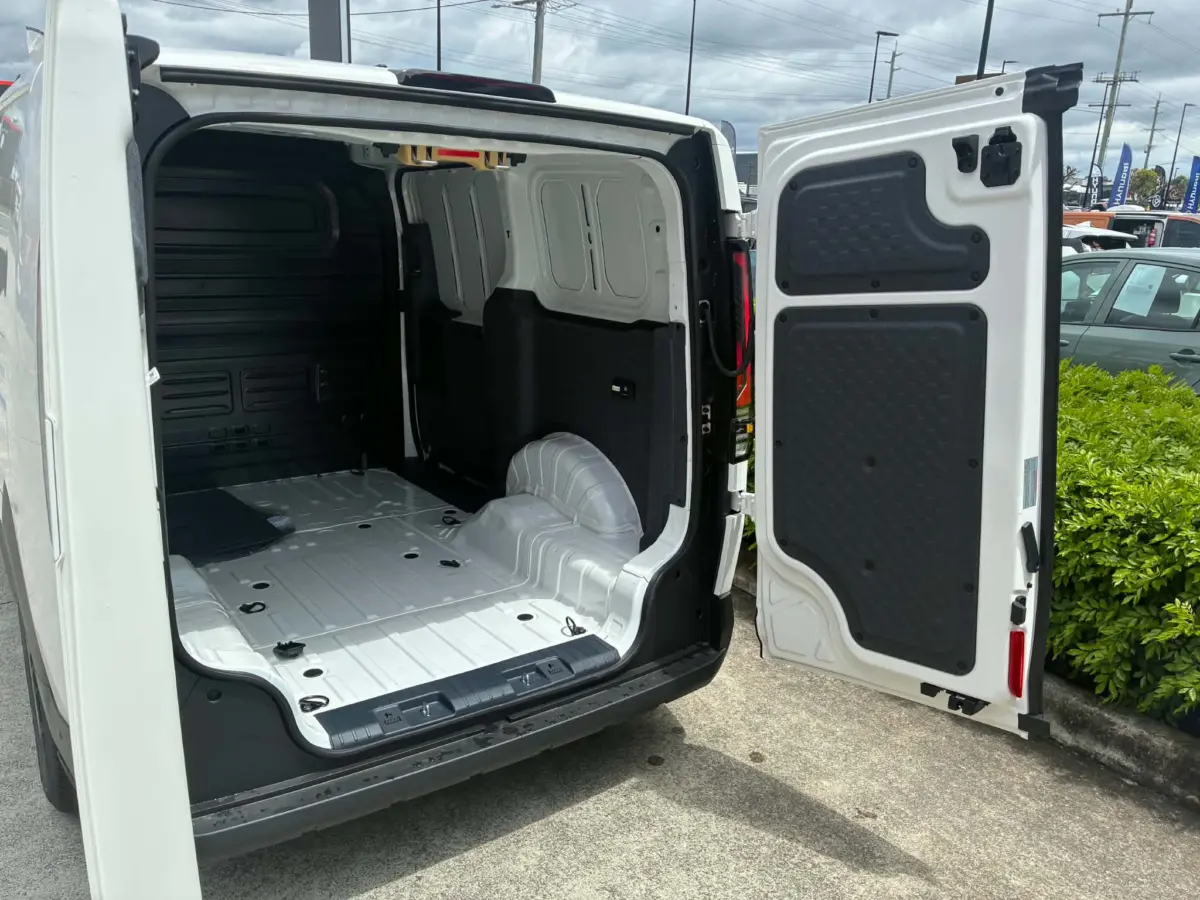
With over four cubic meters of cargo capacity, the PV5 provides double the storage volume of lifestyle-oriented electric vehicles like the Tesla Model Y or the Volkswagen ID. Buzz. The cargo area is engineered to accommodate two Euro pallets, facilitated by a low 419 mm load height. Accessibility is a primary design focus, featuring sliding doors on both sides of the vehicle and rear "barn doors" that open to a full 180 degrees.
Interior durability is addressed through integrated padding on the rear doors and interior walls, protecting both the vehicle and the cargo during transit. The van supports a payload of up to 740 kg and includes floor-mounted tie-down points to secure goods. For tradespeople, the inclusion of a power point in the rear allows for the on-site charging of power tools, effectively turning the van into a mobile workshop.
Driver Comfort and Integrated Technology
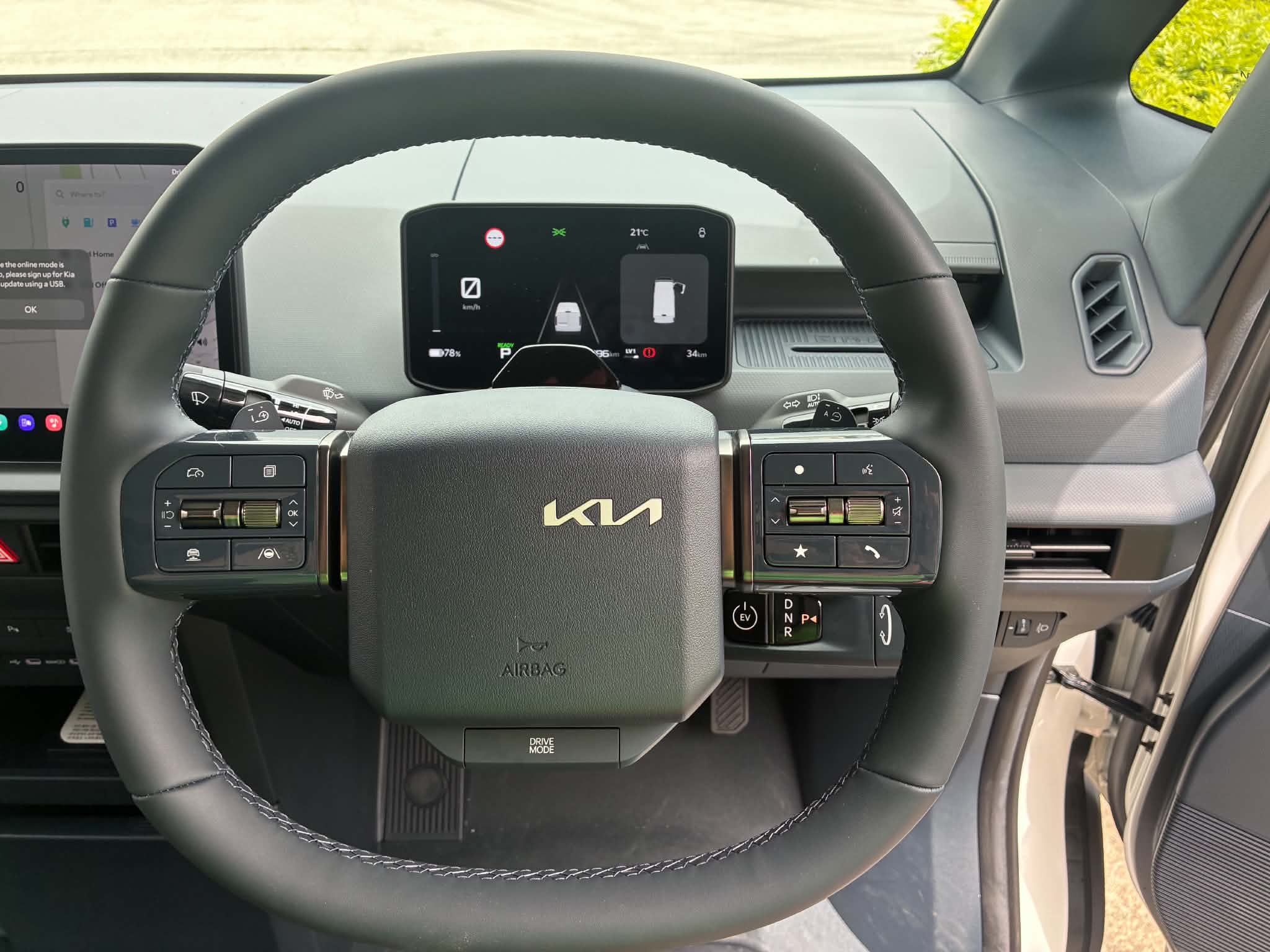
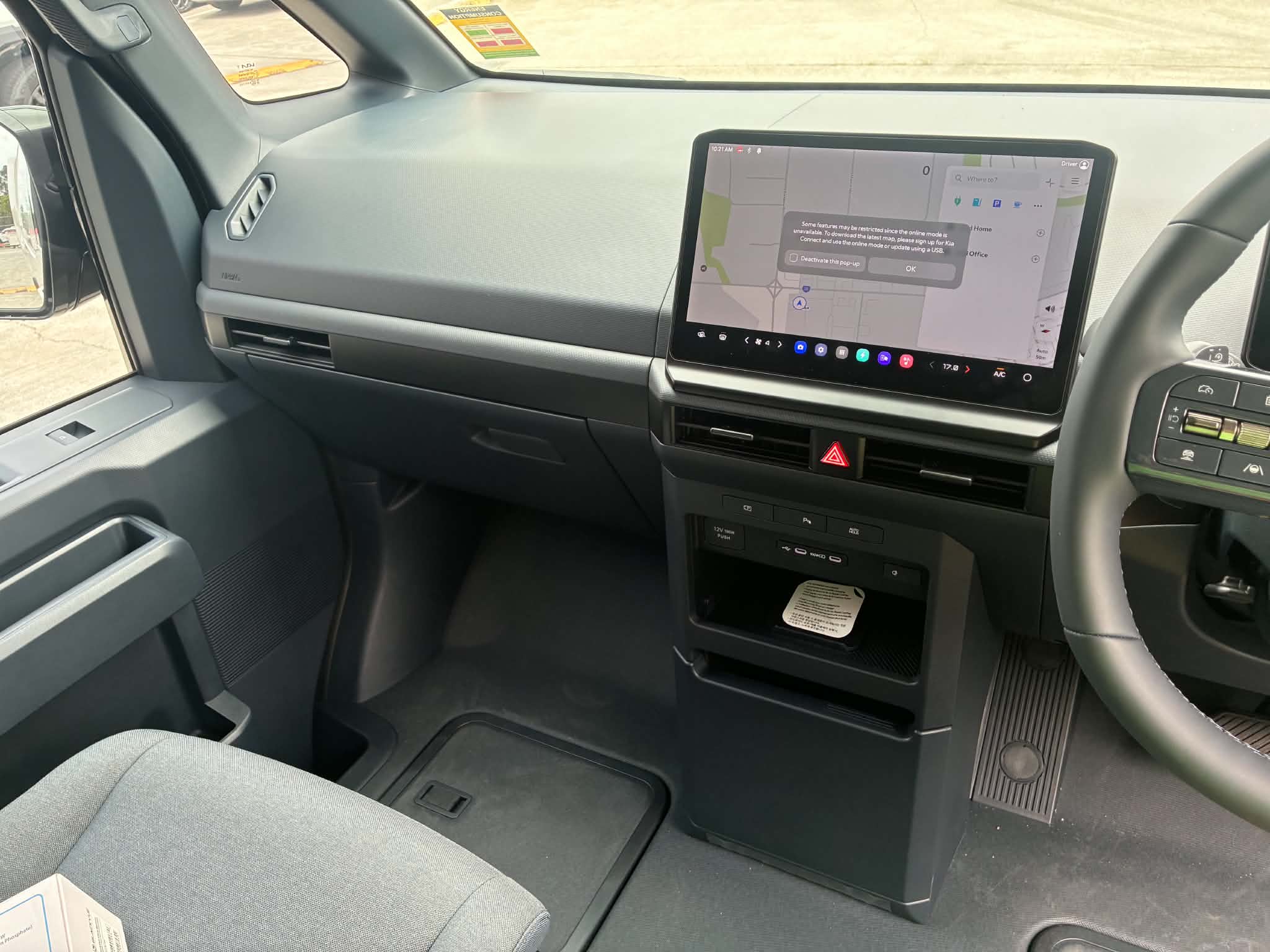
Kia has integrated a suite of technologies into the PV5 that are typically reserved for premium passenger vehicles. The cockpit features an ergonomic layout with electric lumbar support for the driver—a critical feature for those involved in high-volume delivery cycles, such as the pre-Christmas peak period.
The technology package includes:

- 360-Degree Camera System: A vital addition for a van where rear visibility is traditionally obstructed.
- Safety Suite: Standard features include blind-spot collision avoidance, navigation-based adaptive cruise control, lane-keep assist, and lane-centering with hands-on detection.
- Connectivity: A wireless phone charger is located near the dash, supplemented by customizable buttons on the steering wheel that allow drivers to create shortcuts for frequently used functions like climate control.
- Vehicle-to-Load (V2L): The PV5 comes standard with a V2L adapter, allowing the vehicle’s battery to power external devices, a feature that enhances its utility for both work and leisure (such as camping).
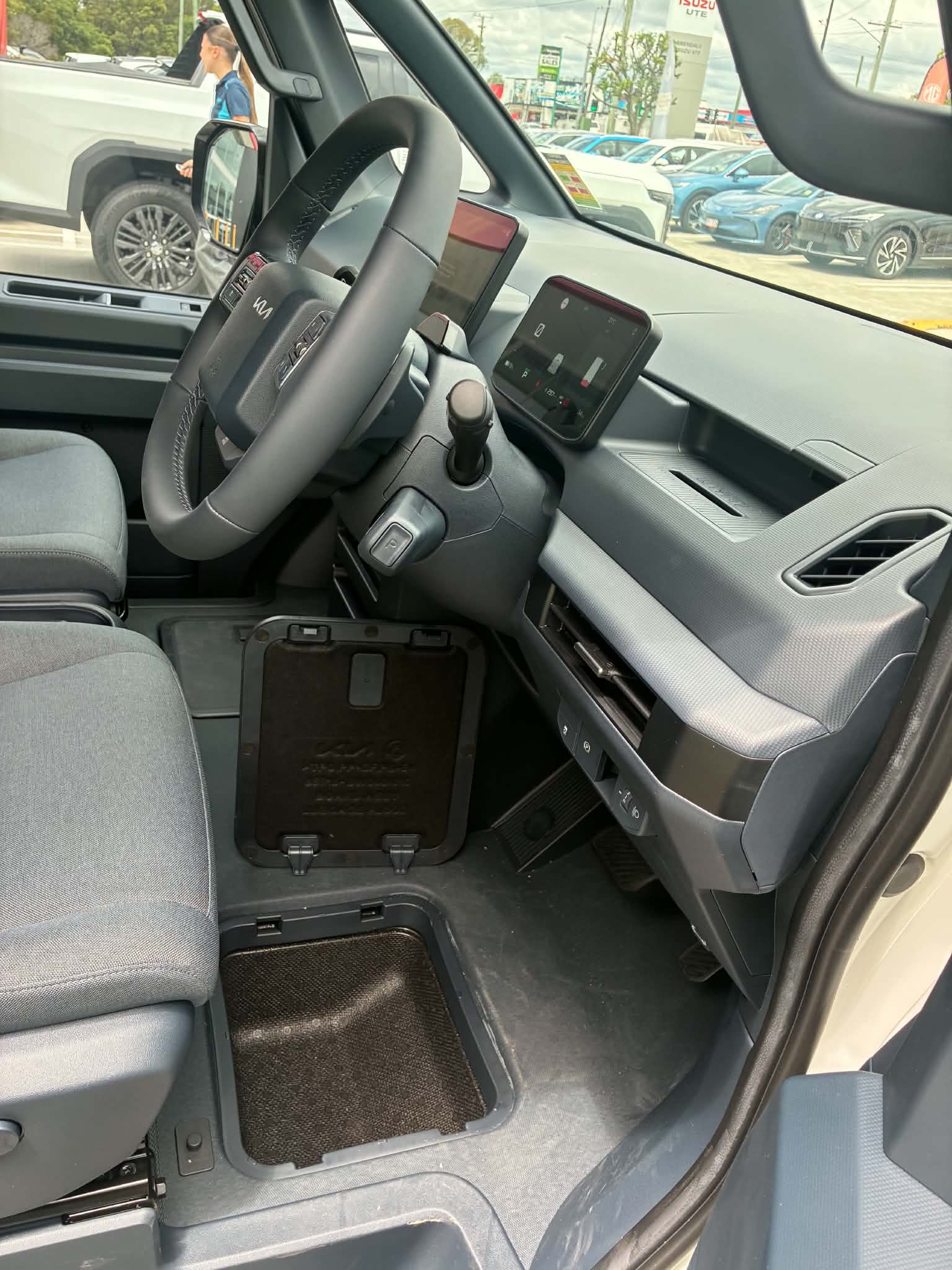
The interior design also emphasizes storage, with numerous "nooks and crannies" including a phone slot above the steering wheel and a glove box designed with high capacity in mind. While some reviewers have noted minor inconveniences, such as the regenerative braking system reverting to its lowest setting upon restart and the lack of a front trunk (frunk), the overall consensus points to a highly refined cabin environment.
Economic Analysis: The Case for Price Parity
The most significant hurdle for EV adoption in the commercial sector has been the "green premium"—the higher purchase price compared to ICE vehicles. The Kia PV5 retails for approximately AU$56,000 (before on-road costs). This pricing strategy is a deliberate move by Kia to match the cost of industry benchmarks like the Ford Transit and Toyota HiAce.

When the Total Cost of Ownership (TCO) is calculated, the business case for the PV5 becomes even more compelling. The reduction in fuel costs is substantial; whereas diesel prices remain volatile and subject to international supply chain pressures, electricity provides a more stable and lower-cost energy source. Furthermore, the PV5 requires less frequent servicing due to having fewer moving parts than an internal combustion engine, reducing downtime for fleet operators. Kia reinforces this value proposition with a 165,000 km warranty on the battery, providing long-term security for high-mileage users.
Global Context and Trade Challenges
While the PV5 is seeing success in Australia, its entry into other major markets, particularly the United States, faces significant headwinds. The primary obstacle is the 1964 "Chicken Tax," a 25% import tariff on light trucks and commercial vans. Because Kia manufactures the PV5 in South Korea and classifies it as a commercial vehicle, the tariff makes it financially difficult to price the vehicle competitively in the US market without local production.
In Europe and Asia, however, the PV5 is being hailed as a leader in the "Platform Beyond Vehicle" (PBV) movement. It was recently named the 2026 International Van of the Year, a prestigious accolade that recognizes its innovation in modularity and efficiency. The PBV concept involves a fixed cab (the "driver zone") and interchangeable upper bodies (the "life modules"), which are attached via a combination of mechanical coupling and electromagnetic fixtures. This allows a single chassis to be used as a delivery van during the day and a personal transport vehicle or recreational camper at night.
Broader Impact and Industry Implications
The success of the Kia PV5 is likely to catalyze further investment in the Australian electric van market. As major logistics companies like Amazon, Australia Post, and DHL face increasing pressure to meet ESG (Environmental, Social, and Governance) targets and decarbonize their supply chains, the availability of a reliable, price-competitive electric van is essential.

The PV5’s performance suggests that the "single biggest unclaimed opportunity" identified by the EVC is finally being addressed. As charging infrastructure continues to expand across suburban Australia and as more businesses realize the TCO benefits of electrification, the sight of white, grey, and black PV5s (the current available color palette) is expected to become a common fixture on Australian roads.
The transition to electric delivery vehicles also offers secondary benefits to urban environments, including a significant reduction in noise pollution and an improvement in local air quality. For the "bean counters" and fleet managers, the PV5 represents a rare alignment of environmental responsibility and fiscal pragmatism. With 2027 upgrades already on the horizon, Kia is positioned to lead the charge in the electrification of the global last-mile delivery sector, proving that the future of commercial transport is not just electric, but also economically sustainable.
