

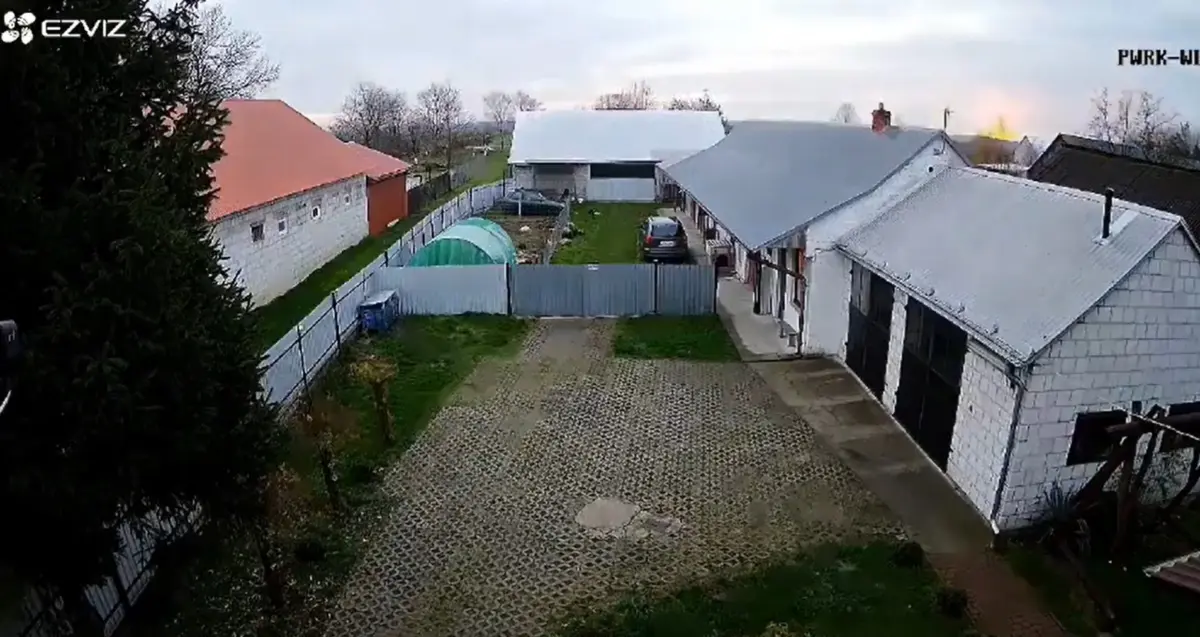
The Polish government has formally accused the Russian Federation of a deliberate and "intentional provocation" following three distinct violations of Polish airspace by military objects during the early hours of Friday. The incidents, which occurred as high-ranking European defense officials gathered in the region for post-war military planning exercises, have triggered a sharp escalation in diplomatic rhetoric and prompted Warsaw to demand an increased NATO presence on the alliance’s eastern frontier.
Polish Prime Minister Donald Tusk confirmed the incursions on Friday morning, stating that the nature of the violations left little doubt regarding Moscow’s intentions. The incidents occurred against the backdrop of a massive Russian aerial bombardment of Ukrainian civilian infrastructure, including critical bridges and transport hubs, which resulted in at least eight deaths and dozens of injuries across Ukraine.
Details of the Airspace Incursions
Polish Defence Minister Wladyslaw Kosiniak-Kamysz provided a detailed technical briefing during a press conference in Warsaw, outlining the trajectory and nature of the objects detected by Polish radar systems. According to military intelligence and preliminary investigations, the three objects are believed to consist of two cruise missiles and one long-range kamikaze drone.
The incursions were localized in three specific areas of southeastern Poland, all within close proximity to the Ukrainian border:
- Nowy Lipowiec: Located approximately 60 kilometers (37 miles) from the border. This site is of particular strategic concern due to its proximity to ongoing multinational military exercises.
- Molodycz: Situated roughly 50 kilometers (31 miles) south of the first site.
- Rudnik nad Sanem: Located approximately 50 kilometers to the west of the border region.
Military recovery teams and forensic experts are currently active at all three locations to secure debris and determine the exact models of the ordnance used. Surveillance footage from Bilgoraj County, approximately 300 kilometers from Warsaw, captured flashes of light and the sounds of explosions in the early morning hours of November 20, 2026, suggesting that at least one of the objects may have been intercepted or underwent a technical failure upon entering Polish territory.
The "Coalition of the Willing" and Strategic Timing
The timing of these incursions has been highlighted by Polish officials as a key indicator of Russian intent. The violations occurred while Poland was hosting the "Coalition of the Willing," a specialized military exercise involving a group of European nations dedicated to the long-term stabilization and reconstruction of Ukraine.
The exercises were not focused on active combat operations but were instead designed to simulate a post-war environment. The mission’s primary goals include the stabilization of Ukrainian territory, the clearing of mines, and the comprehensive rebuilding of the Ukrainian Armed Forces once the current conflict concludes.
The presence of high-level dignitaries at these exercises underscores the gravity of the Russian provocation. Attendees included the defense ministers of France, the United Kingdom, and the Baltic states, as well as eight military chiefs of staff from key NATO allies. The potential crash site near Nowy Lipowiec was identified as being only 76 kilometers (47 miles) from the primary zone where these European troops and officials were stationed.
"These exercises, combined with the presence of defense ministers and military leadership, suggest that the convergence of these events is no accident," Minister Kosiniak-Kamysz stated. "This was a calculated signal sent to the heart of European defense cooperation."
A Chronology of the Night’s Events
To understand the scope of the provocation, it is necessary to examine the timeline of military activity in the region during the 24-hour period surrounding the incident.
- Thursday, 22:00 CET: Russian strategic bombers are reported taking off from airbases in the Murmansk and Caspian regions.
- Friday, 01:30 CET: A massive wave of missiles and drones enters Ukrainian airspace, targeting Kyiv, Lviv, and several western Ukrainian transport hubs.
- Friday, 03:15 CET: Polish radar systems detect a high-speed object crossing the border near Nowy Lipowiec. Polish and allied F-16 fighter jets are scrambled from the 31st Tactical Air Base.
- Friday, 03:45 CET: Two additional objects are detected entering Polish airspace near Molodycz and Rudnik nad Sanem.
- Friday, 04:10 CET: Surveillance cameras in Bilgoraj County record a mid-air explosion and a subsequent ground flash.
- Friday, 06:00 CET: The Polish Ministry of Defence confirms the violations and initiates search and recovery operations.
- Friday, 09:00 CET: Prime Minister Donald Tusk and Defense Minister Kosiniak-Kamysz hold an emergency security briefing.
International Reaction and Diplomatic Fallout
The international community reacted swiftly to the reports. NATO Secretary-General Mark Rutte issued a statement via social media, characterizing the incident as "clearly dangerous" and affirming that the alliance stands in total solidarity with Poland. Rutte is scheduled to arrive in Warsaw on Saturday for emergency talks with the Polish leadership.

Prime Minister Tusk emphasized that Poland would no longer accept being a passive observer to such incursions. "Today, it is clearer than ever before that Poland must participate in all decisions and discussions regarding the future of Ukraine and security in Europe," Tusk said. "We are not just a frontline state; we are a pillar of European stability."
British Prime Minister Andy Burnham, attending an EU-UK summit in Brussels, condemned the Russian actions in the strongest possible terms. Burnham described the violation of Polish airspace as "utterly unacceptable" and a desperate attempt by the Kremlin to fracture European unity.
"Europe will not be deterred from our support for Ukraine," Burnham told reporters. "We will not allow Vladimir Putin to divide our continent. We recognize that the front line in Ukraine is the front line for freedom and democracy everywhere. An attack on the integrity of Polish airspace is an affront to the collective security of the West."
Supporting Data: A Pattern of Escalation
The incidents on November 20, 2026, are part of a broader and troubling pattern of Russian military hardware entering NATO airspace. Since the full-scale invasion of Ukraine in February 2022, several NATO members on the eastern flank have reported similar incursions:
- November 2022: A stray missile landed in the Polish village of Przewodów, killing two civilians. While later identified as a Ukrainian air defense missile attempting to intercept a Russian strike, the incident highlighted the extreme risks of spillover.
- December 2023: A Russian missile entered Polish airspace for approximately 40 kilometers before returning to Ukrainian territory.
- September 2024: Romania and Latvia reported Russian drones crashing on their territory during a concentrated strike on Ukrainian grain infrastructure.
- 2025-2026: Multiple reports of GPS jamming and electronic warfare interference affecting civilian aviation over the Baltic Sea and northern Poland, attributed to Russian installations in Kaliningrad.
Data from the Polish Ministry of Defence indicates that the frequency of "near-miss" incidents—where Russian missiles track within 10 kilometers of the border—has increased by 35% in the last six months.
Analysis of Implications for NATO Strategy
The deliberate nature of this latest incursion suggests a shift in Russian tactics. By targeting areas near multinational exercises, Moscow is likely testing the "red lines" of individual NATO members and the alliance as a whole.
1. The Push for "Active Air Defense":
There is growing pressure within Poland and the Baltic states for NATO to adopt a policy of "active air defense." This would involve intercepting Russian missiles or drones while they are still in Ukrainian airspace if their trajectory indicates a potential violation of NATO territory. While currently avoided to prevent direct conflict with Russia, the events in Nowy Lipowiec have reignited this debate.
2. Strengthening the Eastern Flank:
Poland has signaled that it will formally request additional NATO assets. This likely includes the permanent stationing of more Patriot missile batteries and the acceleration of the "European Sky Shield Initiative." Poland currently spends over 4% of its GDP on defense, the highest ratio in the alliance, but officials argue that the burden of defending the 1,000-kilometer border with Russia and Belarus must be shared more equitably.
3. The Future of Ukraine Post-War Planning:
The fact that the "Coalition of the Willing" was the target of this provocation indicates that Russia is highly sensitive to the prospect of a long-term European military presence in Ukraine. By creating an environment of insecurity, Moscow seeks to discourage European nations from committing troops to stabilization missions, even after a potential ceasefire.
Conclusion
The violation of Polish airspace on November 20 marks a significant low point in NATO-Russia relations and serves as a stark reminder of the volatility of the current security environment. As Polish authorities continue their investigation at the three crash sites, the political focus shifts to Warsaw’s meeting with Secretary-General Mark Rutte.
The consensus among Western leaders is clear: the incident was not a technical error but a strategic message. How NATO chooses to respond in the coming days—whether through increased deployments, diplomatic sanctions, or a change in engagement rules—will likely define the security architecture of Eastern Europe for the remainder of the decade. For Poland, the message is one of renewed urgency; as Prime Minister Tusk noted, the safety of the Polish people is now inextricably linked to the broader resolution of the conflict on their doorstep.
