

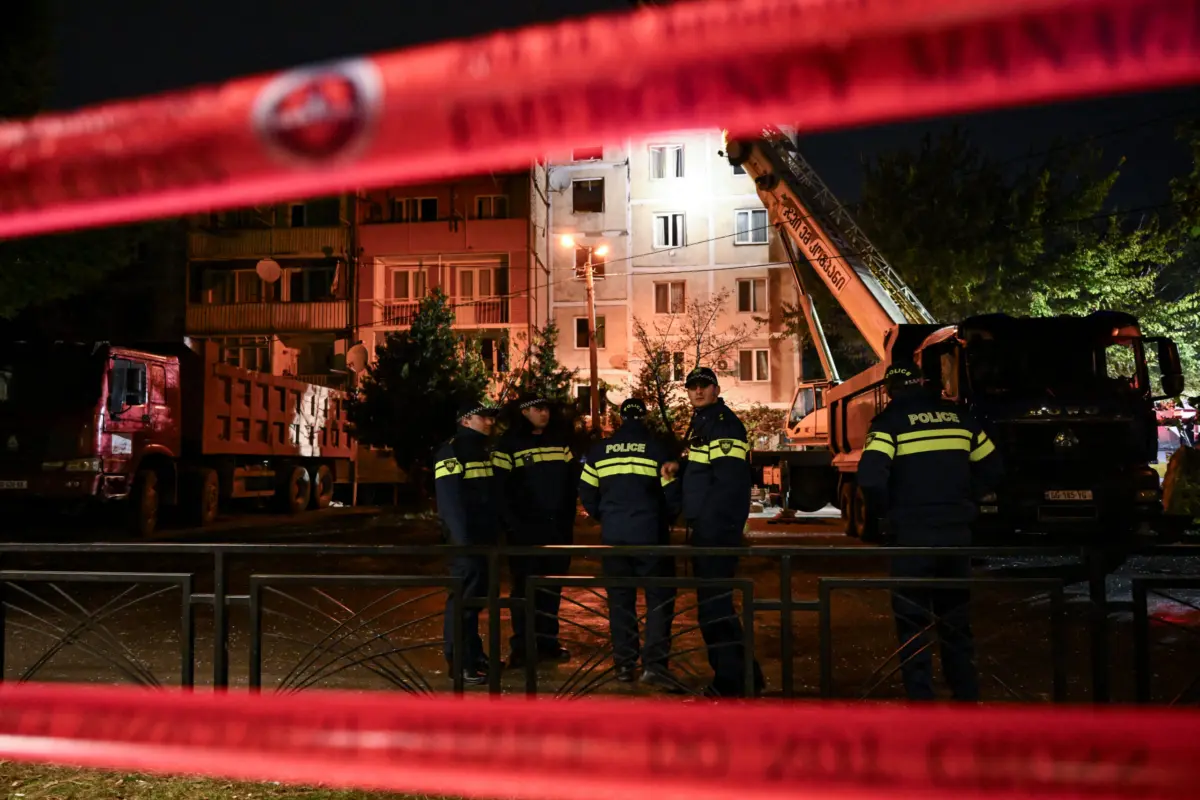
The Georgian capital of Tbilisi was plunged into mourning on Thursday following a devastating natural gas explosion that tore through a five-story residential building in the Ponichala district, resulting in the deaths of six individuals and leaving a community in shock. Among the fatalities confirmed by emergency officials was a young child, while a miraculous rescue of a three-year-old girl from the wreckage provided a brief moment of hope amidst the catastrophic scene. As search and recovery operations transitioned into a formal investigation, the incident has reignited urgent national conversations regarding urban infrastructure safety, the regulation of gas utilities, and the structural integrity of Soviet-era residential blocks.
The blast, which occurred in the early morning hours, caused a significant section of the apartment complex to collapse entirely, trapping residents beneath layers of concrete and twisted metal. Emergency services were dispatched immediately to the suburban Ponichala area, located on the southeastern outskirts of the capital, where they were met with a scene of total devastation. According to the AFP news agency and local reports from the Georgian Interior Ministry, the force of the explosion was sufficient to compromise the structural stability of the entire wing of the building, necessitating the immediate evacuation of surrounding units.
The Rescue Operation and Casualty Reports
Rescuers worked tirelessly for several hours, navigating unstable debris to reach those trapped. Georgian Interior Minister Sulkhan Tamazashvili confirmed the grim toll later that afternoon, stating that six bodies had been recovered from the site. The victims included five adults and one young child. The discovery of the bodies followed a frantic search effort that involved specialized canine units and heavy machinery.
In a moment that drew emotional reactions from onlookers and media personnel, a three-year-old girl was pulled alive from the rubble after several hours of being entombed. Footage from the scene showed emergency workers carrying the child to safety as the crowd broke into applause. Teimuraz Mgebrishvili, the chief of the Emergency Management Service, provided a heartbreaking update shortly after, noting that one of the women found deceased in the wreckage was believed to be the young girl’s mother.
The rescued girl was rushed to the Ingorokva University Clinic. According to a report by the Georgian Public Broadcaster (1TV), medical professionals at the facility stated that she is in stable condition. Initial CT scans and physical examinations revealed that she had avoided serious traumatic injuries, a result many on-site described as a miracle. Additionally, an 11-year-old boy who was injured in the blast remains under medical supervision in the intensive care unit. While his condition is serious, hospital officials have described him as "relatively stable," noting that he is receiving comprehensive treatment for his injuries.
Conflicting Reports on the Cause of the Blast
While the immediate priority was the rescue and recovery of victims, attention has quickly shifted to the cause of the explosion. Preliminary findings presented by Interior Minister Tamazashvili suggested that the blast originated on the fifth floor. Investigators believe the explosion occurred when a resident attempted to ignite a gas-powered space heater, which may have been leaking or improperly installed.
However, this preliminary assessment has been met with a contradictory statement from the utility provider. Tbilisi Energy, the company responsible for gas distribution in the capital, issued a statement via 1TV claiming that the specific apartment identified as the epicenter of the blast was officially registered as unoccupied. The company’s data indicated that there had been no gas consumption recorded at that address for over a year.
"We have not yet been able to conduct a full technical inspection of the internal piping due to the ongoing investigation and the instability of the ruins," a spokesperson for Tbilisi Energy stated. The discrepancy between the official theory of a resident using a heater and the company’s data of a vacant, non-consuming unit has become a central focus for the prosecutor’s office. It raises questions about whether there were unauthorized connections to the gas line or if the leak originated from a common area pipe rather than within the individual apartment.
Immediate Government Response and Relocation Efforts
Tbilisi Mayor Kakha Kaladze arrived at the scene in the Ponichala district shortly after the explosion to coordinate the municipal response. Following a rapid structural assessment by engineers, it was determined that two entire sections of the building were no longer safe for habitation. The structural integrity of the remaining units was deemed compromised by the shockwaves of the blast and the subsequent collapse of the central support elements.
Mayor Kaladze announced that the city government would take immediate responsibility for the displaced residents. "We cannot allow our citizens to remain in a building that poses a risk to their lives," Kaladze told reporters. He confirmed that 28 families, totaling more than 100 individuals, would be temporarily relocated to local hotels. The city has pledged to cover the costs of accommodation and provide essential supplies while a long-term solution for their housing is determined.

The Mayor’s office also indicated that a full technical audit of the building’s foundation and remaining walls would be conducted to decide whether the structure can be reinforced or if it must be demolished. The displacement of over 100 people underscores the scale of the tragedy beyond the immediate loss of life, highlighting the social and economic toll of infrastructure failures in densely populated urban areas.
Legal Investigations and Safety Regulations
The Georgian Prosecutor’s Office has moved swiftly to open a criminal case. Prosecutor Levan Vepkhvadze confirmed that the investigation is being conducted under the articles of the criminal code pertaining to the violation of safety regulations during the placement, design, construction, or operation of gas facilities.
Investigators are expected to look into several factors:
- The Maintenance History of the Building: Determining if regular safety checks were conducted by the gas utility and if the building’s internal infrastructure met modern safety standards.
- The Validity of the Utility Data: Resolving the conflict between the "unoccupied" status of the apartment and the reports of activity within the unit.
- The Role of Resident Installations: Investigating whether the gas heater in question was a certified model or an illegal, unvented installation, which is a common hazard in older residential blocks.
The investigation will also involve questioning officials from the Emergency Management Service and Tbilisi Energy to determine if there were any prior reports of gas odors in the building that went unaddressed.
Historical Context and the Crisis of Aging Infrastructure
This incident is not an isolated event in Georgia’s recent history. The country has struggled with a series of fatal gas explosions over the last decade, often linked to the transition from centralized Soviet heating systems to individual gas-powered heaters. In January 2019, a similar explosion in the Didi Digomi district of Tbilisi killed four people, including a child, and injured eight others. That event led to widespread protests and calls for stricter oversight of gas companies.
Many residential buildings in Tbilisi, particularly in suburban districts like Ponichala, consist of Soviet-era "Khrushchyovka" blocks or similar pre-fabricated designs. These buildings were often not designed for the modern individual gas heating systems that residents have installed over the last thirty years. The lack of standardized ventilation and the aging state of internal piping create a high-risk environment. Furthermore, the practice of "self-installation"—where residents hire unlicensed technicians to install gas appliances to save money—remains a persistent challenge for safety regulators.
Analysis of Implications for Urban Safety
The Ponichala tragedy highlights a critical gap in urban management and utility oversight in Georgia. While Tbilisi Energy and other providers have launched public awareness campaigns regarding the dangers of CO2 poisoning and gas leaks, the enforcement of safety inspections remains difficult. In many cases, inspectors are unable to gain access to private apartments, or residents bypass safety meters to reduce costs.
From a policy perspective, this event is likely to lead to:
- Stricter Inspection Mandates: Legislation may be introduced to grant utility companies or municipal inspectors more authority to enter residences for mandatory safety checks of gas infrastructure.
- Infrastructure Modernization Funds: There is growing pressure on the Georgian government to allocate more significant funding for the modernization of older housing stocks, which are increasingly prone to structural and utility failures.
- Legal Accountability: The outcome of the criminal investigation led by Prosecutor Vepkhvadze will be closely watched. If negligence is found on the part of the utility provider or the building management, it could set a precedent for liability in future infrastructure-related disasters.
Conclusion
As the city of Tbilisi prepares for the funerals of those lost in the Ponichala blast, the focus remains on the survivors and the lessons that must be learned. The miraculous survival of the three-year-old girl stands as a testament to the bravery of the rescue teams, but it does little to mask the systemic issues that led to the collapse.
The conflicting accounts of the apartment’s occupancy and the technical cause of the explosion suggest a complex legal battle ahead. For the 28 families now living in hotels, the immediate future is one of uncertainty. For the rest of the capital, the tragedy serves as a somber reminder of the hidden dangers lurking within the aging walls of the city’s residential districts. The Georgian authorities now face the daunting task of not only providing justice for the victims but also ensuring that such a catastrophe does not repeat itself in a city where thousands of similar buildings house the majority of the population.
