

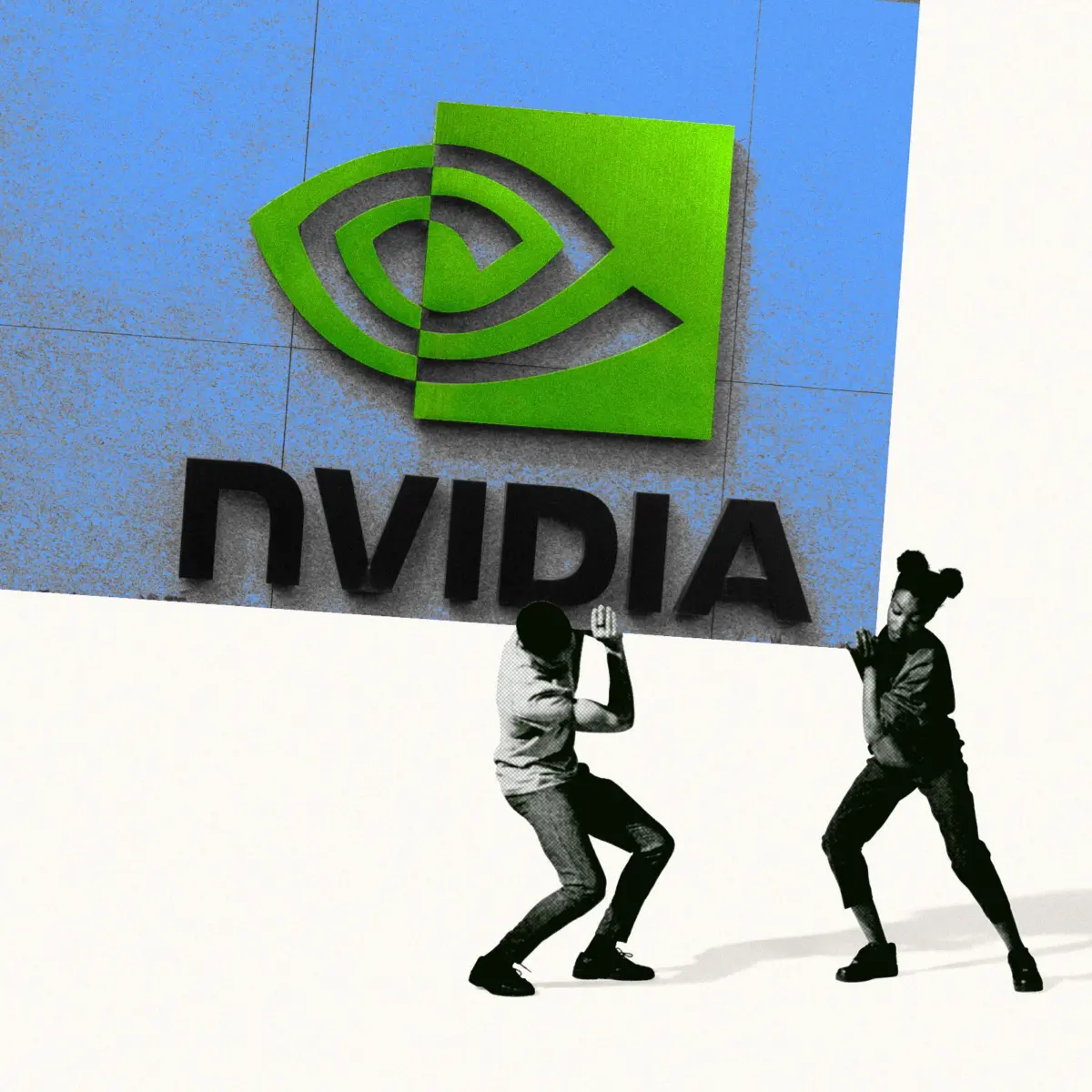
The semiconductor industry is currently witnessing a historic shift as Nvidia Corporation, the world’s most valuable chipmaker and the primary engine of the artificial intelligence revolution, grapples with the sudden departure of its co-founder and long-time Chief Executive Officer, Jensen Huang. Following an international scandal that has raised significant questions regarding the company’s compliance with global trade regulations, Huang’s resignation has left a leadership vacuum at a time when Nvidia’s market dominance is both unprecedented and precarious. In the wake of this upheaval, Colette Kress, the company’s veteran Chief Financial Officer, has stepped into the role of interim CEO. Tasked with steadying a volatile ship, Kress has launched a strategic communications campaign centered on a singular, defiant mantra: "We’ve got this."
This transition comes at a critical juncture for the Santa Clara-based giant. Over the past decade, Huang transformed Nvidia from a niche graphics card manufacturer into a trillion-dollar titan whose H100 and Blackwell GPUs power the world’s most advanced large language models. However, the circumstances of his exit—reportedly linked to investigations into how Nvidia’s restricted AI hardware continued to flow into the Chinese market despite stringent U.S. export controls—have rattled investors and triggered a massive sell-off. As the company attempts to move past the "Jensen Huang mess," Kress is fighting to maintain the confidence of a "money-hungry" workforce and a skeptical Wall Street.
The Catalyst of the Crisis: Export Controls and the Huang Resignation
The resignation of Jensen Huang was not a voluntary retirement but the culmination of mounting pressure from international regulators. While specific details of the "international scandal" remain under tight wraps, industry analysts point to a series of reports regarding the "gray market" for Nvidia chips in East Asia. Since 2022, the U.S. Department of Commerce’s Bureau of Industry and Security (BIS) has implemented increasingly restrictive measures to prevent high-end AI chips from reaching Chinese entities, citing national security concerns.
Nvidia had previously developed modified versions of its chips, such as the H20, specifically for the Chinese market to comply with these rules. However, allegations surfaced that more powerful, restricted hardware was being diverted through third-party distributors in the Middle East and Southeast Asia. The scandal reached a boiling point when it was suggested that high-level internal awareness of these bypasses existed within Nvidia’s leadership. The resulting fallout led to Huang’s immediate resignation, ending a 31-year tenure that was once considered untouchable in the tech world.
The Rise of Colette Kress and the "We’ve Got This" Campaign
In the immediate aftermath of Huang’s ouster, the Nvidia board of directors turned to Colette Kress to serve as the interim leader. Kress, who joined Nvidia in 2013 after high-level roles at Cisco and Microsoft, has been the architect of the company’s financial explosion during the AI boom. Her primary objective is stabilization. To achieve this, she has adopted a rhetorical style that contrasts sharply with Huang’s visionary, often philosophical presentations.
During the company’s third-quarter earnings call—the first without Huang—Kress repeatedly deployed the phrase "We’ve got this" to signal operational continuity. She emphasized that despite the leadership change, the underlying demand for Nvidia’s Blackwell architecture remains "insane," a term previously used by Huang. The phrase appeared again during a high-stakes all-hands meeting on Wednesday, where Kress sought to reassure employees whose total compensation packages are heavily tied to the company’s fluctuating stock price.
Kress’s messaging has been described by some observers as a "collectivist mantra," designed to pivot the company’s identity away from a single "cult of personality" leader toward a more institutionalized corporate identity. By comparing Nvidia’s 30,000-strong workforce to 90,000 fans at a University of Florida football game—all singing in harmony—Kress is attempting to foster a "siege mentality" where the company succeeds through collective grit rather than individual genius.
A Chronology of the Turbulence
To understand the gravity of the current situation, one must look at the rapid sequence of events that have unfolded over the past two weeks:
- Ten Days Ago: Initial reports of an expanded federal investigation into Nvidia’s distribution networks in Asia began to circulate, causing an initial 4% dip in share price.
- Seven Days Ago: Jensen Huang officially resigns. The announcement sent shockwaves through the Nasdaq, resulting in nearly $300 billion in market value being erased in a single trading session.
- Five Days Ago: The Board of Directors appoints Colette Kress as interim CEO, while Harvey Jones, the Board Chair, issues a statement emphasizing the board’s commitment to regulatory compliance.
- Tuesday: Nvidia reports its Q3 earnings. While the revenue figures exceeded analyst expectations, the focus remained on the leadership transition. Kress used the earnings call to debut her "We’ve got this" slogan.
- Wednesday: An all-hands meeting was held at Nvidia’s headquarters. Kress addressed employee concerns regarding the future of the company’s product roadmap and the potential for further regulatory fines.
- Thursday: Harvey Jones confirmed that the board has no plans to reinstate Jensen Huang, despite a vocal minority of employees and retail investors calling for his return via social media platforms like X (formerly Twitter).
Financial Implications and Market Reaction
The financial impact of the leadership change has been profound. Before the scandal broke, Nvidia was trading near its all-time high, with a market capitalization flirting with $3.5 trillion. In the wake of Huang’s departure, the stock entered a period of extreme volatility. Investors are not only concerned about the loss of a visionary leader but also the potential for "headline risk" involving future Department of Justice or SEC actions.
Data from the third-quarter earnings report shows that while Nvidia’s data center revenue remains robust—growing by triple digits year-over-year—the company’s margins could face pressure if it is forced to further limit its sales to China, which historically accounted for approximately 20% to 25% of its data center revenue. Furthermore, the cost of internal audits and legal fees associated with the international scandal is expected to rise in the coming quarters.
Market analysts at firms like Goldman Sachs and Morgan Stanley have maintained "Buy" ratings on the stock, citing the lack of viable competitors to Nvidia’s software ecosystem, CUDA. However, they have also lowered their price targets to reflect the "leadership premium" that has been lost with Huang’s exit.
Internal Sentiment and Official Responses
The internal atmosphere at Nvidia is a mix of defiance and anxiety. For many employees, Huang was more than a CEO; he was the primary reason for their immense paper wealth. The "money-hungry" nature of the workforce, as described by some industry critics, means that morale is directly indexed to the stock ticker.
Support for Kress has been vocal among the middle and upper management. Aaron Erickson, Nvidia’s head of NemoClaw engineering, and Vega Shah of Nvidia’s venture capital arm, have both publicly endorsed Kress’s "We’ve got this" mantra on social media. This public display of unity is crucial for a company that relies on retaining top-tier engineering talent in a hyper-competitive AI labor market.
Officially, the company has doubled down on its commitment to its current path. Board Chair Harvey Jones stated, "The board is entirely focused on the future. We have a deep bench of talent, and Colette Kress has our full confidence as she guides the company through this transition. Our priority is maintaining our technological lead while ensuring the highest standards of global compliance."
Broader Impact and Industry Implications
The Nvidia crisis has implications that extend far beyond the company’s headquarters. As the primary provider of the hardware required for AI training, any instability at Nvidia could potentially slow the pace of AI development globally. Competitors such as AMD and Intel, as well as custom-silicon efforts from big tech firms like Google (TPUs) and Amazon (Trainium), are watching the situation closely. If Nvidia’s "precarious position" leads to supply chain disruptions or a slowdown in R&D, these competitors may find a rare window to gain market share.
Furthermore, the scandal highlights the growing tension between the tech industry and national security policy. Nvidia’s struggle to balance its fiduciary duty to shareholders with the geopolitical requirements of the U.S. government serves as a cautionary tale for the entire semiconductor sector.
Fact-Based Analysis of the Path Forward
As Colette Kress moves from the CFO’s office to the CEO’s suite, she faces three primary challenges:
- Regulatory Resolution: Nvidia must satisfy the requirements of the BIS and other regulatory bodies to ensure that no further sanctions are imposed. This may require a total overhaul of their international distribution and auditing processes.
- Product Execution: The rollout of the Blackwell chip architecture is the most important product launch in the company’s history. Any delays in manufacturing or shipping could be catastrophic for the stock price.
- Permanent Leadership: While Kress is stabilizing the company, the board must eventually decide whether she is the permanent solution or if an external candidate with a stronger technical/engineering background is needed to lead a company that is fundamentally built on hardware innovation.
For now, the mantra remains "We’ve got this." Whether that phrase is a genuine reflection of internal strength or a desperate attempt to whistle past the graveyard will be determined by the company’s performance in the upcoming fiscal year. With the board’s refusal to look back at the Huang era, Nvidia has officially entered a new, uncertain chapter. The "sweaty, hot" stadium of 90,000 employees is singing together, but the song’s final notes have yet to be written.
