

The European inland shipping industry stands at a critical crossroads, facing a complex paradox where short-term market fluctuations mask a profound long-term structural transformation. While recent data from the Port of Rotterdam indicates a 15.3% surge in coal throughput during the first nine months of 2026, alongside rising volumes of crude oil and petroleum products, these figures represent a temporary deviation from an overarching trend of decarbonization. For vessel operators and port authorities, the current cargo landscape offers a deceptive sense of stability. An engine or battery system commissioned today is expected to remain in service until 2050, a year by which the European Union’s logistics corridors will be fundamentally unrecognizable.
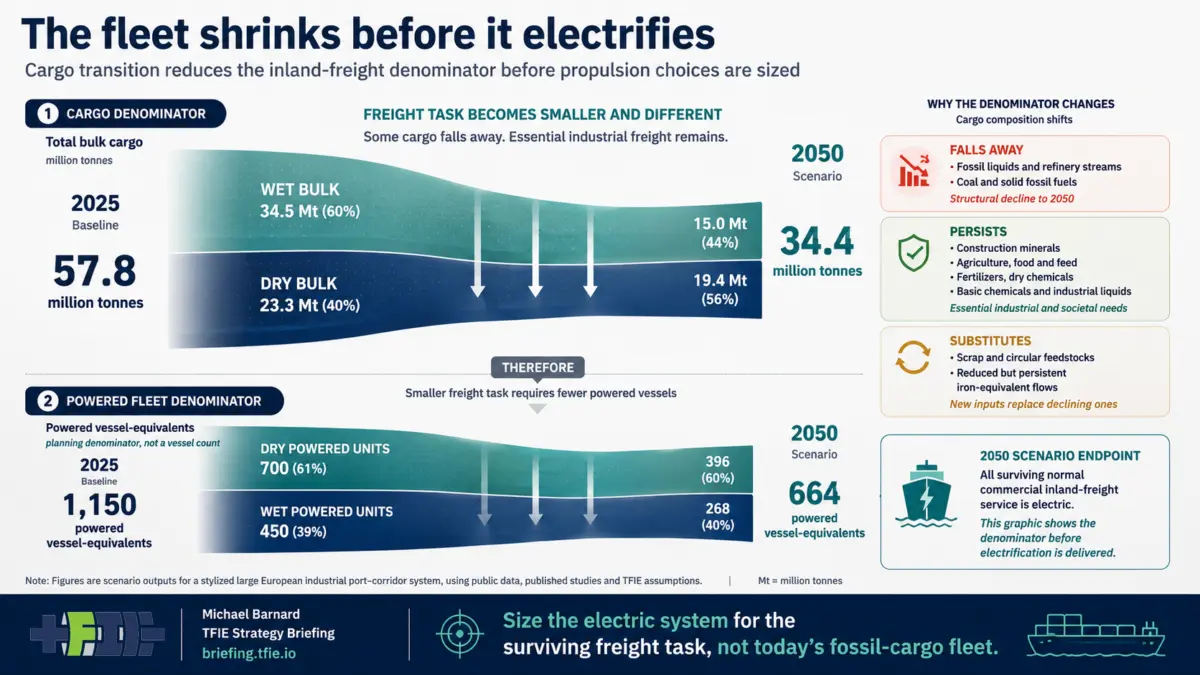
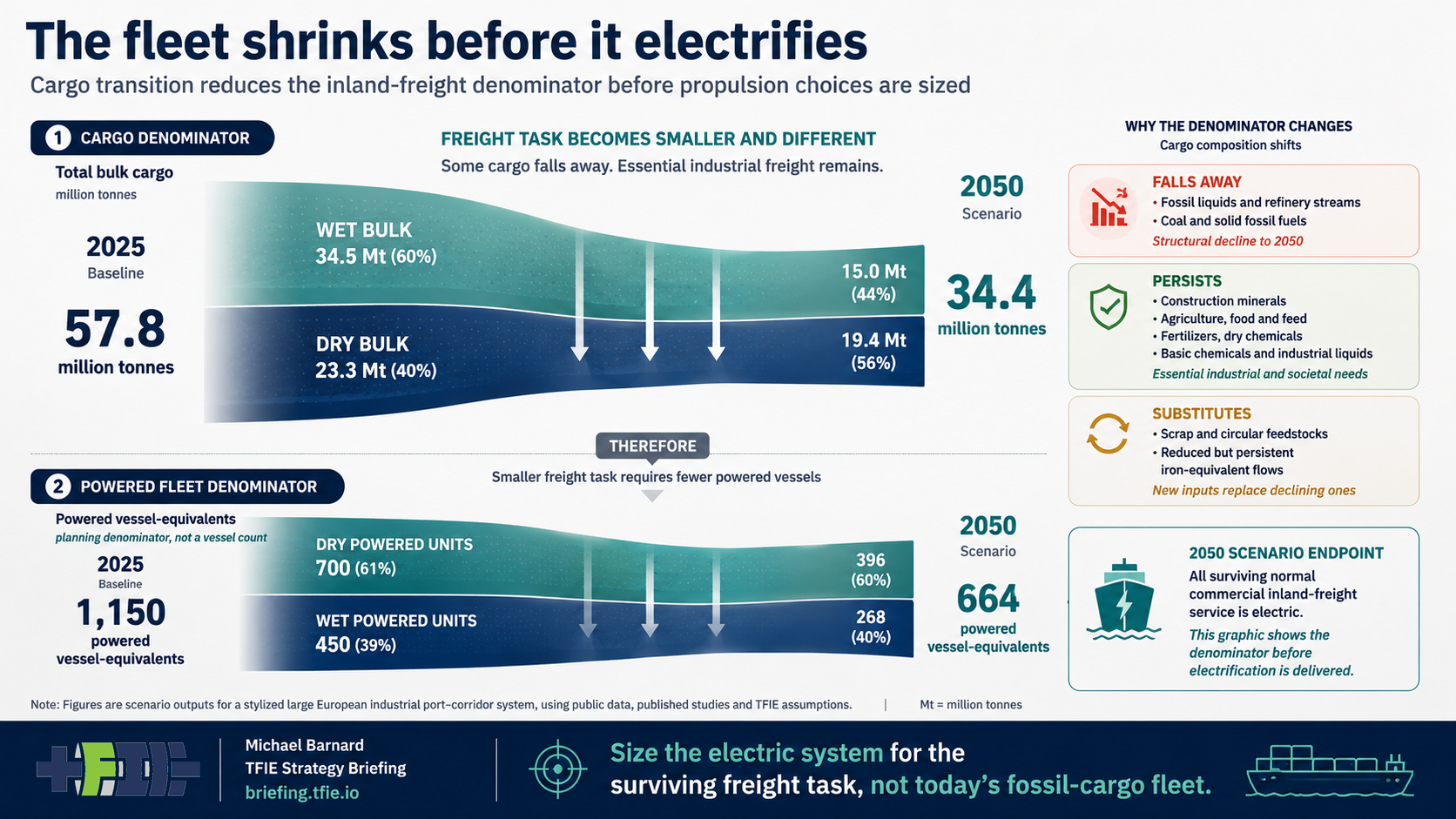
The shift toward a carbon-neutral economy necessitates a total reimagining of the inland fleet. According to recent modeling of a large European industrial port corridor, bulk cargo volumes are projected to plummet by approximately 40% by mid-century, falling from a 2025 baseline of 57.8 million tonnes to just 34.4 million tonnes. This decline is driven almost entirely by the phase-out of fossil fuels, which currently constitute the backbone of river-based logistics. As coal disappears and petroleum flows dwindle to a fraction of their current volume, the survival of the inland shipping sector will depend on its ability to adapt to new commodities, circular economy feedstocks, and electrified propulsion systems.
The Coal Rebound and the 2025 Logistics Landscape
The recent uptick in fossil fuel transport is largely a reaction to volatile energy markets and the ongoing recovery of coking-coal movements essential for heavy industry. High natural gas prices and specific power-market conditions have forced a temporary reliance on coal-fired generation in several European states. However, this "rebound" exists within a broader context of contraction. Eurostat data for 2025 reveals that total EU inland-waterway freight fell by 3% to 118 billion tonne-kilometres.
While coal and crude petroleum saw localized growth in 2025, agricultural freight contracted, signaling a shift in the traditional demand for river transport. This volatility has already begun to reshape the fleet. The Central Commission for the Navigation of the Rhine (CCNR) reported a decrease in dry-cargo vessels across Rhine countries, dropping from 6,410 in 2023 to 6,224 in 2025. Conversely, the tanker fleet grew from 1,400 in 2022 to 1,477 in 2025, reflecting a short-term hedge toward liquid bulk transport that may not be sustainable in the long run.
A Cargo-First Model for the 2050 Horizon
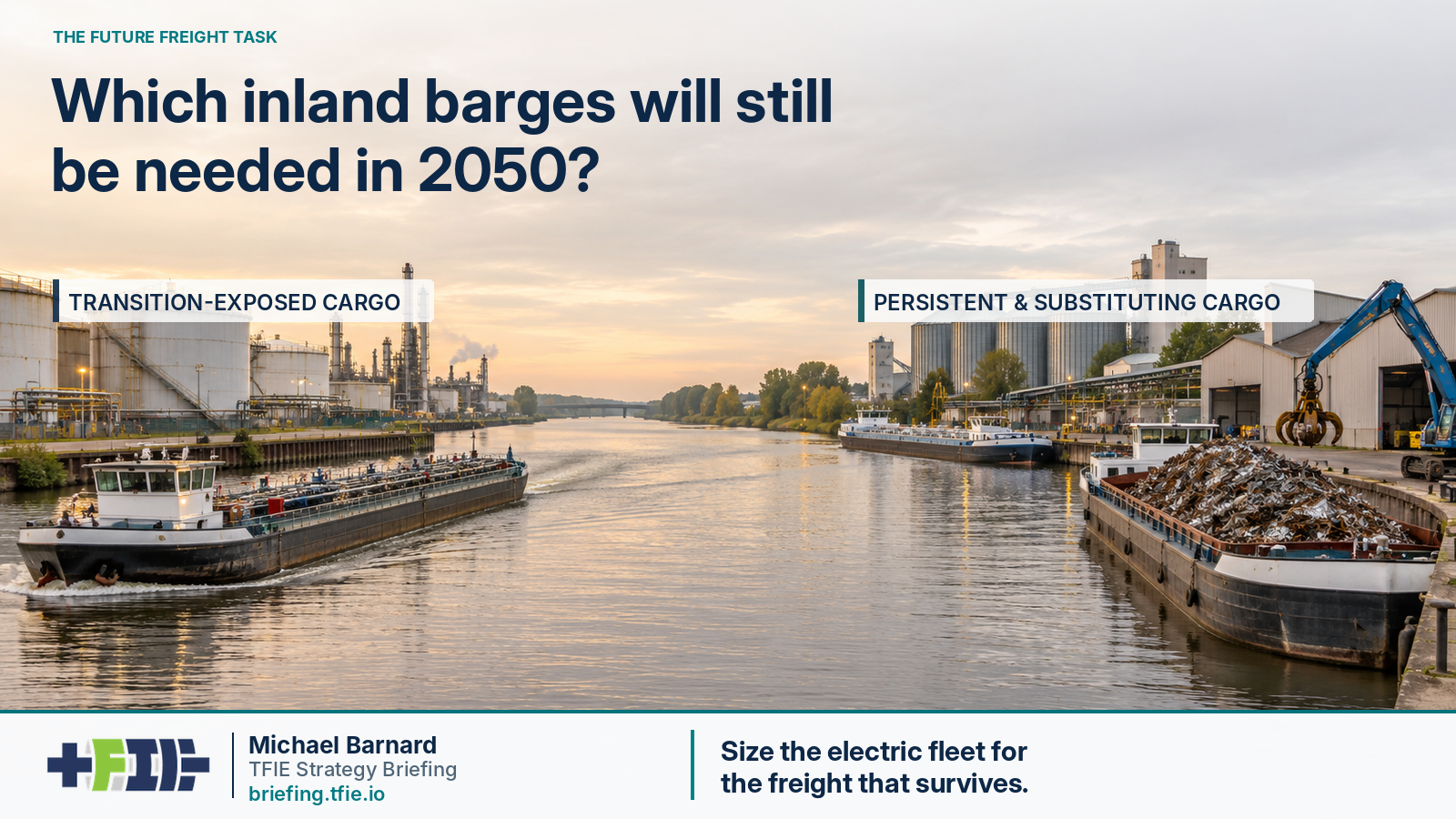
To understand the fleet requirements of the future, industry analysts have moved away from simple forecasting toward "cargo-first" modeling. This approach works backward from the expected freight task of 2050 to determine the necessary propulsion and charging infrastructure. The model focuses on a stylized European port corridor to illustrate the dramatic shifts in material flows.
In this central scenario, wet bulk—primarily liquid fossil fuels—is the hardest hit, falling from 34.5 million tonnes to 15.0 million tonnes. Dry bulk is expected to decline more modestly, from 23.3 million to 19.4 million tonnes. The most significant disruption occurs in the fossil-linked cargo segment: petroleum and refinery streams are projected to drop from 19.0 million tonnes to a mere 1.5 million tonnes, while coal is expected to vanish entirely from the shipping registers.
Combined, these reductions account for 20 million tonnes of a total 23.4-million-tonne net decline in the corridor’s throughput. For an operator whose business model is currently predicated on moving coal or oil, the decision to invest in a new vessel or a major conversion becomes a high-stakes gamble. The useful life of a ship often exceeds 25 years, meaning equipment purchased today must be viable in a market where its primary cargo no longer exists.
Substitution and the Circular Economy
As fossil fuels exit the stage, new commodities will emerge to fill the void, albeit with different logistical requirements. The steel industry provides a primary example of this substitution. In the 2050 model, imported iron ore and virgin iron units fall from 4.5 million tonnes to 3.0 million tonnes. Simultaneously, the transport of scrap metal and circular feedstocks rises from 1.8 million to 3.5 million tonnes.
While the industrial function of the corridor remains, the nature of the freight changes. Circular economy materials often involve different parcel sizes, loading speeds, and routes compared to traditional raw ore. Existing barges and terminals can be repurposed for this "new" work, but the transition requires a granular understanding of how loading systems and terminal access must evolve to handle lighter, more varied loads.
Biofuels present a unique challenge, often described as a "second trap" for investors. Modeling suggests that biofuel feedstock movements will peak near 5 million tonnes by 2030 as the transport sector seeks immediate alternatives to diesel. However, as electrification scales across road and rail, the demand for liquid biofuels is expected to drop to 1.5 million tonnes by 2050. A temporary freight boom in the 2030s could lead to over-investment in vessels that will lack a market for the second half of their operational lives.
Rightsizing the Electric Fleet: From Hulls to Powered Units
The transition to an electric fleet cannot be measured by tonnage alone. The efficiency and productivity of future vessels will determine the actual number of ships required. Using a model that translates commodities into "powered vessel-equivalents," analysts have found that the fleet size will likely shrink significantly.
Starting with approximately 1,150 powered vessel-equivalents in 2025, the model ends with only 664 by 2050—a 42% reduction. Interestingly, while dry cargo tonnes fall by 17%, the number of powered vessels needed for that cargo falls by 43%. This discrepancy arises from expected improvements in vessel productivity and changes in the freight service model.
A critical distinction in this transition is the difference between "powered units" and "physical hulls." In pushed formations, a single powered pusher can move multiple unpowered barges. Decarbonization efforts and battery conversion decisions must focus on the powered units. Counting every hull as a candidate for a propulsion conversion would lead to a massive overestimation of the capital and financing required, potentially stalling the transition through perceived unaffordability.
Environmental Constraints and Infrastructure Demands
The push for electrification is further complicated by the physical realities of Europe’s river systems. In recent years, low water levels on the Rhine have become a recurring constraint. When draught is restricted, barges carry less freight per journey, forcing cargo owners to buy more voyages or shift freight to rail and road.

For an electric fleet, these seasonal load factors are critical. A vessel carrying a heavy battery pack may have a higher baseline draught than a traditional diesel ship, potentially limiting its operational window during dry summers. Therefore, route depth and terminal access must be integrated into any investment model for electric conversion.
To mitigate these risks, a coordinated approach is required:
- Ports: Must maintain a "living cargo register" to track which freight types are declining and which are emerging.
- Vessel Owners: Must align hull life and cargo contracts with the specific costs of electric conversion.
- Utilities and Terminal Operators: Must size grid connections and battery-container pools based on "bankable" routes—those with dependable, long-term freight customers.
Implications for the Future of Inland Shipping
The commercial opportunity for Europe lies in electrifying established, high-utilization routes now, rather than waiting for a total market shift. Battery-powered vessels are already operational in several container and bulk segments, proving the technical viability of the technology. However, the economic viability depends on the "freight task" of the future.
The strategy for the next two decades must be "cargo-first." Expanding an electric fleet without a clear understanding of what will be carried in 2050 puts the order of operations backward. Infrastructure developed around surviving industries—such as chemicals, construction minerals, and scrap metal—has a significantly higher prospect of earning a return than infrastructure built to serve the tail-end of the fossil fuel era.
As the industry moves toward 2050, the successful operators will be those who recognize that they are not just moving goods, but are integral parts of a changing industrial ecosystem. The electrification of European inland freight is not merely a swap of diesel for batteries; it is a fundamental rightsizing of the fleet to match a circular, decarbonized economy. Investing in the routes and services that will persist is the only way to ensure that the massive capital required for this transition does not result in a fleet of stranded assets.
