

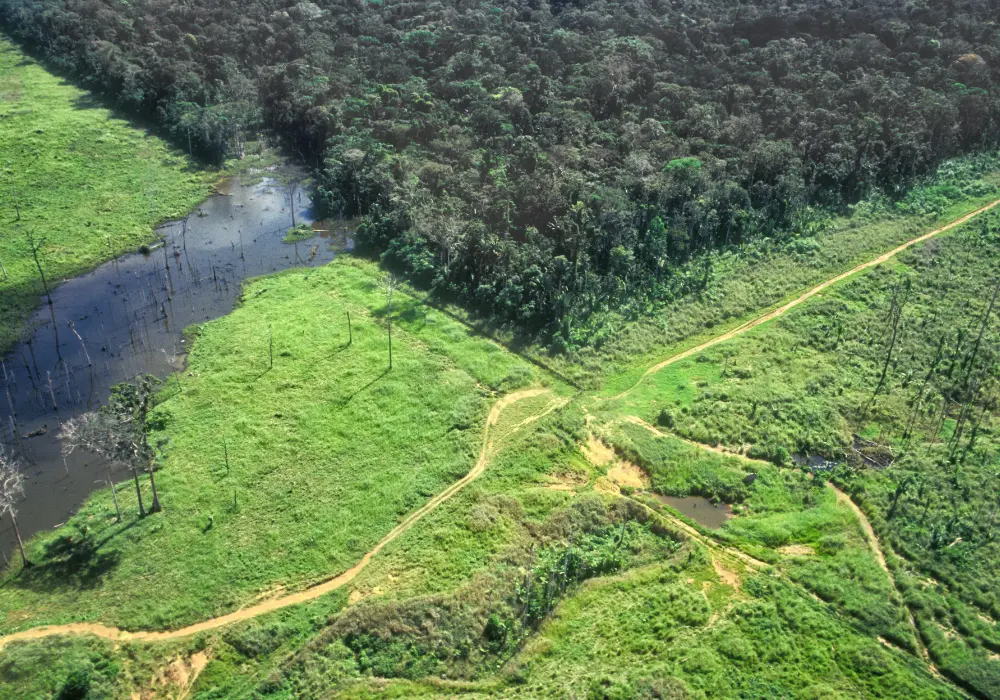
Spanning approximately 6.4 million hectares along the rugged Pacific coast of British Columbia, the Great Bear Rainforest represents one of the most significant ecological fortifications against global climate change. This vast expanse of temperate rainforest, characterized by its dramatic fjords, ancient cedar groves, and sprawling river systems, serves as one of the world’s largest terrestrial carbon sinks. According to data from Great Bear Carbon, an Indigenous-led carbon-offsetting initiative, these old-growth and second-growth forests sequester more carbon per hectare than the Amazon rainforest, positioning the region as a critical asset in the international effort to mitigate greenhouse gas emissions.
The Great Bear Carbon project is currently the largest of its kind in Canada and is increasingly cited as a primary success story within the global carbon-credit market—a sector that has faced intense scrutiny and criticism in recent years. Managed by an alliance of nine Coastal First Nations, the project generates approximately one million carbon credits annually. These credits represent a tangible financial mechanism that funds large-scale conservation efforts and essential community initiatives. Purchased by corporations through both voluntary markets and a provincial compliance framework, these credits allow emitters to offset their carbon footprint while supporting the sovereignty and economic stability of Indigenous communities.
The Mechanics of Carbon Offsetting and Market Integrity
To understand the significance of the Great Bear Carbon project, it is necessary to examine the mechanics of the carbon market. In a compliance market, such as the one established by the British Columbia provincial government, large industrial emitters are subject to a mandatory cap on their carbon output. When a company exceeds this cap, it must purchase carbon credits to remain in compliance. In theory, the exchange is straightforward: one credit represents the removal or avoidance of one metric ton of carbon dioxide from the atmosphere.
However, the practical application of this system is fraught with complexity. Economists, including Dave Sawyer, principal economist at the Canadian Climate Institute, point out that if governments set emission caps too high, an oversupply of credits can saturate the market. This surplus drives down prices and removes the financial incentive for corporations to actually reduce their internal emissions. Furthermore, the integrity of the entire system relies on the accuracy of verification.
The global carbon market faced a reckoning in 2023 when an investigation by The Guardian revealed that Verra, the world’s leading certifier of carbon credits, had approved millions of "phantom credits." The investigation suggested that over 90% of the rainforest offset credits verified by the organization offered no genuine benefit to the climate. In some instances, these credits may have even exacerbated global heating by allowing companies to claim "carbon neutrality" while continuing to emit at high levels.
Against this backdrop of skepticism, Great Bear Carbon has sought to distinguish itself through rigorous adherence to the principle of "additionality." This concept is the litmus test for any legitimate carbon project: would the carbon-sequestering activity have occurred without the funding provided by the sale of credits? Joseph Pallant, CEO of Great Bear Carbon, asserts that the project’s additionality is beyond reproach. Because the land was previously slated for industrial logging, the decision to preserve the forest directly resulted in carbon remaining sequestered that would otherwise have been released.
A Chronology of Conservation: The 2009 Landmark Agreements
The foundation of Great Bear Carbon was not laid overnight; it is the result of decades of activism, negotiation, and legal maneuvering. For much of the 20th century, the Great Bear Rainforest was a primary target for the forestry industry. The region’s massive Sitka spruce and Western red cedar trees were highly valued, and logging was the backbone of the local economy, even as it threatened the ancestral lands of the Coastal First Nations.
The conflict reached a boiling point in the 1990s during what became known as the "War in the Woods." Environmental groups and Indigenous leaders organized blockades and international boycotts to protest the clear-cutting of old-growth forests. These tensions eventually led to a paradigm shift in land management.
In 2009, the landmark Great Bear Rainforest agreements were signed. This series of conservation deals between the British Columbia provincial government and the Coastal First Nations fundamentally altered the landscape’s future. The agreements mandated that 85% of the forest be permanently protected from industrial logging, while the remaining 15% would be subject to stringent ecosystem-based management practices. Crucially, these deals recognized the right of the First Nations to issue and sell carbon credits based on the protected land. This effectively turned "inaction"—the refusal to log—into a valuable economic commodity.
By 2016, the agreement was further solidified with the Great Bear Rainforest (Forest Management) Act, which provided the legal framework for the carbon project to scale. To date, the revenue generated from these credits has reached approximately $85 million, providing a stable financial base for the nine participating Nations as they look toward 2026 and beyond.
Economic Impact and Community Empowerment
The financial influx from the carbon market has been transformative for the Coastal First Nations. Rather than relying on the boom-and-bust cycles of the extractive timber industry, these communities now have a steady stream of "conservation capital." One of the most prominent beneficiaries of this funding is the Indigenous Guardians program.
Often described as the "eyes and ears on the land," the Guardians are trained professionals who monitor the health of the ecosystem. Their responsibilities are vast, ranging from wildlife population surveys and habitat restoration to search-and-rescue operations and the enforcement of cultural heritage protections. The program ensures that the forest is not just "set aside" but actively managed by the people who have inhabited the region for millennia.
In specific communities, the impact is even more granular. In Haida Gwaii, carbon credit revenue has contributed to the construction of a new healthcare unit, addressing a critical need for local medical services. Additionally, the funds support scientific research into endangered species, such as the northern goshawk, a raptor that relies on the dense canopy of old-growth forests for nesting. By funding these initiatives, the carbon project creates a circular economy where the protection of nature directly improves the quality of human life.
Navigating Environmental Risks: The Wildfire Buffer
While the Great Bear Carbon project has been successful, it is not immune to the escalating threats posed by climate change itself. Forest-based carbon projects face a "reversal risk"—the possibility that a forest fire, pest infestation, or disease could destroy the trees and release the stored carbon back into the atmosphere, effectively canceling out the credits sold.
To mitigate this risk, the project employs a "buffer pool" strategy. Every year, 10% of the credits that would normally be issued for sale are instead held back in a reserve. If a catastrophic event occurs, credits from this buffer pool are "retired" to compensate for the lost carbon. According to Pallant, the project has yet to experience a fire or pest event significant enough to require the use of the buffer pool. This conservative accounting puts the project in a robust position to handle future environmental volatility, especially as British Columbia faces increasingly severe wildfire seasons.
The reliability of Great Bear Carbon’s methodology was highlighted in a 2023 audit by the verifier Standard Carbon. The project received several "sufficient" scores, a mark of distinction in an industry where many projects fail to meet basic transparency standards. In contrast, the BigCoast Forest Climate Initiative, another B.C.-based project, received a zero score in an audit that found a lack of transparency and a failure to prove additionality.
Broader Implications and the Future of Indigenous Climate Leadership
The success of the Great Bear Carbon project offers a potential blueprint for climate action worldwide. It demonstrates that carbon markets, when designed with high integrity and Indigenous leadership, can serve as a bridge between conservation goals and economic development.
The project is currently 15 years into a 25-year carbon-credit issuance agreement. However, the stakeholders involved view this as a multi-generational commitment. The legal and financial structures created over the last two decades have established a precedent for "Nature-Based Solutions" (NbS) that prioritize biodiversity and human rights alongside carbon sequestration.
As the global community moves toward the goals set by the Paris Agreement, the role of Indigenous-led conservation is likely to expand. Indigenous peoples manage or hold tenure over roughly 25% of the world’s land surface, which contains 80% of the planet’s remaining biodiversity. By empowering these communities to monetize the carbon stored in their territories, the international community can foster a more equitable and effective approach to climate mitigation.
In the Great Bear Rainforest, the narrative has shifted from one of conflict and extraction to one of stewardship and sustainability. As Joseph Pallant noted, the project has not "run out of land to protect." The continued health of this massive carbon sink depends on the ongoing partnership between the provincial government, the private sector, and the Coastal First Nations—a partnership that proves that the most effective way to protect the planet is often to listen to those who have guarded it the longest.
The Great Bear Carbon project remains an outlier, a high-bar standard in a market often plagued by "greenwashing." Its success suggests that if carbon credits are to have a future, they must be rooted in the tangible, verifiable, and permanent protection of the world’s most vital ecosystems. For the Great Bear Rainforest, the value of the standing forest now far outweighs the value of the timber, ensuring that these ancient trees will continue to breathe for generations to come.
