

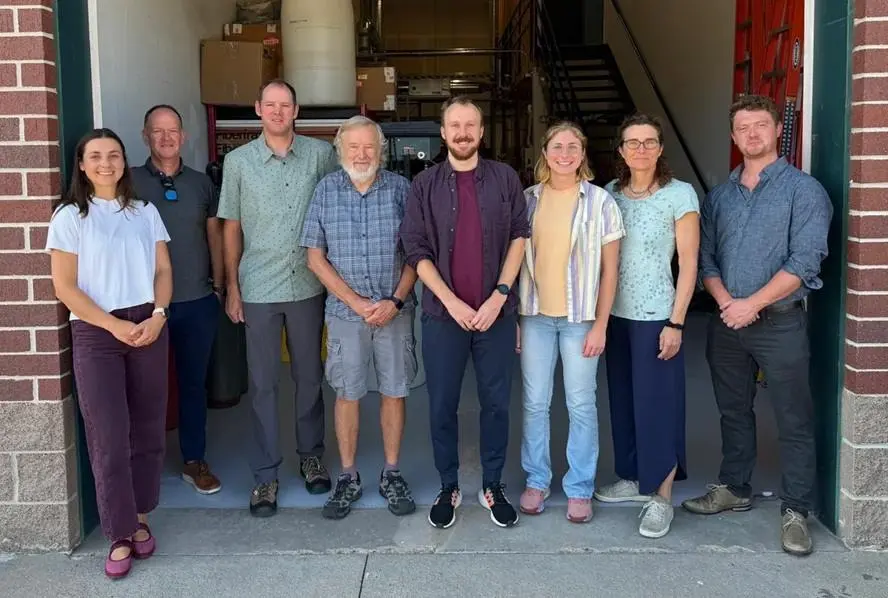
The financing round was led by Propeller Ventures and Catalyzer Ventures, with participation from a diverse group of investors including Safar Partners, SOSV, Desai Ventures, and Cartography Capital. The investment underscores a growing venture capital interest in "blue economy" technologies—innovations specifically aimed at decarbonizing the oceans and the global shipping lanes that carry over 80% of the world’s trade.
The Technological Breakthrough: Onboard Fuel Reforming
At the heart of Blaze Energy’s value proposition is its "Flex-Fuel Reformer System." Founded in 2023, the company has developed a compact, engine-integrated solution that addresses the primary hurdle of the maritime energy transition: fuel uncertainty. Currently, shipowners are hesitant to commit to a single alternative fuel, such as green ammonia or methanol, due to concerns regarding global availability, infrastructure, and the varying energy densities of these substances.
Blaze’s technology functions by converting these alternative fuels into a hydrogen-rich mixture directly onboard the vessel. This mixture is then used to facilitate hydrogen-assisted combustion within existing internal combustion engine platforms. By reforming the fuel at the point of use, the system bypasses many of the traditional combustion hurdles associated with alternative fuels—such as the slow flame speed of ammonia or the low energy density of methanol—allowing them to burn more efficiently and cleanly in engines originally designed for heavy fuel oil (HFO) or liquefied natural gas (LNG).
This "fuel-agnostic" approach is a potential game-changer for the industry. Rather than requiring a complete engine overhaul or the construction of an entirely new vessel—processes that cost tens of millions of dollars—Blaze offers a pathway for retrofitting the global fleet. This ensures that vessels currently in service can remain compliant with tightening environmental regulations without being rendered obsolete before the end of their 25-to-30-year operational lifespans.
Industry Context: The Multi-Fuel Dilemma and Regulatory Pressure
The maritime sector contributes approximately 3% of global greenhouse gas emissions. If the industry were a country, it would be the sixth-largest emitter in the world. To combat this, the International Maritime Organization (IMO) has set ambitious targets to reach net-zero emissions from international shipping by or around 2050, with indicative checkpoints in 2030 and 2040.
However, the path to these targets is obscured by what experts call the "multi-fuel dilemma." Unlike the automotive industry, which is coalescing around battery-electric solutions, the shipping industry must choose between several competing energy carriers:
- Green Ammonia: Zero-carbon but toxic to handle and difficult to ignite.
- Green Methanol: Easier to store as a liquid at ambient temperatures but requires significant volume due to lower energy density compared to diesel.
- LNG: A cleaner-burning "bridge fuel" that reduces CO2 but faces scrutiny over methane slip.
- Hydrogen: The ultimate clean fuel, yet nearly impossible to store in the quantities required for long-haul transoceanic voyages.
Blaze Energy’s CEO and Co-Founder, Rok Sitar, highlighted this complexity during the funding announcement. "Maritime shipping used to be about moving cargo safely, on-time, and economically," Sitar noted. "Now operators need to be experts in fuel markets, energy shifts, and geopolitics just to keep vessels running. Blaze exists to cut through that uncertainty, giving ship owners fuel flexibility through their existing assets, so they can stay resilient no matter what is thrown at them."
Chronology of Development and Commercial Roadmap
Since its inception in 2023, Blaze Energy has moved rapidly from conceptual design to the brink of industrial application. The $6.5 million seed round represents a critical milestone in a timeline that aims for full market penetration by the end of the decade.
- 2023-2025: Initial research and development, prototype design, and bench testing of the Flex-Fuel Reformer System in Colorado.
- 2026: Expansion of operations into Norway, a global hub for maritime innovation and "green shipping" corridors. This phase includes rigorous marine engine testing to meet international safety and performance standards.
- 2027: The company will initiate a high-profile pilot program in collaboration with Lomar Shipping. The Reformer System will be installed on an active Lomar vessel for sea trials. This phase is crucial for validating the technology under real-world maritime conditions, including variable sea states, humidity, and long-duration operational cycles.
- 2028: Following the successful completion of sea trials, Blaze plans a dual-track commercial launch. This will include a retrofit product for the existing global merchant fleet and a "newbuild" product line for integration into the next generation of ship designs.
Supporting Data: The Economic and Environmental Impact
The economic argument for Blaze Energy’s technology is bolstered by the sheer scale of the global merchant fleet. There are currently over 50,000 large merchant ships at sea. Replacing even 10% of this fleet with new, zero-emission vessels would require hundreds of billions of dollars in capital expenditure. Retrofitting, by comparison, offers a significantly lower barrier to entry.

Data from maritime consultancies suggests that the "green premium"—the extra cost of operating on clean fuels—is currently one of the biggest deterrents for shipowners. By improving combustion efficiency through hydrogen assistance, Blaze’s system aims to reduce the volume of alternative fuel required, thereby narrowing the price gap between traditional fossil fuels and green alternatives.
Furthermore, the environmental implications are substantial. By enabling a smoother transition to ammonia and methanol, Blaze’s technology could help the industry avoid "carbon lock-in," where shipowners continue to use fossil fuels because the cost of switching is too high. A single large container ship can emit as much sulfur oxide as millions of cars; transitioning these vessels to reformed alternative fuels could lead to a drastic reduction in not only CO2 but also sulfur oxides (SOx), nitrogen oxides (NOx), and particulate matter.
Official Responses and Stakeholder Perspectives
The investment community sees Blaze Energy as a pragmatic bridge between current realities and future goals. Kristina Johnson, Partner at Catalyzer Ventures, emphasized the practical nature of the solution. "Blaze Energy’s Reformer System offers ship owners a practical, cost-effective pathway to meet increasingly stringent emissions requirements while preserving the value of their existing vessels and infrastructure," Johnson stated.
The involvement of Lomar Shipping, through its corporate venture arm, is particularly telling. Lomar is a leading ship-owning and management group with a diversified fleet. Their willingness to pilot the technology in 2027 provides Blaze with a direct line to end-user feedback and a "proof of concept" that is essential for gaining the trust of the wider, often conservative, shipping industry.
Other investors, such as Propeller Ventures, specialize in "ocean-climate" technology. Their lead role suggests that Blaze is being positioned not just as a mechanical engineering firm, but as a key player in the broader climate-tech ecosystem.

Broader Implications for Global Trade
The success of Blaze Energy could have ripple effects across the global supply chain. As the European Union integrates shipping into its Emissions Trading System (EU ETS) and introduces the FuelEU Maritime initiative, the cost of carbon emissions for ships calling at European ports is set to rise sharply. Technologies that allow for flexible fuel use will enable shipping companies to optimize their fuel choices based on the specific regulations of the regions they serve.
Moreover, the "fuel-flexible" nature of the Blaze system provides a hedge against geopolitical volatility. If a conflict or trade dispute disrupts the supply of methanol in one region, a Blaze-equipped ship could potentially pivot to ammonia or LNG without needing to return to dry dock for modifications. This resilience is vital for maintaining the stability of global trade routes.
As Blaze Energy prepares for its 2027 pilot, the maritime world will be watching closely. The company’s ability to successfully reform fuels onboard and integrate with existing engine architecture could determine whether the shipping industry meets its 2030 decarbonization milestones or falls behind in the global race to net zero. With $6.5 million in fresh capital and a roadmap leading to commercialization in 2028, Blaze Energy is now positioned at the forefront of the maritime energy transition, turning the "hard-to-abate" sector into a laboratory for radical, yet practical, innovation.
