


The global imperative to transition toward a low-carbon economy has traditionally been viewed through the lens of massive, multi-billion-dollar utility-scale projects funded by institutional investors and international conglomerates. However, as Canada navigates its ambitious path toward net-zero emissions by 2050, a parallel movement is gaining significant momentum at the grassroots level. This shift suggests that the daunting financial requirements of the green transition may find their most sustainable solutions within local communities. By leveraging cooperative ownership and community bonds, Canadians are increasingly bypassing traditional financial intermediaries to fund, build, and manage renewable energy and sustainable infrastructure projects. From solar arrays in Saskatchewan to affordable net-zero housing in British Columbia, the democratization of energy production is reshaping the national landscape of climate action.
The Historical Context of Community Power in Canada
The evolution of community-owned energy in Canada can be traced back to the early 2000s, a period marked by shifting provincial policies and a growing public appetite for direct involvement in climate solutions. One of the most significant milestones in this timeline was the establishment of WindShare in Toronto. Founded as a cooperative, WindShare partnered with Toronto Hydro to install a landmark wind turbine at Exhibition Place in 2002. This project served as the first Canadian example of local residents directly owning a clean energy project. It demonstrated that urban environments, often seen as consumers rather than producers of power, could host viable renewable infrastructure.
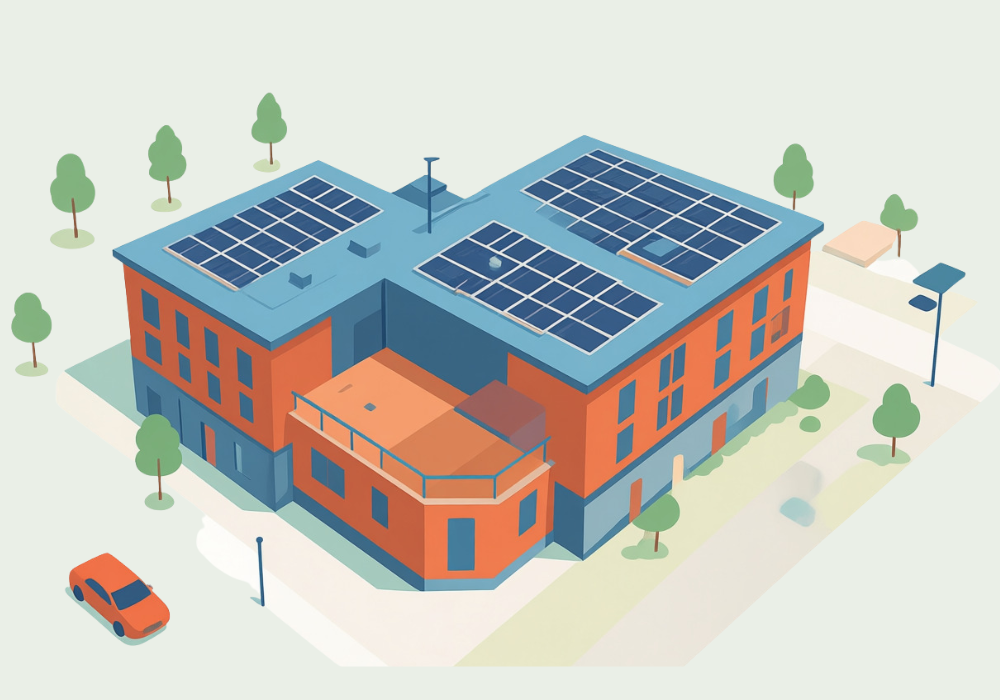
The momentum generated by WindShare laid the groundwork for the Ottawa Renewable Energy Co-op (OREC), established in 2010. OREC expanded the cooperative model by diversifying its portfolio across multiple technologies. Today, OREC’s partial ownership of two Lake Huron wind turbines generates approximately 3.3 million kWh annually—enough to power more than 400 homes. These early successes proved that when communities are given the legal and financial frameworks to invest in their own backyards, they can achieve both environmental impact and steady financial returns.
Diversifying the Green Portfolio: Solar and Biogas Innovations
As the technology for renewable energy matured, the cooperative model expanded beyond wind. SolarShare, now recognized as Canada’s leading renewable energy cooperative, has been instrumental in scaling solar power across Ontario. A prime example of their impact is the Wintergreen solar array located outside Kingston. Capable of powering 100 homes, Wintergreen represents just one node in a larger network of community-funded assets that allow everyday citizens to participate in the province’s energy mix.
Innovation has also moved into the realm of waste-to-energy. ZooShare represents a unique intersection of circular economy principles and community finance. Located at the Toronto Zoo, the project utilizes an anaerobic digester to turn organic animal waste and food waste into high-quality fertilizer and renewable electricity for Ontario’s grid. The project was initially backed by 800 cooperative members who purchased community bonds, effectively turning a liability—waste—into a revenue-generating asset.
However, the journey of ZooShare also highlights the complexities and risks inherent in community-led finance. Following a 2023 member vote, ZooShare announced it would stop interest payments, with plans to repay bonds only when cash flow permits. This development serves as a critical case study for the sector, illustrating that while community bonds offer high social impact, they are subject to the same operational and market pressures as any other industrial venture. It underscores the importance of robust financial planning and transparent communication between cooperatives and their investors.
Sustainable Infrastructure and the Housing Crisis
The community bond model is also being applied to address Canada’s dual crises: climate change and housing affordability. In Kamloops, British Columbia, a non-profit organization named Propolis has pioneered a model that integrates net-zero construction with social equity. By raising $1 million through community bonds from approximately 100 local investors, Propolis is developing a 53-unit affordable housing complex.
The project is designed to be net-zero, meaning it will produce as much energy as it consumes through highly efficient building envelopes and on-site renewable generation. This approach challenges the traditional real estate development model, where environmental features are often the first to be cut to reduce costs. By using community-sourced capital, Propolis can prioritize long-term sustainability and affordability over short-term profit maximization for external shareholders.

Similarly, the Faithfully Green Fund is targeting the existing building stock—specifically places of worship. Many churches, mosques, and temples across Canada occupy historic buildings that are notoriously difficult and expensive to heat. Faithfully Green operates as a revolving fund, selling community bonds and lending the proceeds to faith communities for green retrofits. As the energy savings from these retrofits are realized, the loans are repaid into the fund, allowing the capital to be redeployed for the next project. This creates a self-sustaining cycle of decarbonization within the non-profit sector.
Expanding Access: The Role of Community Bonds in EV Infrastructure
The transition to electric vehicles (EVs) is another area where community-led initiatives are filling critical gaps. While major networks focus on high-traffic highway corridors, local communities often lack accessible charging infrastructure. EcoCharge has addressed this by launching the first EV-charging community bond campaign of its kind.
Through this initiative, members own roughly 100 charging stations across Quebec and New Brunswick. This model not only accelerates the rollout of necessary infrastructure but also ensures that the profits from these stations remain within the communities they serve. For investors, it offers a way to directly support the electrification of transport while earning a return based on the utilization of the charging network.

Bridging the Gap for Renters and Apartment Dwellers
One of the significant barriers to renewable energy adoption has been the "split incentive" or the physical limitations faced by those who do not own a detached home. In Regina, Saskatchewan, the Wascana Solar Co-operative is solving this problem. The cooperative has overseen the installation of 400 solar panels, which are collectively owned by approximately 100 members.
This "virtual" ownership model is particularly beneficial for apartment dwellers and renters who lack the authority or the roof space to install their own solar panels. By purchasing shares or bonds in the cooperative, these individuals can offset their carbon footprint and benefit from the transition to clean energy without needing to modify their own living spaces. It represents a vital step in ensuring that the green transition is inclusive and accessible to all socioeconomic groups.
Analysis of Implications and Future Outlook
The rise of these eight initiatives reflects a broader trend toward "impact investing" and "social finance" in Canada. Data suggests that community-owned projects often enjoy higher levels of local public support compared to projects owned by distant corporations. This social license is crucial for overcoming the "Not In My Backyard" (NIMBY) opposition that often plagues renewable energy developments.

From an economic perspective, community-led projects ensure that the wealth generated by the energy transition stays local. When a utility-scale project is built by a multinational firm, the profits generally exit the community. In contrast, the interest paid on community bonds and the dividends from cooperative shares flow back into the pockets of local residents, who are then likely to spend that money within the local economy.
However, several challenges remain. The regulatory environment for community bonds varies significantly by province, often requiring complex legal filings that can be cost-prohibitive for smaller groups. Furthermore, as seen with ZooShare, the financial viability of these projects depends on stable energy policies and fair "feed-in" tariffs that allow small producers to sell power back to the grid at competitive rates.
The future of Canada’s green energy landscape will likely depend on a hybrid model. While massive hydro and nuclear projects will provide the baseload power necessary for an industrial economy, community-led projects like those in Kingston, Kamloops, and Regina will provide the decentralized resilience and public engagement needed to sustain the transition. As more Canadians look for ways to align their investments with their values, the localized funding model is poised to move from the margins to the mainstream of the national climate strategy.

The success of these cooperatives and bond campaigns demonstrates that the financial hurdles of building a low-carbon future are not insurmountable. By breaking down large-scale problems into community-sized solutions, Canadians are proving that the power to change the world often starts exactly where they live. Through a combination of wind, solar, biogas, and green building, the collective action of small-scale investors is building a foundation for a more resilient and equitable energy future.
