

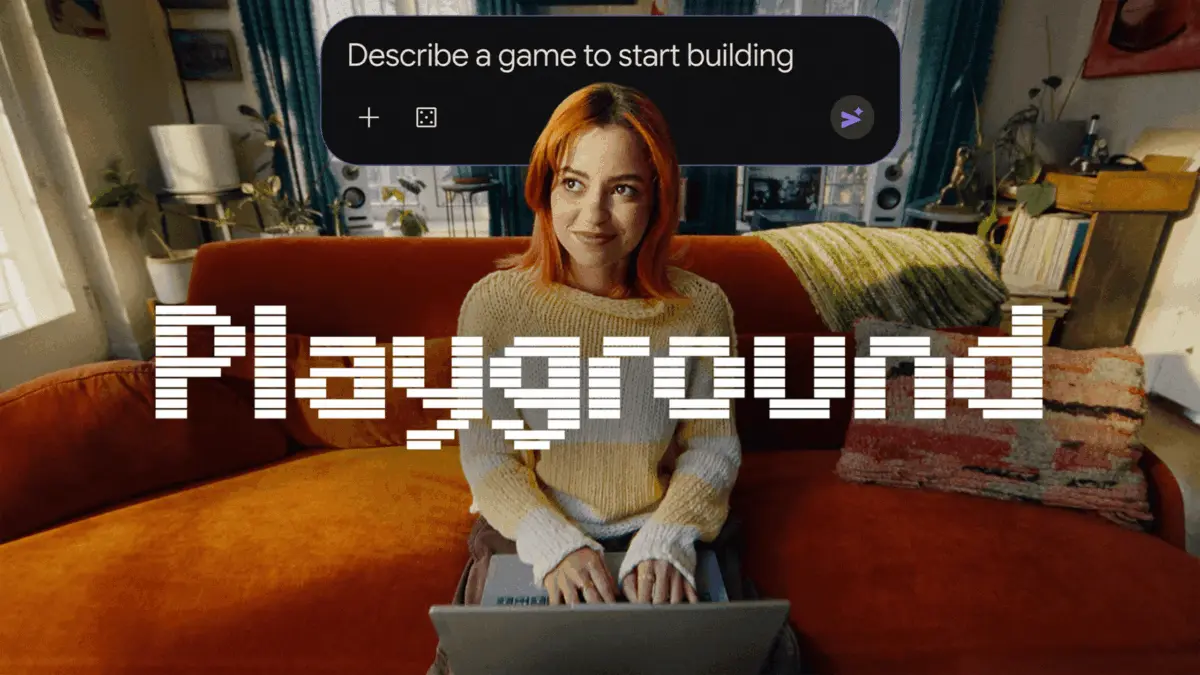
The intersection of generative artificial intelligence and interactive entertainment reached a new milestone this week with the public debut of Google Playground, an experimental platform designed to democratize video game creation. Operating under the Google Labs umbrella, the service allows users to generate fully playable, browser-based games using natural language descriptions, a process increasingly referred to in the tech industry as "vibe coding." By removing the traditional barriers of syntax-heavy programming and asset management, Google aims to pivot the role of the game developer from a technical architect to a high-level creative director. However, as the initial wave of user-generated content floods the platform, the technology faces scrutiny regarding its long-term viability, the quality of its output, and the limitations of AI-driven creativity.
The Mechanics of Vibe Coding and Google Playground
Google Playground functions as a conversational interface where the user acts as a prompt engineer. Instead of writing C# or C++ code, a user might request "a 2D platformer where the protagonist is a sentient toaster in a kitchen-themed world." The underlying Large Language Models (LLMs) and image generation diffusion models then collaborate to produce a functional game loop, including character mechanics, physics, environmental art, and sound effects.
The platform is built on the principle of iterative refinement. Once an initial version of a game is generated, users can provide follow-up instructions to sharpen the experience. This might include adjusting the difficulty, adding new enemy types, or changing the thematic tone of the narrative. For instance, a user might start with a basic rhythm game and progressively request more complex elements, such as a "snark system" for character dialogue or specific "tough-guy swagger animations" for enemies. This responsiveness allows for a rapid prototyping cycle that was previously impossible for individuals without a background in software engineering.
Chronology of AI Integration in Creative Tools
The launch of Playground is the latest entry in a series of aggressive moves by major technology firms to integrate generative AI into creative workflows. The timeline of this evolution highlights a shift from static media generation to interactive software development:
.png)
- Late 2022: The widespread release of ChatGPT and Midjourney popularized the use of LLMs for text and diffusion models for static imagery.
- Early 2023: Google Labs began testing experimental AI features in its core products, including AI-assisted writing in Google Docs and image generation in Search.
- Mid-2023: Specialized AI tools for music production and video generation, such as Google’s MusicFX and various video-to-video models, entered the experimental phase.
- September 2024: Meta announced Horizon Create, a generative AI tool designed to allow users to build virtual worlds and games within its Metaverse ecosystem.
- October 2024: Google officially launched Playground, positioning it as a direct competitor in the emerging "prompt-to-game" market.
This chronology suggests that the technology has moved past the stage of generating "parts" (images, text, sounds) and has entered the stage of "system synthesis," where the AI must manage the complex logic and interdependencies required for a functional software application.
Case Studies in Automated Game Design
Early testing of the platform has yielded a diverse array of results, ranging from simple logic puzzles to more complex action titles. These examples illustrate both the creative potential and the current technical ceiling of the Playground service.
One of the more straightforward applications is the reinterpretation of classic genres. A project titled "Pork Drop" demonstrated the platform’s ability to take the core logic of Tetris and apply a specific thematic overlay. By prompting the AI to replace standard blocks with "contorted, cute pigs," the user was able to generate a stable puzzle game. While the AI initially struggled with the physical shapes—producing "T-posed pigs" in some instances—the iterative nature of the tool allowed for corrections through further natural language prompts.
A more narrative-driven example, "Dinner Darling," showcased the AI’s ability to generate simulation-style gameplay. The prompt requested a "gay dinner party" simulator, resulting in a 2D game where the player manages a stressed host named Julian. The game involves preparing artisanal cocktails and appetizers for guests under a strict timer. Notably, the AI interpreted the prompt by focusing on the frantic nature of high-end hosting rather than explicit narrative themes, indicating a reliance on stereotypical "vibes" associated with the prompt’s keywords.
The most complex endeavor reported during the launch week was "Neon Don," a cyberpunk-style top-down shooter inspired by titles like Hotline Miami. This project required the most extensive iteration, with the user requesting specific systems for level scaling, boss generation, and a "divorced ex-cop" protagonist with cynical dialogue. The AI successfully implemented a "snark system" that triggered witty quips during combat, such as references to the protagonist’s legal battles with his ex-wife. Despite this success, the project also highlighted the AI’s linguistic limitations, such as misnaming a "backflip" mechanic as a "doge flip."

Technical Constraints and Resource Management
While the ease of use is a significant selling point, Google Playground operates under strict technical and economic constraints. Generative AI is computationally expensive, requiring massive amounts of GPU (Graphics Processing Unit) power for every iteration of a game. To manage these costs, Google has implemented a "usage allowance" or credit system.
When a user reaches their usage limit, they are throttled and must wait for their credits to refresh—typically on a weekly cycle—or potentially pay for additional access. This throttling significantly impacts the development process, as users may find themselves unable to fix critical bugs or refine mechanics until their allowance is restored. This "pay-to-play" or "wait-to-create" model highlights the significant overhead associated with real-time AI generation compared to traditional local development environments like Unity or Godot, which do not charge users per "build."
Furthermore, the games are currently limited to browser-based environments. This restricts the complexity of the physics engines and the fidelity of the graphics. Most generated games feature a "Flash-like" aesthetic, reminiscent of the indie web games of the early 2000s, rather than modern high-definition titles.
Industry Reactions and the "AI Slop" Debate
The reaction from the professional game development community has been mixed. Some see Playground as a valuable tool for rapid prototyping, allowing designers to test gameplay concepts before committing to a full production cycle. Others express concern that the platform contributes to a phenomenon known as "AI slop"—a saturation of low-effort, derivative content that lacks the soul and intentionality of human-made art.
Analysts have noted an "unmistakable sameness" in the games generated by the platform. Because the AI is trained on existing datasets, it tends to fall back on common tropes, repetitive musical loops, and standardized UI layouts. This homogeneity poses a challenge for the platform’s long-term appeal; if every shooter feels and looks the same, the novelty of "making" a game may quickly wear off for users.

"The democratizing power of these tools is undeniable," says Marcus Thorne, a digital media analyst. "However, there is a risk that we are trading depth for accessibility. A game is more than just a collection of assets and logic; it is a series of intentional choices made by an author. When the AI makes those choices based on statistical averages, the result can feel hollow."
Broader Implications for the Future of Software
The implications of Google Playground extend beyond the gaming industry. It serves as a proof-of-concept for the future of general software development. If a user can describe a game into existence, they can theoretically do the same for a productivity app, a social media tool, or a personalized financial tracker.
This shift toward "natural language as the universal interface" suggests a future where the ability to articulate an idea clearly is more valuable than the ability to write code. However, the current limitations of Playground suggest that we are still in the "experimental" phase of this transition. For AI-generated software to move beyond the realm of "slop" and into the realm of professional-grade tools, the underlying models will need to develop a better understanding of system architecture, original artistic direction, and nuanced user intent.
For now, Google Playground remains a fascinating sandbox for the curious and a cautionary tale for those who believe AI will replace human creativity overnight. It provides a glimpse into a world where anyone can be a creator, provided they have the patience to navigate the quirks of the machine and the credits to keep the engine running. As the platform matures, the industry will be watching closely to see if "Neon Don" and his pixelated peers are the beginning of a creative revolution or merely a fleeting digital novelty.
