

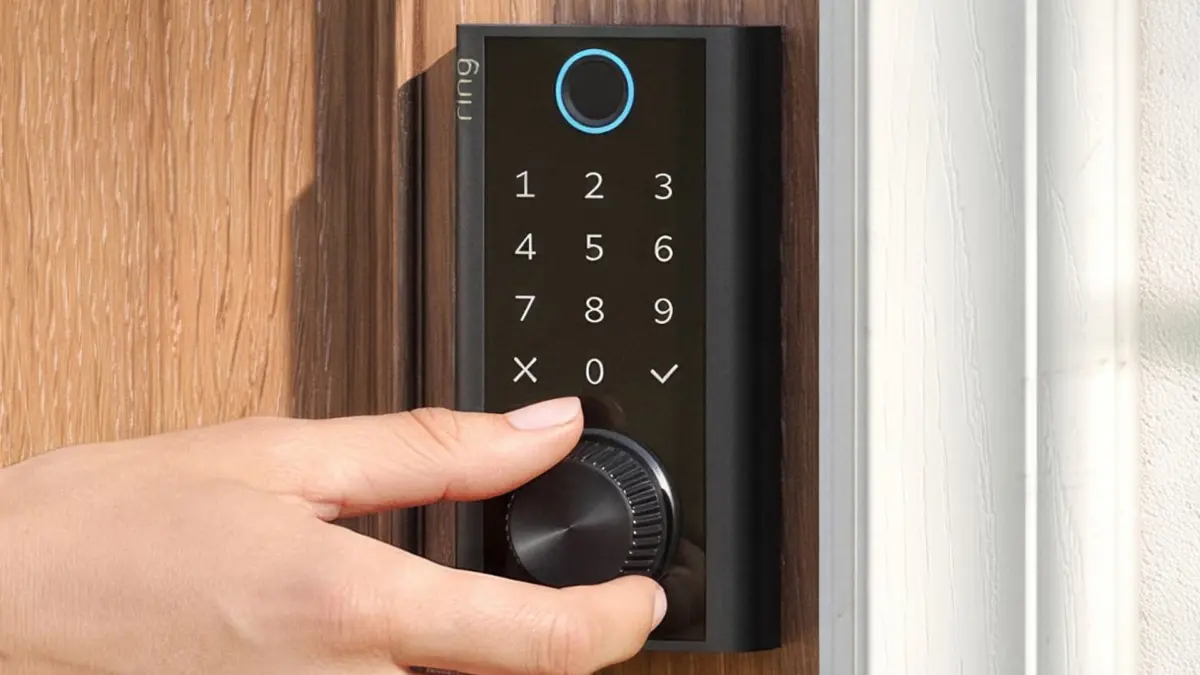
Ring, the Amazon-owned home security giant, has officially announced its foray into the smart lock market with the introduction of the Ring Smart Lock. This move marks a significant milestone for the company, which has long dominated the video doorbell and outdoor camera sectors but had yet to produce its own branded deadbolt solution. The new device, unveiled this week, aims to solve one of the most persistent anxieties in the smart home industry: the fear of being locked out due to a dead battery. By integrating a unique manual power dial that generates electricity through kinetic motion, Ring is positioning its latest hardware as a fail-safe entry point for the modern connected home.
The Ring Smart Lock is scheduled for a broad commercial release in early 2027 with a suggested retail price of $250. It will be available in three distinct finishes—satin nickel, polished brass, and matte black—to ensure compatibility with a wide range of residential architectural styles. While Ring has historically partnered with third-party lock manufacturers like Schlage and Yale to integrate their products into the Ring app, this new device represents the company’s first fully in-house hardware solution for door access control.
The Innovation of Kinetic Emergency Power
The defining feature of the Ring Smart Lock is its "Manual Power Dial," a mechanical component located on the exterior housing of the lock. In the event that the internal battery is completely depleted, a user can rotate the dial manually. This action generates a small amount of electrical current, sufficient to wake the device’s internal processor and activate the keypad or fingerprint scanner.
This approach addresses a critical design flaw in many contemporary smart locks. Currently, most competitors rely on one of three backup methods: a physical keyway, which many users prefer to abandon; a 9V battery jumpstart terminal, which requires the user to have a specific battery on hand; or a USB-C emergency power port, which necessitates a portable power bank and a compatible cable. By utilizing a hand-crank mechanism, Ring removes the need for external tools, ensuring that a homeowner can regain entry using only their hands and their programmed credentials.
Industry analysts suggest that this feature is targeted at the "keyless" demographic—users who wish to stop carrying physical keys entirely. By providing a self-sustaining power source for emergencies, Ring is attempting to lower the psychological barrier to removing traditional mechanical overrides from the front door.
Technical Specifications and Entry Methods
The Ring Smart Lock is designed as a multi-modal access device, offering four primary ways to unlock the door. These include a built-in capacitive fingerprint sensor, a backlit digital keypad for PIN codes, remote unlocking via the Ring mobile application, and voice-activated commands through Amazon Alexa-enabled devices.
The fingerprint sensor is expected to utilize advanced biometric encryption, allowing for near-instant recognition of multiple users. This is particularly beneficial for households with children or elderly residents who may find it difficult to remember complex numerical codes. Additionally, the Ring app will allow homeowners to generate temporary "guest codes." These codes can be scheduled to work only during specific hours, making the device an attractive option for short-term rental hosts or individuals who employ domestic staff, such as cleaners or dog walkers.
Powering the unit is the Ring "Quick Release Ultra" battery pack. This is a proprietary rechargeable lithium-ion battery that has become a staple of the Ring ecosystem, used in many of its doorbells and cameras. The standardization of this battery pack allows existing Ring customers to swap batteries between devices, potentially reducing downtime. When the lock’s battery runs low, the user receives a notification through the Ring app, and the battery can be removed from the interior side of the lock for charging via a standard micro-USB or USB-C cable.
Strategic Context and Market Evolution
The announcement of the Ring Smart Lock comes at a time when the global smart lock market is experiencing rapid growth. According to recent market research data, the global smart lock market size was valued at approximately $2.1 billion in 2023 and is projected to expand at a compound annual growth rate (CAGR) of over 15% through 2030. The primary drivers of this growth are the increasing adoption of home automation and the rising demand for enhanced residential security.
For Ring, the development of a proprietary lock is a logical step in its "Ring of Security" strategy. Since its acquisition by Amazon in 2018 for an estimated $1 billion, Ring has focused on creating a seamless, end-to-end security experience. By owning the lock hardware, Ring can offer deeper integration with its existing suite of products. For example, a user could set a "Home" mode that simultaneously disarms the Ring Alarm, turns on the smart lights, and unlocks the front door with a single fingerprint scan.

However, the late entry into the market—with a 2027 release date—suggests that Ring is taking a cautious approach to ensure hardware reliability. Smart locks face unique engineering challenges compared to cameras, including mechanical torque requirements, weatherproofing against extreme temperatures, and the need for high-level physical security against "lock bumping" or forced entry.
A Timeline of Ring’s Access Control Journey
Ring’s path to the 2027 smart lock release has been a decade-long evolution of the front door experience:
- 2013: Jamie Siminoff founds "Doorbot," the first Wi-Fi-enabled video doorbell.
- 2014: Doorbot rebrands to Ring after a successful appearance on the television show Shark Tank, despite failing to secure a deal on the air.
- 2017: Ring introduces the "Ring Access Controller Pro," designed for gated communities and apartment complexes, showing early interest in entry management.
- 2018: Amazon acquires Ring, integrating it into the Alexa ecosystem.
- 2019-2023: Ring focuses on the "Works with Ring" program, certifying third-party locks from Yale, Kwikset, and Schlage to work within its app.
- 2024: Internal development of the Ring Smart Lock begins in earnest, focusing on the kinetic power dial innovation.
- Early 2027: Scheduled launch of the Ring Smart Lock.
Unanswered Questions and Technical Considerations
Despite the detailed announcement, several technical specifications remain undisclosed. One of the primary concerns for smart home enthusiasts is the device’s compatibility with Matter—the new universal smart home standard. Matter support would allow the Ring Smart Lock to work natively with Apple Home, Google Home, and Samsung SmartThings without the need for complex workarounds. While Amazon has been a vocal supporter of the Matter protocol, Ring has yet to confirm if this lock will be Matter-over-Thread or if it will rely on a proprietary bridge.
Furthermore, the exact battery life of the "Quick Release Ultra" pack within the context of a motorized deadbolt is unknown. Motorized locks typically consume more power than cameras because they must physically move a metal bolt against potential door misalignment. Ring has also not yet specified the "crank-to-power" ratio for the manual dial—namely, how many rotations are required to provide enough energy for a single unlock event.
Security and Reliability Implications
From a security standpoint, the move to a purely digital interface with a kinetic backup removes the traditional pin-and-tumbler lock cylinder. This eliminates the risk of "lock picking" in the traditional sense. However, it shifts the security focus to digital encryption and the physical durability of the exterior housing.
Industry experts note that the $250 price point puts Ring in direct competition with premium offerings like the Schlage Encode Plus and the August Wi-Fi Smart Lock. Ring will need to prove that its kinetic power dial offers more real-world value than the "HomeKey" NFC features offered by competitors like Apple-compatible locks.
The manual dial also represents a move toward "sustainable" emergency design. In an era where consumer electronics are often criticized for becoming useless "bricks" once their batteries fail or cloud services are interrupted, the inclusion of a mechanical power generator is a rare nod toward long-term hardware resilience.
Broader Industry Impact
The introduction of the Ring Smart Lock is expected to put pressure on traditional lock manufacturers to innovate their backup power solutions. If the kinetic dial proves popular with consumers, it could become a standard feature for high-end electronic locks, potentially signaling the beginning of the end for the emergency 9V battery terminal.
Furthermore, this launch strengthens Amazon’s "Sidewalk" network—a shared, low-bandwidth network that helps devices work better at the edge of home Wi-Fi ranges. A smart lock equipped with Sidewalk technology could theoretically remain reachable and send low-battery alerts even if the home’s primary internet connection is down.
As the early 2027 release window approaches, the smart home industry will be watching closely to see if Ring can successfully transition from the "eyes" of the front door to the "hands" that control access. For now, the Ring Smart Lock stands as a bold attempt to marry mechanical ingenuity with modern digital convenience, promising a future where the physical key is truly a relic of the past.
