

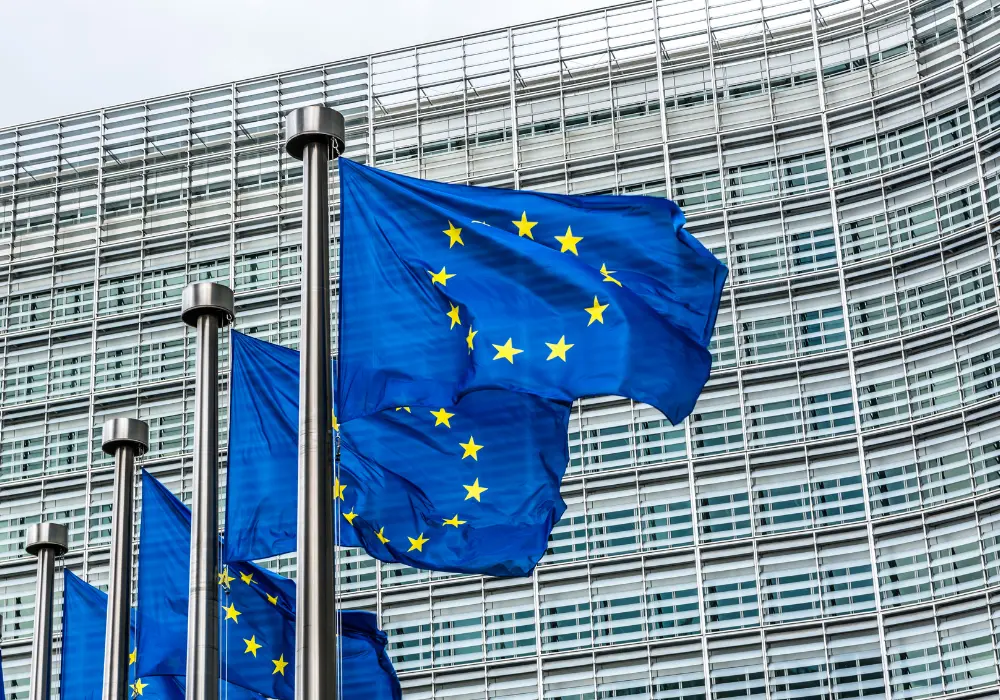
The concept of resilience has rapidly ascended to the forefront of international climate discourse, shifting from a niche technical term to the cornerstone of modern geopolitical strategy. During the recent New York Climate Week, the narrative of "collective resilience" served as the overarching theme for high-level negotiations, reflecting a growing recognition that mitigation efforts alone are no longer sufficient to address the immediate impacts of a warming planet. This shift comes as the European Union prepares to unveil its highly anticipated climate resilience framework later this month, a policy move catalyzed by a devastating summer that saw record-breaking heatwaves across the continent, resulting in at least 35,000 excess deaths. In this climate of urgency, the relationship between the European Union and Canada has taken a historic turn, marked by a proposal for "associate membership" for the North American nation—a move that could redefine the Western response to both environmental collapse and the shifting global order.
The architect of this new Canadian positioning is Prime Minister Mark Carney, whose recent address to the European Parliament emphasized the necessity of deep, structural cooperation between like-minded democratic powers. Carney’s remarks were a direct response to a surprise invitation from European Commission President Ursula von der Leyen, who suggested Canada could become an associate member of the EU. While the legal definitions of such a status remain opaque—no country has ever held such a title, and current EU frameworks offer little specific guidance—the symbolic and strategic weight of the offer is immense. For Von der Leyen, the alliance represents a commitment to the European Green Deal, even as the bloc faces internal pressures to scale back environmental regulations. "Europe can, must, and will stay the course on its climate targets," she reiterated, signaling that Canada’s resource wealth and Carney’s financial expertise are viewed as essential components of Europe’s survival strategy.
The Evolution of Mark Carney: From Financier to Prime Minister
Mark Carney’s transition from the world of central banking to the pinnacle of Canadian politics has been marked by both continuity and contradiction. Before his tenure as Prime Minister, Carney was widely regarded as the "climate whisperer" of the financial world. During his time as Governor of the Bank of England, he was instrumental in the creation of climate stress testing and the Task Force on Climate-related Financial Disclosures (TCFD). These initiatives forced the global financial sector to view climate change not as a peripheral ethical concern, but as a systemic risk to governance and profitability. Later, as the United Nations Special Envoy on Climate Action and Finance, he led the Glasgow Financial Alliance for Net Zero (GFANZ), aiming to mobilize trillions of dollars in private capital for the energy transition.
However, since assuming the premiership of Canada, Carney has had to navigate the gritty realities of domestic politics and resource-based economics. His once-unimpeachable record on climate leadership has faced scrutiny following several controversial policy pivots. These include revisions to Canada’s carbon taxation schedule and a more flexible approach to electric vehicle (EV) mandates, moves seen by critics as concessions to regional political pressures. Most notably, a recent proposal to include fossil-fuel abatement technologies—such as carbon capture and storage (CCS)—within Canada’s sustainable finance taxonomy has drawn sharp criticism from environmental advocates. Skeptics warn that such inclusions risk institutionalizing "greenwashing," allowing the continued extraction of oil and gas under the guise of sustainability. Despite these critiques, Carney maintains that a pragmatic, "all-of-the-above" energy strategy is the only way to ensure the economic stability required to fund the broader transition.
Navigating the Geopolitics of Energy and Conflict
The impetus for the EU-Canada rapprochement is deeply rooted in the current state of global instability. The traditional reliance on the United States as a guarantor of both energy security and climate leadership has been shaken. The current administration in Washington has adopted an increasingly protectionist economic agenda, characterized by aggressive trade tariffs and a domestic political landscape where climate denialism remains a potent force. Furthermore, the global energy crisis has been exacerbated by the escalating conflict involving the United States, Israel, and Iran. This war has not only disrupted Middle Eastern supply chains but has also forced European nations to seek more reliable, democratic partners for their energy needs.
In his acclaimed speech at the World Economic Forum in Davos earlier this year, Carney positioned Canada as the "reliable alternative" to the volatility of both the U.S. and the authoritarian regimes of the East. Canada, he argues, possesses the scale and variety of energy required for a successful transition. Beyond its traditional oil and gas reserves, Canada is a global leader in the production of critical raw materials. It currently ranks among the top producers of 10 of the most essential minerals for the green transition, including lithium, nickel, cobalt, and copper—resources that are currently dominated by Chinese supply chains. By aligning closely with the EU, Canada offers the bloc a path toward "strategic autonomy," reducing its dependence on geopolitical rivals for the components of solar panels, wind turbines, and EV batteries.
A Chronology of the EU-Canada Alignment
The path toward this potential associate membership has been paved by a series of high-stakes diplomatic engagements over the past year:
- January: The Davos Declaration: Prime Minister Carney uses the World Economic Forum to pitch Canada as a stable energy powerhouse, explicitly contrasting Canadian reliability with the "unpredictable nature of current global superpowers."
- June – August: The European Heat Crisis: Record temperatures across Southern and Central Europe lead to a public health crisis. The 35,000 excess deaths recorded during this period put immense pressure on EU leaders to accelerate the Climate Resilience Framework.
- September: New York Climate Week: Discussions shift from long-term "net-zero" goals to immediate "resilience." Canadian and EU delegations hold closed-door meetings regarding critical mineral supply chains.
- Early October: Address to the European Parliament: Carney delivers a landmark speech in Brussels, welcoming Von der Leyen’s offer of associate membership and emphasizing "collective resilience."
- Upcoming: The EU-Canada Summit: Scheduled to take place just days before the U.S. midterm elections, this summit is expected to produce a roadmap for Canada’s integration into European climate and energy frameworks.
Economic Pressures and the Re-industrialization Narrative
While the rhetoric of the EU-Canada alliance is centered on climate, the underlying drivers are also profoundly economic. EU member states are currently grappling with significant fiscal challenges. Rising interest rates have increased the cost of servicing sovereign debt, while the necessity of increased defense spending—driven by the war in the Middle East and tensions in Eastern Europe—has tightened national budgets. These "fiscal headaches" have made the traditional model of state-subsidized decarbonization more difficult to sustain.
In response, the narrative of the green transition in Europe has been "rephrased." Decarbonization is no longer presented solely as an environmental imperative; it is now framed as a quest for re-industrialization and global competitiveness. This shift is partly a reaction to the normalization of far-right rhetoric across the continent, which often pits climate action against industrial jobs. By framing the transition as a way to build a new, resilient industrial base in partnership with Canada, EU leaders hope to neutralize populist opposition and ensure that the continent remains a leader in the global "green race."
Analysis of Implications: A New Middle Power Bloc?
The potential for an EU-Canada associate membership represents a significant experiment in "middle power" diplomacy. For decades, the global order has been dictated by the push and pull of the world’s two largest economies, the United States and China. However, as these two superpowers find themselves on opposite ends of the climate transition—with China leading in manufacturing but lagging in emissions reductions, and the U.S. oscillating between leadership and isolationism—a vacuum has emerged.
A consolidated EU-Canada alliance could create a powerful third pole in global climate politics. Canada’s vast natural resources and the EU’s regulatory and financial might could together set global standards for the energy transition. If this alliance succeeds in securing critical mineral supply chains and implementing a shared carbon-adjustment mechanism, it could force both the U.S. and China to adapt to their terms.
However, the success of this partnership depends on Carney’s ability to reconcile his domestic energy policies with European expectations. The "raised eyebrows" regarding Canada’s inclusion of fossil-fuel abatement in its sustainable finance taxonomy suggest that the road to alignment will be fraught with technical and ideological hurdles. Europe’s environmental movement remains wary of any policies that appear to extend the life of the fossil fuel industry, even if those policies are wrapped in the language of "pragmatic transition."
Conclusion: Resilience as a Pragmatic Path Forward
As the world heads toward the EU-Canada summit, the term "resilience" has become the defining mantra of the era. In a geopolitically fragmented world, the dream of a seamless, global transition to net zero has been replaced by the reality of building fortified, reliable alliances. The proposed associate membership for Canada is more than a legal anomaly; it is a signal that the West is attempting to reorganize itself around the realities of resource scarcity and climate instability.
Whether Mark Carney can maintain his reputation as a climate leader while steering a resource-heavy economy into the heart of the European project remains the central question. For the EU, the gamble is equally high: by opening its doors to Canada, it seeks to secure the materials for its future at the risk of complicating its legal and political unity. In the end, "resilience" may indeed be the only word left to describe a strategy that prioritizes survival and collaboration in an increasingly unpredictable world. The outcome of the upcoming summit will likely provide the first concrete evidence of whether this new pragmatic alliance can truly push the global transition forward on its own terms.
