

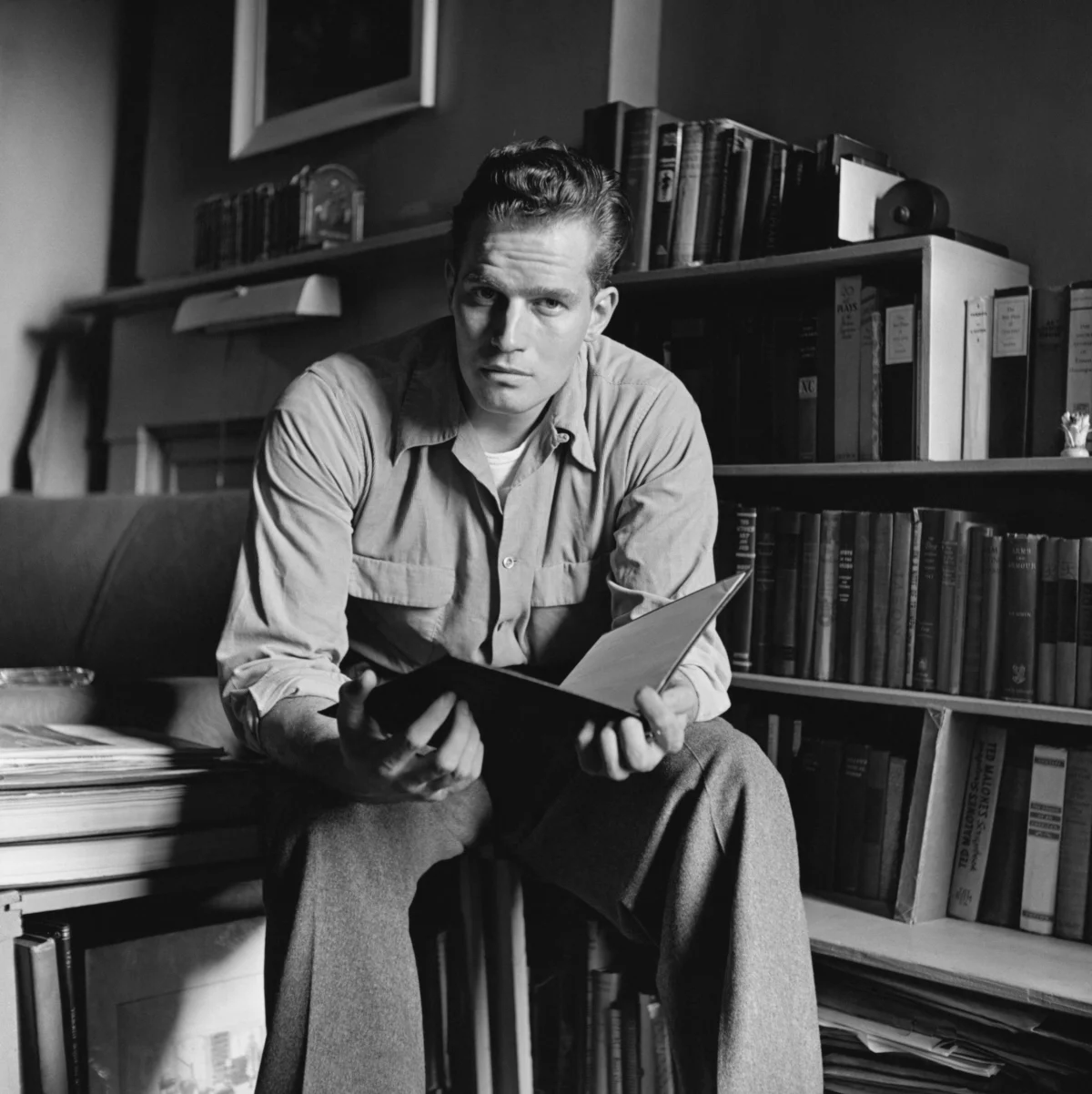
Charlton Heston was a man of profound dualities, a figure who commanded the screen as Moses and Ben-Hur while simultaneously seeking the quietude of a Michigan woodsman within the confines of his private residences. While his cinematic career was defined by epic scales and historical gravitas, his domestic life was characterized by a steady progression from the grit of post-war New York to the architectural heights of Beverly Hills. Throughout his life, Heston’s homes served as more than mere shelter; they were reflections of his professional ascent and his deeply held need for solitude, a trait he attributed to his upbringing in the American Midwest.

The Foundations of a Private Life: From Michigan to Hell’s Kitchen
Born John Charles Carter in 1923 in Evanston, Illinois, Heston’s formative years were spent in the "backwoods" of Michigan’s Great Lakes region. This environment instilled in him a lifelong preference for the outdoors and a psychological requirement for "time alone," a commodity that would become increasingly scarce as he rose to international stardom. In his 1995 memoir, In the Arena, Heston reflected on this necessity, noting that while filmmaking is an "inescapably collective undertaking," the soul requires a sanctuary from the public eye.
Heston’s professional journey began in earnest after his marriage to Lydia Clarke in 1944. The couple’s early years were marked by the typical struggles of aspiring actors in New York City. Their first notable residence was a "nineteenth-century railroad flat" located in the Hell’s Kitchen neighborhood. By modern standards, the living conditions were austere. Heston described the apartment as a four-flight walk-up consisting of two small rooms and a bed alcove. The flat lacked central heating, requiring the couple to leave the gas oven open during the winter to maintain warmth.

Despite the presence of cockroaches and the lack of summer ventilation, Heston recalled the apartment with a sense of nostalgic thrift. Renting for just $30 a month, the space was a "steal" that allowed the couple to save resources while building their careers. Demonstrating a hands-on approach that would later manifest in the construction of his California estate, Heston built the bed frame, kitchen closets, and bookshelves himself. The furniture was largely sourced from the Salvation Army, an organization Heston would support through fundraising and commercials for the remainder of his life, citing their role in helping the couple establish their first livable space.
The Mid-Century Transition: Penthouse Living and Hollywood Breakthroughs
The trajectory of Heston’s career shifted dramatically in the early 1950s when legendary filmmaker Cecil B. DeMille cast him as Brad Braden in the 1952 circus epic The Greatest Show on Earth. This breakthrough role provided the financial stability necessary for a significant residential upgrade. By the late 1950s, the Hestons had moved across Manhattan to a penthouse apartment overlooking the United Nations headquarters and the East River.

This second New York residence represented a leap in both status and architectural interest. Featuring 20-foot ceilings, a massive living room with a fireplace, and two expansive terraces, the apartment offered a sophisticated urban lifestyle. Even then, Heston’s financial pragmatism remained; the rent never exceeded $480 a month. It was during this period that the Heston family began to grow. In 1955, they welcomed their son, Fraser Clarke Heston.
Fraser’s entry into the world was famously intertwined with his father’s career. Before the child was even born, DeMille had tentatively cast the infant in the role of Baby Moses for the 1956 production of The Ten Commandments. Upon receiving word of Fraser’s birth, DeMille sent a telegram confirming the "casting," marking the beginning of a multi-generational legacy in the film industry. The family’s expansion continued in 1961 with the adoption of their daughter, Holly Ann Heston, further solidifying the actor’s commitment to providing a stable and spacious environment for his children.

"The House that Ben-Hur Built": The Coldwater Canyon Estate
The most significant chapter in Heston’s residential history began in 1958. While filming The Big Country, Heston realized that his growing family required a permanent home that mirrored the space and privacy of his Michigan childhood. He discovered a three-acre ridge in Coldwater Canyon, located just minutes from the Beverly Hills Hotel but surrounded by hundreds of acres of undeveloped wilderness. Enchanted by the landscape, which was populated by deer, hawks, and raccoons, Heston purchased the land the day he saw it.
To realize his vision, Heston commissioned architect Bill Beckett, a protégé of the modernist movement who had worked under Lloyd Wright. Beckett’s approach was immersive; he reportedly spent 24 hours in a sleeping bag on the ridge to study the movement of light and the contours of the land before beginning the design. He also consulted dozens of issues of Architectural Digest with the Hestons to align the home’s aesthetic with their personal tastes.

Construction began while Heston was in Rome filming his Oscar-winning role in Ben-Hur. The timing was so precise that the home was completed just as production wrapped, leading Fraser Heston to famously refer to the property as "the house that Ben-Hur built." The resulting structure was a masterpiece of Mid-century Modern architecture, characterized by clean lines, expansive glass walls, and a seamless integration with the rugged California terrain.
The estate’s amenities were tailored to Heston’s professional and personal needs:

- The Main Residence: A sprawling layout featuring four primary bedrooms and dedicated staff quarters.
- The Library: A massive, two-story space that housed Heston’s extensive collection of books and served as a retreat for study.
- Professional Facilities: A private screening room for reviewing dailies and a photo studio for Lydia Clarke Heston, an accomplished photographer.
- Outdoor Amenities: A swimming pool, a tennis court, and a gym, allowing the actor to maintain the physical conditioning required for his demanding roles.
Solitude and the Professional Life of "The Ridge"
For Heston, the Beverly Hills estate—which he simply called "the ridge"—was the ultimate sanctuary. It allowed him to engage with the Hollywood industry on his own terms. He famously conducted satellite television interviews with London and other international hubs directly from his home, utilizing the property’s technological capabilities to minimize the need for public appearances.
In his memoir, Heston emphasized that the ridge was where his most important work occurred, whether it was reading through stacks of scripts to secure his family’s future or rehearsing for upcoming plays. He viewed the maintenance of the estate not as a burden of wealth, but as a motivation for professional diligence. The need to "make it all secure" for his wife and children drove him to take on a rigorous workload throughout the 1960s and 70s.

The property remained Heston’s primary residence for half a century. It was here that he faced his final years, including his 2002 announcement that he was suffering from symptoms consistent with Alzheimer’s disease. Heston passed away at the home in April 2008 at the age of 84, with Lydia by his side.
Chronology of Real Estate Transitions and Market Impact
Following Heston’s death, the Coldwater Canyon estate entered a new phase of its history, reflecting the fluctuating values of the Los Angeles luxury real estate market.

- 2008–2015: The Heston family maintained the property for several years following the actor’s passing. Fraser Heston eventually noted that the decision to sell was difficult but necessary, as Lydia had moved to a different living arrangement before her own passing in 2018.
- 2015: The estate was officially listed on the market for $12.25 million. It was purchased by the renowned French filmmaker Luc Besson, known for The Fifth Element and Léon: The Professional.
- 2020: After several years of ownership, Besson listed the property for $14.9 million. The increase in price reflected both the prestige of the Heston legacy and the general appreciation of Mid-century Modern architectural landmarks in Southern California.
- 2025: Most recently, the home reappeared on the market with a listing price of $10.5 million. This price adjustment has been noted by real estate analysts as a reflection of current high-interest rates and a recalibration of the luxury tier in Beverly Hills, though the home remains a "trophy property" due to its cinematic provenance.
The Broader Impact of the Heston Legacy
The architectural journey of Charlton Heston provides a lens through which to view the evolution of the Hollywood star system. Unlike many of his contemporaries who sought flamboyant displays of wealth, Heston’s homes were consistently defined by their functionality and their relationship to the natural world. From the DIY bookshelves of Hell’s Kitchen to the glass-walled library of Coldwater Canyon, his residences were tools for a life of disciplined work and fierce privacy.
The preservation of the Coldwater Canyon ridge as a single estate, rather than being subdivided for high-density development, stands as a testament to the enduring value of Heston’s vision. For historians and fans alike, these properties represent the physical manifestation of a career that spanned the Golden Age of Hollywood to the modern era. Heston’s homes were the stages upon which he played his most enduring role: that of a devoted family man and a guardian of his own solitude. In the end, the "guy brought up in the Michigan woods" succeeded in creating a wilderness of his own in the heart of the world’s film capital.
