

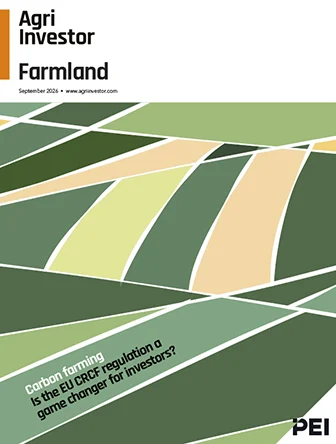
The European Union’s proposed carbon farming regulation is poised to significantly reshape the agricultural investment landscape, offering a new avenue for capital deployment while demanding greater environmental stewardship from land managers. This landmark initiative, currently navigating the complex legislative corridors of Brussels, aims to incentivize and standardize the sequestration of carbon within agricultural soils, presenting both unprecedented opportunities and considerable challenges for investors seeking to align their portfolios with sustainability goals. The regulation, if enacted in its current form, could unlock substantial investment flows into practices that not only mitigate climate change but also enhance the long-term productivity and resilience of farmland.
At its core, the carbon farming framework seeks to establish a verifiable and tradable market for carbon credits generated through specific agricultural activities. These activities typically include practices such as cover cropping, reduced tillage, agroforestry, and improved grassland management. The underlying principle is that by enhancing soil organic matter, farms can effectively draw down atmospheric carbon dioxide and store it within the soil. This stored carbon then becomes a quantifiable asset, capable of being certified and sold as carbon credits to entities seeking to offset their own emissions. For investors, this translates into a potential new revenue stream for agricultural land and a compelling argument for directing capital towards sustainable farming operations.
The development of this regulation has been a multi-year process, driven by the EU’s ambitious climate targets, particularly those outlined in the European Green Deal. The Green Deal, launched in December 2019, sets a goal of making the EU climate-neutral by 2050, with interim targets for emissions reductions by 2030. Agriculture, a significant contributor to greenhouse gas emissions, is a crucial sector within this strategy. The recognition of soils as a vital carbon sink, capable of absorbing billions of tons of CO2, has elevated carbon farming from a niche concept to a central pillar of the EU’s climate policy. Discussions and consultations surrounding the regulation have involved a wide array of stakeholders, including farmers’ organizations, environmental groups, scientific bodies, and importantly, the investment community. The timeline for its final adoption remains subject to political consensus within the European Parliament and Council, but momentum appears to be building.
The Investor Proposition: Opportunities and Risks
For agricultural investors, the carbon farming regulation presents a dual proposition: enhanced returns through carbon credit sales and a more robust, climate-resilient asset base. The potential for generating additional income from carbon sequestration could significantly boost the profitability of agricultural land, making it an even more attractive asset class. This is particularly relevant in an environment where traditional agricultural returns can be volatile, influenced by commodity prices, weather patterns, and geopolitical events. By diversifying revenue streams to include carbon credits, investors can potentially de-risk their agricultural portfolios and achieve more stable, long-term financial performance.
However, the regulatory framework is not without its complexities and potential pitfalls. Investors must grapple with the intricacies of carbon accounting, verification methodologies, and the establishment of robust monitoring, reporting, and verification (MRV) systems. The credibility of carbon credits hinges on their permanence, additionality (meaning the carbon reduction would not have happened without the incentive), and avoidance of leakage (ensuring emissions are not simply shifted elsewhere). Ensuring compliance with these stringent requirements will necessitate significant investment in data management, technology, and expert consultation.
Furthermore, the market for carbon credits is still maturing. While demand from corporations seeking to meet their ESG (Environmental, Social, and Governance) commitments is growing, the pricing and liquidity of agricultural carbon credits are subject to market forces. Investors will need to conduct thorough due diligence on potential carbon credit buyers, contract terms, and the long-term viability of the carbon market itself. The potential for regulatory changes or shifts in market demand introduces an element of uncertainty that requires careful consideration.
Drought Resilience: A Strategic Imperative
Beyond the direct financial implications of carbon credits, the regulation implicitly encourages practices that bolster the resilience of agricultural systems, particularly in the face of increasing climate volatility. Drought, a growing concern across many agricultural regions, can have devastating consequences for crop yields and farm profitability. Practices promoted under carbon farming, such as increasing soil organic matter, improve soil structure, water-holding capacity, and nutrient cycling. This enhanced soil health means that farmland is better equipped to withstand periods of drought, requiring less irrigation and maintaining productivity even under stress.
For investors, this translates into a more resilient asset. Farmland that can better withstand drought is less susceptible to yield losses, reducing the risk of income disruption and preserving asset value. This inherent resilience becomes a significant competitive advantage for agricultural investments, particularly as climate change intensifies. The ability to adapt to changing climatic conditions is no longer just an environmental consideration but a fundamental driver of financial performance.
Australian Farmland Returns: A Benchmark for Growth
While the EU regulation is a forward-looking development, recent performance in other major agricultural markets offers insights into the potential for robust returns. Australian farmland, for instance, has demonstrated a consistent upward trend in returns in recent years. Data from various agricultural property indices and market analyses indicate that factors such as strong commodity prices, favorable weather conditions in key growing regions, and sustained investor interest have contributed to this growth. While not directly attributable to carbon farming, this trend underscores the underlying attractiveness of agricultural assets when supported by favorable market dynamics and effective land management.
The rise in Australian farmland returns serves as a valuable benchmark, highlighting the potential for significant capital appreciation and income generation in the agricultural sector. Investors considering the EU carbon farming landscape can draw lessons from these established markets, understanding the interplay of agricultural fundamentals, market demand, and investment strategies. The increasing global demand for food and agricultural products, coupled with a growing awareness of the environmental impact of food production, suggests a continued long-term positive outlook for well-managed agricultural assets.
Expert Perspectives: Navigating the New Landscape
Leading figures within the agricultural investment sector are closely monitoring the EU’s carbon farming initiative. Their insights provide crucial context for understanding the practical implications for investors.
US Agriculture, a prominent player in the agricultural investment space, has expressed keen interest in the evolving regulatory landscape. The firm’s analysts have consistently emphasized the importance of integrating sustainability into investment strategies. They view the EU’s move as a significant step towards formalizing the economic value of environmental services provided by agriculture. The challenge, as they see it, lies in developing standardized and transparent mechanisms for measuring and verifying these services to ensure market integrity and investor confidence. Their research often focuses on the interplay between policy, technology, and market demand, suggesting that successful carbon farming investments will require a holistic approach.
Astarte Capital Partners, known for its focus on sustainable and impact-driven investments in the agricultural sector, has been an early advocate for integrating environmental considerations into farmland management. The firm’s investment philosophy often centers on creating long-term value through enhanced land stewardship and resource efficiency. For Astarte, the EU’s carbon farming regulation represents a validation of their approach and a potential catalyst for attracting further capital to sustainable agriculture. They are likely to be exploring how to best leverage such regulations to enhance the environmental and financial performance of their portfolio assets, emphasizing the importance of robust data and scientific rigor in carbon accounting.
Roc Partners, another significant entity in the agricultural investment arena, also recognizes the transformative potential of carbon farming. Their expertise lies in identifying undervalued agricultural assets and implementing strategies to optimize their performance. Roc Partners is likely to be assessing the regulatory framework from a perspective of operational feasibility and financial return. They will be looking for clarity on the practical implementation of carbon farming practices on the ground, the costs associated with compliance, and the long-term stability of the carbon credit market. Their involvement in discussions with policymakers and industry stakeholders will be crucial in shaping the practical application of the regulation.
Broader Implications and Future Outlook
The EU’s carbon farming regulation is more than just a piece of environmental legislation; it is a signal of a fundamental shift in how agriculture is perceived and valued. It elevates the role of land managers as custodians of natural capital and incentivizes them to adopt practices that benefit both the environment and their own long-term profitability. For investors, this presents an opportunity to align their capital with a sector that is not only essential for global food security but also increasingly recognized for its crucial role in climate change mitigation and adaptation.
The success of the EU’s initiative will likely have ripple effects globally. As other regions observe the economic and environmental benefits of formalized carbon farming, similar regulatory frameworks may emerge. This could lead to a more integrated and standardized global market for agricultural carbon credits, further enhancing the attractiveness of sustainable agricultural investments.
However, challenges remain. Ensuring equitable distribution of benefits, supporting farmers through the transition, and maintaining the scientific integrity of carbon accounting will be critical for the long-term success of carbon farming. Investors will need to be adaptable, informed, and strategic in their approach, collaborating with land managers, technology providers, and policymakers to navigate this evolving landscape. The potential for significant financial and environmental returns is undeniable, but realizing this potential will require a commitment to innovation, transparency, and a deep understanding of the complex interplay between agriculture, climate, and finance. The EU’s carbon farming regulation is not just a game changer; it is an invitation to redefine the future of agricultural investment.
