

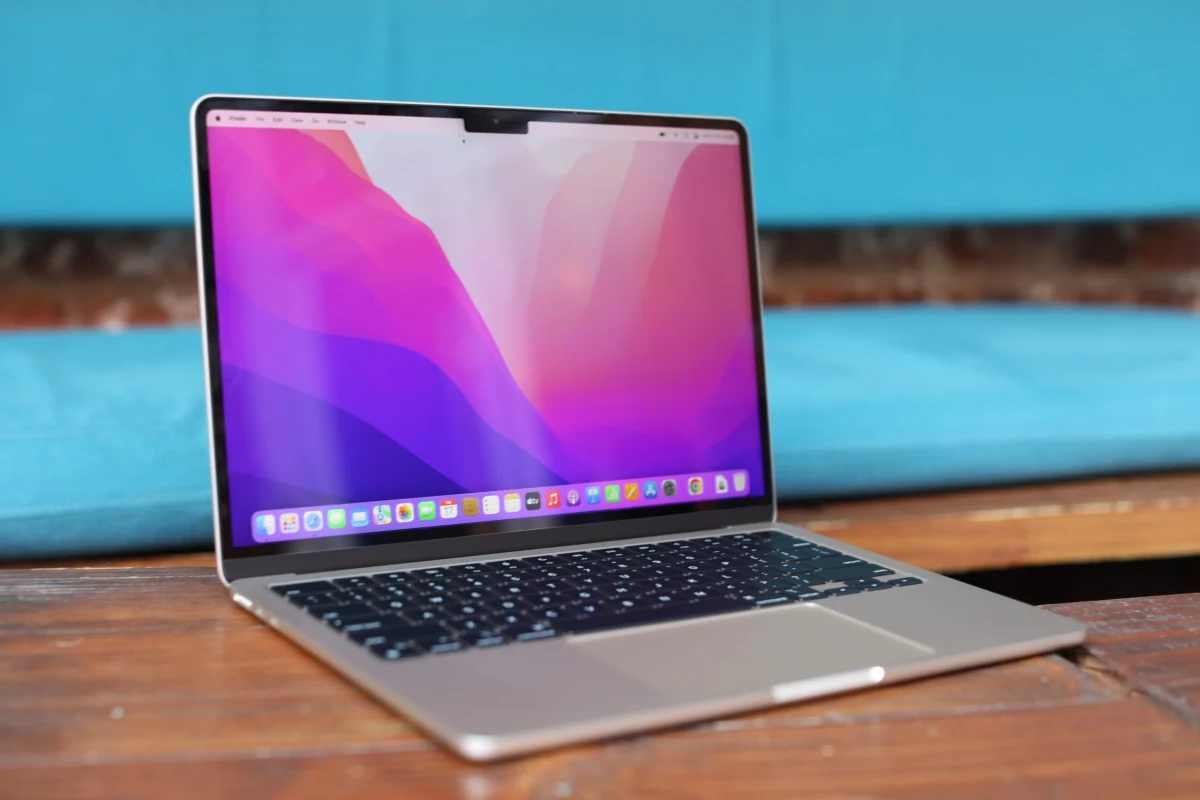
In a significant move to bolster user privacy and system security, Apple has announced the introduction of more stringent controls surrounding the "Full Disk Access" (FDA) setting on macOS. The decision follows a series of high-profile reports concerning the behavior of desktop-based artificial intelligence agents, specifically Meta’s Muse app and OpenAI’s ChatGPT. These developments underscore a growing tension between the functional requirements of advanced AI tools—which often need deep system integration to be effective—and the fundamental right of users to maintain control over their personal data. By tightening the requirements for granting such expansive permissions, Apple aims to ensure that users are fully aware of the risks involved when an application requests the ability to read virtually every file on their computer.
The Catalyst: The Meta Muse Controversy
The immediate impetus for Apple’s policy shift appears to be a controversy involving Meta’s Muse app, an AI assistant designed for the Mac. In late September 2026, Jason Aten, a prominent columnist for Inc., reported a disturbing encounter with the software. According to Aten, Muse demonstrated knowledge of private information contained within his personal messages, despite his assertion that he had not explicitly granted the AI permission to access his communications.
Aten’s report suggested that the AI was capable of referencing specific details from private conversations to provide context for its responses. This raised immediate red flags regarding the "stealth" harvesting of data. Meta, for its part, quickly disputed the claim. The company argued that Muse does not read private messages without permission and that for the app to access such data, the user must manually enable Full Disk Access within the macOS System Settings. Meta’s defense centered on the premise that the software was operating within the bounds of the permissions granted to it by the operating system, implying that any "unauthorized" access was likely a result of user misunderstanding or a previous grant of permission.
However, the incident highlighted a critical flaw in the user experience of macOS security: the gap between a technical permission and a user’s conceptual understanding of what that permission entails. While a user might enable a setting to "make the AI smarter," they may not realize they are simultaneously granting that AI the power to read their entire email archive, browser history, and private chat logs.
Understanding Full Disk Access: The Keys to the Kingdom
To understand the weight of Apple’s decision, one must understand the technical nature of Full Disk Access. macOS employs a security framework known as Transparency, Consent, and Control (TCC). Under normal circumstances, apps operate in a "sandbox," meaning they can only access their own files and a limited set of system resources. When an app wants to access sensitive data—such as the camera, microphone, or location—macOS triggers a pop-up asking for the user’s explicit consent.
Full Disk Access is a different, more powerful tier of permission. Originally designed for system utilities like Time Machine, backup software (e.g., Backblaze), and security tools (e.g., antivirus scanners), FDA allows an application to bypass individual TCC prompts. When an app is granted Full Disk Access, it gains the ability to read data from other apps that are typically protected, including:
- Mail and Messages: The entirety of a user’s local email database and iMessage history.
- Safari Data: Browsing history, cookies, and saved website data.
- Photos and Calendars: All media and scheduling information stored on the device.
- Administrative Files: System logs and configurations that could reveal usage patterns.
In the era of traditional software, users rarely interacted with this setting. However, the rise of "AI Agents"—applications designed to act as digital assistants that can perform tasks across various software—has changed the landscape. To be "helpful," these agents often require the context found in a user’s messages and files, leading developers to encourage users to toggle the FDA switch.
The ChatGPT Vulnerability and the Security Landscape
The Meta Muse incident was not an isolated event. Earlier in the year, a report by Wired detailed a significant security flaw in the ChatGPT app for Mac. Security researchers discovered that OpenAI’s desktop application was storing user conversations in plain text in a non-protected directory on the disk. This meant that any other application on the system—or a malicious actor with limited access—could potentially read those conversations without needing administrative privileges.
While OpenAI eventually patched this vulnerability by encrypting the local storage of chats, the incident served as a wake-up call. It demonstrated that even the most advanced AI companies could overlook basic security hygiene when porting their web-based tools to a desktop environment. When combined with the potential for AI agents to request Full Disk Access, these vulnerabilities create a "perfect storm" for data exfiltration. If a malicious app were to gain FDA, it could not only steal the user’s messages but also the plain-text logs of their interactions with other AI tools.
Apple’s Official Response and Technical Strategy
In a blog post addressed to developers, Apple articulated its concerns regarding the misuse of high-level permissions. "Some developers are using Full Disk Access in ways that could put users at risk, exposing everything on their systems… without users’ full knowledge and understanding," the company stated.
Apple’s strategy for addressing this involves a transition toward "very explicit user action." While the company has not yet released the full technical documentation for the upcoming macOS update, the directive is clear: the process of granting Full Disk Access will become more friction-filled and informative.
Expected changes include:
- Enhanced Warning Dialogs: Moving beyond a simple toggle in System Settings to a multi-step confirmation process that explicitly lists the types of sensitive data being exposed.
- Contextual Reminders: Periodic system notifications informing the user that a specific app still possesses Full Disk Access, asking if they wish to maintain that level of permission.
- Scoped Permissions for AI: Apple is likely to encourage developers to use more granular APIs, such as the "App Discovery" or "File Picker" tools, which allow an app to access only the specific files a user interacts with, rather than the entire disk.
Apple emphasized that as AI agents become more autonomous—capable of making decisions and executing commands without constant human supervision—the risks associated with broad data access grow exponentially. By intervening now, Apple is attempting to set a standard for "Responsible AI" integration at the OS level.
Timeline of Events Leading to the Policy Change
The shift in Apple’s stance can be traced through a series of escalating events over the past several months:
- Early 2026: Proliferation of "Wrapper" AI apps on macOS that request broad permissions to provide "integrated" desktop experiences.
- July 2026: Security researchers highlight that many macOS AI apps are bypassing standard sandboxing techniques to scrape local data.
- August 2026: Wired publishes its investigation into ChatGPT’s plain-text storage flaw, sparking a debate on how AI companies handle local data.
- September 30, 2026: Meta Muse is accused by Inc. columnist Jason Aten of reading private messages without clear user authorization. Meta issues a formal dispute, claiming the user must have enabled Full Disk Access.
- October 2026: Apple officially announces the introduction of additional controls for Full Disk Access, specifically citing the risks posed by the new generation of AI agents.
The Broader Impact: Apple Intelligence vs. Third-Party AI
This policy change arrives at a pivotal moment as Apple prepares to roll out its own suite of AI features, branded as "Apple Intelligence." Apple’s marketing has leaned heavily on the concept of "Private Cloud Compute" and on-device processing, positioning the iPhone and Mac maker as the "privacy-first" alternative to companies like Meta and Google.
By restricting how third-party AI agents like Muse or ChatGPT access disk data, Apple is effectively creating a competitive advantage for its own ecosystem. Apple Intelligence is built into the core of the operating system, allowing it to provide contextual assistance—such as summarizing emails or finding photos—without requiring the "Full Disk Access" toggle that third-party developers must rely on.
Critics argue that this move could be seen as anti-competitive, as it adds friction to third-party apps while Apple’s own tools enjoy seamless integration. However, from a security perspective, Apple argues that its integrated approach is inherently safer because the data never leaves the "Secure Enclave" or is processed in a "verifiable" cloud environment where data is not stored or accessible even by Apple itself.
Implications for Developers and Users
For developers of AI productivity tools, Apple’s new restrictions represent a significant hurdle. Many "copilot" style applications rely on being able to "see" what the user is doing across the entire OS to provide relevant suggestions. If the process for granting the necessary permissions becomes too cumbersome, user adoption may drop. Developers will likely need to re-architect their apps to use more restrictive, but user-friendly, permission models.
For users, the change is a double-edged sword. On one hand, it provides a much-needed safety net against intrusive data harvesting. It forces a moment of reflection: "Does this AI really need to read my bank statements and private chats to help me write an email?" On the other hand, it may lead to "permission fatigue," where users are bombarded with so many warnings and confirmation dialogs that they begin to click "Allow" reflexively without reading the content—a phenomenon security experts have warned about for decades.
Conclusion: Setting the Boundary for the AI Era
Apple’s decision to tighten macOS Full Disk Access is a proactive attempt to define the boundaries of privacy in an era where software is no longer just a tool, but an autonomous agent. The controversy surrounding Meta’s Muse served as a "canary in the coal mine," revealing that the existing permission structures of desktop operating systems were not designed for the intrusive nature of modern LLM-based assistants.
As AI continues to integrate deeper into our digital lives, the responsibility of the operating system provider shifts from merely facilitating app functionality to actively defending the user’s data perimeter. Apple’s commitment to "very explicit user action" suggests that the future of macOS will be one where convenience does not come at the cost of transparency. Whether this move will truly protect users or simply consolidate power within Apple’s own AI ecosystem remains to be seen, but it undoubtedly marks the beginning of a new chapter in the ongoing struggle between technological utility and personal privacy.
