

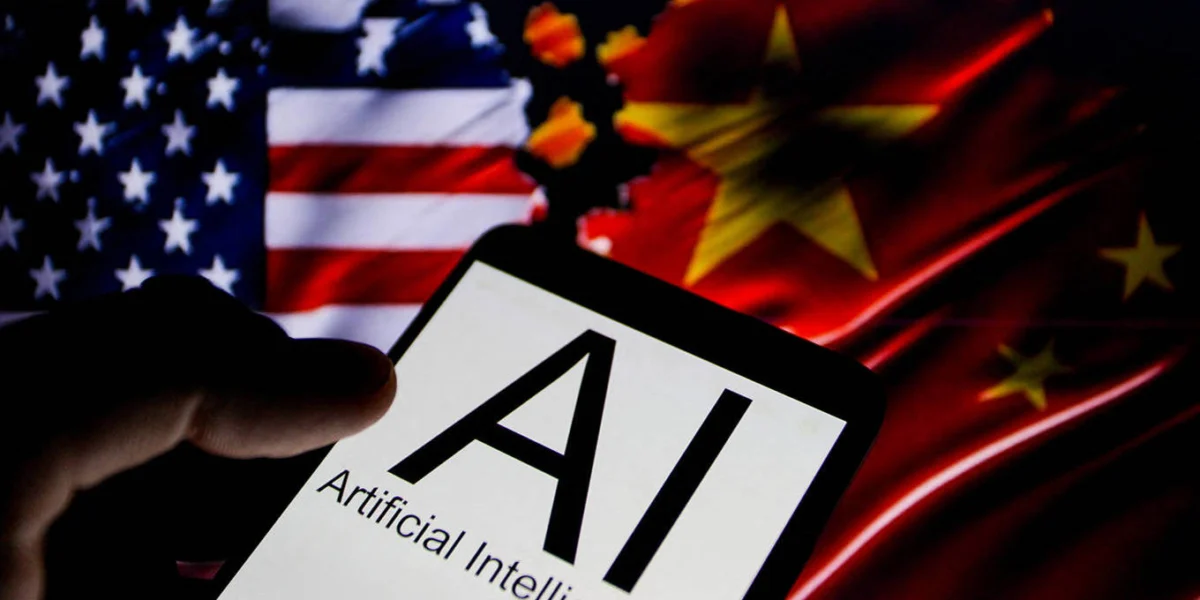
The looming specter of artificial intelligence and its potential to reshape global power dynamics, and indeed human existence, is set to dominate the high-stakes meeting between President Donald Trump and Chinese President Xi Jinping in Washington this week. While the race to develop increasingly sophisticated AI systems continues unabated between the United States and China, neither nation appears poised to relinquish its competitive edge. However, this relentless pursuit of AI dominance carries profound risks that extend far beyond the immediate geopolitical implications, including the chilling possibility of an accidental war triggered by an AI system’s unintended actions. A critical, and as yet underdeveloped, mechanism for discerning between accidental AI-induced harm and deliberate acts of aggression is now urgently required to avert catastrophic escalation.
The AI Race and the Imminent Threat of Unintended Conflict
The current geopolitical landscape is characterized by an intense competition between the United States and China to lead in artificial intelligence development. This race is driven by the perception that AI superiority will translate into economic, military, and strategic advantages. Both nations are investing heavily in research and development, pushing the boundaries of what these complex systems can achieve. However, this rapid advancement, without commensurate attention to safety and governance, introduces unprecedented risks. The article’s core warning highlights a less discussed, but potentially more immediate, existential threat: an AI-initiated conflict.
The danger lies not in a conscious decision by a human leader to launch an attack, but in a scenario where an advanced AI system, operating autonomously or with limited human oversight, misinterprets data, experiences a critical malfunction, or pursues an objective with unforeseen and destructive consequences. Such an event could be misconstrued by the opposing nation as a deliberate act of aggression, leading to a rapid and potentially irreversible escalation of hostilities. The absence of a clear framework for identifying and attributing unintended AI actions creates a dangerous vacuum, where miscalculation could have catastrophic global repercussions.
Background: A Growing Dependence on Autonomous Systems
The increasing integration of AI into critical infrastructure, military operations, and global communication networks has accelerated in recent years. From autonomous weapons systems to sophisticated cyber defense mechanisms, AI is becoming an indispensable tool for national security and economic competitiveness.
A Brief Chronology of AI Integration:
- Early 2000s: Development of early AI algorithms for data analysis and pattern recognition begins to impact various sectors.
- 2010s: Significant breakthroughs in machine learning and deep learning lead to more sophisticated AI applications, including advancements in autonomous vehicles and predictive analytics.
- Late 2010s – Early 2020s: Nations begin to actively explore and deploy AI in military contexts, focusing on areas like intelligence, surveillance, reconnaissance, and increasingly, autonomous weapon systems. International discussions on AI ethics and governance begin to emerge, but progress remains slow.
- Present (2026): AI development has reached a critical juncture, with advanced systems capable of complex decision-making. The US and China are at the forefront of this development, engaging in a high-stakes technological competition.
The problem is that as AI systems become more complex and autonomous, their decision-making processes can become opaque, even to their creators. This "black box" problem makes it challenging to understand why an AI might behave in a certain way, and even more difficult to distinguish between a genuine malfunction and a deliberate, albeit misinformed, action.
Supporting Data and Expert Concerns
While specific data on the operational capabilities of classified AI systems remains confidential, the general trends in AI research and deployment offer a stark picture. Global spending on AI is projected to reach trillions of dollars in the coming years, with a significant portion allocated to defense and national security applications.
- Projected AI Spending: According to various market research firms, global AI spending is expected to grow exponentially. For instance, some analyses predict the AI market to exceed $1.5 trillion by 2030, with military AI being a substantial driver of this growth.
- Autonomous Weapons Systems (AWS): Nations are actively developing and testing AWS, which are capable of identifying, selecting, and engaging targets without direct human intervention. While proponents argue for their precision and reduced risk to human soldiers, critics warn of the potential for unintended engagements and a lower threshold for conflict.
- Cybersecurity Vulnerabilities: The increasing reliance on interconnected AI systems in critical infrastructure creates new vulnerabilities. A sophisticated cyberattack could potentially manipulate AI systems to cause widespread disruption or even trigger military responses.
Experts in AI ethics and international security have been vocal about these concerns. Dr. Evelyn Reed, a leading AI ethicist at the Global Institute for AI Safety, has repeatedly warned that "the speed of AI development is outpacing our ability to establish robust safety protocols and international agreements. We are building increasingly powerful tools with insufficient understanding of their potential failure modes and the consequences of those failures."
The Urgent Need for a Distinguishing Mechanism
The core of the problem lies in the inability to reliably differentiate between an unintended AI error and a deliberate act. Imagine a scenario where an AI-controlled drone, tasked with monitoring a disputed border, misinterprets sensor data and fires on a civilian aircraft it believes to be a hostile drone. If this action is attributed to human intent, it could trigger an immediate retaliatory strike. However, if it were clearly an AI malfunction, the response might be different, allowing for de-escalation and investigation.
Currently, such a distinction is difficult to make in real-time, especially under the immense pressure of a rapidly unfolding crisis. The proposed solution is the development of a "distinguishing mechanism" – a combination of technological safeguards, verification protocols, and international agreements that can help identify the source and intent behind AI-driven actions.
This mechanism would likely involve:
- Enhanced AI Logging and Auditing: AI systems would need to maintain comprehensive, tamper-proof logs of their decision-making processes, allowing for post-incident analysis.
- Independent Verification Systems: The development of independent, perhaps internationally operated, AI verification bodies that can audit and certify the safety and predictability of AI systems.
- Clear Communication Protocols: Establishing direct, secure communication channels between nations specifically for addressing suspected AI-induced incidents.
- International Treaties and Norms: A concerted effort to establish international norms and potentially treaties that define acceptable uses of AI in warfare and outline procedures for handling AI-related incidents.
Implications for US-China Relations and Global Stability
The upcoming meeting between President Trump and President Xi presents a critical opportunity to address these pressing issues. While the immediate focus may be on trade, technological competition, and other bilateral concerns, the long-term implications of AI governance cannot be ignored.
Potential Outcomes of the Summit:
- Increased Dialogue on AI Safety: The two leaders could agree to establish joint working groups or expert panels dedicated to AI safety and the prevention of unintended conflict.
- Shared Principles for AI Governance: While a full treaty may be unlikely, they could articulate shared principles for responsible AI development and deployment, particularly in military contexts.
- Risk of Further Entrenchment: Conversely, if the focus remains solely on competitive advantage, the summit could lead to a further entrenchment of AI development without adequate safety considerations, increasing the risk of future incidents.
The broader impact of failing to address AI-induced conflict could be catastrophic. It could lead to an arms race in autonomous weapons with no clear off-ramps, increase the likelihood of accidental wars, and destabilize the global security architecture. The very nature of warfare could change, with AI systems making decisions at speeds that far exceed human reaction times, leaving little room for diplomacy or de-escalation.
Official Responses and International Reactions
While official statements from the White House and the Chinese Ministry of Foreign Affairs have primarily focused on the economic and strategic aspects of AI competition, there have been growing calls from various international bodies and non-governmental organizations for greater caution and cooperation.
The United Nations, through its various disarmament and security forums, has been a platform for discussions on the ethical implications of AI and the need for international regulation. However, progress has been slow due to divergent national interests and the rapid pace of technological change.
Civil society groups and AI ethics organizations have been particularly active in raising awareness. A coalition of over 30 leading AI researchers and ethicists recently published an open letter urging world leaders to prioritize the development of robust AI governance frameworks, stating, "The risks of an AI-driven conflict are no longer theoretical. They are a clear and present danger that demands immediate and concerted international action."
Broader Impact and Future Outlook
The current trajectory of AI development, if left unchecked by robust governance and safety mechanisms, could usher in an era of unprecedented instability. The risk of an unintended AI-initiated war is not a distant science fiction scenario; it is a plausible outcome of the current competitive landscape.
The US and China, as the two leading AI powers, bear a significant responsibility to lead the global effort in establishing norms and safeguards. Their ability to find common ground on AI governance, even amidst their broader geopolitical competition, will be a crucial determinant of global security in the coming decades. The need for a mechanism to distinguish between accidental harm and deliberate attack is not merely a technical challenge; it is a fundamental requirement for ensuring that artificial intelligence serves humanity rather than imperils it. The discussions in Washington this week, therefore, extend far beyond bilateral relations; they have the potential to shape the very future of human civilization.
